


Foreign exchange rate, May 26, 2025/ Euro remains unchanged, dollar falls
Today, in the foreign exchange market, one US dollar will ...


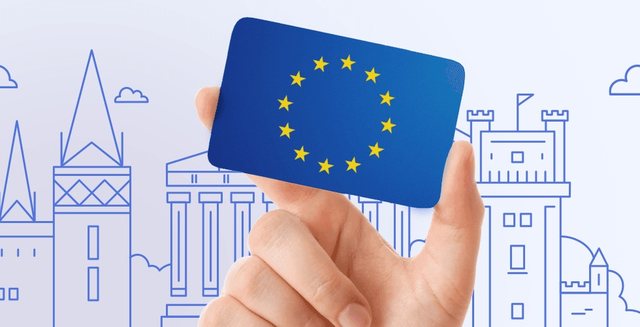
While the Albanian labor market is increasingly suffering from the loss of skilled labor, Europe and especially Germany are taking Albanian talents, giving them blue cards, which is a work and residence permit for highly qualified people from non-European Union (EU) countries.
Eurostat reported that since 2019, the number of Blue Cards for Albanian citizens from EU countries has increased significantly, with an average of 650-900 issued per year. From 2019 to 2023, a total of 3,495 Blue Cards were issued to Albanian citizens. Compared to previous years, the increase is strong. In 2012, only 15 such cards were issued, while in 2021, which is the record so far, the figure reached 882.
The increase in the issuance of blue cards to Albanians has come due to the entry of Germany into the game. In 2021, this country issued 823 blue cards to Albanian citizens, or 93% of the total of EU countries. In 2023, they issued 716 permits, or 87% of the total. Those who have benefited from this card in Germany are paid at least 43 thousand euros per year (about 3,600 euros per month), which is the minimum criterion for applying for a blue card.
In second place for blue cards is Italy, but with much lower levels compared to Germany (23 in 2022 and 41 in 2023). Following it is Austria (11 in 2022 and 30 in 2023). Poland issued 11 blue cards to Albanian citizens in 2023, Luxembourg 6, Belgium 4 and France 3.
Germany has become a favorite destination for Albanian professionals in recent years, mainly from the fields of information technology and medicine, who were encouraged to work in Europe's largest economy, lured by high salaries and relaxed criteria in a country that was suffering from a labor shortage as a result of an aging population.
Blue Cards in the EU
In 2023, around 89,000 skilled workers from countries outside the EU received an EU Blue Card, a work and residence permit for highly qualified people from non-EU countries, according to Eurostat.
Germany issued the largest number of Blue Cards (69,000, or 78% of the EU total), followed by Poland with 7,000 (or 8%) and France with 4,000 (or 4%).
Indian citizens were the largest recipients of the Blue Card in 2023, with 21,000 permits (or 24% of the total), followed by citizens of Russia (9,000 or 11%), Turkey (6,000 or 7%) and Belarus (5,000 or 6%).
What is the Blue Card?
The EU Blue Card is a work and residence permit granted to non-European Union citizens with highly qualified professionals to work in an EU member state. It aims to attract foreign specialists in sought-after professions by offering them favourable working conditions, including the right of family residence, mobility within the EU and the possibility of long-term residence. The Blue Card is granted on the basis of an employment contract with a defined minimum wage and university qualifications.
To benefit from the EU Blue Card, applicants must meet a minimum salary threshold, which varies by member state and job sector. These thresholds are set by national authorities and usually represent a certain percentage of the average gross salary in the respective country. For example, in Germany for 2025, the minimum annual gross salary for the Blue Card is €48,300 for general professions and €43,759.80 for professions with significant shortages, such as IT, engineering and healthcare.
The high-priority professions for the EU Blue Card are Information and Communication Technology (ICT); Engineering; Medicine and healthcare; Natural sciences and mathematics; Higher education and scientific research; Finance and accounting./ Monitor.al

Today, in the foreign exchange market, one US dollar will ...
The European Commission has proposed new measures to save ...
This was supposed to be the year of the return of initial ...
You would never fall prey to an online scam, would you? Wr...
The cost of living for the middle class has increased more...
Today, in the foreign exchange market, one US dollar will ...

Today, in the foreign exchange market, one US dollar will ...
The Governor of the Bank of Albania, Gent Sejko, received ...

The Bank of Albania has published in the Official Gazette ...
Today, in the foreign exchange market, one US dollar will ...

The Bank of Albania has published in the Official Gazette ...
Today, in the foreign exchange market, one US dollar will ...
The European Commission has published its spring forecasts...
Applications by Albanian citizens for temporary protection...
Today, in the foreign exchange market, one US dollar will ...
The country's economy is growing faster than the number of...
Today, in the foreign exchange market, one US dollar will ...
With the Dollar's Fall, Europeans Have an Opportunity, The...

Today, in the foreign exchange market, one US dollar will ...
Today, in the foreign exchange market, one US dollar will ...

CNA has launched another investigation that could lead to ...

Irfan Hysenbelliu is a businessman that we call "Irfan the...

In March 2026, CNA launched another investigation centered...
The arrested mayor of Tirana, Erion Veliaj, with 13 charge...

The Special Board of Appeal (KPA) decided this Monday ...

The KPA vetting decided this Thursday to dismiss the p...

Suela Salavaçi, a prosecutor in the Prosecutor's Offic...

The Special Board of Appeal reinstated the prosecutor ...

A road accident occurred this evening on Nikolla Zoraqi St...

Three people were shot and wounded in Elbasan last night b...
A serious incident occurred this Tuesday in the Yrshek are...

An accident occurred this Tuesday on "Dituria" street in K...
This Wednesday, our country will be under the influence of...

All of Southern Europe will face changing weather conditio...
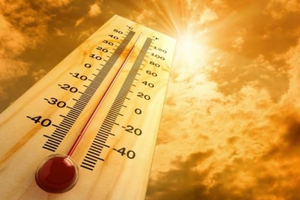
Albania was hit by temperatures significantly higher than ...

For the first time, Pogradec welcomed the Inter-Lake Chess...

US Secretary of State Marco Rubio arrived in Manila on Jul...

In the space of a few days, Ukrainian President Volodymyr ...

The spokesman for the Iranian Foreign Ministry warned Bulg...
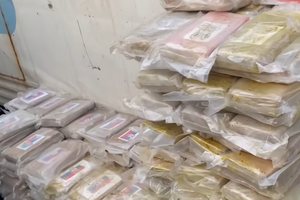
Autoritetet italiane sekuestruan pako me afër 800 kilogram...

At a time when industrial products are increasingly taking...

Trust among people is not just a three-syllable word. It c...

Master of humor Todi Llupi has passed away at the age of 7...

The ninth edition of "MIK Festival" kicked off with one of...

Businesses will no longer be required to simply register t...

Despite economic growth and income in recent years, Albani...
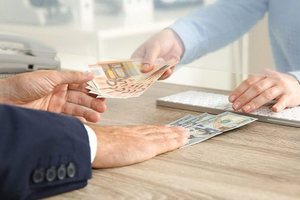
This Wednesday, one US dollar is bought for 81.4 lek and s...

Construction company licenses will have a validity period ...