


Fire at the waste field in Kruja/ Toxic smoke covers the area
The waste field in Kruja has been engulfed in flames since...

The waste field in Kruja has been engulfed in flames since...

The European Commission has published its spring forecasts for the economies of European countries, both EU members and non-members, including Albania.
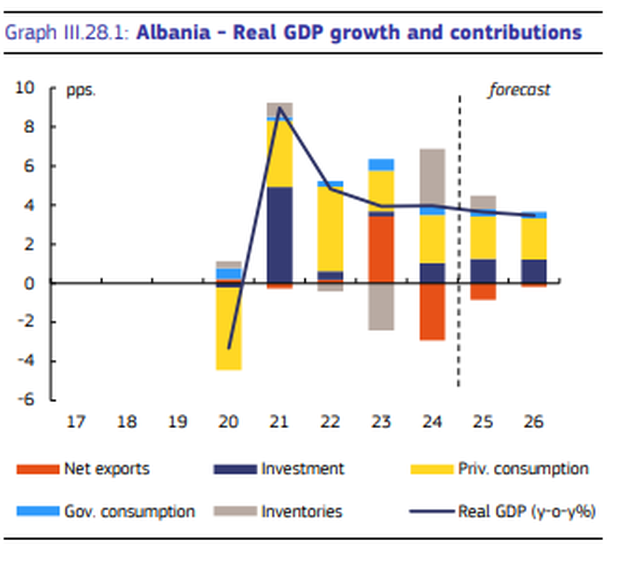
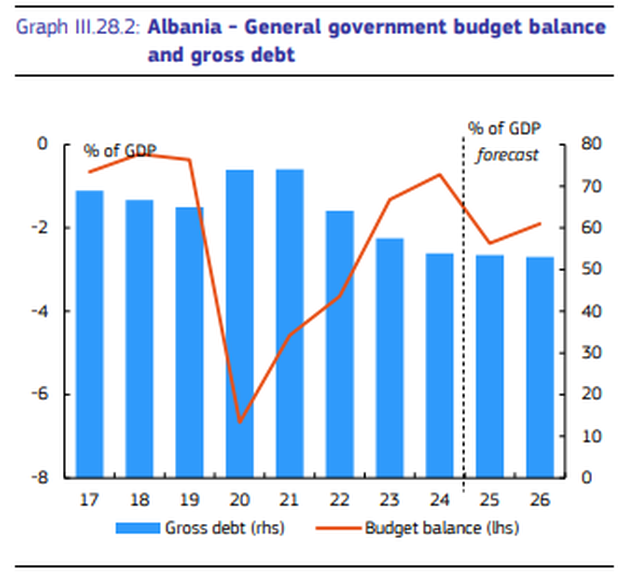
The report starts with data that Albania’s economy is expected to grow by 3.6% in 2025 and 3.5% in 2026, driven by domestic demand. Supported by tourism, services exports are expected to continue to expand, while goods exports are expected to recover somewhat after two years of significant contraction. After a sharp decline in 2024, inflation is expected to gradually return to the 3% target next year. The fiscal deficit is expected to widen before falling below 2% of GDP in 2026. The public debt-to-GDP ratio is projected to decline only gradually, driven by nominal GDP growth.
Economic activity will remain strong
Albania’s economic growth remained strong at 4% in 2024, driven by strong domestic demand, good tourism performance, and sustained construction activity. Household consumption growth was supported by rising real wages amid declining inflation and accelerating credit growth. Public consumption growth increased thanks to the second phase of the public wage reform. Job creation in the services sector supported employment growth. Services exports expanded, but goods exports declined sharply due to an unfavorable external environment and the appreciation of the lek.
Similar to 2023, most economic sectors recorded positive production growth, but agriculture and industry contracted.
In 2025-2026, GDP growth is projected to moderate compared to previous years, but remain strong at 3.6% and 3.5% respectively. Public consumption growth is projected to slow as the impact of the public wage reform fades, while private consumption, supported by real wage growth and improvements in the labor market, is expected to remain strong over the forecast horizon. Investment growth is supported by favorable financing conditions and the implementation of the Reform Agenda under the EU Reform and Growth Programme.
On the external side, services exports are expected to continue to expand, but the growth in tourist arrivals is expected to moderate from the double-digit growth rates observed in previous years. After reaching a low in 2024, goods exports are projected to recover somewhat, as the goods sector undergoes structural changes and the effect of currency appreciation fades. The current account deficit is expected to widen slightly from its historical low recorded in 2023, but remains well below its long-term average, indicating structural improvements driven by the growth in tourism.

This outlook is subject to downside risks, related to changes in exchange rates and interest rates and growing shortages of skilled labor exacerbated by emigration. As a small and open economy, Albania is exposed to external risks related to the economic impact of tariffs on its main trading partners in the EU, such as Italy. Furthermore, global uncertainty and geopolitical risks could affect foreign direct investment flows.
The rapid decline in inflation in 2024 is expected to be followed by an increase
Inflation fell from 3.4% in January 2024, the highest level of the year, to 2.1% in December, leading to an average annual inflation rate of 2.2%, down from 4.8% a year earlier. This decline was driven mainly by lower food and oil prices, along with the stable appreciation of the lek.
Headline inflation excluding food and energy also fell in 2024. In response, the Bank of Albania implemented two policy interest rate cuts in 2024, reducing it from 3.25% to 2.75%.
Average annual inflation is projected to rise in 2025, supported by higher imported inflation, and reach the central bank's target of 3% in 2026./CNA

Applications by Albanian citizens for temporary protection...

Today, in the foreign exchange market, one US dollar will ...
The country's economy is growing faster than the number of...

Today, in the foreign exchange market, one US dollar will ...
With the Dollar's Fall, Europeans Have an Opportunity, The...

Today, in the foreign exchange market, one US dollar will ...
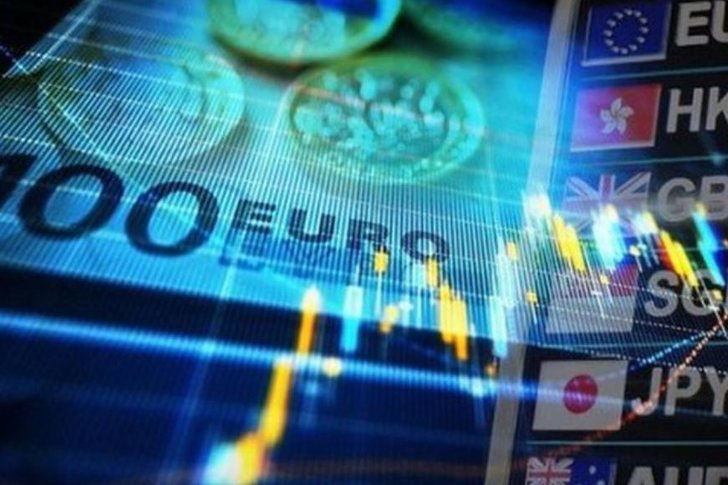
Today, in the foreign exchange market, one US dollar will ...
Today, in the foreign exchange market, one US dollar will ...

Today, in the foreign exchange market, one US dollar will ...
Today, in the foreign exchange market, one US dollar will ...
Today, in the foreign exchange market, one US dollar will ...
Today, in the foreign exchange market, one US dollar will ...
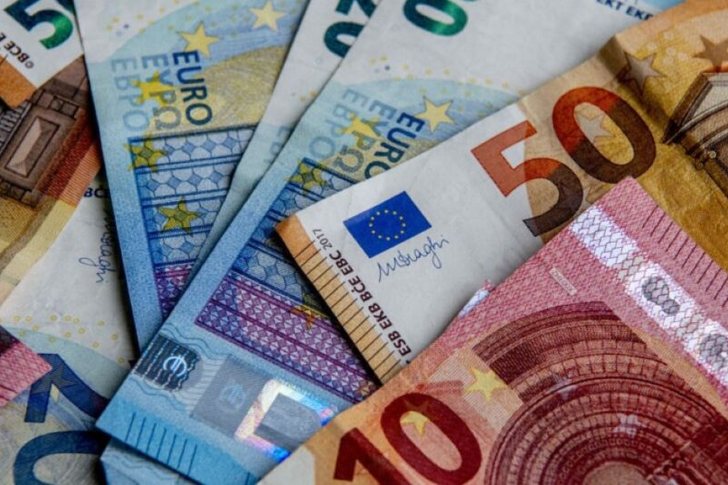
The growth of bank deposits in Euro has slowed in the firs...

Coffee, a favorite habit of Albanians, is in danger of bec...
Today, in the foreign exchange market, one US dollar will ...

The coverage of bank loans with collateral increased furth...

Prices in April have increased beyond the seasonal trend, ...
Today, in the foreign exchange market, one US dollar will ...
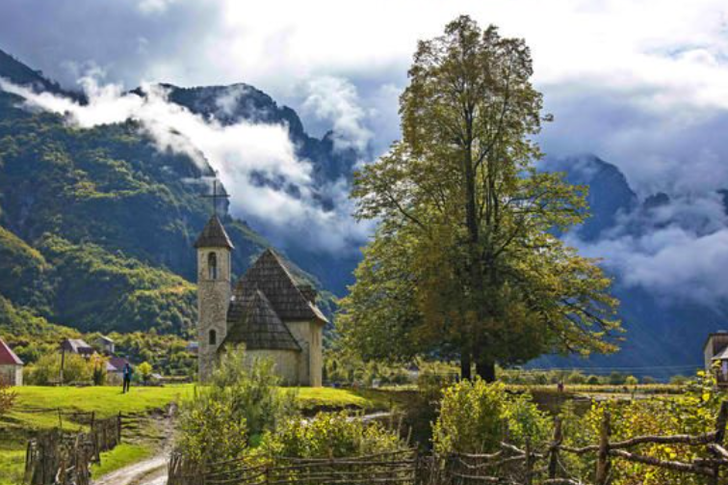
Albanians seem to be increasingly preferring nature to rel...
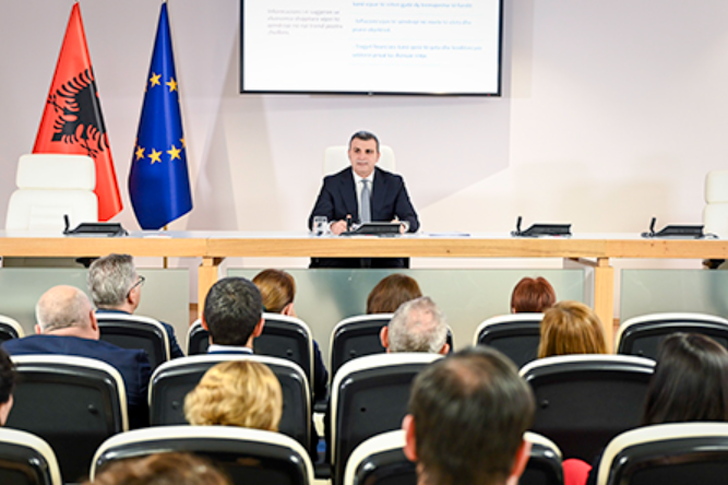
The Bank of Albania has limited the credit that citizens c...

CNA has launched another investigation that could lead to ...

Irfan Hysenbelliu is a businessman that we call "Irfan the...

In March 2026, CNA launched another investigation centered...
The arrested mayor of Tirana, Erion Veliaj, with 13 charge...

The Special Board of Appeal (KPA) decided this Monday ...

The KPA vetting decided this Thursday to dismiss the p...

Suela Salavaçi, a prosecutor in the Prosecutor's Offic...

The Special Board of Appeal reinstated the prosecutor ...

A road accident occurred this evening on Nikolla Zoraqi St...

Three people were shot and wounded in Elbasan last night b...

A serious incident occurred this Tuesday in the Yrshek are...

An accident occurred this Tuesday on "Dituria" street in K...

This Wednesday, our country will be under the influence of...
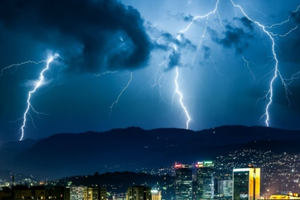
All of Southern Europe will face changing weather conditio...
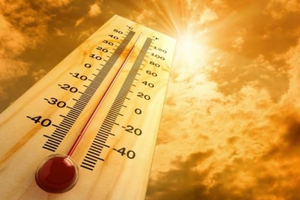
Albania was hit by temperatures significantly higher than ...

For the first time, Pogradec welcomed the Inter-Lake Chess...
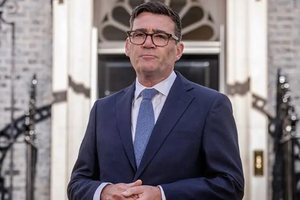
Prime Minister Andy Burnham has announced that most bus fa...

France's parliament has passed a law to ban social media f...

US Secretary of State Marco Rubio arrived in Manila on Jul...

In the space of a few days, Ukrainian President Volodymyr ...

At a time when industrial products are increasingly taking...

Trust among people is not just a three-syllable word. It c...

Master of humor Todi Llupi has passed away at the age of 7...

The ninth edition of "MIK Festival" kicked off with one of...

Businesses will no longer be required to simply register t...

Despite economic growth and income in recent years, Albani...

This Wednesday, one US dollar is bought for 81.4 lek and s...

Construction company licenses will have a validity period ...