

Foreign exchange rate, May 18, 2025
Today, in the foreign exchange market, one US dollar will ...


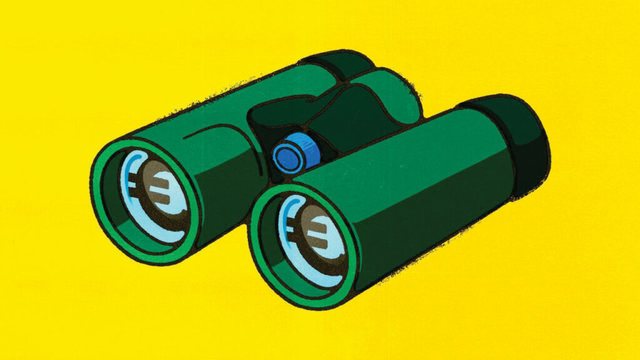
With the Dollar's Fall, Europeans Have an Opportunity, The Economist writes
Europe's first reserve coin was the tetradrachm, which featured an owl. The symbol of wisdom was intended to inspire confidence in the rulers of ancient Athens.
This bird still appears today on the Greek version of the €1 coin.
The tetradrachm is not only known for this among modern economists. As Barry Eichengreen of the University of California, Berkeley, points out, throughout history, every major currency has belonged to a republic or democracy.
And Athens was a democracy. Limiting the power of the most powerful people through popular vote promises a degree of stability, which, along with a large economy and military power, is a key ingredient for any currency.
The lack of such stability in America today is leading investors and politicians to question the role of the Dollar as the world's reserve currency.
In these times of difficulty for the Dollar, can the Euro rise to the occasion? Christine Lagarde, president of the European Central Bank (ECB), and Paschal Donohoe, head of the Eurogroup, have recently spoken about ways to increase the currency's international role.
The euro is not yet ready to replace the dollar. But it could play an increasingly important role. And if this window of opportunity is well-settled, Europe could benefit from changes in the global financial order.
Since its birth in 1999, the euro has been a contender for global status. In the wake of the 2007-09 financial crisis, European officials had hoped that over time, the currency could rival the dollar.
Then came the Euro crisis of the 2010s. The ECB was not designed to be a lender of last resort, which increased the risk of government bond sales.
Europe's banking system was divided along national lines and prone to crises, as a result of the weak link between shaky sovereign debts and even shakier financial institutions.
Capital markets were too small to compensate for such risk. The eurozone provided few safe assets for those looking to “park” money: bond issuers were either too frugal (as in the case of Germany) or lacked credibility (as in the case of Italy and Spain).
The common debt, backed by the entire bloc, was barely viable. The bleak prospects for economic growth then forced short- and long-term yields below zero.
European assets offered low returns, so there was little demand for the Euro and there was no question of an international role for the currency.
Replacing tiles
Today, the Euro is in second place, but far behind the Dollar, accounting for one-fifth of global central bank reserves, compared to three-fifths for the greenback. Similar figures are also seen for the issuance of foreign currency bonds.
Over the past decade, as the world has slowly moved away from the dollar, the euro has struggled to gain ground. However, some European officials now believe that could change, for four reasons.
The first is that the financial architecture of the Eurozone has become more secure. The ECB has now assumed the role of lender of last resort, although not in theory. This began with the bank’s response to the euro crisis. At the time, the institution was led by Mario Draghi.
During the Covid-19 pandemic, the bank set up a bond-buying program, with a budget of more than 1.8 trillion euros ($2.1 trillion). When sovereign bond yields widened too much during the 2022 inflationary uptick, monetary policymakers set up an unlimited bond-buying scheme to prevent such spreads from triggering future crises.
Investors have also understood that the European Union will support governments in difficulty and will do so in a generous manner.
During the pandemic, the bloc created a recovery plan worth 807 billion euros, financed by joint EU debt, to help countries in difficulty.
Furthermore, the ECB is overseeing Europe's 114 largest banks, which together hold 82% of the continent's total banking assets.
Investment in Europe has also become more direct, a second reason for optimism. Europe's pandemic recovery fund created a lot of common debt, and safe European assets. Germany is ready to start spending huge sums, through a continent-wide deficit-financed defense spending.
The third reason is that Europe's institutions now look more attractive, at least when compared to America's. Far-right parties are popular and are gaining ground in countries like Germany and France.
One is in power in Italy. However, at the same time, the Euro is the common currency of 20 sovereign states and has a highly independent central bank that oversees it. Members must unanimously agree on any changes to the way the currency is governed.
Moreover, sanctions against other countries would require the consent of the 27 EU members. The rule of law is essential in the EU. The balance and checks of power are not in question.
The prevailing opinion in the bloc is that the EU should be as open as possible to foreign trade and investment.
The ECB has created a framework for providing liquidity in euros to countries outside the eurozone, which could be more attractive to crisis-hit countries than the US Federal Reserve's rules if Trump continues with his current policy. No one wants to give the US president more influence.
Old continent, new tricks
There is one final reason for optimism: the state of international trade. As America withdraws from global trade, Europe will play a more important role.
Goods and services invoiced in Euro will create secondary markets in this currency, such as for trade financing, insurance, and hedging derivatives for interest rates and currencies.
Although over-the-counter currency derivatives continue to be dominated by the Dollar, Euro interest rate derivatives have recently overtaken those in the greenback.
New trade links will also lead to the creation of credit accounts and deposits in Euro, all over the world.
These, in turn, will increase the demand for Euros and subsequently for central bank reserves in Euros, as any lender of last resort must maintain reserve currencies held by domestic financial institutions.
Europe has the chance to take the lead in a new liberal trade order, which would create opportunities to change the financial system. European Commission President Ursula von der Leyen notes that “many countries around the world want to work with us.”
According to ECB research, in the 2000s, the eurozone's eastern neighbors began to bill trade in euros because of closer trade ties with the bloc; now the same phenomenon may spread elsewhere. Capital usually follows geopolitical alignment.
Research by Elisabeth Kempf and co-authors at the University of Chicago finds that asset managers and banks invest less in countries led by governments with political leanings different from their own.
However, these opportunities will not fall into the laps of Europeans. Difficult reforms will be needed.
First, countries with high debt, particularly France and Italy, should boost economic growth in order to achieve fiscal sustainability, rather than increasing their stock of investable bonds simply to keep their budgets afloat.
Germany, the Netherlands and the Scandinavian countries face the opposite task: they must use fiscal space for investment in order to create safe assets.
Economic growth across the EU would help boost Euro assets, including government bonds, and make them even more attractive.
Europe also needs bigger and deeper capital markets to give investors more assets. Policymakers have so far focused on easy profits as they try to link fragmented national markets together.
They are dealing more with issues like the asset insurance process, rather than more controversial topics like the harmonization of bankruptcy laws and business regulation.
The ECB's plans to connect third countries to its internal payment system need to move forward more quickly. The creation of a digital euro would also help here.
European officials want to make the continent less dependent on America and China. A more international Euro would lower borrowing costs for national governments, which would be extremely useful at a time of rising defense spending.
For now, few European politicians have publicly expressed such ambitions, because they know it would provoke the wrath of the Trump administration. But that doesn't matter.
International finance operates according to certain rules and does not need grand speeches. Just ask the Athenians./ Monitor Magazine

Today, in the foreign exchange market, one US dollar will ...
Today, in the foreign exchange market, one US dollar will ...
Today, in the foreign exchange market, one US dollar will ...

Today, in the foreign exchange market, one US dollar will ...
Today, in the foreign exchange market, one US dollar will ...
Today, in the foreign exchange market, one US dollar will ...
Today, in the foreign exchange market, one US dollar will ...
The growth of bank deposits in Euro has slowed in the firs...
Coffee, a favorite habit of Albanians, is in danger of bec...
Today, in the foreign exchange market, one US dollar will ...
The coverage of bank loans with collateral increased furth...

Prices in April have increased beyond the seasonal trend, ...
Today, in the foreign exchange market, one US dollar will ...
Albanians seem to be increasingly preferring nature to rel...
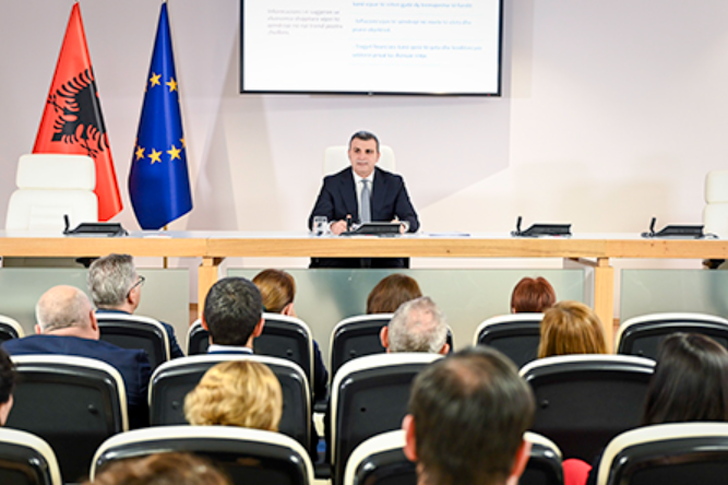
The Bank of Albania has limited the credit that citizens c...
Today, in the foreign exchange market, one US dollar will ...
Today, in the foreign exchange market, one US dollar will ...

Today, in the foreign exchange market, one US dollar will ...
The country's economy is expanding at a pace above the ave...
Today, in the foreign exchange market, one US dollar will ...

CNA has launched another investigation that could lead to ...

Irfan Hysenbelliu is a businessman that we call "Irfan the...

In March 2026, CNA launched another investigation centered...
The arrested mayor of Tirana, Erion Veliaj, with 13 charge...

The Special Board of Appeal (KPA) decided this Monday ...

The KPA vetting decided this Thursday to dismiss the p...

Suela Salavaçi, a prosecutor in the Prosecutor's Offic...

The Special Board of Appeal reinstated the prosecutor ...

A road accident occurred this evening on Nikolla Zoraqi St...

Three people were shot and wounded in Elbasan last night b...

A serious incident occurred this Tuesday in the Yrshek are...

An accident occurred this Tuesday on "Dituria" street in K...

This Wednesday, our country will be under the influence of...

All of Southern Europe will face changing weather conditio...

Albania was hit by temperatures significantly higher than ...

For the first time, Pogradec welcomed the Inter-Lake Chess...

US Secretary of State Marco Rubio arrived in Manila on Jul...
In the space of a few days, Ukrainian President Volodymyr ...

The spokesman for the Iranian Foreign Ministry warned Bulg...

Autoritetet italiane sekuestruan pako me afër 800 kilogram...

At a time when industrial products are increasingly taking...

Trust among people is not just a three-syllable word. It c...

Master of humor Todi Llupi has passed away at the age of 7...

The ninth edition of "MIK Festival" kicked off with one of...

Businesses will no longer be required to simply register t...

Despite economic growth and income in recent years, Albani...
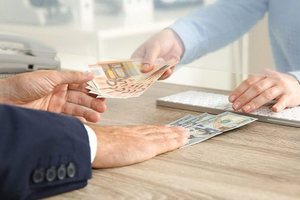
This Wednesday, one US dollar is bought for 81.4 lek and s...

Construction company licenses will have a validity period ...