


"Berisha called me 1 hour before the candidacy"/ Korreshi reveals the behind-the-scenes of the DP elections
Democratic Party MP, Saimir Korreshi, shared today some un...

Democratic Party MP, Saimir Korreshi, shared today some un...


From January 1, 2024, the implementation of the new fiscal package begins with the increase in tobacco and cigarette excise and the tax on income from professions.
From 2024, import VAT will not be paid to everyone in order to stimulate the increase in the number of livestock and exemption from VAT for beehives.
From January 1, 2024, the effects also begin in the changes to the law "On tax procedures" that aims to toughen the fines for businesses that do not meet the obligations to pay installments of corporate profit tax and personal income tax, and it goes to 500 thousand Lek fines for corporate income tax payers who do not issue a tax invoice.
About 29 thousand self-employed businesses will pay the progressive tax from 15 to 23%. The revenues programmed in the budget from this category are estimated at about 3 billion ALL according to the 2024 draft budget report. https://www.monitor.al/nis-sot-tatimi-13-23-per-profesionet-e-lira- 29-thousand-businesses-will-pay-3-billion-lek-more/
The Law "On Income Tax" stipulates that freelancers with annual income up to 14,000,000 will be taxed on the profit 15%, after deducting expenses and minimum wage income from the total annual income. For the free professions defined according to the list of the decision "On the implementing provisions of the law no. 29/2023, "On income tax" with annual income up to 14 million ALL per year, the deductible fixed expenses not declared in accounting are recognized in the amount of 30%.
The other category of businesses that are included in the annual income over ALL 14 million have the obligation to declare their annual expenses to the tax administration, unlike the first category, which are recognized as fixed or unaccounted expenses at the rate of 30%. After deducting the expenses declared in the tax administration, the profit of this category will be taxed at the tax rate of 23%.
MFE calculates that up to 90% of all businesses (divided according to 3 categories, such as: self-employed, natural persons and traders) are included in the band of annual income up to 14 million ALL per year that will be taxed at a rate of 15%.
From January 1, 2024, the effects of the amendments to the law "On Excises" begin, limiting the increase in excise duties for fuel and alcoholic beverages to the level of 1.5%.
The changes foresee that the excise tax will be indexed every two years, to the extent of the official rate of inflation announced by INSTAT, but not more than 1.5%, with the exception of tobacco and its by-products, for which the excise tax will applied according to the calendar defined in Appendix no. 1, which is attached to the law. According to the report of the draft law, this level of indexation will generate 0.6 billion ALL of additional revenue from excise duty.
In January 2022, the automatic indexation of excise duties with the official rate of inflation announced by INSTAT for the previous two years was applied, in order to reflect the increase in the consumer price index of goods above the level of excise duty applied, as and prevention of erosion in excises.
The biennial legal indexation of excise duties was established, based on the average inflation level resulting in the last 10 years, which varied at the level of about 1.7% per year.
In the relation of the 2024 draft budget, it was emphasized that according to this forecast, excise duty levels for excisable products would increase by an average of 3-3.4%, every two years.
The rapid increase in inflation to "abnormal" levels during the last two or three years, as a phenomenon not only Albanian, but global, which was first triggered by the Covid-19 pandemic and then by the war in Ukraine, makes it necessary to review growth scheme. Both of these events damaged supply chains for several vital products, such as energy, oil and food.
This increase in inflation, with an average annual rate of 7.4% at the end of 2022 and 5.2% for the period January-August 2023, makes it necessary to limit the increase in excise duties due to inflation and the proposal of this draft law, with the aim of limiting of indexation of excise duties within the limits of a two-year accumulated inflation rate that does not exceed 1.5%.
Otherwise, if this restriction is not made, the excise duty level from January 2024 must increase +11.5% and if in the following years inflation will result in above-normal levels, the indexation will affect the increase in the prices of goods, such as fuels, alcoholic beverages, beer, wine, etc.
For tobacco and cigarettes, for the period 2022-2026, an increase is applied every year, according to a certain schedule, provided in the excise law. The increase in the excise tax on cigarettes, approved in 2022 according to the calendar for the period 2022-2026, has an effect on the increase of income in the amount of 0.75 billion ALL.
From January 1, 2024, the tax rate for "cigars and cigarillos", "cigarettes containing tobacco", "cigars, cigarillos and cigarettes with tobacco substitutes" and "for other processed tobacco and rolling tobacco substitutes" from 7,000 lek per kg will to be 7,250 ALL per kg.
While for "tobacco processed with tobacco leaves cultivated in Albania" the excise rate from 3,000 ALL per kg will be 3,250 ALL per kg. For products containing liquid nicotine, the excise duty increases by 2 Lek per ml and reaches the level of 16 Lek per ml. For heated tobacco products and for bottles and clays, the excise duty reaches from 7,250 ALL per kg to 7,750 ALL per kg.
The fiscal package also includes some exemptions from VAT for the agriculture and livestock sector. Based on the need to increase the number of cattle in the country, the exemption from VAT on the import of pregnant cattle according to a specific customs code was approved.
Similarly, the exemption from VAT of beehives was approved, which will stimulate the expansion of this sector, as well as the exemption from VAT of the import of insects that fight insects, which are substitutes for insecticides used in agriculture. The effect of these measures in support of agriculture is about -150 million ALL per year.
From January 1, 2024, the Ministry of Finance and Economy proposed an increase of 0.5 Lek in the carbon tax on the heavy industry of iron, cement or ferro-chrome from 3 Lek per kilogram, which is currently to reach 15.3 Lek until 2030.
After the proposals of the deputies of the Parliamentary Economy Committee, it was approved that the carbon tax increase will start from July 1, 2026 with 0.5 Lek per kg, reaching the value of 4.5 Lek. It will further reach 6.5 Lek in 2027, 9 Lek in 2028, and 12 Lek in 2029 and 15.3 Lek per kg in 2030.
From the changes that will be implemented from July 1, 2026, it is anticipated that 140 million additional revenues will be generated in the budget./ Monitor.al


Today, December 31, 2023, the US dollar is bought at 92.8 ...

Nga 1 janari do të nisë zbatimi i tatimit progresiv me...

The end of the year marks a time when grocery shopping...

From January 1, 2024, the self-employed and natural pe...
Sot më 30 dhjetor 2023, dollari amerikan blihet me 92....
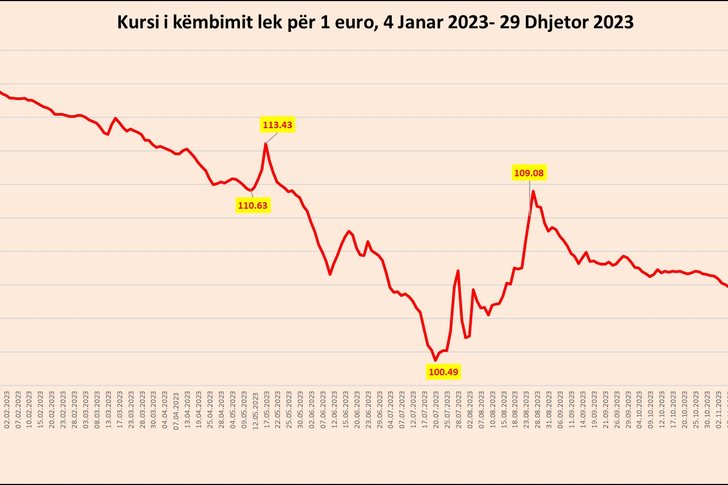
The lek has closed the year 2023 in a significant appr...

Mbi 48 për qind e të punësuarve me pagë në vendin tonë...

Today, on December 29, 2023, the US dollar is bought a...

Lending to the economy increased again during November. Ac...

Production deficits and rising costs are increasingly ...
Today, on December 28, 2023, the US dollar is bought a...

Hekurudhat janë mjeti më ekonomik dhe më i lirë i transpor...

According to data from the Bank of Albania, Dutch direct i...

Today, on December 27, 2023, the US dollar is bought at 93...
Today, on December 26, 2023, the US dollar is bought a...

In September of this year, the Parliament of Albania appro...

The growth of the tourism sector has directly transmitted ...

Today, December 25, 2023, the US dollar is bought at 93.3 ...
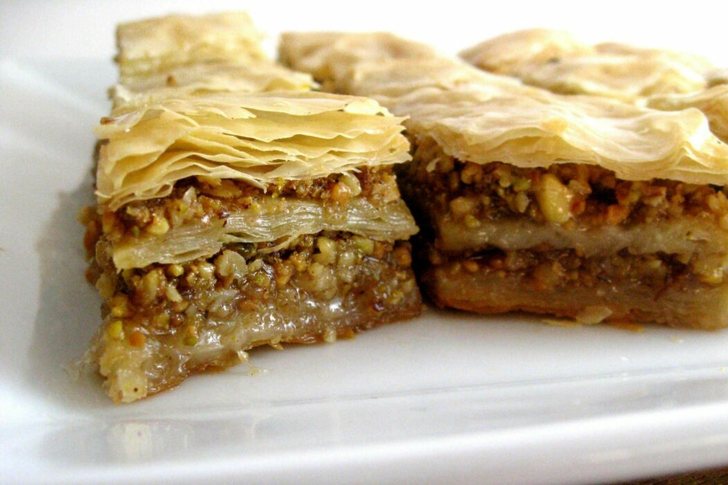
On the eve of the Christmas and New Year holidays, the con...
Today, December 24, 2023, the US dollar is bought at 9...

CNA has launched another investigation that could lead to ...

Irfan Hysenbelliu is a businessman that we call "Irfan the...

In March 2026, CNA launched another investigation centered...
The arrested mayor of Tirana, Erion Veliaj, with 13 charge...

The Special Board of Appeal (KPA) decided this Monday ...

The KPA vetting decided this Thursday to dismiss the p...

Suela Salavaçi, a prosecutor in the Prosecutor's Offic...

The Special Board of Appeal reinstated the prosecutor ...

This Wednesday, around 4:00 PM, a serious accident occurre...

Tirana Police have shared details regarding the accident t...

New details have emerged regarding the accident that occur...

New details have emerged from the serious accident that oc...
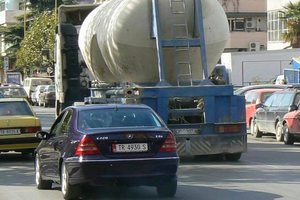
A serious accident that occurred this Wednesday with the c...

The Institute of Geosciences has shared a forecast for wea...

Rising energy and fertilizer prices are expected to contin...

Over 18,000 foreign citizens from 140 countries have appli...

US President Donald Trump has issued another warning to Ir...

Prime Minister Andy Burnham has announced that most bus fa...

France's parliament has passed a law to ban social media f...

US Secretary of State Marco Rubio arrived in Manila on Jul...

At a time when industrial products are increasingly taking...

Trust among people is not just a three-syllable word. It c...

Master of humor Todi Llupi has passed away at the age of 7...

The ninth edition of "MIK Festival" kicked off with one of...

Businesses will no longer be required to simply register t...

Despite economic growth and income in recent years, Albani...

This Wednesday, one US dollar is bought for 81.4 lek and s...

Construction company licenses will have a validity period ...