


Hita's absence from the commission irritates the opposition: If he is not capable, he should leave
The Head of the State Police, Skënder Hita, did not appear...

The Head of the State Police, Skënder Hita, did not appear...


The working age population of 15-64 years has been significantly reduced in the period between the two censuses 2011-2023 according to INSTAT data.
Preliminary data from the results of the 2023 census show that the working age population was 1,555,080 people, from 1,903,987 with a decrease of 18.3% compared to the 2011 census data.
The largest decline in the working-age population was seen in the 15 to 19-year-old age group, which shrank by 46.8%, and the 20-24-year-old age group, which was reduced by 41%.
The age groups with a strong decline in the working age population were 25-29 years old with about 25%, 40-44 years old with 25.6% and 45-49 years old with 25.4%.
In contrast, the working-age population on the verge of retirement 60-64 years old has increased by 48.8% and the age group 45-59 years old, increased by 9.6%
As can be seen, the working-age population in our country has not only been significantly reduced over a decade, but has deteriorated in structure, as there is an increase in people on the verge of retirement and a significant decrease in young age groups.
Businesses in all sectors in recent years have considered the lack of employees a serious problem, for the solution of which they have neither experience nor means.
The Albanian economy has never faced this phenomenon before. This is the first decade that the economy and businesses have had to operate with the greatest unknown, the lack of employees.
In 2011, the working-age population (15-64 years) accounted for 68% of the total population, and in 2023, it accounted for 64% of it.
The reduction of the working-age population will reduce the indicators of the degree of laziness in Albania and will significantly change the indicators of employment.
At the end of 2023, 1,243,085 people aged 15-64 were officially employed, accounting for 80% of the working-age population.
The transition to an older population is also seen in dependency ratios. The youth dependency ratio decreased to 24.0% from 30.4% estimated in the 2011 Census, and the elderly dependency ratio increased to 30.4% from 16.7% in 2011.
Analyzed at the district level, Kukësi and Gjirokastra hold opposite positions in terms of dependency ratios. Kukësi has the highest youth dependency ratio (31.8%) and the lowest elderly dependency ratio (19.9%).
Whereas, Gjirokastra has the lowest youth dependency ratio (19.0%) and the highest elderly dependency ratio (46.1%). The average age of the population is 42.5 years, from 35.3 years in the 2011 Census./Monitor

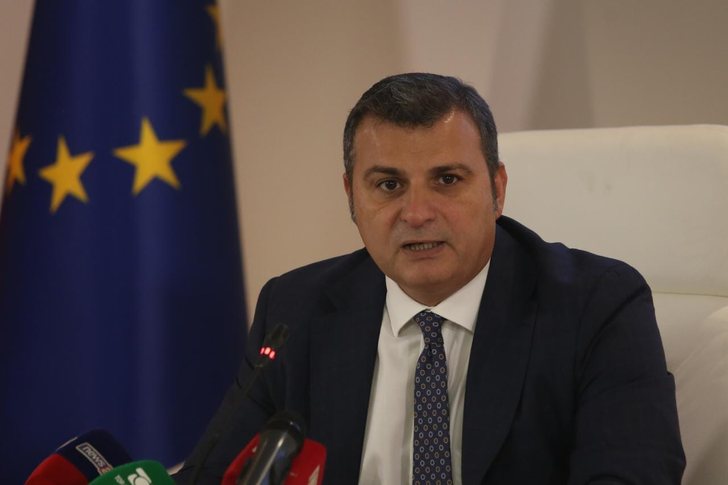
The governor of the Bank of Albania, Gent Sejko, infor...

Today, on July 3, 2024, in the foreign exchange market...
Today, on July 2, 2024, in the foreign exchange market...

The population decline is expected to automatically im...

While the total number of businesses has increased las...
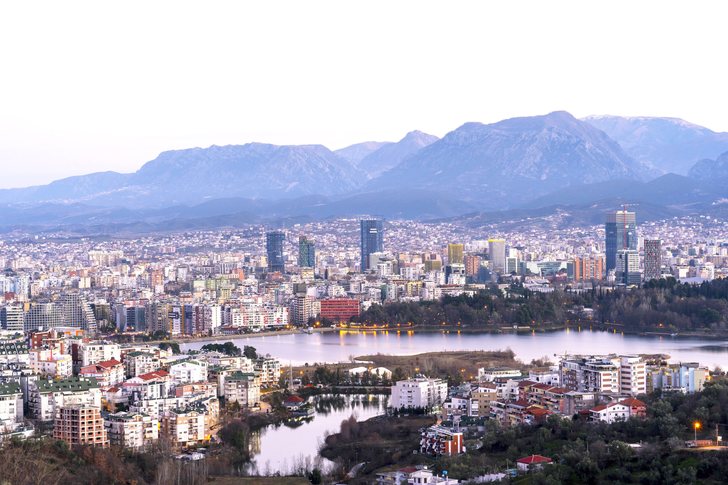
The population shrank by about 400,000 between 2011 an...

Albania has remained in place to reach Europe for the ...
Today, on July 1, 2024, in the foreign exchange market...

Today, on June 30, 2024, in the foreign exchange marke...
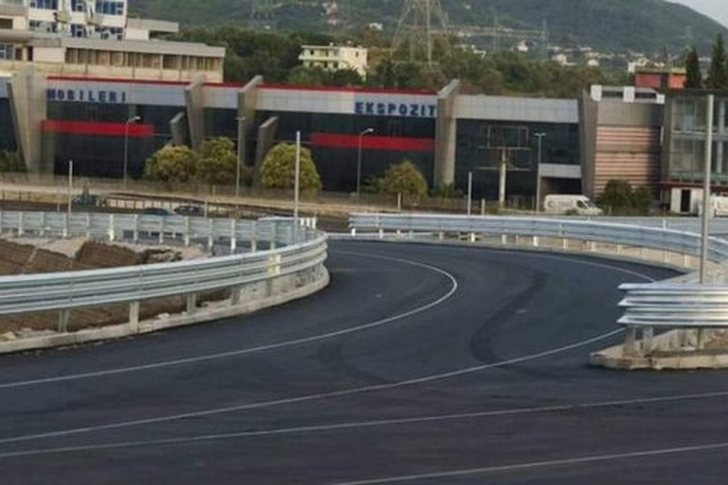
The Thumane-Kashar category A highway opens on Sunday,...

Today, on June 29, 2024, in the foreign exchange marke...

Year after year, Albania is climbing among the countri...

Today, on June 28, 2024, in the foreign exchange marke...

Today, on June 27, 2024, in the foreign exchange marke...

Turkey was the main foreign investor in Albania for th...

Today, on June 25, 2024, in the foreign exchange marke...

Today, on June 25, 2024, in the foreign exchange marke...
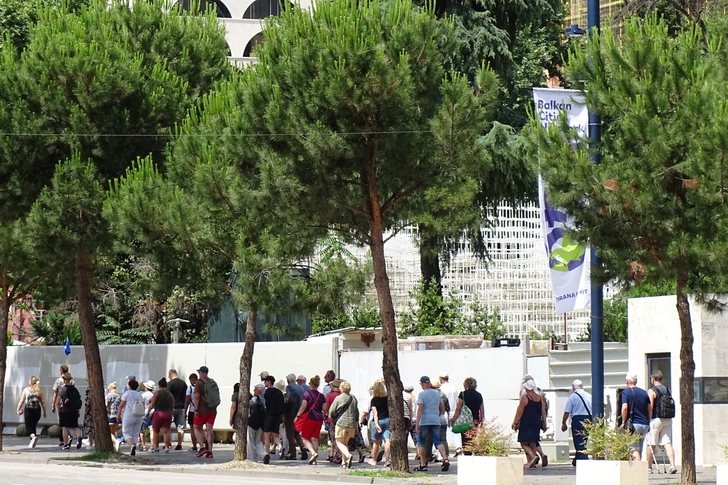
The tourism boom continued even in the fifth month of ...

Today, on June 24, 2024, in the foreign exchange marke...
Today, on June 23, 2024, in the foreign exchange market, t...

CNA has launched another investigation that could lead to ...

Irfan Hysenbelliu is a businessman that we call "Irfan the...

In March 2026, CNA launched another investigation centered...
The arrested mayor of Tirana, Erion Veliaj, with 13 charge...

The Special Board of Appeal (KPA) decided this Monday ...

The KPA vetting decided this Thursday to dismiss the p...

Suela Salavaçi, a prosecutor in the Prosecutor's Offic...

The Special Board of Appeal reinstated the prosecutor ...

A serious accident has occurred on the Lezhë-Shëngjin axis...

A serious incident has occurred in Morina, Kukes. Citizen...
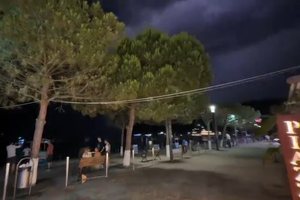
The bad weather that swept the country on Tuesday evening ...

A road accident occurred this evening on Nikolla Zoraqi St...

This Wednesday, our country will be under the influence of...

All of Southern Europe will face changing weather conditio...

Albania was hit by temperatures significantly higher than ...

For the first time, Pogradec welcomed the Inter-Lake Chess...

Prime Minister Andy Burnham has announced that most bus fa...

France's parliament has passed a law to ban social media f...

US Secretary of State Marco Rubio arrived in Manila on Jul...

In the space of a few days, Ukrainian President Volodymyr ...

At a time when industrial products are increasingly taking...

Trust among people is not just a three-syllable word. It c...

Master of humor Todi Llupi has passed away at the age of 7...

The ninth edition of "MIK Festival" kicked off with one of...

Businesses will no longer be required to simply register t...

Despite economic growth and income in recent years, Albani...

This Wednesday, one US dollar is bought for 81.4 lek and s...

Construction company licenses will have a validity period ...