



The IMF, in its statement at the end of its autumn mission, assesses Albania's economic growth as among the highest in Europe, but does not say that Albania's economic growth is incomparable with the economies of European Union member states, especially those of Germany, France, Italy, etc.
This conclusion is rejected by the IMF itself when it states that this is a short-term perspective, as Albania faces structural challenges and major reforms to achieve EU standards.
At the same time, the IMF emphasizes that the productivity of the Albanian economy is stagnant, as output per hour worked in Albania is below the EU average, and informality in the labor market and the number of young people not in employment, education or training are high.
Foreign investment is also discouraged by low levels of education and training, low investment in research and development, weak governance, and unfair competition.
The IMF further emphasizes that Gross Domestic Product (GDP) is projected to grow by 3.5 percent in 2025 and 3.6 percent in 2026, and this growth comes mainly from private consumption, including the construction sector.
Although the IMF does not say so, this growth in the conditions of the Albanian economy is modest and does not guarantee an increase in the well-being of citizens. This is also reinforced by the IMF's assessment of inflation.
It is projected to be 2.2 percent in 2025 and will increase to 3.5 percent in the second half of 2026, mainly as a result of informality in the labor market and rising wages.
The current account deficit or foreign exchange balance will also increase from 2.8 percent of GDP in 2025 to 3.5 percent of GDP as a result of increased imports. Thus, the strengthening of the lek also seems artificial and poses an increased risk to the Albanian economy.
The IMF estimates a reduction in public debt to 54 percent of GDP by the end of 2025 and to around 50 percent of GDP by 2030. However, the IMF does not estimate the impact of the artificial appreciation of the lek on debt reduction.
Exchange rates today are about 50 percent lower compared to 10 years ago, and the impact of their decline on the level of public debt is about 30%, since foreign debt accounts for more than 50 percent of total public debt.
Although the IMF does not highlight this fact, it calls for the continuation of debt management reforms, listing as increased risks the depreciation of the lek from the increase in the foreign exchange balance deficit and the relatively large financing needs estimated at an average of 13 percent of GDP for the period 2025–2030.
According to the IMF, Albania also faces pressures from increasing public spending on pensions and healthcare as a result of an aging population as well as the commitment in NATO to allocate 5 percent of GDP to defense spending.
On the other hand, economic sustainability and productivity growth require greater investments in education, training and climate adaptation. For this reason, the IMF urges the Government to cancel tax favors and exemptions, lower VAT exemption thresholds, cancel preferential regimes for the self-employed and improve tax administration.
But the IMF warns of the risk of "Fiscal Peace", which will undermine tax performance, weaken the credibility of fiscal audits, and reverse the achievements to date in modernizing tax administration.
The IMF also highlights the need to improve the quality of spending and fiscal transparency. This should include replacing non-essential budget programs with increased spending on education, health, and infrastructure.
Broad-based bonuses for pensions should be avoided, and replaced with social assistance programs. But the biggest fiscal risks according to the IMF come from Government loans to public entities such as KESh, OSHE, Ujësjellësa, etc., PPPs and Non-Budgetary Public Enterprises.
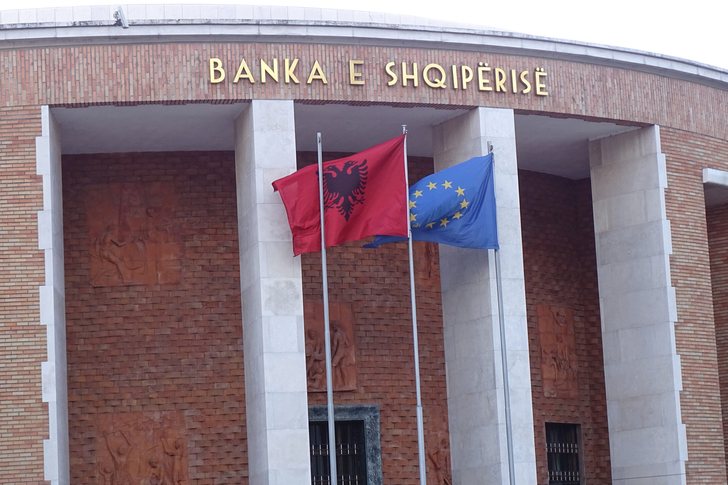
The IMF also points out that even the assessment of the real exchange rate of the lek is based on speculative financial flows that play only a modest role. Consequently, the BoA should allow greater exchange rate flexibility and intervene in the foreign exchange market only in rare cases.
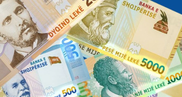
The banking system also needs to reduce exposure to large borrowers, unsecured foreign currency loans (17 percent of bank assets), and investments in government debt financing (28 percent of bank assets).
Other added risks to fiscal and financial stability, according to the IMF, are the rapid growth of real estate lending and the creation of the Albanian Development Bank./ CNA

The report on Albania, drafted by the International Moneta...
A report prepared for Albania by the International Monetar...
The Economy Committee has announced vacancies for 3 member...
This Thursday, one US dollar will be bought for 83.2 lek a...
The new fiscal package, which will bring changes to the VA...
Minister of Finance, Petrit Malaj, presented the draft bud...
European stocks showed mixed signals this Wednesday, somew...

Albania allocates much less funds from the public budget f...

The deduction of 48 thousand lek from the taxable income b...

This Wednesday, one US dollar will be bought for 82.8 lek ...
The voluntary private pension market continued to expand i...
Deputy Minister of Infrastructure and Energy, Besjan Kadiu...
Socialist Party MP, Ceno Klosi, at the meeting of the Natu...
The Albanian Development Fund announced this Monday the wi...
During 2024, public finance management was characterized b...
This Tuesday, one US dollar will be bought for 82.8 lek an...

Among the findings of the EU progress report on Albania, t...
According to the "Keydata" index data, made available to M...

The increase in budget revenues this year is overwhelmingl...
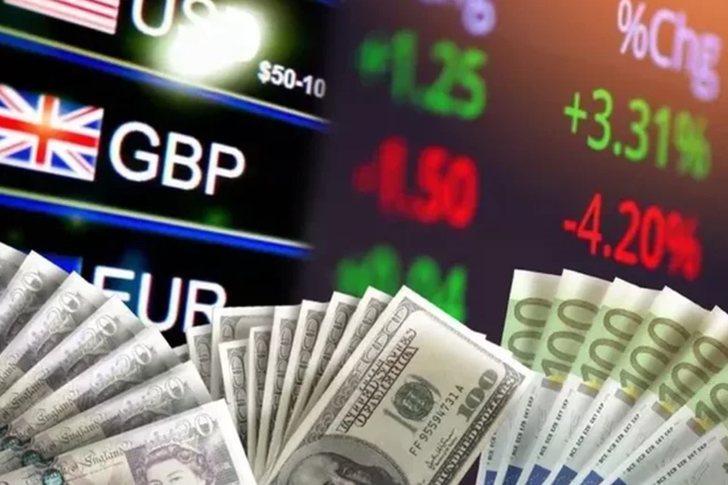
This Monday, one US dollar will be bought for 82.5 lek and...

CNA has launched another investigation that could lead to ...

Irfan Hysenbelliu is a businessman that we call "Irfan the...

In March 2026, CNA launched another investigation centered...
The arrested mayor of Tirana, Erion Veliaj, with 13 charge...

The Special Board of Appeal (KPA) decided this Monday ...

The KPA vetting decided this Thursday to dismiss the p...

Suela Salavaçi, a prosecutor in the Prosecutor's Offic...

The Special Board of Appeal reinstated the prosecutor ...
A road accident occurred this evening on Nikolla Zoraqi St...

Three people were shot and wounded in Elbasan last night b...
A serious incident occurred this Tuesday in the Yrshek are...

An accident occurred this Tuesday on "Dituria" street in K...
All of Southern Europe will face changing weather conditio...
Albania was hit by temperatures significantly higher than ...

For the first time, Pogradec welcomed the Inter-Lake Chess...
Albania has achieved a record for the employment of foreig...

US Secretary of State Marco Rubio arrived in Manila on Jul...
In the space of a few days, Ukrainian President Volodymyr ...
The spokesman for the Iranian Foreign Ministry warned Bulg...
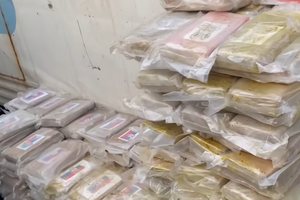
Autoritetet italiane sekuestruan pako me afër 800 kilogram...

At a time when industrial products are increasingly taking...

Trust among people is not just a three-syllable word. It c...

Master of humor Todi Llupi has passed away at the age of 7...

The ninth edition of "MIK Festival" kicked off with one of...
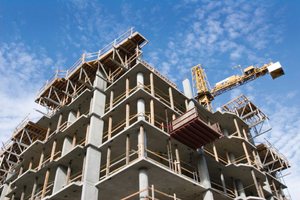
Construction company licenses will have a validity period ...
The Centralized Purchasing Operator recently opened a tend...
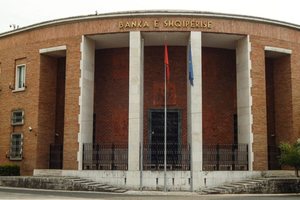
The new draft law "On the Bank of Albania" provides that t...
This Tuesday, one US dollar is bought for 81.2 lek and sol...