

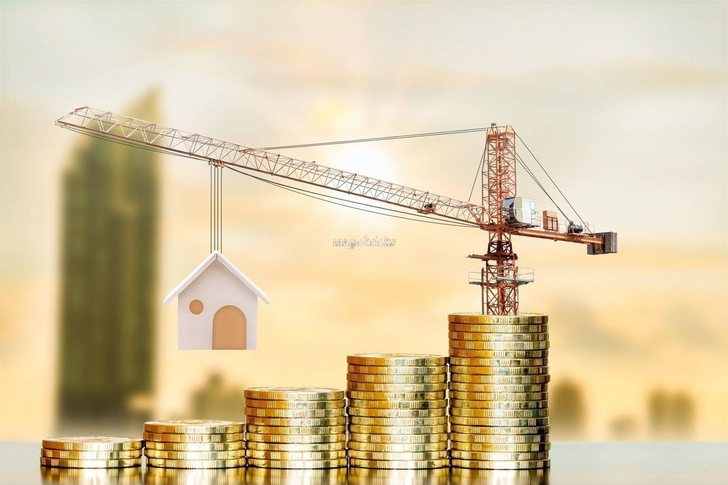
New construction loan reaches highest value in at least 8 years
Credit to the construction sector has returned to growth t...


Even after continuous increases, the minimum wage in Albania continues to remain among the lowest in Europe in nominal value, but still the last in terms of purchasing power, according to a recent ranking made by the European Institute of Statistics, Eurostat.
Although in the last ranking, Albania has surpassed North Macedonia, for the minimum wage in value, when it is ranked according to purchasing power, it again moves to the last place (see the graph according to purchasing power).
The graph published by Eurostat shows a relatively high difference when measured according to purchasing power standards (PPS) for the minimum wage in Albania, with Serbia, Montenegro and North Macedonia. Eurostat compares the minimum gross wages applicable on 1 July 2024, after adjusting them for price differences between countries.
This is done using purchasing power parity (PPP) for household final consumption expenditures. As might be expected, this adjustment reduces differences between countries.
The minimum wage measured according to purchasing power parity (PPP) in Albania is the lowest in Europe and among candidate countries with 556 PPS. The highest of the candidate countries is in Turkey, with 919 PPS, followed by Montenegro, Serbia, North Macedonia and finally, Albania.
According to the nominal salary in value, Albania ranks third with the lowest minimum salary in Europe, leaving North Macedonia behind. In Europe, the two countries with the lowest minimum wage are Moldova and Ukraine.

In Albania, the minimum wage has reached 40 thousand lek (about 400 euros) gross per month after the continuous increases made by the government in the last two years, in a feverish race to equalize wages with the region.
The presidency continues to be held by Serbia and Montenegro, which have not stayed in the country in the meantime. In Serbia and Montenegro, the minimum wage is about 35% higher than in Albania.
In both of these countries, the minimum wage has exceeded 500 euros/month. In Serbia, the minimum wage is 544 euros per month, while in Montenegro 532 euros per month.
In North Macedonia, the minimum wage is around 360 euros/month, but the latest update is at the end of 2021.
But, although the minimum wage in Albania is already higher in nominal value than in North Macedonia, with this wage you can buy less than in North Macedonia, due to more expensive prices.
An element that has increased the minimum wage in Albania is the fact that it is reported in euros and due to the devaluation of the latter, it is artificially higher. This artificial increase is neutralized by the other indicator, according to purchasing power parity, where Albania is again behind North Macedonia.
Eurostat clarified that for countries whose national currency is not the euro: Bulgaria, the Czech Republic, Hungary, Poland and Romania, the candidate and potential candidate countries except Montenegro [1] as well as the United States, the minimum wage is converted to euro using normal exchange in effect at the end of June 2024.
Only from the devaluation of the euro, the minimum wage in Albania is about 10% higher when converted to euros.
On 1 July 2024, 22 of the 27 EU countries had a national minimum wage (including Cyprus from 1 January 2023).
The EU countries without a national minimum wage were: Denmark, Italy, Austria, Finland and Sweden. Minimum monthly wages vary widely across member states, from €477 in Bulgaria to €2,571 in Luxembourg.

Among the 10 candidate and potential candidate countries, 7 had a national minimum wage (Montenegro, Moldova, North Macedonia, Albania, Serbia, Turkey and Ukraine), while Bosnia and Herzegovina, Georgia and Kosovo did not have a national minimum wage.
Based on the level of their national gross monthly minimum wages applicable on 1 July 2024, expressed in euros (€), the EU countries in question can be classified into 3 different groups.
Group 1, with a national minimum wage above €1,500 per month. This group includes: Luxembourg, Ireland, the Netherlands, Belgium, Germany and France. Their national minimum wages ranged from €1,767 in France to €2,571 in Luxembourg.
Group 2, with a national minimum wage above €1,000 and below €1,500 per month. This group includes: Spain and Slovenia. Their national minimum wages were €1,254 in Slovenia and €1,323 in Spain.
Group 3, with a national minimum wage equal to or below €1,000 per month. This group includes: Cyprus, Poland, Greece, Portugal, Malta, Lithuania, Croatia, Estonia, Czech Republic, Slovakia, Romania, Latvia, Hungary and Bulgaria. Their national minimum wages ranged from €477 in Bulgaria to €1,000 in Cyprus.
The average annual growth rate between July 2014 and July 2024 was highest in Romania (+13.7%) followed by Lithuania (+12.3%), Bulgaria (+10.6%), Poland (+9, 5%) and the Czech Republic (+9.3%). The lowest average annual growth rates among EU countries were recorded in France (+2.0%), Malta (+2.6%) and Luxembourg (+3.0%).
All candidate and potential candidate countries with a national minimum wage, for which there is data, are included in group 3, with minimum wage levels ranging from 185 euros in Ukraine to 568 euros in Turkey./ Monitor.al

Credit to the construction sector has returned to growth t...

Today, September 5, 2024, in the foreign exchange market, ...
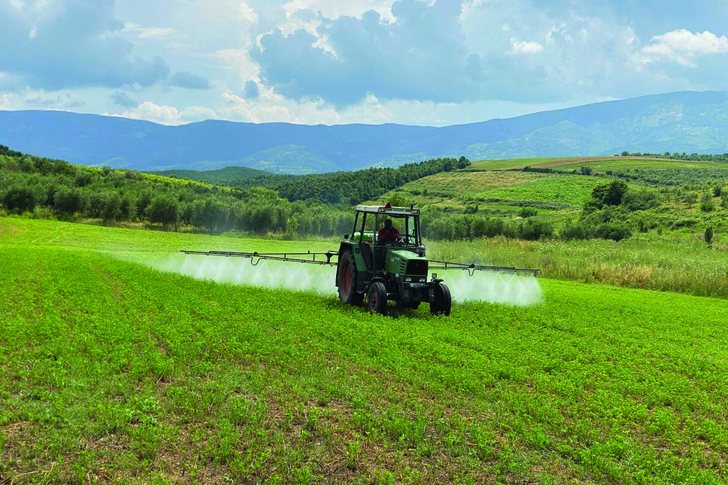
Due to the blocking of EU funds from the IPARD program...
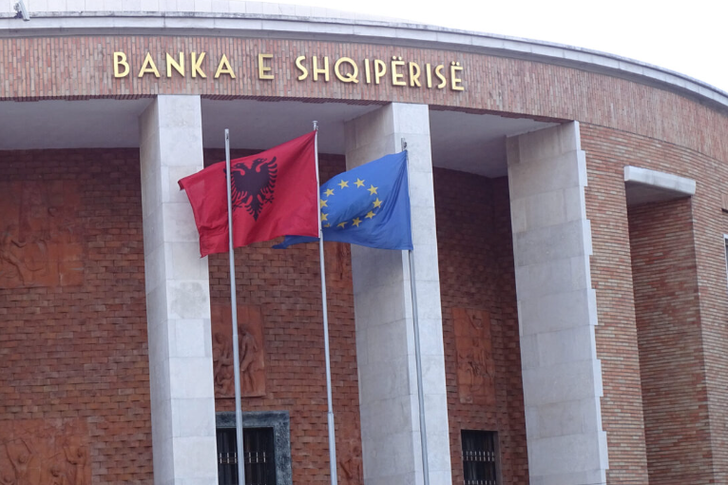
The Bank of Albania has prepared for the first time a guid...

Today, September 4, 2024, in the foreign exchange mark...
Analyzing the prices of tourist packages according to ...
Today, September 3, 2024, in the foreign exchange mark...

With the latest budget changes, the government increas...
The Electronic and Postal Communications Authority (AKEP) ...

Today, September 2, 2024, in the foreign exchange mark...

Today, on September 1, 2024, in the foreign exchange m...

By 2022, the available data suggested that real estate...
Today, on August 31, 2024, in the foreign exchange mar...
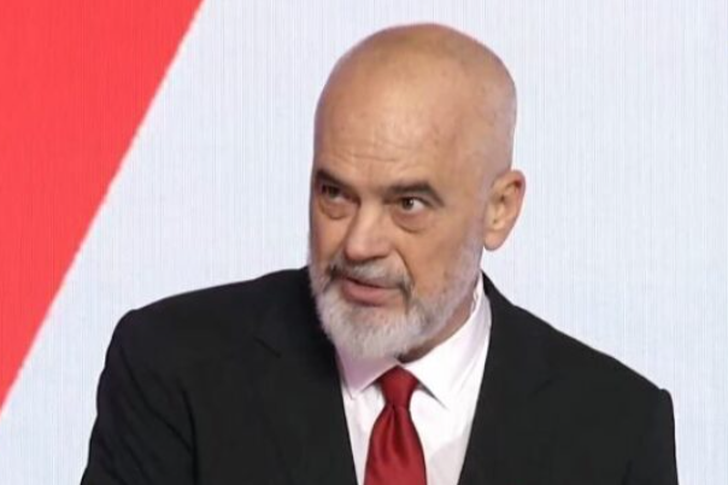
Today, Prime Minister Edi Rama will travel to Prague t...
Today, on August 30, 2024, in the foreign exchange mar...
Today, on August 29, 2024, in the foreign exchange mar...
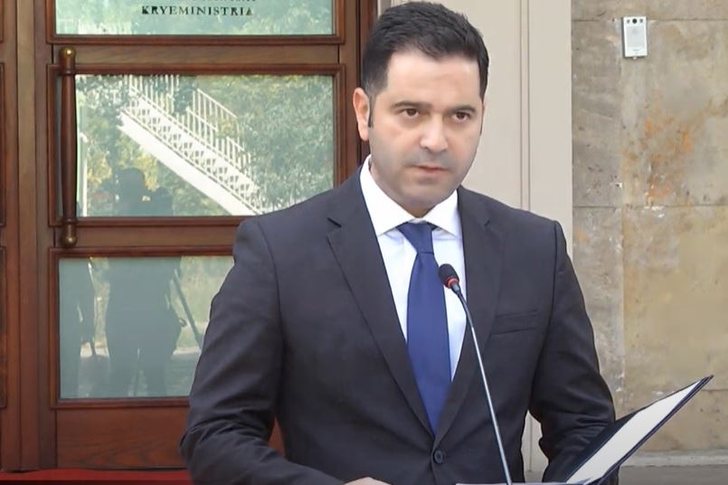
In a statement after the government meeting, Finance Minis...
The water situation in 2024 has not turned out to be a...
Today, on August 28, 2024, in the foreign exchange mar...
Public debt risk indicators this year appear to be decreas...

CNA has launched another investigation that could lead to ...

Irfan Hysenbelliu is a businessman that we call "Irfan the...

In March 2026, CNA launched another investigation centered...
The arrested mayor of Tirana, Erion Veliaj, with 13 charge...

The Special Board of Appeal (KPA) decided this Monday ...

The KPA vetting decided this Thursday to dismiss the p...

Suela Salavaçi, a prosecutor in the Prosecutor's Offic...

The Special Board of Appeal reinstated the prosecutor ...

A road accident occurred this evening on Nikolla Zoraqi St...

Three people were shot and wounded in Elbasan last night b...
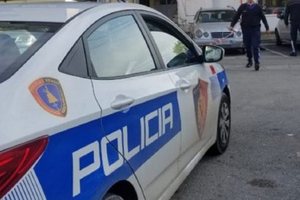
A serious incident occurred this Tuesday in the Yrshek are...

An accident occurred this Tuesday on "Dituria" street in K...

All of Southern Europe will face changing weather conditio...

Albania was hit by temperatures significantly higher than ...

For the first time, Pogradec welcomed the Inter-Lake Chess...
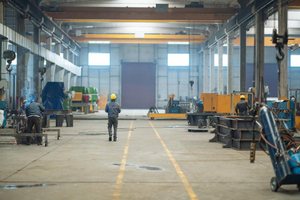
Albania has achieved a record for the employment of foreig...

US Secretary of State Marco Rubio arrived in Manila on Jul...
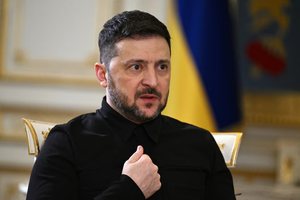
In the space of a few days, Ukrainian President Volodymyr ...
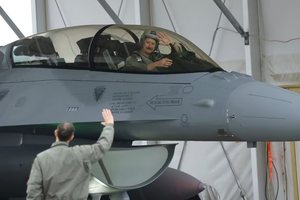
The spokesman for the Iranian Foreign Ministry warned Bulg...
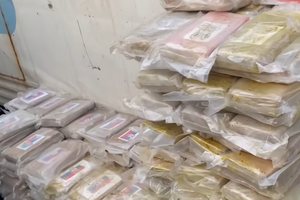
Autoritetet italiane sekuestruan pako me afër 800 kilogram...

At a time when industrial products are increasingly taking...

Trust among people is not just a three-syllable word. It c...

Master of humor Todi Llupi has passed away at the age of 7...

The ninth edition of "MIK Festival" kicked off with one of...

Construction company licenses will have a validity period ...
The Centralized Purchasing Operator recently opened a tend...
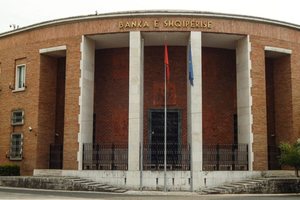
The new draft law "On the Bank of Albania" provides that t...
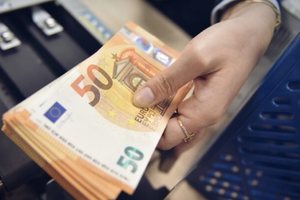
This Tuesday, one US dollar is bought for 81.2 lek and sol...