

VAT implementation clarified: 10% compensation for farmers will be calculated on the value of vehicle invoices
Following the confusion created among farmers and processo...


In the wake of a fiscal peace that the government is widely discussing in this fiscal package, it seems that international financial institutions are emphasizing the other side of the scale, that of tax collection and strengthening measures for fiscal compliance.
The World Bank presented the Public Finance Review of Albania, a report that emphasizes strengthening fiscal sustainability for a resilient economy and human development. The report focuses on a number of aspects related to navigating risks, securing growth, and the macro-fiscal landscape.
Specifically, the World Bank states that Albania has achieved macroeconomic stability, but persistent structural challenges need to be addressed to maintain long-term growth. Average annual GDP growth reached 3.2 percent during the period 2014–2024, driven mainly by domestic consumption, tourism and construction, where post-earthquake reconstruction and foreign investment have played a key role in recent years.
“Poverty has been reduced by 20 percentage points, although the redistributive impact of fiscal policy remains relatively weak. Gender inequalities and high youth unemployment persist. At the current pace of reforms, annual growth is expected to slow in the long term, reaching only 1.5 percent in 2050, due to a declining working-age population, weak productivity and human capital, and declining rates of return on capital accumulation,” the report says.
Below are some excerpts from the report.
Fiscal discipline
While adherence to fiscal discipline has kept Albania’s historically high public debt under control and made its fiscal position sustainable, the country remains exposed to macroeconomic and currency-related risks. Albania spends less than other countries, collects less revenue, and has fiscal deficits at similar levels, yet has consistently had high debt.
An expansionary fiscal policy stance, undertaken as a stabilization measure in response to the 2008 global financial crisis – combined with ongoing problems in the energy sector and weak financial controls – contributed to rising debt and the accumulation of arrears by 2015.
Since then, and after each shock, Albania has rebuilt strong fiscal shock absorbers that enabled effective responses to the 2019 earthquake, the COVID-19 shock in 2020, and the energy crisis in 2022.
Fiscal discipline, including the adoption of several fiscal rules since 2016, has played a critical role in narrowing the fiscal deficit. As a result, public debt fell to 54 percent of GDP in 2024. Although debt remains vulnerable to risks, the fiscal position is supportive of sustainability and fiscal rules are expected to continue to mitigate public debt over the medium term.
Fiscal risks
Fiscal risks stem from demographic pressures, contingent liabilities, climate impacts, and inefficient public investment – ??exacerbated by weaker redistributive policies compared to those of other similar countries.
Albania’s shrinking and aging population poses challenges to labor supply and fiscal sustainability by increasing pension and healthcare costs. Contingent liabilities stemming from state-owned enterprises (SOEs) and public-private partnerships (PPPs) – particularly in the energy and transport sectors – add to fiscal risks. Climate change and natural disasters, such as frequent floods and droughts, also impose high fiscal costs. The efficiency of public investment remains an ongoing concern.
Fiscal framework
The current fiscal framework fails to address emerging fiscal risks and accelerate revenue convergence with the EU. In the context of macroeconomic stability, fiscal policy should ensure that resources are directed towards priority areas, that revenue is raised in a cost-effective and least distortive manner, and that sufficient fiscal buffers are maintained in the context of increasing risks.
In the short term, priorities should include improving tax collection and tax compliance to increase revenues; increasing allocations to human capital sectors to strengthen productivity and economic growth; strengthening the efficiency and transparency of spending in PPPs; improving the governance and accountability of state-owned enterprises; improving the quality of public investments; and strengthening debt management.
In the medium term, Albania will need to increase spending in growth-enhancing sectors, strengthen climate adaptation and disaster preparedness, and improve social protection – while also preserving the fiscal sustainability of the pension system. The establishment of an independent fiscal council would strengthen the credibility and enforcement of Albania’s fiscal rules./ Monitor Magazine

Following the confusion created among farmers and processo...
This Friday, one US dollar will be bought for 83.2 lek and...

In 2026, 2.5 million real estate properties are expected t...
The IMF, in its statement at the end of its autumn mission...
The report on Albania, drafted by the International Moneta...

A report prepared for Albania by the International Monetar...
The Economy Committee has announced vacancies for 3 member...

This Thursday, one US dollar will be bought for 83.2 lek a...
The new fiscal package, which will bring changes to the VA...
Minister of Finance, Petrit Malaj, presented the draft bud...
European stocks showed mixed signals this Wednesday, somew...

Albania allocates much less funds from the public budget f...

The deduction of 48 thousand lek from the taxable income b...

This Wednesday, one US dollar will be bought for 82.8 lek ...

The voluntary private pension market continued to expand i...
Deputy Minister of Infrastructure and Energy, Besjan Kadiu...
Socialist Party MP, Ceno Klosi, at the meeting of the Natu...

The Albanian Development Fund announced this Monday the wi...
During 2024, public finance management was characterized b...
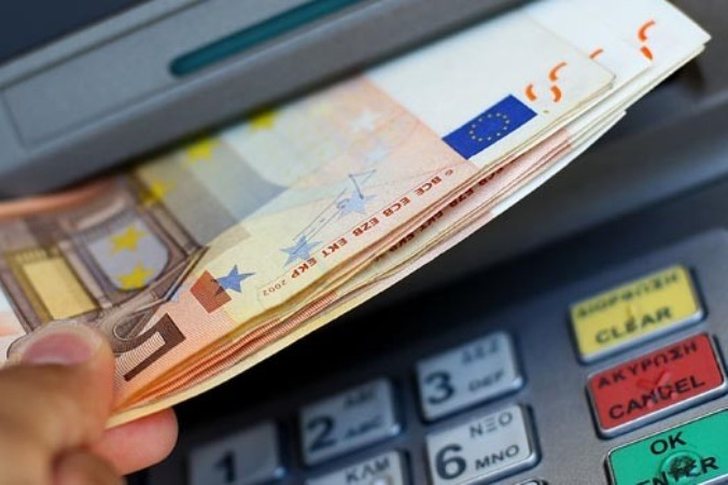
This Tuesday, one US dollar will be bought for 82.8 lek an...

CNA has launched another investigation that could lead to ...

Irfan Hysenbelliu is a businessman that we call "Irfan the...

In March 2026, CNA launched another investigation centered...
The arrested mayor of Tirana, Erion Veliaj, with 13 charge...

The Special Board of Appeal (KPA) decided this Monday ...

The KPA vetting decided this Thursday to dismiss the p...

Suela Salavaçi, a prosecutor in the Prosecutor's Offic...

The Special Board of Appeal reinstated the prosecutor ...

A road accident occurred this evening on Nikolla Zoraqi St...

Three people were shot and wounded in Elbasan last night b...

A serious incident occurred this Tuesday in the Yrshek are...

An accident occurred this Tuesday on "Dituria" street in K...
All of Southern Europe will face changing weather conditio...
Albania was hit by temperatures significantly higher than ...

For the first time, Pogradec welcomed the Inter-Lake Chess...
Albania has achieved a record for the employment of foreig...

US Secretary of State Marco Rubio arrived in Manila on Jul...
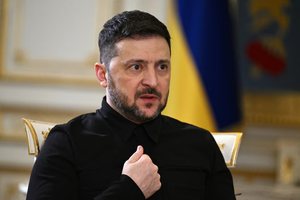
In the space of a few days, Ukrainian President Volodymyr ...
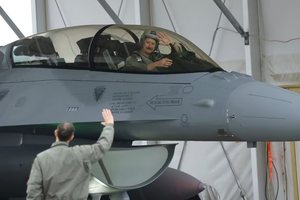
The spokesman for the Iranian Foreign Ministry warned Bulg...

Autoritetet italiane sekuestruan pako me afër 800 kilogram...

At a time when industrial products are increasingly taking...

Trust among people is not just a three-syllable word. It c...

Master of humor Todi Llupi has passed away at the age of 7...
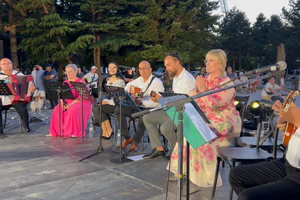
The ninth edition of "MIK Festival" kicked off with one of...
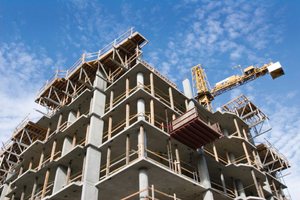
Construction company licenses will have a validity period ...
The Centralized Purchasing Operator recently opened a tend...
The new draft law "On the Bank of Albania" provides that t...
This Tuesday, one US dollar is bought for 81.2 lek and sol...