

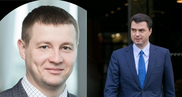


The investigative media outlet "Follow The Money" has published an article titled "Albanian Right-Wing Party Paid Trump's Interlocutor with Kremlin-Linked Money."
This article states that "Oleg Deripaska, a Kremlin-linked oligarch, is behind a shell company that financed political lobbying by a former Trump operative in Europe, leaked documents suggest."
"Follow the Money" points out that Western intelligence agencies have spent years tracking alleged covert Russian foreign policy funding, not just in relation to Trump, but across Europe.
A declassified US intelligence assessment in 2022 concluded that Moscow had quietly funneled more than $300 million to political actors around the world, pointing to unspecified allegations of a Russian influence operation in Albania.
Leaked documents obtained by "Follow the Money" now add a new layer to that picture, linking these broader concerns to a specific financial network linked to Russian interests.
During the 2017 elections in Albania, a battle between the ruling Socialist Party and the Democratic Party, the latter turned to an American lobbyist named Nick Muzin to open doors to Washington's political elite.
American and Albanian investigative media outlets Mother Jones and BIRN revealed that the Democratic Party of Albania (DPSH) was not footing the bill itself. Part of the money came from a fictitious Scottish firm with the common name Biniatta Trade LP.
The company's records suggested it had a connection to Russia, but who exactly was behind Biniatta Trade LP was a mystery.
According to Follow the Money, newly surfaced documents show that the company was part of an evolving network of shell entities linked to Russian oligarch Oleg Deripaska and EN+, a metals and energy conglomerate he founded.
New data trails suggest that the oligarchs' reach went even further than previously known, reaching into Albania and the Washington elite employed to help shape the Balkan country's democracy.
"Follow The Money" further writes that in 2017, two years after Biniatta Trade LP was founded, the citizens of Albania were preparing to go to the ballot boxes.
The competition between Prime Minister Edi Rama and Lulzim Basha, then leader of the Democratic Party, the largest opposition party, was fierce, with the PD supporting street protests against the government fueled by allegations of electoral fraud and vote manipulation.
Historically, the DP was not known for an overtly populist stance, but that changed in the run-up to the elections. That year, under Basha's leadership, the party began to flirt with Trump-style policies.
The DP opposed EU-backed reforms to eradicate corruption in the Albanian judiciary, with Basha calling the idea a "fraud."
According to Follow The Money, the DP needed a strong card.
So, ahead of the election, the party sought to raise its profile in Washington. Collaboration with important international conservative figures was used as a way to influence voters at home.
To do this, the party recruited Nick Muzin, a former senior adviser to Republican Senator Ted Cruz. Muzin had just returned to consulting for foreign governments and politicians in 2017.
Muzin arranged for Basha to appear on Breitbart News, a media outlet owned by Trump advisor Steve Bannon, in early 2017. He also arranged meetings between Basha and several Republican politicians, and even arranged for a photo op with newly inaugurated President Trump at a rally in the US.
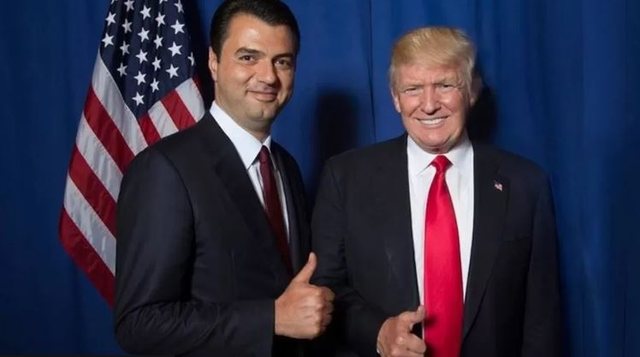
The photo made the rounds throughout Albania, while Basha said he had had an "extraordinary meeting" with Trump.
Muzin's efforts did not result in a victory for the DPA. Basha's party won about 57 seats in parliament, compared to the 83 seats won by the ruling Socialists.
But towards the end of 2017, months after the election, something prompted lobbyist Muzin to change his declaration on the US foreign lobbyist registry. Apparently, he had not only received a fee from DPA, but also from Biniatta Trade LP, the fictitious company.
And it turned out that he received a much larger amount than he had previously reported: $675,000, compared to the $75,000 he had previously recorded for three months of work.
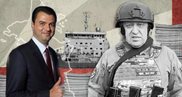
Albanian right-wing party paid Trump mediator with Kremlin-linked money
Oleg Deripaska – a Kremlin-linked oligarch who was investigated for alleged interference in the US election – is behind a shell company that funded political lobbying by a former Trump operative in Europe, leaked documents suggest.
In the first joint press conference between Vladimir Putin and Donald Trump, the two men clashed over persistent accusations that Moscow had supported the rise of the reality TV star-turned-president.
Putin ignored a journalist's question at that 2018 summit in Helsinki, saying that even if individual Russian businessmen had supported Trump, that would not implicate the Kremlin.
For investigators in the US and Europe, however, this distinction has been a bone of contention. Western intelligence agencies have spent years pursuing alleged covert Russian foreign policy funding, not just in relation to Trump, but across Europe.
A declassified US intelligence assessment in 2022 concluded that Moscow had quietly funneled more than $300 million to political actors around the world, pointing to unspecified allegations of a Russian influence operation in Albania.
Leaked documents obtained by Follow the Money now add a new layer to that picture, linking these broader concerns to a specific financial network linked to Russian interests.
During the 2017 elections in Albania, a battle between the ruling Socialist Party and the conservative Democratic Party, the latter turned to an American lobbyist and former Trump campaign operative named Nick Muzin to open doors to Washington's political elite.
American and Albanian investigative media outlets Mother Jones and BIRN revealed that the Democratic Party of Albania (DPSH) was not footing the bill itself. Part of the money came from a fictitious Scottish firm with the common name Biniatta Trade LP.
Company records suggested it had a connection to Russia, but who exactly was behind Biniatta Trade LP was a mystery. Until now.
Newly surfaced documents show that the company was part of an evolving network of shell entities linked to Russian oligarch Oleg Deripaska and EN+, a metals and energy conglomerate he founded.
Deripaska appeared in one of the most high-profile investigations in recent U.S. history: Special Counsel Robert Mueller's investigation into Russian interference in the 2016 presidential election. Launched in 2017, the investigation examined ties between Russia and individuals associated with the Trump campaign.
Part of that investigation focused on the relationship between former Trump campaign chairman Paul Manafort and Deripaska, with whom Manafort had longstanding business ties. Deripaska was never charged by Mueller, but the investigation cited ample evidence pointing to him as a key behind-the-scenes figure in Russia’s malign influence efforts.
Now, new data trails suggest that the oligarchs' reach went even further than previously known, reaching into Albania and the Washington elite employed to help shape the Balkan country's democracy.
DPA, EN+ and Deripaska did not respond to questions from Follow the Money. The oligarch has consistently denied the allegations stemming from Mueller's Russia investigation.
Russian lawyer, private bank
On the outskirts of Gamprin, a quiet town in Liechtenstein, sits a brick office building, its only hint of color the embossed blue and white of its occupant's coat of arms.
The building is home to a little-known private bank called Bendura, which offers “personalized strategies for high-net-worth individuals,” according to its website.
Bendura was the bank of choice for Eduard Blokhin, a Moscow lawyer specializing in managing shell companies for others.
Through his law firm, Blokhin has managed dozens of shell companies around the world since its founding in 2013, according to files released as part of the Pandora Papers.
He referred many, if not all, of them to the Liechtenstein bank for their services. Among them was Biniatta Trade LP.
As a Scottish limited partnership, a business structure known for its obscurity and minimal reporting requirements, Biniatta Trade LP had all the hallmarks of a ready-made shell company that was set up to do secret business globally, avoid taxes or hide from authorities.
But one of her goals became much more public when she became part of an influence campaign against Albanians, causing a political scandal.
In 2017, two years after Biniatta Trade LP was founded, the citizens of Albania were preparing to go to the ballot boxes.
The competition between Prime Minister Edi Rama of the Socialist Party and Lulzim Basha of the DPA, the largest opposition party, was fierce, with the DPA supporting street protests against the government prompted by allegations of electoral fraud and vote manipulation.
Historically, the DPA was not known for an overtly populist stance, but that changed in the run-up to the elections. That year, under Basha's leadership, the party began to flirt with Trump-style policies.
The DPA opposed EU-backed reforms to root out corruption in the Albanian judiciary – with Basha calling the idea a “scam” – and spread anti-Semitic clichés about Hungarian-American billionaire George Soros.
The party even reworked Trump's signature slogan into "Make Albania Great Again."
But Rama was completely at the top of the polls. The DPA needed, so to speak, a strong card.
So, ahead of the election, the party sought to raise its profile in Washington. Collaboration with important international conservative figures was used as a way to influence voters at home, as political parties in France and Italy had previously tried.
To do so, the party recruited veteran Republican influence broker Nick Muzin, a former senior adviser to Republican Senator Ted Cruz. Muzin was also an operative in Trump's first presidential campaign who helped recruit officials to his administration, he wrote in a post on his website, which has since been deleted.
Muzin, who since that campaign has secured a number of high-profile White House contracts and personally introduced Trump's Middle East envoy, Steve Witkoff, to Qatari officials, had just returned to consulting for foreign governments and politicians in 2017.
Muzin arranged for Basha to appear on Breitbart News, a media outlet owned by Trump advisor Steve Bannon, in early 2017. He also arranged meetings between Basha and several Republican politicians, and even arranged for a photo op with newly inaugurated President Trump at a rally in the US.
The photo went viral across Albania, showing the two men smiling and giving each other the thumbs up. Basha said he had had an “extraordinary meeting” with Trump.
Muzin's efforts did not result in a victory for the DPA. Basha's party won about 57 seats in parliament, compared to the 83 seats won by the ruling Socialists.
But towards the end of 2017, months after the election, something prompted lobbyist Muzin to change his declaration on the US foreign lobbyist registry. Apparently, he had not only received a fee from DPA, but also from Biniatta Trade LP, the fictitious company.
And it turned out that he received a much larger amount than he had previously reported: $675,000, compared to the $75,000 he had previously recorded for three months of work.
Question: Why change it now?
"Follow the Money" did not receive a response from Muzini or his office despite several attempts.
Just two weeks before Muzin informed authorities that he had to amend his declarations, another lobbyist was indicted for failing to declare such work: Paul Manafort.
An early advisor to dictators, warlords and President Trump, Manafort was the primary target of Mueller's investigation into Russian interference in the 2016 US election.
But the indictment was only an offshoot of broader charges.
Mueller's team had reason to believe that Manafort had colluded with Russia while serving as Trump's campaign chairman, and investigators focused heavily on his long-standing business ties to Russian oligarch Deripaska, whose closeness to the Kremlin was well-documented.
Having amassed a fortune during the chaotic years following the collapse of the Soviet Union, Deripaska built EN+, one of the world's largest energy and metals conglomerates. It was this nexus of wealth and political closeness that resurfaced in Mueller's investigation.
The indictment of Manafort in 2017 sparked intense scrutiny of foreign lobbying and led to a number of firms retroactively reporting their work.
For former Trump campaign staffer Muzin, the pressure made it clear that he had to register his work for Albania's DPA as well, a spokesperson told Mother Jones.
But even though Muzin was offering some transparency regarding his income from Albania, the company through which he was paid was becoming more complex.
In late 2017, a month after Muzin reported his connection to Biniatta Trade LP, the company's Russian lawyer, Blokhin, greatly expanded its network, adding six subsidiaries.
All but one opened accounts at Bendura, Liechtenstein's private bank. The companies' management told the bank that all future funds would come from grain or textile trade.
But the reality looked very different. Almost immediately after the accounts were opened, tens of millions of euros in loans and fees began flowing to and from entities linked to Deripaska and EN+.
Around 11 million euros were lent to a shell company owned by the then-CEO of EN+ and another 4 million euros to a firm that leased a private jet used by Deripaska's wife and in-laws.
EN+ itself even promised around 12.5 million euros for the network, while another 10 million euros would come from a private holding company owned by Deripaska.
In total, Follow the Money documented loans and other contracts worth around 55 million euros with the six fictitious companies between December 2017 and August 2018, two-thirds of which are linked to Deripaska and his associates.
The rest comes from anonymous fictitious companies in Cyprus, Poland and Singapore. And some of these transactions bear the hallmarks of money laundering, according to experts.
“The use of so many different companies for such a simple transaction seems artificial,” said Peter van Leusden, former chief investigator at the Dutch anti-corruption authority ACC, when asked about a €6.7 million loan that was guaranteed between the network and three other fictitious companies in Poland and Singapore.
“Why are Poland and Singapore involved?” he asked. “Why is the money flowing back to a company within the group? The economic reasoning behind this is not clear and could indicate money laundering.”
What prompted the rapid restructuring of the network of shell companies and the sudden increase in cash flows remains unclear.
Blokhin did not respond to a series of questions posed to him. Private bank Bendura told Follow the Money that according to their policy, they do not comment on individual relationships with clients, but the bank stressed that their response does not confirm or deny any relationship.
But the newly discovered connections give Muzin's altered disclosure new significance. Biniatta Trade LP, which created the fee he attributed to DPA, soon after his work became central to a vast financial network linked to an oligarch close to the Kremlin.
The US Treasury imposed broad sanctions on Russia's elite a year after Mueller's investigation began in April 2018. Although it avoided specific charges, it sanctioned Deripaska and EN+, citing the Kremlin's "global malign activities" and "its efforts to subvert Western democracy."
Soon after, Biniatta Trade LP would become a burden to Blokhin and his partners.
In May 2018, an associate who had set up the six shell companies in the Seychelles wrote to him that, “in light of the current situation,” urgent changes were needed, an email obtained by Follow the Money shows.
She said the risk to her firm had become too high. The associate recommended a name change and the appointment of new directors by proxy "so that there is no trail leading back," without specifying in her message what specific consequences might follow from the discovery of that trail.
Before the end of May of that year, Biniatta Trade LP was renamed Agrotex Nemo International Trading LP.
Despite these apparent efforts to distance the company from its operators, Muzin's appearance as a foreign agent still raised suspicions in Albania.
The country's Prime Minister Rama called for a full investigation into the allegations, but few clarifications were provided.
Just a year later, in April 2019, Biniatta Trade would be dissolved, and its books would be closed forever.
An investigation by Albania's prosecution service also ended in 2019, more than two years after the country's elections. Prosecutors ultimately dropped a case against DPA leader Basha without bringing charges.
In the end, DPA insisted that it had only paid Muzi $25,000, without explaining why the rest of the amount was covered by Biniatta Trade LP, Mother Jones wrote.
Years later, a similar pattern emerged. Ahead of the 2025 general elections in Albania, former Trump campaign operatives rejoined the Albanian conservative party.
The party brought into the race Trump's 2024 campaign co-manager, one of his pollsters and this time even Manafort himself.
Again, serious questions arose about the source of the funds. A New Jersey-based foundation that financed the $6 million lobbying effort was created just days before his contract with the DPA was signed, Albanian media revealed.
No list of donors, which is required by Albanian law on political financing, was disclosed.
The party went on to secure a third of the seats in parliament again, remaining the second largest in the country, as Basha's successor, Sali Berisha, repeated a familiar slogan.
"Let's make Albania great again."
The White House press office did not respond to any questions, but referred them to a Trump campaign committee. Follow the Money did not receive a response from that committee./ Adapted from CNA
Taken from Follow The Money

Dozens of wine labels from the best international brands c...
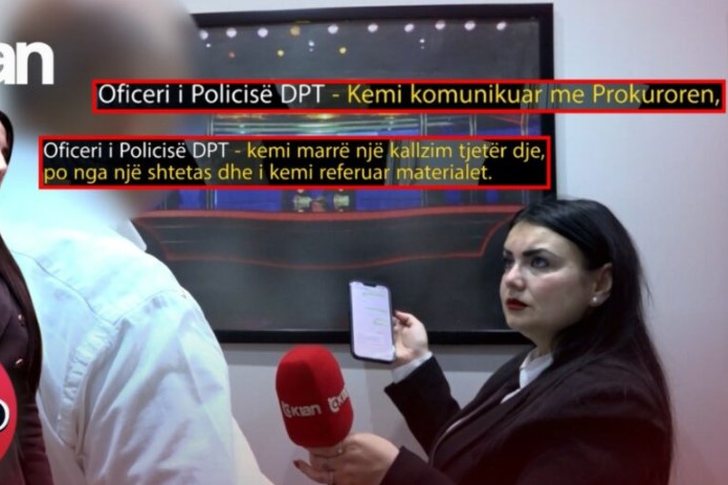
The Eriola Hoxha scandal has taken on new dimensions. The ...
Problematika e radhës e transmetuar në emsionin “Stop”, mb...
Rasti i sotëm, më 22 prill në emisionin investigativ “Stop...
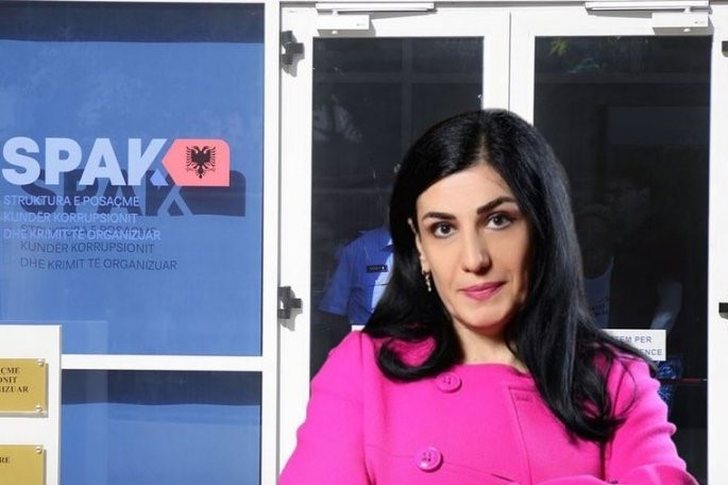
Part of the property seized by SPAK from Mirlinda Karçanaj...
A real estate property in the Sauk area, Tirana, with a su...
Other details have been revealed by SPAK's investigations ...
SPAK has seized the assets of former AKSHI director Mirlin...
A detailed investigation has revealed strong suspicions of...
The Special Court of First Instance for Corruption and...
In many shops and bars in the center of Tirana, wines are ...
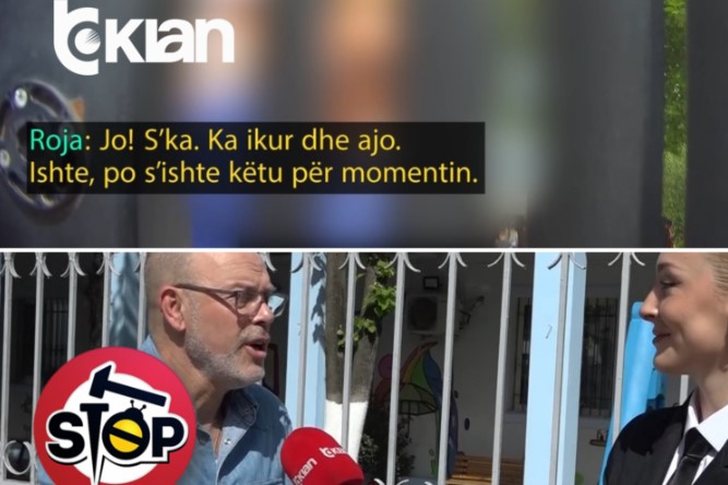
The next issue, today, April 21, concerns an observation m...
The case discussed today, April 21, on the show "Stop" on ...

The new online banking institution, Jet Bank, has caused a...

Jet Bank is a new online banking institution that has been...
Rindërtimi i banesës së 94-vjeçarit, Nikoll Kolaj, të dëmt...

To travel on Tirana's urban buses, you must be prepared to...
Although today is not April 1st, its symbolism can be safe...
The "5D" file is one of the most famous files ever discove...
Rasti i sotëm na çon në Elbasan dhe ka në qendër pacienten...
There have been 12 days of protests in the capital, which ...
Dritan Prençi is the SPAK prosecutor who is sleeping on th...
The in-depth investigations that SPAK conducted into Ajola...
SPAK's standards, the way it investigates, how it secures ...

The Special Board of Appeal (KPA) decided this Monday ...

The KPA vetting decided this Thursday to dismiss the p...

Suela Salavaçi, a prosecutor in the Prosecutor's Offic...

The Special Board of Appeal reinstated the prosecutor ...

A road accident occurred today in Dhërmi. According to in...
The Police Supervision Agency has announced the security m...
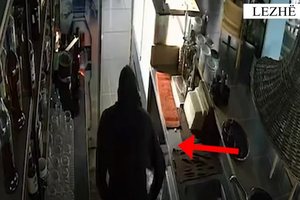
A 21-year-old man has been arrested after, together with a...
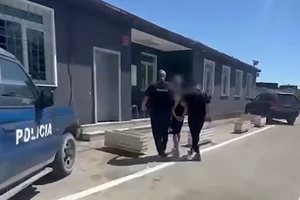
Fier Police have conducted an operation where they have cr...

Today our country will be affected by stable weather condi...
A tragic accident occurred this Friday afternoon in Kameni...

Today our country will be affected by unstable weather con...

On Thursday, our country will be affected by relatively un...
US President Donald Trump and Ukrainian President Volodymy...
The US has deported a group of migrants to the Central Afr...
Kryeministri i Pakistanit, Shehbaz Sharif, tha se Shtetet ...
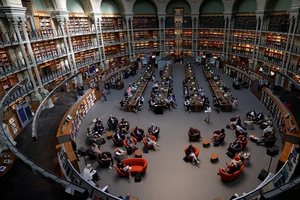
Një gjykatë në Paris ka dënuar gjashtë shtetas gjeorgjianë...
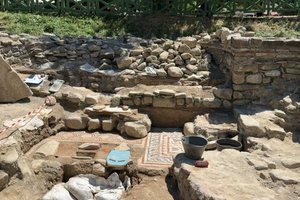
Several archaeological excavations conducted during this s...
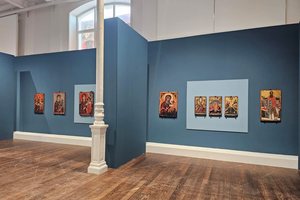
At the Museum of Fine Arts in Chambéry, France, an exhibit...

Korça has transformed this weekend into the capital of cel...
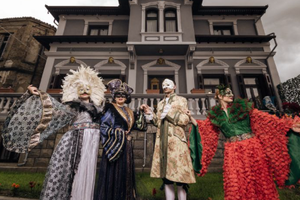
Korça is ready to open the summer season with one of the c...
The labor market is facing increasing polarization where w...
This Saturday, one US dollar is bought for 81.5 lek and so...
The Governor of the Bank of Albania, Gent Sejko, shared to...

Business lending has increased in the first half of this y...