


Strike in Greece, movement in Kapshtica and Qafë Botë temporarily suspended
Due to the strike of Greek customs employees, the Kapshtic...

Due to the strike of Greek customs employees, the Kapshtic...


The consumption of pork is one of the most controversial topics when it comes to eating habits around the world. While in many countries it is considered an important source of food and part of everyday life, in other cultures it is strictly forbidden and even seen as unclean. This stark contrast is not a coincidence, but the result of a combination of religious, historical, ecological and health factors that have evolved over the centuries.
In Judaism, the prohibition of pork is directly related to the dietary laws set forth in the sacred texts. According to these rules, an animal must meet two criteria to be considered permissible for consumption: it must have cloven hooves and it must chew the cud. Pigs, although they have cloven hooves, are not chewers, and are therefore classified as unclean. This prohibition is part of the “kosher” system, which regulates dietary habits and is of great importance in Jewish religious and cultural identity.
An even clearer and stricter prohibition is found in Islam. According to the Quran, the consumption of pork is “haram,” meaning forbidden. This rule is observed by Muslims around the world and is considered a divine command. Beyond religious belief, some scholars suggest that this prohibition may also have a practical basis, since in the arid regions of the Middle East, raising pigs was difficult due to their high demand for water and specific living conditions.
In India, the situation is somewhat different. Hinduism does not directly prohibit pork, but it is not a common part of the diet. This is related to vegetarian traditions and the principle of “ahimsa,” which means nonviolence and respect for all forms of life. In many communities, especially those with a strong religious influence, avoiding meat is an ethical and spiritual choice.
Beyond religion, anthropologists have offered other interesting explanations. One of the most popular theories suggests that the ban on pork may have arisen as a survival strategy. Pigs require a lot of water, shade, and specialized food, which made it difficult for them to grow in dry, resource-poor environments. In these conditions, societies may have developed cultural prohibitions to avoid an inefficient practice.
Health factors may also have played a role. In the past, pork was considered more dangerous to eat if it was not cooked properly, as it could transmit disease. This may have contributed to the perception that it was an unsafe food.
Another important aspect is the role of food taboos in the formation of cultural identity. What a society chooses to eat or avoid is not only a matter of necessity, but also a symbol of belonging and tradition. For example, in some Western cultures dogs are considered pets and not food, while in other cultures the perception is different. This shows that food norms are closely linked to the history and development of each society.
In conclusion, the ban on pork in some cultures cannot be explained by a single reason. It is the result of a combination of factors that include religious beliefs, environmental conditions, health concerns, and the need to preserve cultural identity. This phenomenon proves that food is much more than a biological need – it is a profound reflection of humanity’s history and values./ CNA


From Vietnam to Afghanistan, to Iran and Ukraine. When con...
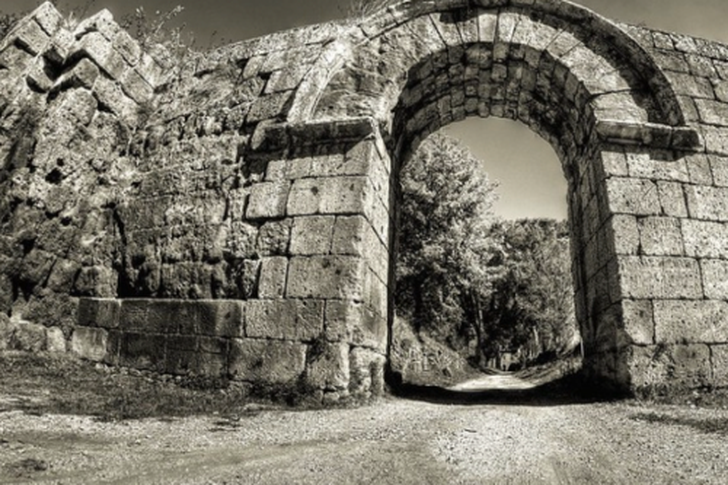
History is not always changed by big decisions or well-tho...

Julius Caesar is not just a name in the history books. He ...

The dog is perhaps the only species on the planet that has...

Many people do not regret the mistakes they made in life, ...

Success is rarely a coincidence. In most cases, it is the ...

Depression is not just a bad day. It is not even a tempora...

In Beirut, the capital of Lebanon, an Israeli strike this ...

Donald Trump announces that he has "wiped Iran off the map...

On social media, what seems like the majority opinion is o...

Beyond the official history we know, there is another worl...

Amiens is a historic city with a strong cultural heritage,...

We all know the story. Helen of Troy, the face that launch...

Ayatollah Ali Khamenei, Iran's Supreme Leader since 1989, ...

In recent months, social media has been awash with videos ...

What's it like to grow up as the children of dictators? Am...

Researchers have uncovered key insights about Saturn's mys...
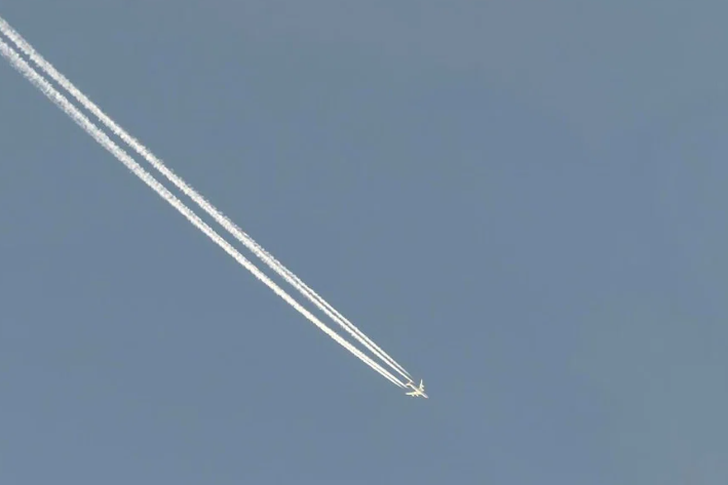
The white streaks left by planes as they fly high in the s...
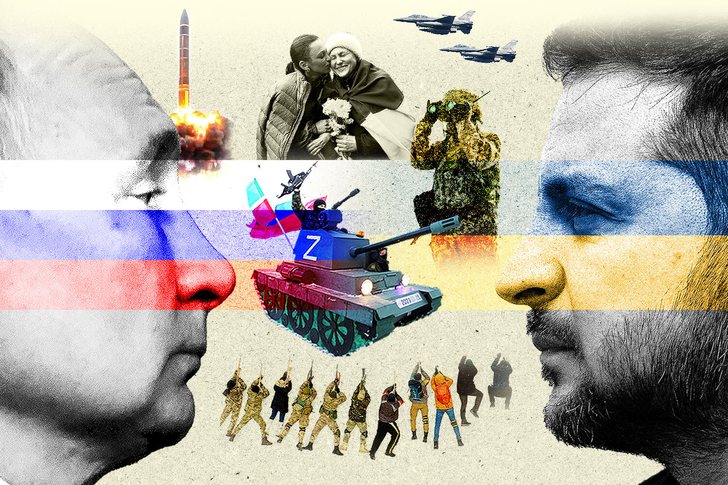
This February 24th marks the fourth anniversary of the Rus...

Estonia is building hundreds of bunkers along its eastern ...

A 39-year-old citizen has been arrested in Lezha, after se...

CNA has launched another investigation that could lead to ...

Irfan Hysenbelliu is a businessman that we call "Irfan the...

In March 2026, CNA launched another investigation centered...

The Special Board of Appeal (KPA) decided this Monday ...

The KPA vetting decided this Thursday to dismiss the p...

Suela Salavaçi, a prosecutor in the Prosecutor's Offic...

The Special Board of Appeal reinstated the prosecutor ...

As a result of the investigative and procedural actions ca...
A conflict for weak motives was recorded today in the vill...

An accident involving three vehicles occurred a few minute...

55-year-old Belere Plaka, who was injured today with a sho...

Today, our country will be under the influence of stable a...

By noon, cloudiness is expected to prevail in almost all o...

Children without parental care, for whom alternative famil...
On Thursday, our country will be under the influence of st...

Marine Le Pen is entering the decisive phase of the presid...

Member states of the International Criminal Court voted to...

From the declining role of exports to new public investmen...

South Korea is becoming one of the most sought-after desti...
Two windows, a century of history and the metaphysics of p...
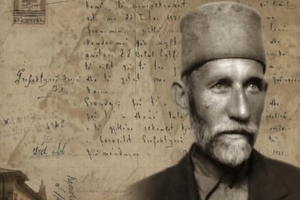
In my research at the Central State Archives, specifically...

At a time when industrial products are increasingly taking...

Trust among people is not just a three-syllable word. It c...

This Saturday, one US dollar is bought for 81.7 lek and so...

War, weather and supply disruptions could send gas prices ...
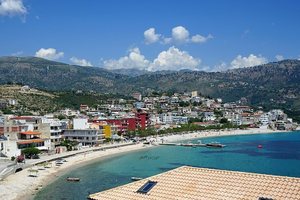
The number of active enterprises in Albania continued to g...
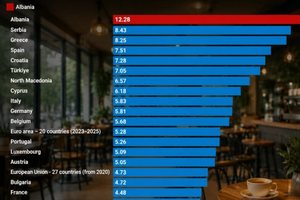
In Albania, the bar-cafe has long become an almost unique ...