

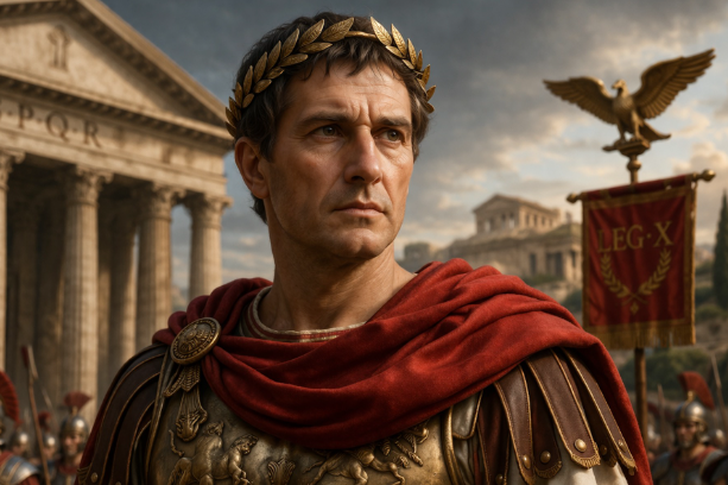
Julius Caesar, power, strategy and legacy
Julius Caesar is not just a name in the history books. He ...


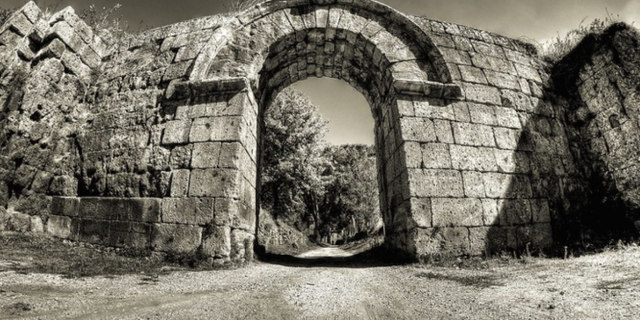
History is not always changed by big decisions or well-thought-out strategies. Often, it is the smallest details, a misunderstanding, a few mistakes, or an uncontrolled moment, that create large and unpredictable consequences. In this article, we will look at four real cases when a small mistake changed the course of world history.
Mistakes happen everywhere and have happened many times throughout history. But some are more consequential than others. You yourself may have made a dozen mistakes in the past week, trivial or even somewhat serious. But most of our mistakes do not change our lives. Only a few of them can have a very big impact on our personal lives. But throughout history, there have been some mistakes that have changed the world as we see it today.
1. When the Dutch didn't claim to have discovered Australia
English Captain James Cook was not the first to discover Australia. A century before him, in 1606, Dutch Captain Willem Janzon set sail on his ship Duyfken and explored over 200 miles of coastline on the western side of Cape York Peninsula, becoming the first person to discover the continent of Australia for Europeans.
Many other Dutchmen explored the western and southern coasts of the same area, and called it New Netherland. However, they made no attempt to colonize the area or establish a permanent settlement there. For this reason, their discovery remained forgotten for a long time until Captain Cook declared his claim in 1770.
2. The Austrian army's war with itself
When the Austro-Turkish War of 1788 broke out between the Ottomans and the Habsburgs, a serious incident occurred in the ranks of the Austrian troops. This incident gave the Ottomans a sudden advantage. In September of that year, the Austrians crossed a river to spy on the enemy on the Turkish side.
But they could not distinguish anyone. Instead, they found some locals selling wine. Some Austrian army troops bought alcoholic beverages and got drunk. On the other side of the river, the Austrian commander was patiently waiting for them in the camp to return with important information about the Ottomans.
When the troops did not return, the commander sent some officers to look for them. It was not long before the drunken soldiers were discovered, and great chaos ensued. The two groups of soldiers believed that the other group was on the enemy's side.
An artillery officer observed the clash from a distance, and thinking that the Austrian camp was under attack, he ordered his soldiers to open fire, killing over 1,000 soldiers. When the Ottomans arrived on the scene, they found many Austrian casualties, and took Karansebes without a fight.
3. When Russia sold Alaska to the United States
When the Crimean War broke out in 1853, Turkey, Great Britain, and France fought against their common enemy, Russia. During this period, things became very complicated for the Russian Empire, which could no longer afford to take care of the Alaska region.
The United States came to his aid. Despite the criticism that this decision provoked, in March 1867 a treaty was signed, according to which Russia sold Alaska to the United States for $7.2 million. Not long after, during the 1880s and 1890s, gold mining in this region brought the United States millions of dollars in revenue, giving a powerful boost to its economy.
4. When Alexander Fleming couldn't keep his lab clean
Since Alexander Fleming's groundbreaking discovery of penicillin in 1928, the field of medicine has never been the same. Although scientists hail him as a revolutionary scientist, what was supposed to be a groundbreaking discovery was actually a mistake, albeit a brilliant one.
After Fleming returned from his short vacation, he noticed that one of his laboratory dishes of staphylococcus bacteria was showing signs of fungal growth. As the fungi spread, they destroyed the bacteria in the dish.
Prompted by this strange observation, Fleming cultivated the mushrooms in a clean dish, which confirmed his initial discovery. Fleming called the substance the mushrooms produced “mold juice,” which acted as an antibiotic against bacterial cultures. This “mold juice” was widely used during World War II and helped save the lives of many wounded soldiers and civilians. / History of Yesterday – Bota.al

Julius Caesar is not just a name in the history books. He ...

The dog is perhaps the only species on the planet that has...

Many people do not regret the mistakes they made in life, ...

Success is rarely a coincidence. In most cases, it is the ...

Depression is not just a bad day. It is not even a tempora...

In Beirut, the capital of Lebanon, an Israeli strike this ...

Donald Trump announces that he has "wiped Iran off the map...

On social media, what seems like the majority opinion is o...

Beyond the official history we know, there is another worl...

Amiens is a historic city with a strong cultural heritage,...

We all know the story. Helen of Troy, the face that launch...

Ayatollah Ali Khamenei, Iran's Supreme Leader since 1989, ...

In recent months, social media has been awash with videos ...

What's it like to grow up as the children of dictators? Am...

Researchers have uncovered key insights about Saturn's mys...
The white streaks left by planes as they fly high in the s...
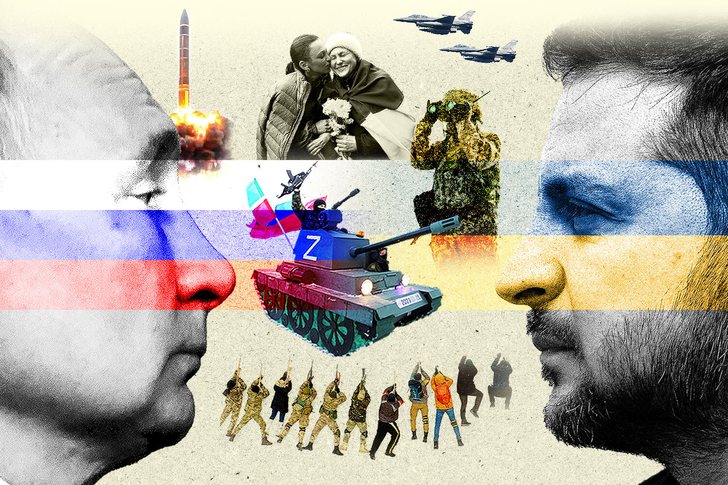
This February 24th marks the fourth anniversary of the Rus...
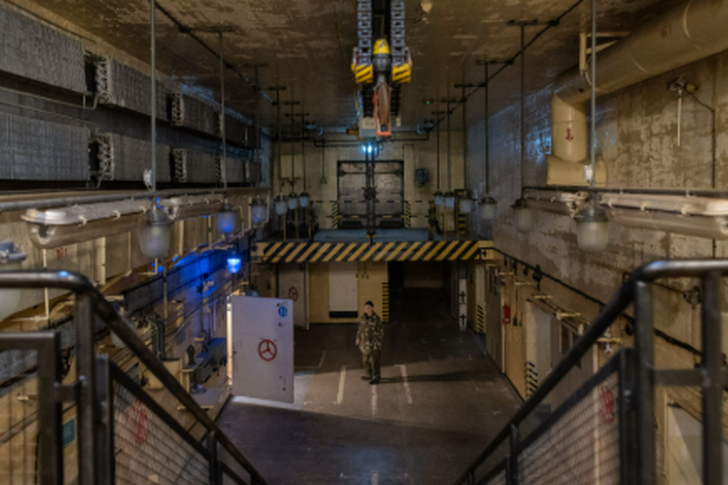
Estonia is building hundreds of bunkers along its eastern ...
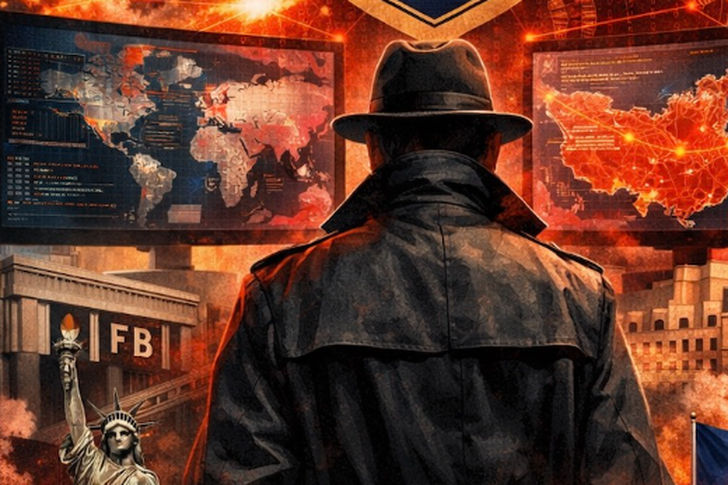
The Chinese MSS, with 800,000 agents and global operations...

We live in a paradoxical age. Never before has humanity ha...
A 39-year-old citizen has been arrested in Lezha, after se...

CNA has launched another investigation that could lead to ...

Irfan Hysenbelliu is a businessman that we call "Irfan the...

In March 2026, CNA launched another investigation centered...

The Special Board of Appeal (KPA) decided this Monday ...

The KPA vetting decided this Thursday to dismiss the p...

Suela Salavaçi, a prosecutor in the Prosecutor's Offic...

The Special Board of Appeal reinstated the prosecutor ...
A serious incident occurred in Lushnje, where citizen IY, ...
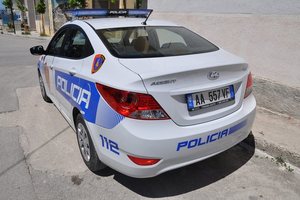
As a result of the investigative and procedural actions ca...

A conflict for weak motives was recorded today in the vill...

An accident involving three vehicles occurred a few minute...

Today, our country will be under the influence of stable a...

By noon, cloudiness is expected to prevail in almost all o...

Children without parental care, for whom alternative famil...
On Thursday, our country will be under the influence of st...

Marine Le Pen is entering the decisive phase of the presid...

Member states of the International Criminal Court voted to...

From the declining role of exports to new public investmen...

South Korea is becoming one of the most sought-after desti...
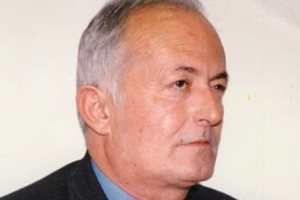
Two windows, a century of history and the metaphysics of p...
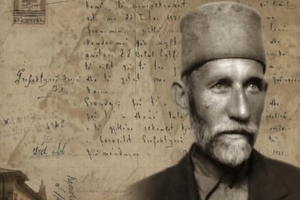
In my research at the Central State Archives, specifically...

At a time when industrial products are increasingly taking...

Trust among people is not just a three-syllable word. It c...

This Saturday, one US dollar is bought for 81.7 lek and so...

War, weather and supply disruptions could send gas prices ...
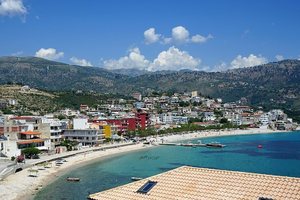
The number of active enterprises in Albania continued to g...

In Albania, the bar-cafe has long become an almost unique ...