



The draft law proposed by the government appears to completely exclude private companies from the compulsory earthquake insurance scheme. According to them, such a scheme could damage even more the small voluntary disaster insurance market that exists in Albania.
The establishment of compulsory catastrophe insurance schemes may be motivated by a lack of a mass culture of voluntary insurance or, in particular cases, by the inability to provide full coverage of risks with private insurance and reinsurance mechanisms.
In the case of Albania, of course, the main impetus for the draft law proposed by the government "On compulsory insurance of housing against earthquakes" is the lack of a developed culture of insurance.
According to data from the Financial Supervision Authority (AMF), last year the catastrophe property insurance market, expressed in terms of gross written premiums, was worth 1.82 billion lek or approximately 16 million euros.
Expressed in per capita insurance premiums, every Albanian spends on average less than 6 euros per year for property insurance against disasters.
Although gross written premiums recorded an increase of approximately 5% compared to a year ago, their specific weight suffered a further decline to 9.5% of Non-Life insurance premiums, from 9.8% that it accounted for a year ago.
The insurance figures are clearly very modest and for the most part it is estimated that this insurance is actually mandatory, because it is required by the bank for the properties that are left as collateral for bank loans.
On the other hand, Albania is considered as a country with golden exposure from the risk of natural disasters. The World Risk Report 2021, which calculates the Disaster Risk Index for 181 countries, based on coping capacities, ranks Albania first in Europe and 61st in the world.
According to the World Bank, the potential losses in Albania from a natural disaster with a return period of 250 years are estimated at around 2.1 billion euros for earthquakes and 1.2 billion euros for floods.
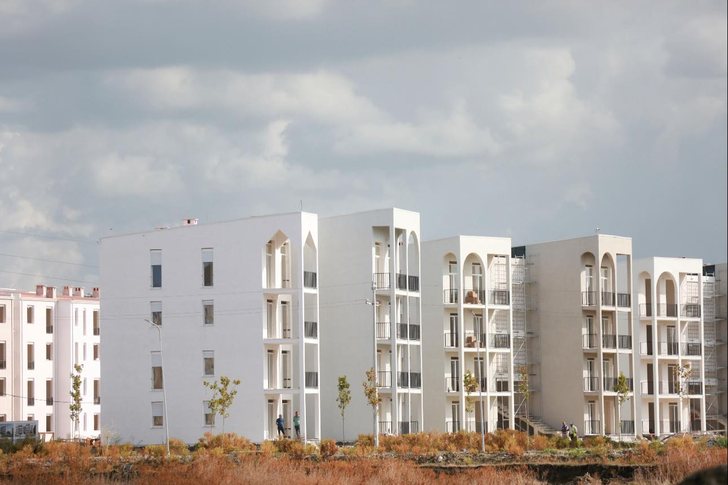
Since 1900, Albania has faced twelve earthquakes with a magnitude above 6. In November 2019, a devastating 6.4 magnitude earthquake struck Albania, affecting over 200,000 people in 11 municipalities, including Tirana and Durrës, and causing a significant economic impact estimated at 7.5% of gross domestic product.
The Turkish model...but with many changes
The draft law presented by the Albanian government is mainly similar to the model implemented by Turkey, where this scheme was established with the consultancy of the World Bank.
In 2020, Turkey made earthquake insurance compulsory by law and a special state entity was established to manage the scheme.
However, the scheme applied in Turkey has some fundamental differences from the one proposed in Albania.
In the case of Turkey, the legal obligation for insurance exists only for urban dwellings and not for rural ones. Also, the law clearly defines that the scheme will not insure that category of urban constructions that do not meet the technical criteria to be insured.
Meanwhile, the draft law that is proposed in Albania requires the provision of all urban and rural housing, with the exception of adobe constructions and mobile ones. This creates a large exposure to financial risk.
Reinsurers cannot agree to reinsure those facilities that do not meet certain minimum technical criteria.
Also, Turkey has clearly defined a division of insurance premiums depending on the degree of risk.
The territory of the country is divided into seven regions and each region has a separate risk coefficient for calculating the premium, because the risk of seismic activity is different for different parts of the country.
Also, the scheme provides different coefficients for constructions with reinforced concrete structure and for constructions of other types. In the Albanian draft law, no such differentiation is proposed, although it is not excluded that it will be done at the stage of the preparation of by-laws.
Although it has a smaller area than Turkey, even in Albania the seismic risk is different in different areas and an accurate assessment of the risk premium would require a differentiation of this type.
Meanwhile, the types and standards of constructions are very different, taking into account the wide spectrum of insurance obligations. A hundred-year-old building in the countryside does not have the same risk of collapse as a dwelling, which is built according to today's standards.
Another difference is that in Turkey, compulsory insurance policies are traded through licensed insurance companies, which act as sales agents. In the case of Albania, it is proposed that the sale of policies be done through a single agent, who will be selected by the government's decision.
Such a scheme would exclude licensed private insurance companies from the policy trading scheme, which would not even be able to act as sales agents or claim handlers.
On the other hand, the example of Turkey also shows the fact that achieving full coverage with housing insurance, even with a mandatory scheme, is not so easy. According to the latest data, the total number of insured dwellings is about 11.7 million or 58.6% of the total number of dwellings.
Despite the fact that home insurance in urban areas is mandatory by law, more than 41% of homes are still uninsured. Divided according to the seven regions of the country, the insurance rate moves from 48.3% to 66.8%.
The highest insurance rate is recorded in the Marmara region, which includes Istanbul, while the lowest rate is recorded in the Black Sea Region, where the risk of earthquakes is estimated to be slightly lower.
At the epicenter of the devastating earthquake, in Kahramanmarash (part of the Mediterranean region) the housing insurance rate was about 54%.
Romania, the scheme is privately managed
Another model referred to in the draft law is that of Romania. In 2009, Romania established the insurance platform against natural disasters, through a special law that was adopted in 2008.
Insurance is mandatory by law for all homeowners in the country.
However, the Romanian model has even greater changes than the one proposed in Albania. First, the scheme not only covers damage from earthquakes, but also those from floods and landslides.
The insurance also includes indirect damages that may be caused by the above disasters. The Romanian scheme is designed to be simplified and the liability limits (insurance amounts) are relatively low.
The scheme provides for two insurance policies, types A and B. Type A policies have a fixed insurance premium of 20 euros and cover damages up to 20,000 euros per apartment.
While type B policies have a fixed insurance premium of 10 euros and cover damages up to 10 thousand euros. Type B policy is mainly designed for the most basic constructions and with lower technical guarantees.
The scheme accumulates its own reserve for catastrophes, which is financed by collected premiums, while it is protected by a reinsurance scheme up to a limit of 1 billion euros.
In case of events that cause damages that exceed the internal capacities of the scheme and the reinsurance limit, then the government comes into play, which is authorized to borrow to cover the obligations of the scheme that exceed the reinsurance limit.
Also, the company that administers the scheme is not state-owned, as proposed in Albania, but is a union of 12 licensed insurance companies.
Such a model has the advantage that it does not require budget expenditures for the construction and operation of this scheme, until it becomes financially independent.
France, obligation at the level of reinsurance
France is one of the few developed countries that has a national natural disaster insurance scheme or Nat Cat. However, this scheme is structured differently from the models of less developed countries.
Through a 1982 law, France mandated that a portion of the insurance premiums for all policies sold must be transferred to this scheme.
Specifically, 12% of the premium for property insurance contracts and 6% of the premium for vehicle insurance contracts are transferred to the natural catastrophe insurance scheme. In this way, all entities that are insured in France contribute to this scheme.
The aforementioned part of the premiums is transferred to the state-owned reinsurance company Caisse Centrale de Reassurance (CCR), which acts as a market-wide reinsurer for damages from natural disasters. CCR is authorized by the French state to offer unlimited reinsurance to insurance companies.
The law in France does not define an exhaustive list of events that are considered natural disasters.
However, the scheme is not so much motivated by the risk of earthquakes (most of the territory of France is considered with low seismic risk), as in the case of Albania and Turkey, but is mainly addressed to disasters caused by atmospheric agents , such as floods, storms or droughts.
How will the scheme affect the private market?
In contrast to the above models, the draft law proposed by the Albanian government does not seem to include the private insurance sector in any form.
If the law is adopted in this form, it would risk taking away from the private insurance market the main product of voluntary insurance, which generates about 10% of the total volume of gross premiums.
In fact, the law only requires compulsory insurance for earthquakes, and in theory private insurance companies could continue to cover risk from other disasters.
However, insurers feel that in a country where the culture of insurance is minimal, almost no one will take the initiative to take out a second insurance against natural disasters other than earthquakes.
In this way, insurance against other natural disasters will remain as a type of product only for borrowers of the banking sector, even more so than it is today.
It can be hypothesized that all borrowers who have left a property as collateral will be forced to pay two property insurances every year, one in the mandatory state scheme and one that will continue to be required by the bank.
However, by removing the earthquake risk, the premiums that private insurers will collect will logically be lower.
Another aspect, which must be clarified with the establishment of the mandatory scheme, will be the amount of insurance or the maximum level of coverage it will offer.
In case the level of coverage will be relatively low, as in the Romanian model, then the mandatory earthquake insurance will not be sufficient for the banks, which require coverage up to the full value of the loan.
Therefore, borrowers will have to take out a double insurance, even for earthquake risk.
2019 earthquakes, about 93% of claims were paid within a year
The earthquakes of September and November 2019 were another test for the insurance market in Albania in dealing with damages from disasters. According to the information published by the Financial Supervisory Authority (AMF), the earthquakes caused over 6,200 damages to the insurance market in Albania.
Always referring to data from the AMF, about 93% of claims were settled within a year, by the end of 2020, while a small portion was paid during 2021.
The total value of earthquake-related damages to insurance companies is estimated to have reached around 40 million euros, and most of it was paid by reinsurers.
Considering that the value of the damages of the earthquake of November 2019 reached approximately one billion euros, the insurance market certainly paid a small part of them, also due to the low rate of housing insurance by Albanians.
However, the insurance market managed to respond well and in a relatively quick time to insured customers.
Meanwhile, the parallel process of reconstruction, undertaken by the government, has moved at a much slower pace and is still ongoing.
According to the data of the Ministry of Finance, for the period 2020-2022, the value of budget expenditures for the reconstruction fund reached approximately 75 billion ALL or about 658 million euros (at the last exchange rate of last year). In this year's budget, the estimated amount for the reconstruction fund is five billion ALL./ Monitor.al



The State Police has issued a warning to all drivers who m...
The earthquake of November 26, 2019 left a large numbe...
To participate in the local elections of September 24 in K...
New facts emerge from the decision of the Special Cour...
Former Prime Minister Sali Berisha has accused the gov...
Rreth 500 mijë italianë kanë zgjedhur të kalojnë pushi...
Former Prime Minister Sali Berisha has wished a speedy rec...
Ministri i Brendshëm, Taulant Balla ka prezantuar masat e ...
The Minister of the Interior, Taulant Balla, has presented...
Ministrja e Arsimit, Evis Kushi, në një konferencë të ...

The Port Authority of Durrës has announced that this m...
The Minister of Foreign Affairs, Olta Xhaçka, has held...
Kushëriri i Ilir Beqajt, Genc Byrazeri dhe Arben Gjata jan...
Lake Prespa e Madhe, "red zone" from the drastic drop in t...
Prime Minister Edi Rama started today by giving the news t...

An independent study by INSTAT experts in about 13,000 ent...
Chinese President Xi Jinping is likely to skip a summit of...
The Minister for Europe and Foreign Affairs, Olta Xhaçka, ...

The affair with the sterilization concession continues to ...
Today, Albania took over the leadership of the Southeast E...
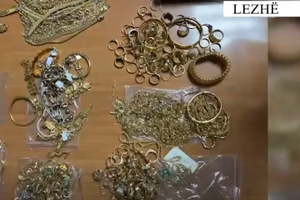
A 39-year-old citizen has been arrested in Lezha, after se...

CNA has launched another investigation that could lead to ...

Irfan Hysenbelliu is a businessman that we call "Irfan the...

In March 2026, CNA launched another investigation centered...

The Special Board of Appeal (KPA) decided this Monday ...

The KPA vetting decided this Thursday to dismiss the p...

Suela Salavaçi, a prosecutor in the Prosecutor's Offic...

The Special Board of Appeal reinstated the prosecutor ...
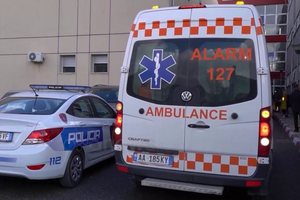
Several gunshots were reported today in the village of Gjo...

Following the successive operations carried out by the ope...
The Police Supervision Agency has seized the service weapo...
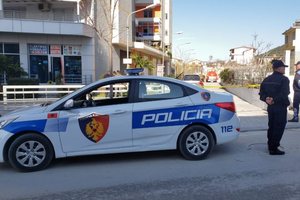
A serious incident occurred in Lushnje, where citizen IY, ...
As the year 2026 is in its second half, the world is exper...

Today, our country will be under the influence of stable a...

By noon, cloudiness is expected to prevail in almost all o...

Children without parental care, for whom alternative famil...

Ukrainian President Volodymyr Zelensky said Russia wants t...
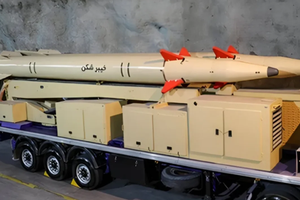
Iran is adapting and enhancing the capabilities of its bal...
Serbia's Minister of State Administration and Local Self-G...
Kazakh President Kassym-Jomart Tokayev shared some critici...
Two windows, a century of history and the metaphysics of p...
In my research at the Central State Archives, specifically...

At a time when industrial products are increasingly taking...

Trust among people is not just a three-syllable word. It c...

This Saturday, one US dollar is bought for 81.7 lek and so...
War, weather and supply disruptions could send gas prices ...
The number of active enterprises in Albania continued to g...
In Albania, the bar-cafe has long become an almost unique ...