


Competition for district police chiefs/ Candidate scores are published
The Commission for the Evaluation of Applications for the ...



In Albania, the journalist community and civil society are increasing the pressure on the official authorities in order to take the necessary measures based on the EU directive on strategic lawsuits against public participation, or as they are otherwise called SLAPP. According to experts in the legal field, they aim to restrain journalists in their mission, harming transparency and public accountability. During the last 3 years, lawsuits against journalists in court increased by almost two times. This was highlighted worryingly in the last progress report of the EU for Albania. On the other hand, officials say that they have moved to implement the EU's anti-SLAPP directive.
In the spring of this year, the EU adopted a directive against SLAPP lawsuits, to protect people who engage in public participation from malicious lawsuits.
The Council of Europe also adopted a recommendation for this purpose. These lawsuits are increasingly being used by high-ranking politicians, business representatives or individuals with criminal connections as a form of pressure on journalists, activists and representatives of civil society in order to get them to withdraw from various investigations of events with a corrupt background. , illegal or criminal.
In 2023, 73 lawsuits were filed against journalists in the country's courts, from 42 the year before. Currently, the Respublica center, which has been providing free legal assistance to them for the past few years, is pursuing about 50 such cases in the courts. Apart from one lawsuit, this center has won all cases at first instance and the processes are continuing on appeal. But in the absence of a legal framework, judges are currently unable to consider SLAPP lawsuits or not. Lawyer Dorian Matlija has a personal approach based on experience.
"They are considered such when it is seen that the chances of winning in court are almost zero, because they are absurd in themselves for the arguments they raise, but they have the negative effect of scaring away journalists with high numbers that are sought for damages. It also delegitimizes them by questioning their news or credibility and of course it takes journalists' time. Powerful political groups or powerful businesses have every opportunity to pursue these issues and continue to "drag" journalists through long trials," Dorian Matlija, executive director of the Respublica center, says for the Voice of America.
Mr. Matlija says that the plaintiffs are senior politicians, most of them from the majority, representatives of businesses and officials. He argues that the plaintiffs do not withdraw, even though in many cases the special prosecutor's office discovers corrupt affairs that were written about by the journalists he defends in court.
In the guide to the rule of law that was approved by the Albanian government in June of this year, as part of the preparation for the negotiations with the EU, it is specified that the official authorities will work to align the EU anti-SLAPP directive with the legislation Albanian.
The directive suggests several measures such as: the early exclusion in court of unfounded lawsuits, the covering of costs by the plaintiff when the process turns out to be unfounded, the obligation of the plaintiff to prove that the lawsuit is justified, the imposition of penalties by the court on those who initiate lawsuits malicious, or free legal aid for journalists.
But civil society representatives note that the process in the country is complex, taking into consideration the shortcomings in the body of judges due to the vetting process.
"Our legal experts who have made the initial assessment of the spaces and gaps we currently have in this regard argue that the process is very challenging. In this context, it is very necessary to start early and be as inclusive as possible" - says Blerjana Bino, head of the Center for Science and Innovation for Development, for the Voice of America.
Even the President of the Union of Journalists of Albania, Aleksandër Çipa, suggests a quick judicial process for journalists in the courts, as the delay damages their work, he argues.
"Our courts cannot keep the processes related to journalists on their calendars. The opportunity must be created for these processes to be completed in full transparency in accordance with Albanian legislation and to become examples that are reflected with reactive attitudes from institutions or persons who file unfounded lawsuits against journalists" - argues Mr. Çipa.
Justice Minister Ulsi Manja told the Voice of America that a special working group has started the analysis of concrete cases of SLAPP lawsuits in courts against journalists to see the typology, where they come from and what the court's decisions are like.
Mr. Manja confirmed that the alignment of the EU directive with the legislation in the country has started even though the final deadline in the roadmap is 2027. According to him, it is thought to intervene in two aspects.
"If you refer to the directive, one of the anti-SLAPP measures is the opportunity that should be given to the judiciary to reject these lawsuits from the first moment. This definitely requires changes to the Civil Procedure Code. Journalists in the case of strategic lawsuits against public participation (SLAPP) are considered victims. Even in this case, there will have to be an incentive related to legal protection, free legal aid. This is provided by the law on free legal aid. This law will also have to be changed. With these, we have started working from now on" - says Minister of Justice Ulsi Manja.
But Mr. Matlija, director of the Respublica center, stops at another point related to the decriminalization of defamation, since half of the lawsuits he pursues in court are criminal and not civil. The Criminal Code provides for a fine of up to 3 million ALL for defamation.
“A good portion of SLAPP lawsuits are those that are tried in criminal courts rather than civil courts. Journalists do not face compensation, but punishment. The fine is not very high, but the biggest problem is that it remains in the testimony of the journalist's penalty, as a convicted person. This has been criticized by the European Court of Human Rights" - continues Mr. Matlija.
The Minister of Justice told VOA that work is underway on a new criminal code that aims to reflect 61 EU directives. The decriminalization of defamation will receive special attention, says Mr. Manja.
"Our approach is positive to align the Criminal Code with the best EU standards. Why not Albania, when the new criminal code is approved, decriminalize defamation. There are other legal instruments to protect against defamation and defamation. A civil court process even in the case of defamation, when it is alleged to violate personal, family or commercial dignity, there are other legal means to restore the violated right even in the case when these subjects are journalists," explained Minister Manja.
But one of the key moments when it comes to strategic lawsuits against public participation is related to the training of judges, which is also included in the EU directive. The Albanian Helsinki Committee considers this element important.
"I believe that there is a need for real training of judges, from experts who have dealt with SLAPP lawsuits in other countries, whether in the region, in Albania or in EU countries, since this is not an Albanian but a global phenomenon." - says Erida Skëndaj, executive director of the Albanian Committee of Helsinki.
In Albania, the EU has held several special sessions for the training of judges regarding freedom of expression. Meanwhile, a special training session is expected in Brussels in mid-November regarding SLAPP lawsuits, with the participation of representatives of the Albanian judicial system. This moment marks a new step in European efforts in this direction, which is expected to be reflected in Albania as well./ VOA

The Commission for the Evaluation of Applications for the ...

The head of the DP, Sali Berisha, today published a video,...

In order to prevent road accidents in urban and rural cent...
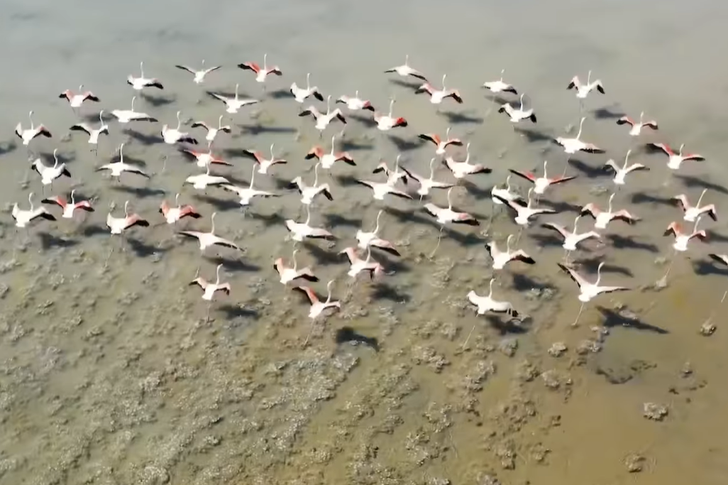
Prime Minister Edi Rama started this morning with some vie...
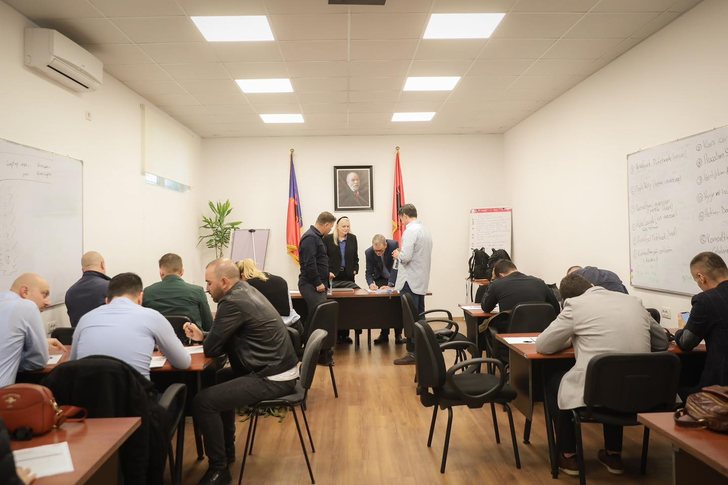
The American Embassy in Tirana has this week held a series...
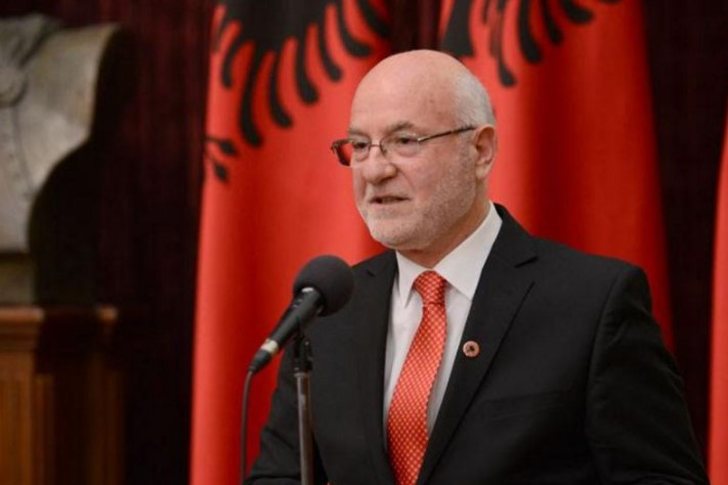
One of the issues that is being discussed with great inter...

The former ambassador of Albania to the United Kingdom...

24 million euros have been given by the Albanian gov...
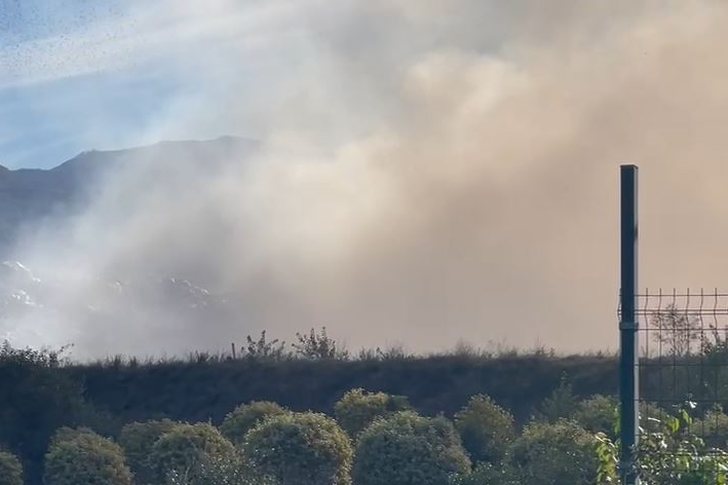
This Saturday morning, the city of Elbasan was covered by ...

This Saturday we are introducing you to some of the main p...

As for several days already, for this weekend our country ...
The former deputy of the Democratic Party, Ervin Salianji,...

The former Minister of the Environment, Lefter Koka, was s...
New evidence casts doubt on the validity of a Belgian cour...

The Seized and Confiscated Assets Administration Agency ha...
The Special Prosecutor's Office has taken Alqi Bllakon as ...
Prime Minister Edi Rama announces that Albania has been ho...

The draft budget of 2025 foresees about 2.17 billion ALL f...

In today's protest in front of the Tirana City Hall, the c...

The citizens of Beijing have come out in protest after the...

CNA has launched another investigation that could lead to ...

Irfan Hysenbelliu is a businessman that we call "Irfan the...

In March 2026, CNA launched another investigation centered...
The arrested mayor of Tirana, Erion Veliaj, with 13 charge...

The Special Board of Appeal (KPA) decided this Monday ...

The KPA vetting decided this Thursday to dismiss the p...

Suela Salavaçi, a prosecutor in the Prosecutor's Offic...

The Special Board of Appeal reinstated the prosecutor ...

A road accident occurred this evening on Nikolla Zoraqi St...

Three people were shot and wounded in Elbasan last night b...

A serious incident occurred this Tuesday in the Yrshek are...

An accident occurred this Tuesday on "Dituria" street in K...

All of Southern Europe will face changing weather conditio...

Albania was hit by temperatures significantly higher than ...

For the first time, Pogradec welcomed the Inter-Lake Chess...

Albania has achieved a record for the employment of foreig...

US Secretary of State Marco Rubio arrived in Manila on Jul...

In the space of a few days, Ukrainian President Volodymyr ...

The spokesman for the Iranian Foreign Ministry warned Bulg...

Autoritetet italiane sekuestruan pako me afër 800 kilogram...

At a time when industrial products are increasingly taking...

Trust among people is not just a three-syllable word. It c...

Master of humor Todi Llupi has passed away at the age of 7...

The ninth edition of "MIK Festival" kicked off with one of...

Construction company licenses will have a validity period ...

The Centralized Purchasing Operator recently opened a tend...
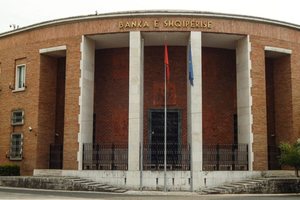
The new draft law "On the Bank of Albania" provides that t...

This Tuesday, one US dollar is bought for 81.2 lek and sol...