

Bregu: Aiming at digital transformation, we are working for the Europeanization of our region
The sixth Western Balkans Digital Summit (SDBP), organized...


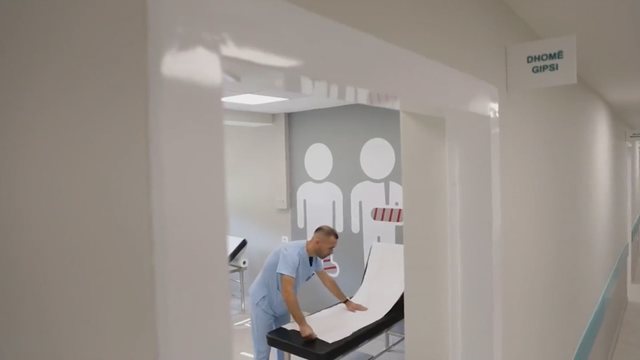
In Albania, the health system continues to face problems even though progress has been made in recent years. Citizens' out-of-pocket payments, although they have paid health contributions, are above the average of EU countries, and burden the family budget. Some experts are promoting discussions on a new service delivery model that foresees the increase of health insurance, and the reimbursement of medical services even in private hospitals in order to improve their quantity and quality. The authorities have reservations about this model, while they say they are adding contracts with private structures for services that are missing from public ones.
In Albania, the provision of medical services is based on the universal principle, i.e. the provision of as many services as possible and that of solidarity, the provision of some services even for citizens who have not paid health contributions. But one of the most tangible problems continues to be the high amount of payments they have to make, although they have paid the corresponding contributions.
According to a recent report of the European Commission, which analyzes the programs of economic reforms in the countries of the region, out-of-pocket payments in Albania amount to 45% of the total expenditure on health, significantly above the average of 15.5% of the EU countries. These are the data of 2018, but INSTAT for the following years presents increasing expenses of families for health.
Experts in the field think that the time has come for a public debate that serves to increase the level of health contributions of citizens in order to increase services and quality in the public health system. According to the current scheme, over 50% of the contributions are paid from the state budget (taxes). Citizens pay 3.4% of the salary divided between the employer and the employee. They can also pay contributions to private insurance companies.
"This level is very low. We are practically the last in the region for the level of direct health insurance contributions. Their rate is 8-9% in the region, while in Kosovo it is 7%. With this low level, citizens have less quality services, doctors have lower salaries and there are fewer investments. The truth must be told to citizens, a higher level of payment is quality service to them. Health costs, it costs, it is expensive everywhere. We need political consensus on such issues to have stability over the years", Qamil Dika, Lecturer at the Faculty of Medicine at UMT, told the Voice of America.
For their part, the officials explain that the policy of salary increase has resulted in the increase of citizens' health contributions. Experts also single out positive steps towards universal health care coverage, both through the expansion of the list of reimbursable drugs and the categories that benefit, as well as in the direction of investments in the health sector.
The budget for the health sector has increased significantly in the last decade by over 80%, but in relation to GDP it is 3.1%, significantly below the average of 8% of the EU countries, while the authorities say they intend to bring it to the extent of 5%. The European Commission estimates that the health system in Albania is underfunded and that health care accounts for 10% of government spending, below the WHO recommendation of 12%. And as a result, limited funding has made citizens spend out of pocket often and informally.
The public health system is financed by the Compulsory Health Care Insurance Fund. The model is a hybrid, a cross between the Beveridge model, where the state covers all health expenses, and the Bismark model, where health services are covered by citizens' contributions. In Albania, the private health system is also developed, and citizens pay out of pocket for the services they require. But despite some improvements over the last few years, the universal coverage scheme is compromised in the public system.
"It certainly has its drawbacks, being a mix of packages that the world uses. One of the main drawbacks is that it does not offer universal services, or all services. The other shortcoming, which we all feel that we are forced to pay out of pocket for health services, is related to the quality that leaves much to be desired in public hospitals," said Elisabeta Musta, a doctor in Tirana, to the Voice of America.
In order to enable some health services that are not offered in state structures, the authorities say that they have signed contracts with private health institutions.
"The state, in order to meet the needs for those pathologies that it cannot cover on its own, which are life-saving, has 19 packages that citizens, based on their contributions and funding from the state, can receive in private health institutions such as those of cardiology, dialysis, cochlear implant, cataract or radiotherapy. So the state has tried every year to meet the growing needs of the population, also based on the developments that medical science is making" - Mira Rakacolli, Vice President, told the Voice of America. Minister of Health.
But many experts, within the framework of the progress of the private health system during the last decade, are promoting a new debate, in order to increase health services and quality, seeing the public and private systems as one. They propose that these services be covered by the Compulsory Health Care Insurance Fund, in both sectors, and the citizen chooses himself where he wants to receive them.
"Through the increase in contributions, we encourage two more elements, which are the introduction of private operators into the scheme, offering health services to citizens made possible by public fund payments, and the other element is competitiveness between two public and private operators. The cost of the service costed by the Ministry of Health is allocated to the institution where the citizen chooses to receive the service. Here we would definitely have a quality hop of our health system. It will be seen who performs better, the private or the public system. And the next director will not stay there to see tenders, he will see the mechanisms of how to increase performance" - continued Qamil Dika, Lecturer at the Faculty of Medicine at UMT.
The pedagogue of medical sciences at the Aleksandër Xhuvani University in Elbasan, Gjergj Koja, thinks that such a step requires careful analysis, since the consequences in the event of the malfunction of this scheme are serious.
"It may be an opportunity in terms of expanding the services that the health insurance scheme can cover in the future, bearing in mind that the practice of reimbursing dialysis in private hospitals is a good omen to consider." for the expansion of the scheme. But this is something that should be looked at and discussed well, because there are cases where the public hospital benefits, but there are also cases where the public is put in difficulty or the private hospital benefits at the expense of the public hospital. It should be studied well, several variants of cooperation should be looked at, because the consequences in case of malfunction of this scheme are serious", said Gjergj Koja, former Minister of Health, for the Voice of America.
Asked by Voice of America about discussions on a new model of providing reimbursable health services in both public and private hospitals, Deputy Health Minister Mira Rakacolli was skeptical when giving these arguments.
"This model has many problems, technical, medical and financial. It becomes difficult to control. They are experiences shared with international experts, and they are their advice. Because a diagnosis with one examination may require several, because it benefits the hospital more revenue. It is not a model strongly recommended by the experts we consult to do the best. It's a complex worldwide problem, if it were a good model, they wouldn't exist 4. Everyone has their own priorities and shortcomings" - continued Mira Rakacolli, Deputy. Minister of Health.
Debates about the model of providing health services also take place in Western countries, where deficiencies have been noticed in quite a few cases. But in Albania, they take on a different dimension in the conditions when government spending on health in relation to GDP, as well as citizens' contributions, are almost half of those of Western countries. In 2020, according to a document of the European Commission for Economic Reforms in the region, 9.1% of the population, many times higher than the average of 1.1-3.3% of EU countries, reported an unmet need for medical care due to cost high. These figures, according to experts, show that despite improvements in the health system, Albania continues to face problems related to the financial protection of low-income people and other vulnerable categories.

The sixth Western Balkans Digital Summit (SDBP), organized...
The Embassy of Great Britain in Tirana has reacted on ...
The Council of Ministers in the meeting organized this...
The Council of Ministers in the meeting organized this...
Entrepreneur Gjegj Luca has hired a blind woman in his...
The US Embassy in Tirana has issued a response regarding t...
The former mayor of Puka, Gjon Gjonaj, has been appoin...

Cardiac surgeon Edvin Prifti is ranked second in the l...
A 43-year-old man in Kruja was arrested by the police ...
A car accident happened this Wednesday on the Fushë Krujë-...
Apeli i GJKKO-së ka lënë në burg ish-zëvendësministrin e S...
The session in the Assembly for Kosovo will be held on...
Deputeti i PD-së, Luan Baçi iu ka bërë thirrje autoritetev...
DP deputy, Ina Zhupa, has shown details from the next ...
Applications for the American Lottery opened on Wednes...
A 27-year-old man is wanted by the police after he is ...
A 28-year-old man in Gjirokastra has been arrested by ...
The Parliamentary Group of the Democratic Party has submit...
Skleroza Multiple është sëmundje inflamatore kronike e...
The Minister of the Interior, Taulant Balla, has infor...

CNA has launched another investigation that could lead to ...

Irfan Hysenbelliu is a businessman that we call "Irfan the...

In March 2026, CNA launched another investigation centered...
The arrested mayor of Tirana, Erion Veliaj, with 13 charge...

The Special Board of Appeal (KPA) decided this Monday ...

The KPA vetting decided this Thursday to dismiss the p...

Suela Salavaçi, a prosecutor in the Prosecutor's Offic...

The Special Board of Appeal reinstated the prosecutor ...
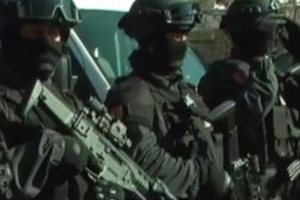
New details from the operation being carried out in Fier t...
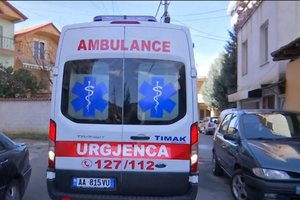
The 17-year-old, who was seriously injured yesterday after...
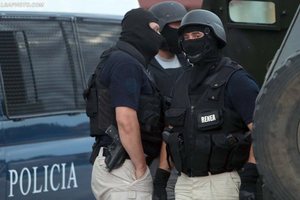
RENEA is headed towards Roskovec after the murder that occ...
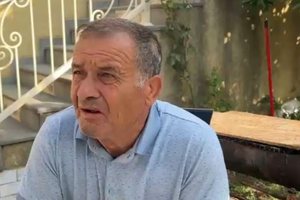
A serious incident occurred in Fier where citizen RB, 35 y...

By noon, cloudiness is expected to prevail in almost all o...

Children without parental care, for whom alternative famil...

On Thursday, our country will be under the influence of st...
A serious accident that occurred this Wednesday with the c...
The European Union Office in Kosovo has called on all poli...
Serbian President Aleksandar Vučić, at a press conference ...
For the first time since the launch of the euro, European ...

Artificial intelligence (AI) models from the American comp...

At a time when industrial products are increasingly taking...

Trust among people is not just a three-syllable word. It c...

Master of humor Todi Llupi has passed away at the age of 7...

The ninth edition of "MIK Festival" kicked off with one of...
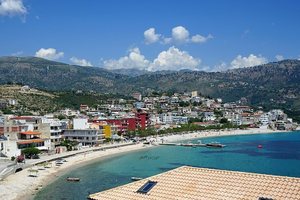
The number of active enterprises in Albania continued to g...
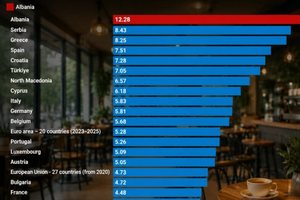
In Albania, the bar-cafe has long become an almost unique ...

This Friday, one US dollar is bought for 81.7 lek and sold...
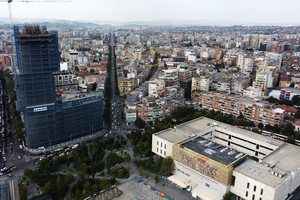
The average sale price of apartments in Tirana reaches rec...