


Elon Musk becomes world's first trillionaire after SpaceX's historic stock market debut
American entrepreneur Elon Musk has become the first perso...

American entrepreneur Elon Musk has become the first perso...

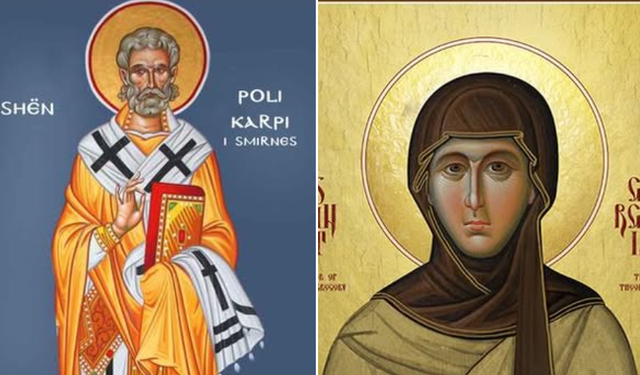
Orthodox believers have begun the journey of Great Lent, a period that, beyond food deprivation, invites deep spiritual reflection.
Today begins the White Moon, also known as Clean Monday, which is the first day of Great Lent.
Hieromartyr Polycarp of Smyrna. Saint Gorgonia. Martyr Serenus.
- HIERODESHMOR POLYCARPUS OF SMYRNA -
The glorious Polycarp, who was, according to his disciple Irenaeus of Lyons, “a disciple of the apostles and a companion of those who had seen the Lord,” was born in Ephesus, in the time of the emperor Vespasian (about the year 70). Before their martyrdom, his holy parents entrusted their child to a holy woman, Callista, who raised him in the fear of God and in love for the holy virtues. Full of love in his soul, the child gave so much alms that he emptied the reserves of his adoptive mother to give to the poor.
Since they were miraculously replenished again, Callista changed his name, and from Pangrat he called him Polycarp (which means: with many fruits).
When he reached adulthood, Polycarp became a disciple of the Apostle St. John the Theologian, who was then preaching the gospel in the province of Asia, together with St. Bucol (February 6) and St. Ignatius the God-bearer (December 20). Benefiting from his teaching in everything that had to do with God, Polycarp shared with His Beloved Disciple all his sufferings, until his exile to Patmos. The Apostle St. John ordained Bucol bishop of the great and famous city of Smyrna and entrusted Polycarp with his help and companion in suffering. When he arrived in Smyrna, Polycarp was ordained a priest and was entrusted with the care of orphans, until the day when Bucol, who foresaw his own death, appointed him to be his successor.
Thus Polycarp, by the will of God and his spiritual father, became the pastor of the Church of Smyrna, and he labored with great diligence, imitating in all things the holy conduct of his fathers and faithfully repeating the words which they had received from the very mouth of our Lord. Saint John sent from exile his praises to the Angel of the Church of Smyrna and encouraged him to remain faithful until death, in order to receive the crown of eternal life (Rev. 2:10). Clothed with divine grace, Polycarp performed many miracles: by his prayer he quenched a fire that had threatened the entire region for seven days, caused abundant rain to fall after a long drought, freed the demon-possessed and healed the sick, so that many pagans, thanks to him, became Christians.
At the beginning of Polycarp's pastorate (101 AD), Saint Ignatius was condemned to death and sent in chains to Rome to be devoured by the beasts of the arena. He passed through Smyrna and was happy to embrace the holy bishop for the last time. When he arrived in Troas, Saint Ignatius sent him a letter thanking him for his hospitality, entrusted him with the care of the Church of Antioch, and conveyed to him valuable and divinely inspired advice on the duties of a shepherd: I praise God who has judged me worthy to contemplate your blameless face. Perform your episcopal duty with great zeal in body and soul. Pursue unity, for there is nothing greater than it. Bear with all men in love, just as God bears with you.
Bear the weaknesses of all, like a perfect athlete. The present time demands that you win God, just as a helmsman waits for the wind and as a man tossed by a storm hopes to reach a calm harbor...
Next, Saint Polycarp wrote to the Christians of Philippi to congratulate them on their worthy reception of Saint Ignatius and the martyrs: ... the icons of true love, which you have accompanied as befits those who were bound with chains worthy of the saints, which are the diadems of those truly chosen by God. He urged them to persevere in the patience that they saw radiated in the martyrs and presented to them the principles of life of a Christian community, which is a friend of love: Faith is the mother of us all, it is the source of hope and is preceded by love for God, for Christ and for neighbor. He who abides in these virtues has fulfilled the commandment of Justice, because he who has love is far from all sin.
Saint Polycarp led his Church in an apostolic manner for more than 50 years. In the year 160, already an old man, he made a journey to Rome to discuss with Pope Anicetus a difference that divided Rome from the Churches of Asia on the date of Easter and to defend the true faith against heresies. The splendor of his holiness and teaching led to the conversion to the true faith of many who had been deceived by the heretics Valentinus and Marcion. At the moment when he was leaving Rome, the Pope left him, out of respect for the Eucharistic Assembly, and, after exchanging the holy kiss, they parted in peace, with mutual respect for the legitimate differences between the local Churches.
Shortly after his return to Smyrna (165), a violent persecution broke out against the Christians by the emperor Marcus Aurelius (161-180), which convulsed all the Churches of Asia. At this time, during the martyrdom of the twelve martyrs of Philadelphia, Saint Polycarp, now 86 years old, died a glorious death, on Holy Saturday, in a manner similar to the Passion of our Lord Jesus Christ.
While these holy martyrs of Christ were enduring all kinds of tortures and were finally to be served as food for wild beasts, the most venerable Polycarp, maintaining his usual calmness, wanted to remain in the city so as not to abandon his flock. But, listening to the prayers of his friends, who begged him not to expose himself prematurely to death, he retired to a small estate, not far from the city, and prayed day and night for all people and for the Churches of the whole world. Three days before his arrest, while he was praying, he had a vision in which his pillow caught fire and became ashes. When he returned to his friends, he announced to them that he would soon give his life for the sake of Christ.
When he had gone to another shelter, four armed men, who learned where he was staying after torturing a young slave, went and forcibly entered the building. The saint refused to leave and received them with a face full of radiance and light, invited them to have a good breakfast, asking them to leave him for a while to pray.
They agreed, and for almost two hours he prayed on his feet, filled with the grace of God, remembering all the people he had known, great and small, as well as the Church throughout the world. The hour of departure came, and the soldiers, seized with great fear and regretting having undertaken such an act, mounted him on a donkey to take him to Smyrna. The chief of the guards, also called Herod, stopped in front of him and took him into his chariot, to persuade him to save his life by making a sacrifice to Caesar. When he saw that his efforts were in vain, he threw the saint into the road and beat him. The old man, wounded in the leg, continued his journey with greater joy.
When he entered the packed stadium, where the crowd was shouting and screaming with bloodlust, a divine voice was heard among the few Christians who were in that mass of people. “Be of good courage, Polycarp, and behave like a man!” The proconsul urged him to deny Christ, saying: “May you be sorry for your old age!” and other things that persecutors are accustomed to say on such occasions. “Swear by Caesar and say: Down with the atheists!” he shouted to him. Polycarp looked at the crowd of pagans who had filled the amphitheater and answered with a sigh: “Yes, of course, down with the atheists!” As they were ordering him to deny Christ, he replied: “For 86 years I have served him and he has done me no harm. How can I blaspheme against my King who loves me?”
The proconsul said to him: “I have wild animals, and if you do not change your mind, you will become their prey.” Polycarp replied: “Bring them here, for it is impossible for us to go from better to worse, while the rule for man is to advance from evil to righteousness.” “I will burn you with fire, because you despise animals,” said the judge. Polycarp, full of strength and joy, replied: “You threaten me with the fire that burns for a moment and is extinguished after a little while, because you do not know the fire of the coming judgment and the eternal torment that is prepared for the wicked. But why waste time and delay? Do whatever you want!”
After the herald announced that Polycarp had declared three times in a row that he was a Christian, the enraged crowd demanded that a ferocious lion be unleashed upon him.
But since the animal games were over, they cried out: “Polycarp must be burned alive!” Immediately the pagans and the Jews mixed with them went to the various workshops to find wood and sticks. When they had prepared the pile of wood in the middle of the stadium, Polycarp himself took off his clothes and, as calm as he was when performing the sacred sacrifice, wanted to take off his shoes, which he had not done because the believers wanted to kiss his feet. When they wanted to fasten him to a stake, he said to the executioners: “Leave me alone, for He who gives me strength to endure the fire will give me strength to stand still on the pile of wood.” They placed him in the middle of the pile and lit a fire to consume him as a voluntary sacrifice prepared for a holocaust. He raised his eyes to heaven and with a final prayer thanked God, who made him worthy to participate, with all the other martyrs, in the cup of Christ, for the resurrection and eternal life of soul and body, in the incorruption of the Holy Spirit.
When he uttered the word Amen and finished his prayer, the executioners lit the fire. A great fire rose high, but, surprisingly, the flame took the form of a veil, swaying in the wind, which surrounded the body of the saint like a protective wall. He stood in the middle not like a burning body, but like a loaf of bread baking or like gold shining in a foundry, emitting the aroma of incense and other pleasant aromas. When the wicked saw that the saint was not dying from the fire, they ordered the executioners to cut off his head with a sword. Then blood burst out in such a large amount that it quenched the fire, astonishing the crowd present.
The precious relics of the holy martyr were burned to ashes at the instigation of the Jews, but the faithful managed to obtain some bones and placed them in a suitable place, where they gathered every year to joyfully celebrate the day of his birth in heaven. The glorious martyrdom of Saint Polycarp stopped the persecution against Christians for a while.
- GORGONIA SEAFISH –
Blessed Gorgonia was the elder sister of St. Gregory the Theologian (January 25) and the daughter of St. Gregory of Nazianzus the Elder (January 1) and St. Nonna (August 5). She inherited from this exemplary couple not only her existence, but also her zeal for the faith. Gorgonia grew up in Nazianzus, but she always considered the heavenly Jerusalem to be her true homeland and that true nobility was that of the icon of God. From her youth she strove to exalt herself by the beautiful crown of virtues, especially by her chastity. She married a resident of Iconium, Alypius, with whom she had three daughters. Gorgonia preserved the zeal of virgins for God even in marriage and attracted her husband to the spiritual struggle to acquire virtue.
Guarding her eyes from every indecent sight and closing her ears to vain talk, opening them only to divine and saving words, she restrained herself from laughing indecently, transforming them into a smile that peacefully illuminated her face. She knew, like no one else, to guard her tongue and speak words with salt, uttering with her mouth only praises for God. She did not waste time on trifles, did not pay attention to herself and her external appearance, deforming the icon of God with makeup.
Gorgonia knew only one adornment, that of the soul through holy virtues, and the only red on her face, pale from asceticism, was that of fear.
A model of the Christian woman for the sake of knowledge and great spiritual wisdom, she was for her parents, for her fellow citizens, and for strangers a wise counselor with deep knowledge in many delicate matters concerning the conduct of Christians in the world.
No one else cared so much for the churches of God, no one had more respect than she for the priests of God, opening the doors of her house at all times. There was no one else like her in almsgiving and helping relatives and the afflicted, so much so that in her case it could be said, as about Job the Just, that she was: “the eye of the blind, the foot of the weak, the mother of the orphans…” She distributed all her material goods as alms, so that, when she departed from this life, she left her body as her only possession; but she always tried to do her charity secretly.
One day she had a terrible accident: she was dragged for a long time under her overturned carriage. But, out of shame, she refused to show the doctor her body swollen from the blows and placed all her hope in God, who miraculously healed her.
Another time, while suffering from a disease that doctors had no cure for, she rose early in the morning and went and lay down on the floor of the church, before the altar, reminding God of the miracles He had performed to help His servants. Just like the woman in the Gospel, who wetted the feet of the Lord Christ with her tears, watered the holy altar with her tears and thus found healing from the disease that tormented her.
When she received Holy Baptism, at an advanced age, as was the custom at that time, nothing held her back in this life and she prayed to Christ for whole nights to take her to Him as soon as possible. During these agripnias, she received a revelation about the day of her death. All that remained for her was the baptism of her husband to fulfill the work of a disciple of Christ and an imitator of the apostles. When the day came, the saint fell ill and gathered all her relatives by her bedside to give them the last lesson about eternal life, then she set out to join the choir of saints, murmuring the words of the psalm: “Now I will lie down in peace and sleep, for you alone, O Lord, fill me with hope” (Ps. 4:9)./ CNA


AKMC (National Civil Protection Agency) has reacted regard...

Journalist Sokol Balla has left the SPAK premises. Asked b...

The situation on the Librazhd-Prrenjas road axis has worse...

The blockage of movement in the southeast of the country a...

The Mandates Council meets today to review the request of ...

Journalist Sokol Balla appears at SPAK. Sources for CNA em...

Prime Minister Edi Rama will depart for Korça by helicopte...

This Monday morning, the former Deputy Prime Minister of N...

Long lines of vehicles, slow traffic and hours at the ...

The Mandates Council will meet this Monday at 10:00 to rev...

Prime Minister Edi Rama has shared several photos on his s...

The Democratic Party in Saranda held elections today for a...

A problematic situation caused by a landslide has been cre...

The head of the Socialist Party Parliamentary Group, Taula...

The citizens of Vlora will face water supply interruptions...

After the damage to the road segment on the axis connectin...

For almost 48 hours, the Librazhd-Prrenjas national road h...

The blockage of the Librazhd-Pogradec national axis, follo...

The head of the SP parliamentary group, Taulant Balla, has...
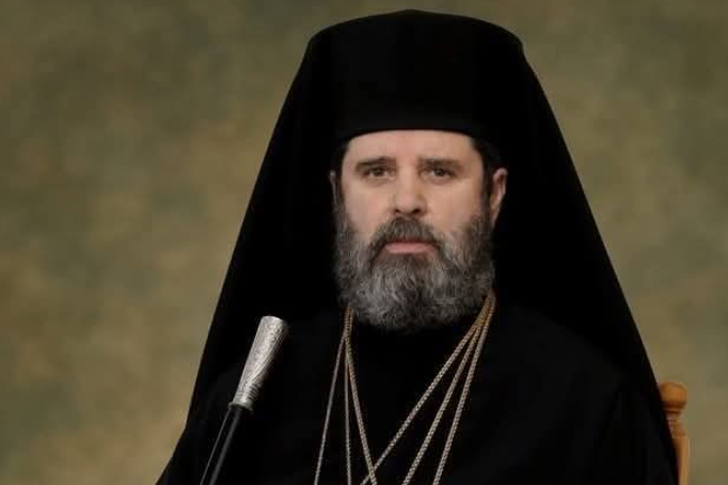
His Beatitude, Archbishop of Tirana, Durrës and All Albani...

There have been 12 days of protests in the capital, which ...

Dritan Prençi is the SPAK prosecutor who is sleeping on th...
The in-depth investigations that SPAK conducted into Ajola...
SPAK's standards, the way it investigates, how it secures ...

The Special Board of Appeal (KPA) decided this Monday ...

The KPA vetting decided this Thursday to dismiss the p...

Suela Salavaçi, a prosecutor in the Prosecutor's Offic...

The Special Board of Appeal reinstated the prosecutor ...

New details have emerged regarding the serious accident th...

An Albanian businessman was arrested this afternoon in Gre...

A serious accident has occurred on the Korça-Ersekë axis, ...

Fier Police has announced the measures taken this week for...

Today our country will be affected by stable weather condi...

A tragic accident occurred this Friday afternoon in Kameni...

Today our country will be affected by unstable weather con...

On Thursday, our country will be affected by relatively un...

American entrepreneur Elon Musk has become the first perso...
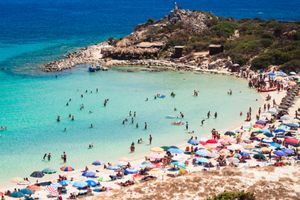
Umbrellas have been banned on a beach in Sardinia for anyo...
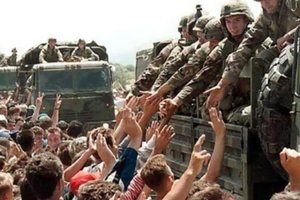
This June 12th marks the 27th anniversary of the liberatio...

The global economy is expected to face its biggest slowdow...
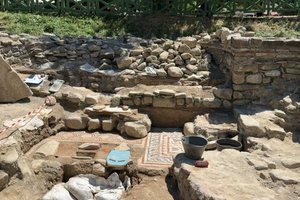
Several archaeological excavations conducted during this s...
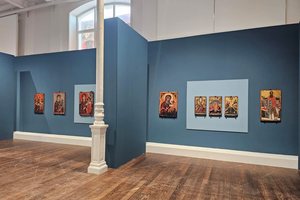
At the Museum of Fine Arts in Chambéry, France, an exhibit...

Korça has transformed this weekend into the capital of cel...

Korça is ready to open the summer season with one of the c...

This Saturday, one US dollar is bought for 81.5 lek and so...
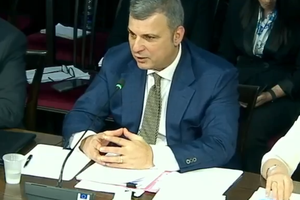
The Governor of the Bank of Albania, Gent Sejko, shared to...

Business lending has increased in the first half of this y...

The labor market has shown worrying trends in early 2026. ...