


Closing of the National Museum/Ceka: I witnessed how grapes and plums became 1.5 million dollars
Archaeologist Neritan Ceka has spoken about the closur...



Facebook turned 20 years old and the platform remains as much a magnet for controversy and money as it was when it was created, writes The Economist. On January 31, the founder of the social network, Mark Zuckerberg, was questioned by US senators about the spread of harmful material on the network.
The next day, he made public the financial results of the company Meta, which has now reached the value of 1.2 trillion dollars. However, even though social media is attracting a lot of attention from users and critics, it is undergoing a profound, but somewhat hidden, transformation, writes The Ecpnomist.
The magic of social networks lay in the combination of personal interactions with mass communication. Now, this amalgam is splitting again. Status updates from friends have given way to videos from strangers, resembling hyperactive television.
Public posting is increasingly moving to closed groups, similar to email communications. What Zuckerberg calls the digital "town square" is being rebuilt and creating problems at the same time.
This matters because social media is how people experience the Internet. Facebook alone has more than 3 billion users. Social apps are responsible for almost half of the time spent in front of the mobile screen, a time that takes up more than a quarter of the hours of the day that a person spends awake.
Users now spend 40% more time on social apps than they did in 2020. In addition to being fun, social media is the center of online debate and serves as a catapult for political campaigns. In a year when half the world's population will head to the polls, politicians from many countries, from Donald Trump of the US to Narendra Modi of India, will be very present on the Internet.
The main different feature of social media is that it is not so social anymore. Popular apps like Facebook, inspired by TikTok, are showing users clips selected by Artificial Intelligence, relying on users' personal likes, not their social connections, i.e. the likes of friends.
On the other hand, people are posting less and less about themselves. The percentage of Americans who say they enjoy documenting their lives online has dropped from 40% to 28% as of 2020. The debate is shifting to closed platforms like WhatsApp and Telegram.
Well, it seems that in the "digital city square", the lights have been turned off. Social media has become more closed. Chinese-owned video app TikTok has begun to be imitated by other platforms that want to follow its path of success. Twitter, renamed "X," has released some of its code but has tightened access to data that explains the method used to choose which posts users see. Private message groups are often fully encrypted.
Some of the consequences of these trends are welcome. Political activists say they have to soften the tone of their messages to appeal to users who chat in private social media groups. A provocative post that attracts "likes" on the X platform, may seem tasteless to the group of parents of school children, formed on WhatsUp.
Posts on messaging apps are sorted chronologically, not by an algorithm that maximizes user engagement, and this reduces sensationalism. In particular, closed groups may be better for the mental health of teenagers who had problems with self-confidence when their private lives became public on social media.
On platforms where algorithms base online content on users' personal likes, users notice many posts from people who are not part of their circle. And a source that gets content from almost anywhere has the potential to spread the best ideas far and wide.
The new world of social media
However, this new world of social media has its own problems. Messaging apps are largely unmoderated. For small groups, this is a good thing: after all, platforms don't have to monitor direct messages between their users, just like phone companies don't have the right to monitor customer calls.
In dictatorial regimes, coded conversations can save lives. But Telegram's 200,000-person groups are more like uncensored broadcasts than private conversations. Politicians in India have used WhatsApp to spread lies that would probably not have been accepted by an open network like Facebook.
While more people are choosing closed groups for communication, open networks have become less useful, due to the decline of public posts. During the Covid-19 pandemic, scientists and doctors started debates on the Internet, which included both correct data and misinformation.
Open source intelligence flooded in from all sides when Russia invaded Ukraine. Today, those conversations are disappearing or moving into closed channels, slowing the spread of ideas. Meanwhile, people who still express their opinions on open public networks are mostly men, who tend to describe themselves as far left or far right.
Moreover, open network algorithms that are driven by user behavior seem to tend to spread the spiciest videos widely. Previously, for something to go viral on a social network, people had to choose to share it with others.
Whereas now, they inadvertently make a certain post more popular just by looking at it, as the algorithm rewards online content that attracts more views and clicks. From this new method, provocateurs such as Trump or Nayib Bukele, the favorite politician in this week's elections in El Salvador, are expected to benefit more, as well as the spreaders of misinformation.
The platforms say they have become better able to eliminate fakes. Taylor Swift, the latest victim of AI-generated fake images, may not agree with these platforms' claim that they are improving in this regard.
Even more pressing than the rise of fake news is the lack of real news. Zuckerberg once said he wanted Facebook to be like a personal newspaper. But since the social network is designed for entertainment, news accounts for only 3% of what people see.
Across all social media, only 19% of adults share news weekly, down from 26% in 2018. Pink news sites like BuzzFeed News, which relied on sharing posts, are gone. But it's clear that there's a problem when nearly half of young people say that social media has become their main source of news, at a time when these platforms have decided that news is no longer interesting.
WhatsApp and WhatsDown
Some people argue that the flaws of social networks can be fixed by better governance, smarter coding or a different business model. Things like that can certainly help. But the problems raised by the new generation of applications show that the shortcomings of social media are also the result of compromises in human communication.
When platforms turn to private groups, they inevitably have less oversight. When people leave their social groups, they may encounter more extreme online content.
When users embrace harmless entertainment, they watch less news. As social networks wither, operators and platform users should spend less time fighting old battles and more time facing new battles./Monitor

Archaeologist Neritan Ceka has spoken about the closur...

The founder of the "Albania Becomes" movement, Adriatik La...
The former deputy, Myslim Murrizi tells how the former spy...

Prime Minister Rama, during his speech held today in S...
Prime Minister Edi Rama has announced that the Thumanë-Kas...
GJKKO ka pezulluar nga detyra prefekten e qarkut të Fierit...

Prime Minister Edi Rama has spoken about new elections...
Kryeministri Edi Rama ka folur për lajmet që kanë qark...
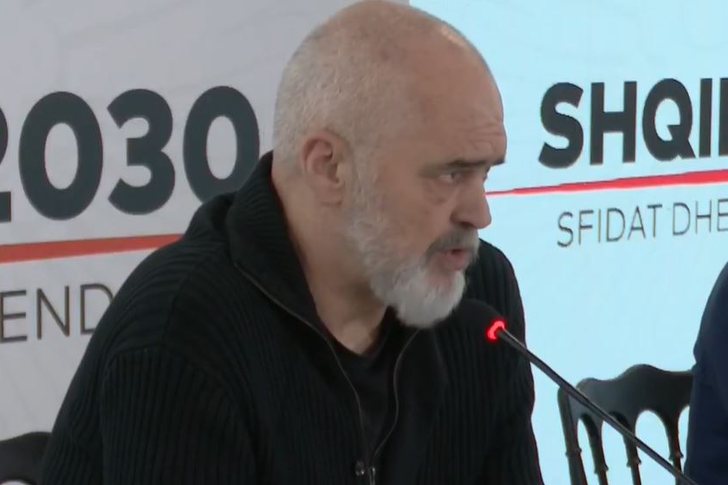
Prime Minister Edi Rama has stated that there will be ...

144 well-known Albanian actors have signed a petition aski...

The Ministry of Defense has refuted the Greek media which ...
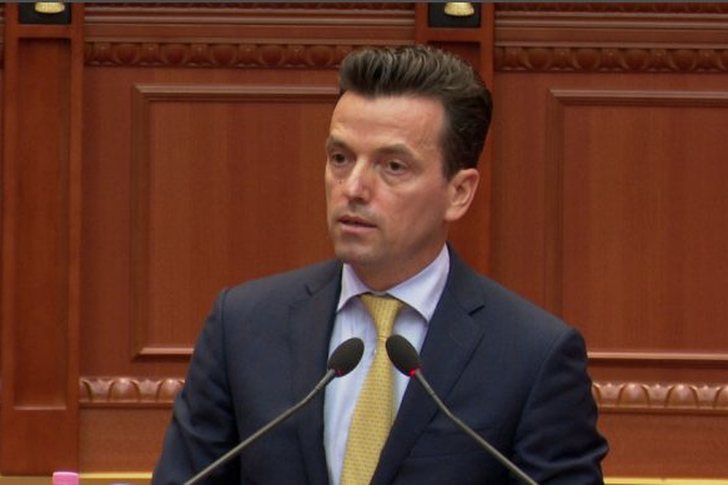
Deputeti Agron Shehaj ka ngritur shqetësimin se në Shq...

Geological fieldwork occasionally takes place in dangerous...

Gjykata e Shkallës së Parë në Kukës ka shpallur fajtor...

Dosja e dhunës brenda familjes mbretërore i ka kaluar për ...

The Tirana police managed to save an Italian tourist, who ...
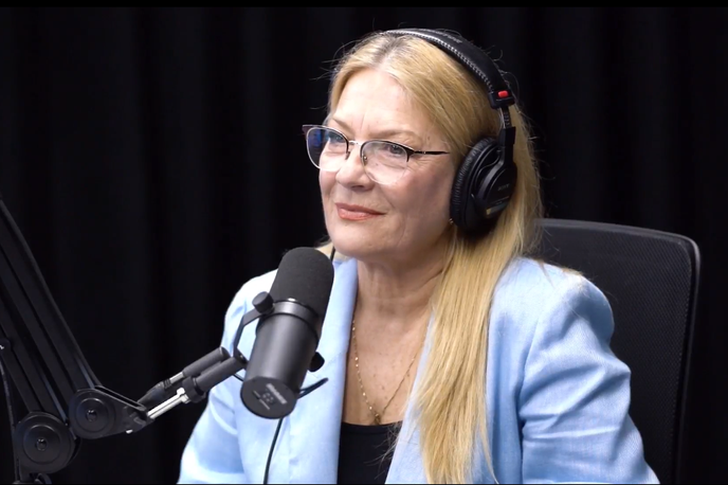
Në podcastin "Flasim" të kryeministrit Edi Rama, aktor...

This Saturday we are introducing you to some of the ma...

Edvin Kullurin, the secretary in Lulzim Basha's group, the...

During the weekend, it is expected that the atmospheric co...

CNA has launched another investigation that could lead to ...

Irfan Hysenbelliu is a businessman that we call "Irfan the...

In March 2026, CNA launched another investigation centered...
The arrested mayor of Tirana, Erion Veliaj, with 13 charge...

The Special Board of Appeal (KPA) decided this Monday ...

The KPA vetting decided this Thursday to dismiss the p...

Suela Salavaçi, a prosecutor in the Prosecutor's Offic...

The Special Board of Appeal reinstated the prosecutor ...

A conflict occurred this Thursday evening in the toy area ...

A person has died today on Orikum beach. According to repo...

Footage emerges from the serious accident that occurred th...

A Shkodra traffic police officer was hit with hard objects...

Children without parental care, for whom alternative famil...

On Thursday, our country will be under the influence of st...

A serious accident that occurred this Wednesday with the c...

The Institute of Geosciences has shared a forecast for wea...

The European Union Office in Kosovo has called on all poli...

Serbian President Aleksandar Vučić, at a press conference ...

For the first time since the launch of the euro, European ...

Artificial intelligence (AI) models from the American comp...

At a time when industrial products are increasingly taking...

Trust among people is not just a three-syllable word. It c...

Master of humor Todi Llupi has passed away at the age of 7...

The ninth edition of "MIK Festival" kicked off with one of...

The average sale price of apartments in Tirana reaches rec...

This Thursday, one US dollar is bought for 81.5 lek and so...

The price of diesel reached 206 lek per liter from 198 lek...

Businesses will no longer be required to simply register t...