

The Gjirokastra festival may end in SPAK
The old man in the beautiful Saranda of Kiko, our clev...


In 2003, in Thessaloniki, EU leaders took the far-sighted decision to offer EU membership to the countries of the Western Balkans. While the countries of the region pledged to respect the common values ??of democracy, the rule of law, basic human rights and freedoms and the principles and rules of the market economy. At that time there was no dilemma about "what should be done with the Balkans", but about "what are the right policies for the Balkans to reach the rest of Europe and join the EU".
Twenty years after the Thessaloniki Summit, the membership of the region's countries in the EU remains an unfulfilled promise. Only Croatia managed to be part of the EU and since the beginning of the year part of the Euro and Schengen area. While no one is able to say when the other countries of the Western Balkans will be part of the EU.
The EU membership process of the countries of the Western Balkans has been characterized by ambiguity and commitments left halfway. This has been clearly demonstrated especially after the financial crisis of 2008 and the refugee crisis of 2015, which dominated the political narrative in a good part of the EU member states, also bringing to the surface the differences based on financial contributions (between the North and the south of Europe) and worldview values ??for fundamental freedoms and rights (between the west and the east of Europe).
Despite the instruments offered by the Thessaloniki Summit (programs for financial and technical support; treating all the countries of the region with the same treatment as the candidate countries at that time for EU membership; the visa liberalization process) the EU's relations in The Western Balkans have rarely been on the path of economic convergence and meaningful democratic transformation. On the one hand, the EU countries continued to confirm the "European perspective" of the Western Balkan countries, but without a specific membership deadline. On the other hand, the latter have continued with the semi-reforms, not demonstrating ownership over them. As a result, a "comfort zone" was created where both parties claimed to be sticking to their commitments,
But the occupation of Ukraine by Russia gave the enlargement of the EU a different spirit and dimension, giving priority to security issues. The granting of EU candidate country status to Ukraine and Moldova are political messages that signal that the EU will be located on the border with Russia. The war taking place on the continent no longer creates opportunities for "states with neutral status", nor for the implementation of the Helsinki Process, which was drawn up in 1975 with the aim of building a common security architecture in Europe with the former Soviet Union. . With today's Russia this is impossible.
Likewise, the start of negotiations for EU membership by Albania and North Macedonia, the granting of EU candidate country status for Bosnia and Herzegovina and the decision to liberalize visas with Kosovo, are decisions that should be read against the background of the environment security in Europe and which can be interpreted as "awakening" of the expansion process from the "clinical situation".
Seen in this context, the question of "what are the right policy tools for the Balkans to catch up with the rest of Europe and join the EU" remains equally valid even though two decades have passed since the Thessaloniki Summit.
There are five interrelated challenges that must be addressed in terms of democratic stability, well-being and membership of the region's countries in the EU.
First, the level of democracy and the rule of law. Although the implementation of reforms within the framework of EU integration should improve the level of democracy and help strengthen the rule of law, the situation in the Western Balkans does not fully prove this. On the contrary, based on the evaluations of international organizations that monitor democratic developments, a "democratic slippage" can be observed in recent years, with the exception of Kosovo.
The success of reforms in the field of the rule of law is related to the economic success and income of the individual. Waiting outside the doors of the EU, the economic growth of the countries of the Western Balkans has slowed down. The belief that democratic systems will automatically bring about transformation has been shattered. Thus, progress towards the EU is not in direct proportion to the strengthening of the rule of law.
Despite the change in the enlargement methodology in 2020 aimed at associating reform progress with tangible benefits and turning back in the absence of results, the EU has not been able to demonstrate in the Western Balkans either the link between reforms and benefits, nor the cost of stalling reforms or going back. As a result, the incentive element for a real competition between the countries of the region as to which of them reforms faster and irreversibly is missing.
It must be admitted that at this point the EU faces internal challenges. Although values ??are cornerstones for the functioning of the EU, the mechanism and manner in which these values ??are respected within the EU has often been questioned. Poland and Hungary, once political and economic success stories in terms of democratic transformation, economic growth and full integration in the EU, today are viewed with skepticism by a part of the member states and are under disciplinary proceedings by the EU itself, for issues that relate to the rule of law.
Given the existing concerns about the rule of law and the fact that countries such as Poland and Hungary are ardent supporters of EU enlargement, it is possible that some of the EU member states in the west would view their alliance with the countries of the Western Balkans tomorrow in the EU, in case the issues of the rule of law are not addressed fully and in due time by these countries.
Second, bilateral disputes and unresolved conflicts. A host of bilateral disputes involving unfinished citizenship projects; identity issues; border issues; minorities; reconciliation process, carry a high potential for regional instability and cyclical crises. These disputes are exploited by foreign powers for divisive agendas in the region. But also from countries like Serbia in the connection of international alliances and non-alignment with the positions and decisions of the EU in foreign policy and security issues.
The case of Cyprus shows the difficulties of accepting a member state in the EU with territorial disputes. Cyprus joined the EU in 2004 despite its territory being divided and without effective governance over the two communities. The decision to join Cyprus in the EU was prompted by the efforts of Greece and the prevailing zeal for the necessity of the enlargement process. At the same time, this decision coincided with the period of improved relations between Turkey and the EU and with the hope that Turkey would also become part of the EU.
Almost two decades since Cyprus joined the EU, the conflict is far from over. The conflict undermines the functioning of the EU Customs Union with Turkey, represents an important obstacle for EU-NATO cooperation and for security in the Eastern Mediterranean. The non-resolution of the conflict also contributes to the institutional deadlock between Turkey and the EU, due to the cemented position of Cyprus whenever the EU's relationship with Turkey is discussed. With the accession of Cyprus to the EU, before the settlement of the dispute, the latter lost its influence in finding a solution accepted by all parties.
The unity, coherence and determination demonstrated by the EU in response to Russia's aggression against Ukraine must also be proven on key security issues in the Western Balkans. Although in completely new conditions in terms of the security environment in Europe, five EU member states still do not recognize Kosovo's independence. Their move towards recognition would increase the chances of implementing European plans for the region. At the same time, it would increase the pressure on Serbia to recognize the post-war reality in the former Yugoslavia and to move towards the European path.
For the citizenship of Montenegro, the EU was united. She even played an important mediating role in preparing the conditions for the country's independence referendum. The Implementation Plan of the Brussels Agreement that was finalized in Ohrid between Kosovo and Serbia places the EU not only in the position of mediator, but also directly involved in the implementation of the commitments of the parties. This process is related to the membership of Kosovo and Serbia in the EU.
The EU must project vision, power, and will to materialize the citizenship of Kosovo and the Europeanization of Serbia, avoiding the realization of short-term transactional interests that do not produce sustainable solutions and long-term democratic stability. Europe's new geopolitical focus should make it possible to end this conflict and at the same time anchor both countries in the EU.
Embracing an active approach by the EU in the region would cement its role as an effective actor in overcoming disputes and addressing them in a broader European plan. At the same time, it would guarantee a membership process of the region's countries in the EU, based on merit and not eclipsed by the above disputes.
Third, the region's development gap with the EU average. The Western Balkans continues to remain underdeveloped compared to the average of the EU countries, but also to the poorest countries of the bloc. The GDP of all Western Balkan countries is roughly equal to that of Slovakia, or less than 1% of that of the EU. Despite the economic benefits brought by various regional initiatives or the potential of the Common Regional Market, created within the Berlin Process, the economic development of the region remains limited, as the Western Balkans depends on trade and foreign investments originating from the EU - to a greater extent than from trade between the countries of the region.
The situation would be different if the EU would treat the Western Balkans with the same solidarity as it treats the economic laggards within it, most of them neighboring countries of the Western Balkans. The best way to improve cooperation in our region is to implement policies aimed at increasing individual income. For example, transfers from the EU budget to members in Central and Eastern Europe are considered the main driver of individual income growth.
The EU financially supports the countries of the region and has tried to harmonize its contribution with that of other international actors through the approval of the Economic and Investment Plan for the Western Balkans in 2020. The President of the European Commission has announced a further increase in funding. of pre-accession as part of the Commission's New Growth Plan for the Western Balkans. It remains to be seen if this growth aims at the economic convergence of the Western Balkan countries with the EU.
Economic convergence generates political, institutional and macroeconomic stability, especially for countries with turbulent political histories or new democracies. The countries that joined the EU after 2004 have entered a healthy cycle of economic growth, which has been accompanied by the strengthening of the position of the middle class, the reduction of corruption and the consolidation of democratic institutions. The policy of convergence has helped to create a more suitable environment for business, which is crucial for attracting foreign investments.
An inclusion of the Western Balkan countries in the scheme of EU structural funds, common agricultural policies or EU Next Generation funds, would represent an economic opportunity similar to the Marshall Plan after the Second World War. Because through these funds, important infrastructure and critical networks can be improved and modernized, placing the countries of the Western Balkans on the map of European connectivity.
In order to benefit from the above EU policies, the countries of the Western Balkans must guarantee the implementation of European norms in the field of public procurement and competition, as well as improve the parameters and measuring indicators of the fight against corruption and organized crime.
Fourth, the limitations of regional cooperation. Although regional cooperation is an important part of the European integration process, its potential is limited. Bilateral disputes, not only between the countries of the region but also between them and the EU countries, have influenced the slowdown of cooperation, the cyclical return of tensions as well as the stagnation of the European integration process. Moreover, as the experience of Central and Eastern European countries has shown, regional cooperation increased more after these countries became members of the EU.
One way to accelerate economic development would be the admission of the countries of the region to the internal market of the EU. The President of the European Commission has promised to bring the Western Balkans closer to the internal market of the EU. This idea, if accompanied by substantial steps, does not aim to bury the EU membership process, but to include a temporary policy in this journey.
The inclusion of the countries of the Western Balkans in the internal market of the EU, depending on the fulfillment of reforms on their part, would have extraordinary practical effects for the citizens of the region, who would enjoy the fruits of the "four freedoms" ( the movement of goods, persons, services and capital) within the EU, before the accession of the countries of the region to the EU. In this way, the EU expands the space in which its rules are applied, exerting a great influence in the region, incomparable to that of other powers.
The question arises, how can the Western Balkan countries cope with the pressure of competition in the internal market of the EU? The answer to this question lies in the implementation of development policies and the successful transformation of the Baltic countries or the Visegrad countries at the time of EU membership and in the fact that membership in the EU internal market is closely related to the governance reforms of the law in economics.
The cooperation of the EU with the countries of the Western Balkans should not only be guided by past experiences in the enlargement process, but also by the challenges of the future. In this context, the EU should provide the appropriate instruments for the gradual inclusion of the region in the digital market, the promotion of productivity policies that are based on the knowledge economy and the fulfillment of the parameters for a green Europe.
Fifth, the demographic threat. While the essence of the European integration process is the construction of a better life for the countries aiming for EU membership, the countries of the region are facing a massive departure of citizens towards the EU, for a better and more dignified life. In order to encourage citizens not to leave the region, it is not enough only the agreements for the mutual recognition of diplomas and professional qualifications concluded within the framework of the Berlin Process, despite their undeniable value in a long-term plan for possible EU membership. For professionals from the region, it is more beneficial to choose northern Europe than one of the Western Balkan countries that offers more or less the same standard of living.
Western Balkan countries should embrace welfare policies related to investments and opportunities in education, health and housing, creating a more suitable terrain for a more dignified life. On the other hand, the treatment of the Western Balkans as part of the EU through financial schemes for the most inclined to leave is an effective way to mitigate the development gap, curb the depopulation phenomenon and prevent the region from returning to a reservoir of human resources for the needs of the labor market in the EU.
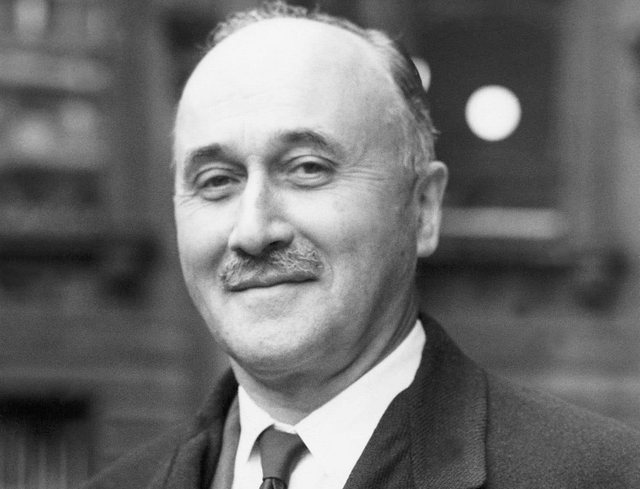
One of the founding fathers of the European Union, Jean Monnet, said that crises should be used as opportunities for transformation for the EU. What we see today with the Russian occupation of Ukraine, in addition to an unprecedented crisis since World War II, is an opportunity for European leaders to think about how to make war in Europe impossible, and create a stronger Europe. So, in the truest sense of the word, it is Jean Monnet's moment for Europe.
It is the moment where it can be argued that an EU with more members is more difficult both in the way of acting and in the financial sense, but the advantages are greater. As such would make war unthinkable, create a vast space with a single market, without barriers between states and citizens, and a stronger Europe that addresses the consequences of ending the wars in the former Yugoslavia and aggression east of the continent.
The moment Europe is in now is a window of opportunity for a new push towards EU enlargement, for geostrategic reasons, as well as a signal of strength that shows the EU is able and ready to renew, grow and to promote its values ??against competitive forces.
The discussion of enlargement is connected in one way or another with the discussions and ideas about reforming the EU. Historically, the process of EU deepening and enlargement have gone hand in hand. The connection between the two processes is also proven by the fact that 16 years have passed since the signing of the Treaty of Lisbon, the longest period that the EU has gone without a new treaty. Thus coping with the financial crisis, that of refugees, Brexit, and the pandemic through the use of the existing spaces offered by the Treaty of Lisbon. So, without expanding and without deepening.
A new treaty may not necessarily be necessary for the accession of new members as acceding countries are minimally required to sign existing EU treaties and, more importantly, accept the EU acquis. However, a new treaty is likely to be needed for practical and political reasons. This is why previous enlargements have been linked to treaty changes.
More important than the debate about the deepening versus the enlargement of the EU is the vision and the will to transform the existing crisis into an opportunity for development and transformation, in the footsteps of Jean Monnet. Although the EU is not a military power, it can deepen its influence as a normative power through the enlargement process. In this context, the EU must demonstrate commitment in the Western Balkans by correcting the mistakes and weakness shown in the past. In order to produce the desired success, the EU membership process must be linked with the development agenda and with a defined deadline for the membership of the region's countries in the EU.
*The analysis is a publication of the "Friedrich Ebert" Foundation Friedrich-Ebert-Stiftung Tirana

The old man in the beautiful Saranda of Kiko, our clev...
The government has taken an important step in efforts to e...
Albin Kurti has a psychological crisis, because he thi...
Alexis Tsipras today, three days after losing the May ...
Has Edi Rama given enough reward to the American ambassado...

There is no reactionary Opposition, we react in coffee aft...
Due to the increase in tensions in the North of Kosovo...
When I heard the news about the existence of the STAR of p...
The recent crisis in Kosovo and the role that Edi Rama is ...
Ajo qëndroi njësoj sa të gjithë ambasadorët e tjerë, po që...
The Greek election marathon ended last Sunday with a c...
"I want to thank from the bottom of my heart tho...
Although delayed, of course and without any doubt, the rel...
Edi Rama's request for an international conference on Koso...

In every corner of Greece, if you go on vacation, you will...
The revolting question "WHY?" there is no easy answer when...
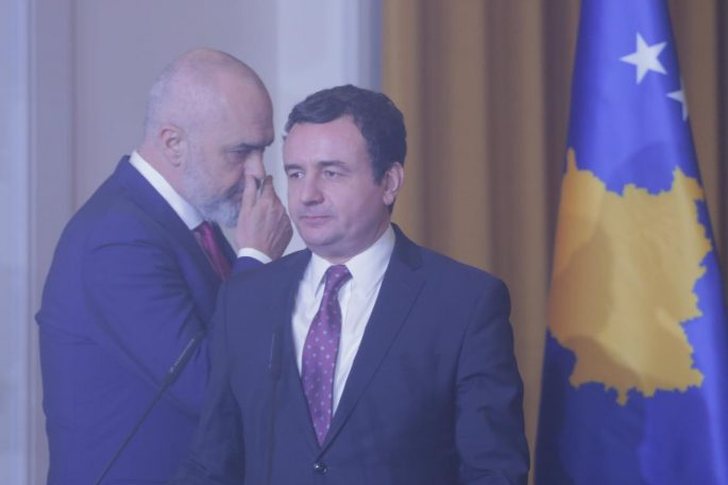
Albin Kurti has not had a quiet day in government since he...
Albanians have been the most attacked and massacred pe...
Due to the high duties and functions that I have exercised...
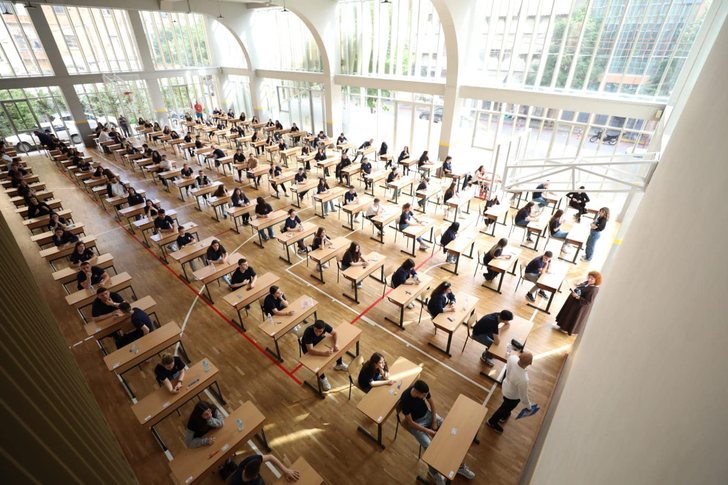
The state matura, instead of being a challenge for young p...
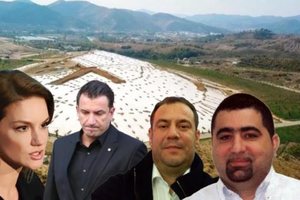
The in-depth investigations that SPAK conducted into Ajola...
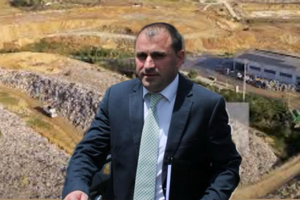
SPAK's standards, the way it investigates, how it secures ...

Irfan Hysenbelliu claims to be a big businessman, an hones...

The murder of officer Enea Mekolli in the line of duty has...

The Special Board of Appeal (KPA) decided this Monday ...

The KPA vetting decided this Thursday to dismiss the p...

Suela Salavaçi, a prosecutor in the Prosecutor's Offic...

The Special Board of Appeal reinstated the prosecutor ...

Policia e Tiranës ka ndarë pak minuta më parë një thirrje ...
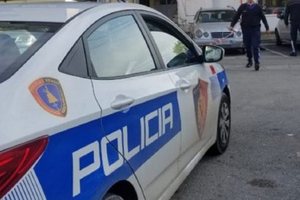
A violent conflict occurred between two people in Velipoja...
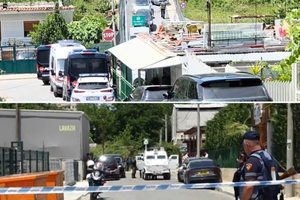
The police have reacted to the murder of citizen AB in Kam...
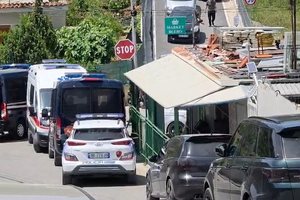
Tirana Police Director, Oliger Torba, gave a statement to ...

On Monday, our country will be affected by relatively stab...

More than 860 million people fall ill and 1.5 million die ...
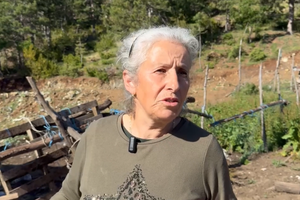
The mother of Violand Braçellari, the perpetrator of the s...

The modern European traveler seeks a meaningful connection...
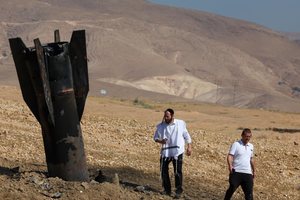
Iran's military's central command announced a halt to airs...
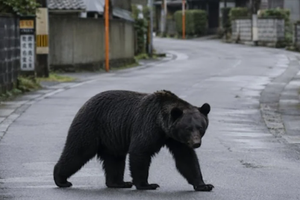
The city of Utsunomiya, about 100 kilometers north of Toky...
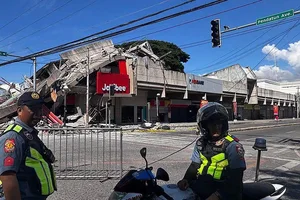
At least 32 people have died after a 7.8-magnitude earthqu...
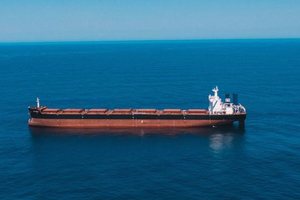
The European Union's (EU) foreign policy chief says member...

Korça has transformed this weekend into the capital of cel...

Korça is ready to open the summer season with one of the c...
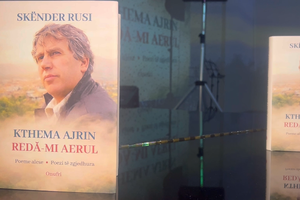
Two years after his passing, the renowned Korçë poet Skënd...

The Ethnographic Museum of Berat has opened its doors to v...
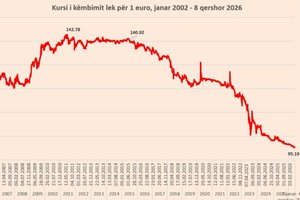
Kursi i këmbimit mes euros dhe lekut e ka nisur javën në r...
The construction sector is going through a challenging per...
This Monday, one US dollar is bought for 81.8 lek and sold...

The tourist apartment market is continuing to expand at a ...