

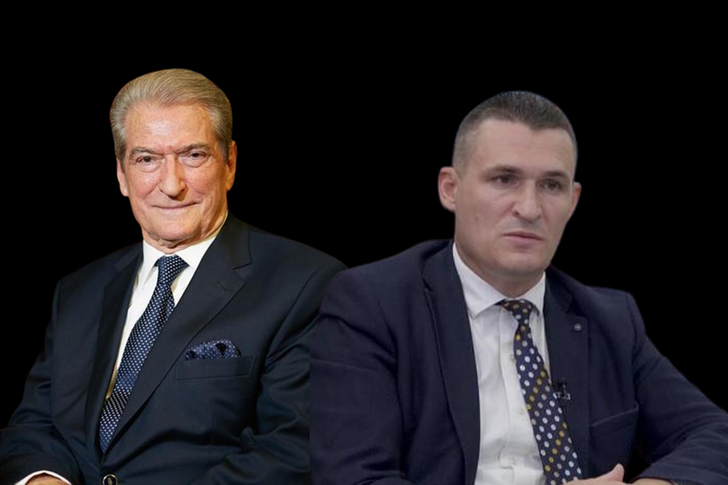
Why should Berisha publicly apologize to Altin Duman
For several months, Sali Berisha has started a frontal...


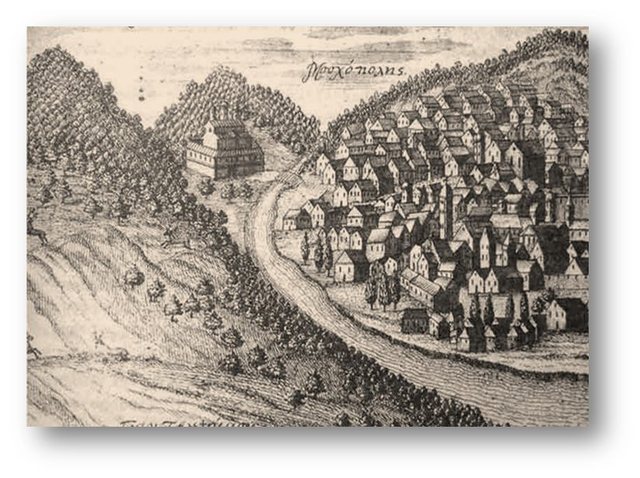
The work, "Voskopoja - Encyclopedic Thesaurus" (published in June 2022), over 900 pages, large A4 format (about 1800 - 2000 pages of the format that books usually have) is one of the biggest works I could do, a which relies on my data collection, notes, information, studies, research, etc., spanning a span of time that spans about 50 years of my life. Suffice it to say that my notes, some of them, even the letter I once wrote to them today, have turned yellow from time or the oral information I have collected over time, belong to different people, most of whom, if not all of them are dead today and are no more.
This paper deals with: family histories, fragments of genealogies, prosopography, erudites, diaspora, ethnography, faith, culture, education, letters, science, art, music, urban planning, history, economy, trade, handicrafts, architecture, hajography, iconography, lexicology , codicography, philosophy, medicine, oenology, agriculture, animal husbandry, anthropology, etc., etc., of Voskopoja.
About 630 families are mentioned in "Voskopoja - Encyclopedic Thesaurus" of which, about 130 in detail and the others briefly, all depending on the information found; several thousand people are mentioned and historical data about many of them; family histories are given, as well as almost 100 fragments of genealogies developed in over 130 genealogical trees, some of which penetrate to the c. XVI and extend then until the beginning of the century. of XX; the Voskopoja families that won titles of nobility in Europe and their heraldry are detailed; the history of the former city is talked about since the beginning of the century. XIV and until the beginning of the century. XX; there is also talk of the scattering of hundreds of families to the four corners of the earth, etc. Many prominent figures who emerged or originated from the burnt city, their works and lives, etc., etc., are treated in detail.
I think that the work in question is the most complete that could ever be written about Voskopoja, in any language.
---
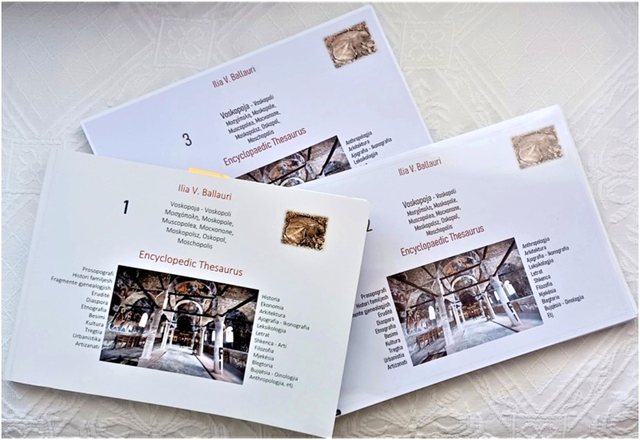
"Voskopoja - Encyclopedic Thesaurus" is published in a limited edition, in three volumes, on quality paper, in colors, with over 1200 illustrations, photos, paintings, engravings, portraits, autographs, maps, schemes, graphics, diagrams, etc. and finally closes with my anthropological study about the biological characteristics of the ancient Voskopojars.
(From the encyclopedia entry)
"Voskopoja - Encyclopedic Thesaurus", is available in a limited number and can also be searched through fb. my, Ilia V-Ballauri. ©
1. On the natural sciences that were once studied at the Academy of Voskopoja. PHYSICS
Extracted from: IVB "Voskopoja - Encyclopedic Thesaurus", pg. Vol. 2nd, pg. 393, 394
ABOUT PHYSICS, Theodhor Kavalioti, in his treatise on this science that was in the hands of the students of Voskopoja Academy, in a series of chapters deals with these issues: physics and its definition, matter, its division, the form of bodies, principles of mechanics , principles of chemistry, space, vacuum or void, pneumatic machines, barometer, motion in space and time, heat and cold, liquids, motion of solids and liquids, elasticity, void and density, importance and lightness, attractive forces between bodies, light, etc., etc.
The level of this treatise of Cavaliot can be judged from the quotation of these ancient philosophers who are mentioned in its pages: Thales, Parmenides, Xenophon, Anaximenes of Miletus, Seleucus, Plutarch, Theophrastus, Heraclitus, Socrates, Leicipus, Democritus, Epicurus, Hippocrates, Empedocles, Hesiod, Anaxagoras, Anaximander, Pythagoras, Plato, Aristotle, Proclus, Zeno, Galen, Diogenes, etc.
* * *
FOR METAPHYSICS, in the treatise of this field, p. 125 that has reached us as a manuscript prepared by Th. Cavalioti, for the general reader but also for the New Academy, writes: "...Metaphysics for philosophers is the first science because it deals with the concepts and principles of the human mind in a general form, it is the mother of all other sciences, because it includes these in its bosom, it represents all the principles in the form of axioms, from which then the sciences make their arguments..."
2. On the natural sciences that were once studied at the Academy of Voskopoja. ARITHMETIC & ASTRONOMY
Extracted from: IVB "Voskopoja - Encyclopedic Thesaurus", pg. Vol. 2nd, pg. 394, 395
FOR ARITHMETIC, in his text "Eisagogiki" which is for students of lower grades, Ikonomi Dhaniil Voskopojari, among others such as addition, subtraction, multiplication, division, fractions and the four operations with them, teaches students the rule of three for calculations in trade, but he continues with other methods that are not known or forgotten today, such as calculations according to the rule of five and the rule of seven in arithmetic. Here is a trade problem that he raises and then gives a solution to, with the rule of seven: "... 5 people, in 3 months, with 20 groshy, earned 130 groshy." What about 7 people, in 2 months, with 16 grosh, how much will they earn?" After raising the problem, Dhanili then also gives the quick and correct way, emphasizing to the students that a good trader immediately solves such a problem. (Here is the solution method given by Dhanili: of the seven digits listed above, multiply the fourth, fifth, sixth and seventh and then, what comes out is multiplied by the product of the multiplication of the first digit, the second and with the third.) (Daniil Voskopojari, "Eisagogiki Didaskalia", Vienna 1802, pp. 72 - 81 )
* * *
ABOUT ASTRONOMY, Ikonomi Dhaniil teaches his students, in "Eisagogiki" among others, the following, we quote: " ...The heavenly bodies that are found in space with stars that stand in the same positions, we have seven according to Ptolemy:
Kronos (Saturn), Zeus (Jupiter), Ari (Mars), Ilios (Sun), Aphrodite (Venus), Hermes (Mercury) and Selini (Moon). They are called planets, because they wander (πλαν?σταν) according to a trajectory, (οδοιπορ?αν) in the sky full of stars... They come round and round for 14 hours, remaining in the meantime, little by little, some of them more and some less . The cycle that the planets appear to traverse is carried out in a sense from west to east, ... The cycle around the Sun [which also constitutes the annual cycle] takes 365 days, 5 hours, 48 ??minutes and 45 seconds ... The cycle of the Moon, which also constitutes the lunar month, is carried out for 29 days, 12 hours, 44 minutes and 3 seconds…” etc. (Daniil Voskopojari, ibid., pp. 57 - 58)
Extracted from: IVB "Voskopoja - Encyclopedic Thesaurus", pg. Vol. 2nd, pg. 393, 395

For several months, Sali Berisha has started a frontal...
Corruption and organized crime are the two key problems th...
The concerted chorus of opponents of Albin Kurti betwe...

The news is almost daily like this: Spak Beqja, the former...
When a society has its existence linked to the breadcr...
The Sirens and Odysseus Do you remember the sirens fr...

Hello Mrs. Lindita, I am writing these lines with a f...
Edi Rama has the charm, eloquence, courage, extravagan...
In August 2023, I joined a group of artists in a walk arou...
Rama's rally with his party supporters in Athens was t...

We have well understood a lesson from the recent devel...
Television, the grandfather of media, is experiencing ...
Dear friends, Llagami of KLGj, I have publicly denounced h...
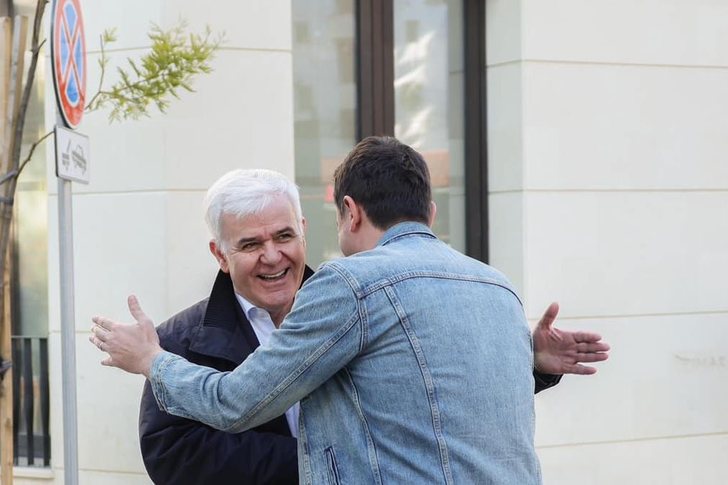
Fatmir Xhafaj came to the podium today and for 5 minut...
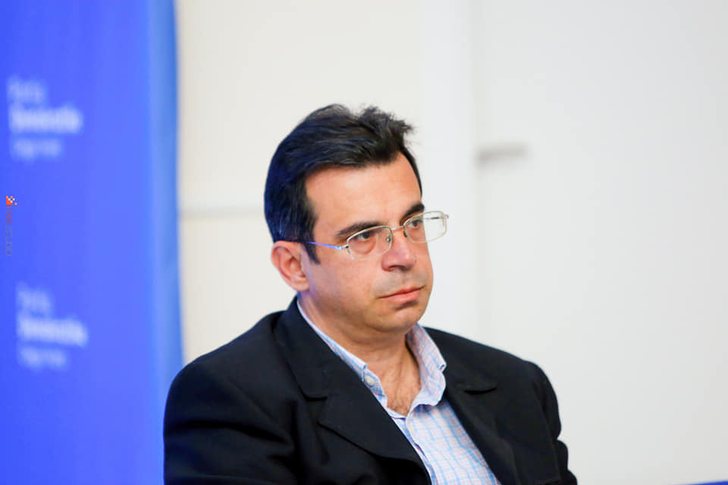
One of the characteristics of today's political discou...
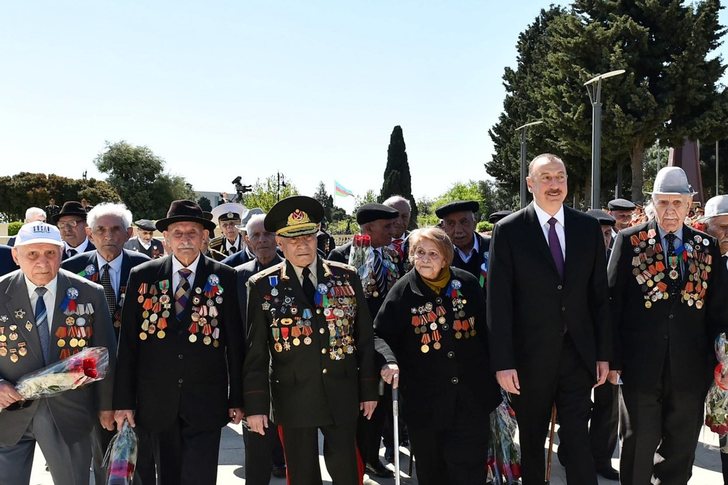
Nëntë maji - Dita e Fitores mbi Fashizmin - festohet në Az...
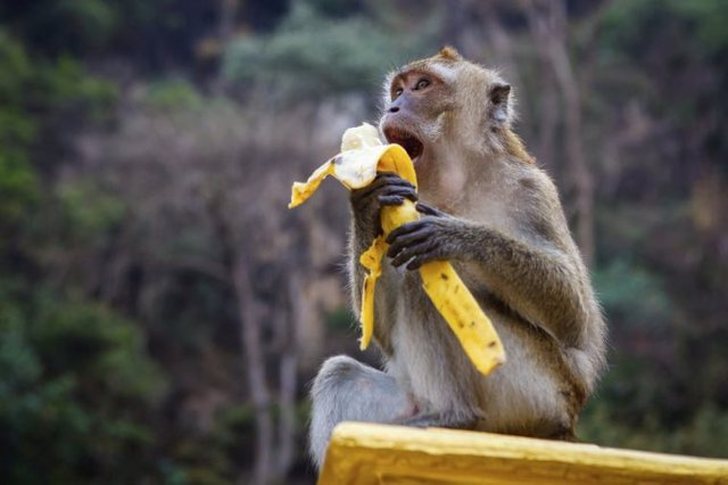
Shocked by the news that Skenderbeu ate a calf before the ...
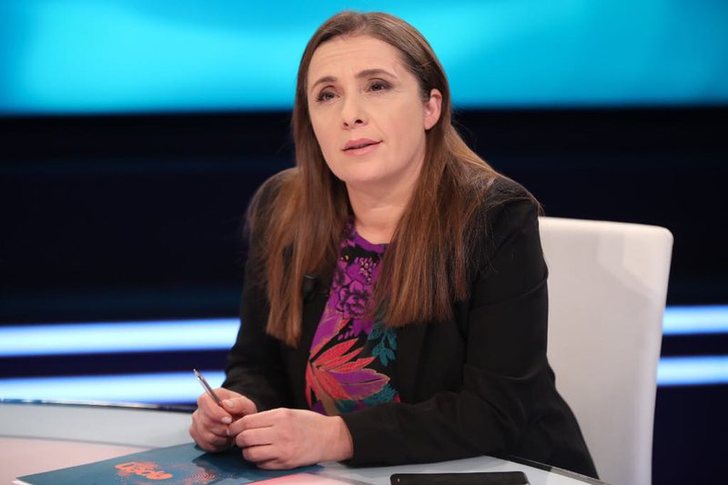
\Jam menduar natën e kaluar ta botoj apo jo dhe vendos...

As expected, many television programs last night were ...
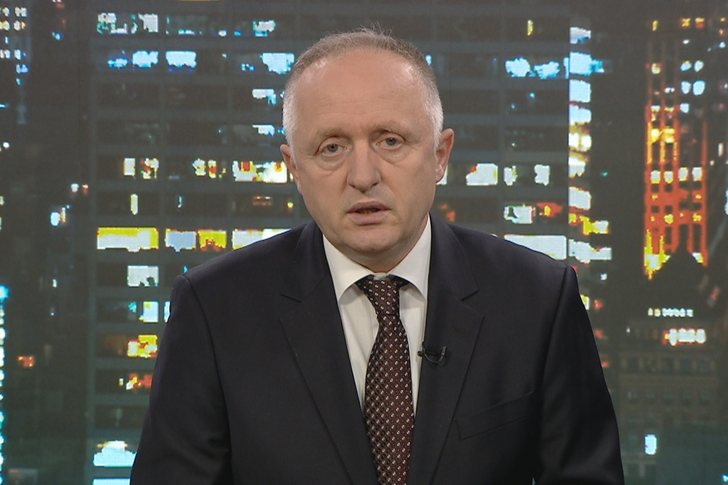
1. What is said on the first day is incomplete. The releas...

CNA has launched another investigation that could lead to ...

Irfan Hysenbelliu is a businessman that we call "Irfan the...

In March 2026, CNA launched another investigation centered...
The arrested mayor of Tirana, Erion Veliaj, with 13 charge...

The Special Board of Appeal (KPA) decided this Monday ...

The KPA vetting decided this Thursday to dismiss the p...

Suela Salavaçi, a prosecutor in the Prosecutor's Offic...

The Special Board of Appeal reinstated the prosecutor ...
A road accident occurred this evening on Nikolla Zoraqi St...

Three people were shot and wounded in Elbasan last night b...

A serious incident occurred this Tuesday in the Yrshek are...

An accident occurred this Tuesday on "Dituria" street in K...
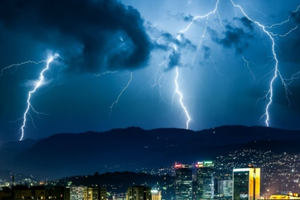
All of Southern Europe will face changing weather conditio...
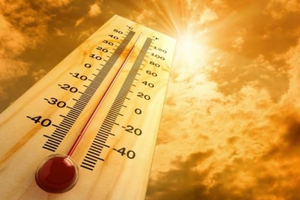
Albania was hit by temperatures significantly higher than ...
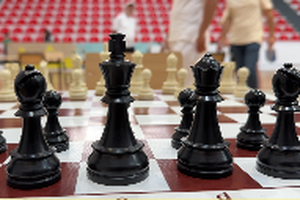
For the first time, Pogradec welcomed the Inter-Lake Chess...

Albania has achieved a record for the employment of foreig...

US Secretary of State Marco Rubio arrived in Manila on Jul...
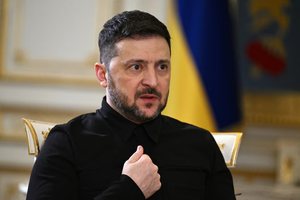
In the space of a few days, Ukrainian President Volodymyr ...
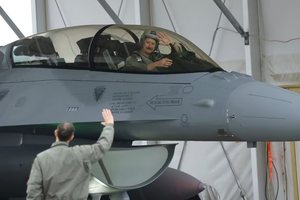
The spokesman for the Iranian Foreign Ministry warned Bulg...

Autoritetet italiane sekuestruan pako me afër 800 kilogram...

At a time when industrial products are increasingly taking...

Trust among people is not just a three-syllable word. It c...

Master of humor Todi Llupi has passed away at the age of 7...

The ninth edition of "MIK Festival" kicked off with one of...

Construction company licenses will have a validity period ...

The Centralized Purchasing Operator recently opened a tend...
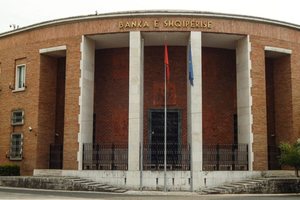
The new draft law "On the Bank of Albania" provides that t...

This Tuesday, one US dollar is bought for 81.2 lek and sol...