


From Brizida Gjikondi/ Open letter to Mrs. Lindita Nikolla!
Hello Mrs. Lindita, I am writing these lines with a f...


Do you remember the sirens from the myth of the Road? (Kanga XII)
It is one of the most beautiful and famous passages in the entire Odyssey. But why? Because inside this myth is hidden a bone truth.
"No one has passed here without stopping to listen to the sweetness of our song," the sirens say to the great Guide. And they don't lie: with their song they lure, enchant, enchant sailors and push them to jump into the sea to end up in the strait between Scylla and Carybdis.
Yes, the hero uses a trick to survive: he ties himself to the mast of the ship and covers the ears of his fellow sailors with wax so that they cannot hear.
Now, what does Homer say? A vulnerable person is the easiest thing to deceive.
Those who speak honestly tell the truth, the masses often laugh at them, misunderstand them, ignore them.
Such examples abound in mythology, even more so in history.
The masses prefer those who seduce, flatter. Spectacle is the current language of politics. The masses want siren pimps.
But what does academic charlatanism have to do with the heroes of mythology?
Followers of the generally political chronicle remember that not more than a month ago, the Academy of Official Scientists of Albania emerged from a "heroic" fight against "charlatans."
Etim explains that a charlatan is someone who is removed who is not for profit. The typical example is someone who presents himself as a healer without being a doctor.
Then it follows in all forms and performances in different fields.
The academics among them and Xhufi signed a lightning sheet with the revolutionary call to the TVs to remove the television and media space from some who messed around in history and linguistics without authorization, without tag. Because they were charlatans. They were folkloric and confused mythology with science.
The answer was as laconic as it was epic: "...charlatans are those who have titles, without research and scientific works..."
Perhaps our academics have regretted not finding the word, because for the first time in 50 years, the lazy Albanian, or rather incompetent, "science" encountered opposition.
And the opposition in one form or another is a kind of mirror that brings out the charlatan charlatans, and such arrogant ones, as they are.
The fact that we took Athens "guts out" was inadvertently brought out by the jufi-historian, who, carried away by the pathos of the Prime Minister's speech in Athens, spoke not of two, but of ten thousand heroes-patronages who are applauded. (Only the academics of the organization founded by the party know what the historian has to do with pathos.)
Desolate Homer!
The muse (or the fly) in the mind of our historian sings not the evidence, nor the memory of Achilles, but of his scoundrel: Ten thousand were the attackers of Troy, ten years the victory lasted, ten thousand did the academician with a tassel make the patronages who destroyed today's Athens without any resistance.
Maybe when the muse (or the fly) leaves the historian's head, he will see that the Greeks are not at all taken by the fools that his "siren" spewed.
Because according to the ten-thousand-year-old teachings of the poem, Micotaqis himself was tied to the "mast of the affairs of his government, while the Greeks waxed their ears.
Anyway, they gave Skanderbuch a piece of lawn for rent so that he could free himself from patriotic pathos for the ears of patron Nazis and especially academics.

Hello Mrs. Lindita, I am writing these lines with a f...

Edi Rama has the charm, eloquence, courage, extravagan...

In August 2023, I joined a group of artists in a walk arou...

Rama's rally with his party supporters in Athens was t...

We have well understood a lesson from the recent devel...

Television, the grandfather of media, is experiencing ...
Dear friends, Llagami of KLGj, I have publicly denounced h...
Fatmir Xhafaj came to the podium today and for 5 minut...
One of the characteristics of today's political discou...

Nëntë maji - Dita e Fitores mbi Fashizmin - festohet në Az...

Shocked by the news that Skenderbeu ate a calf before the ...

\Jam menduar natën e kaluar ta botoj apo jo dhe vendos...

As expected, many television programs last night were ...

1. What is said on the first day is incomplete. The releas...
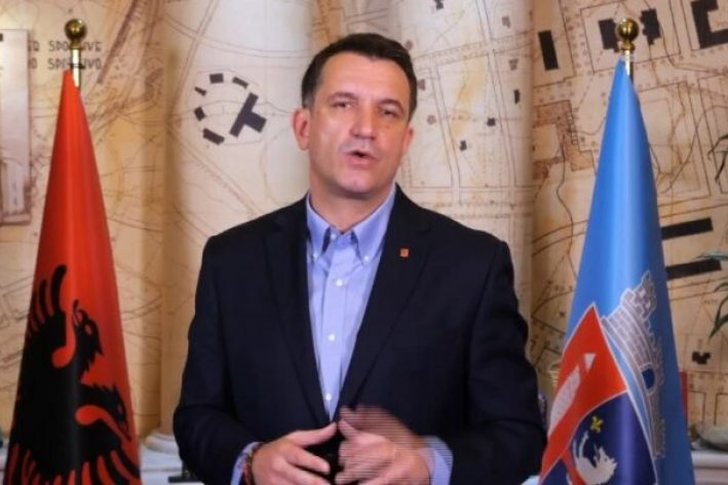
Those who regularly follow the prime minister's Instag...

When we say that this is a very serious event, another...
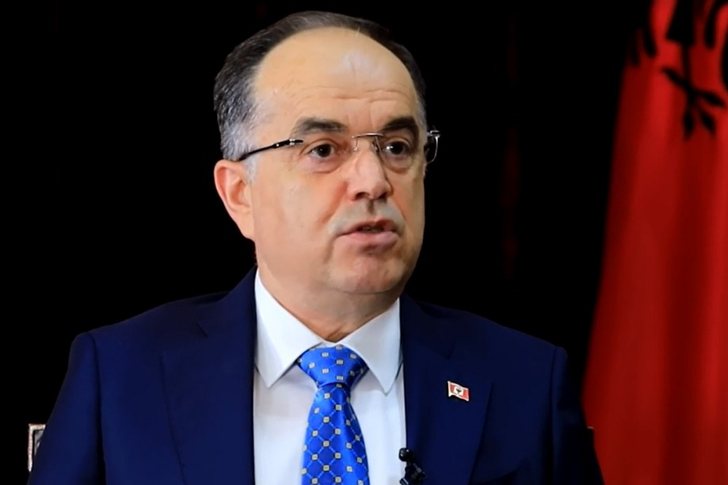
Although a non-delegable protocol obligation stemming ...

Dear friend, Today the letter has lost its power, unl...
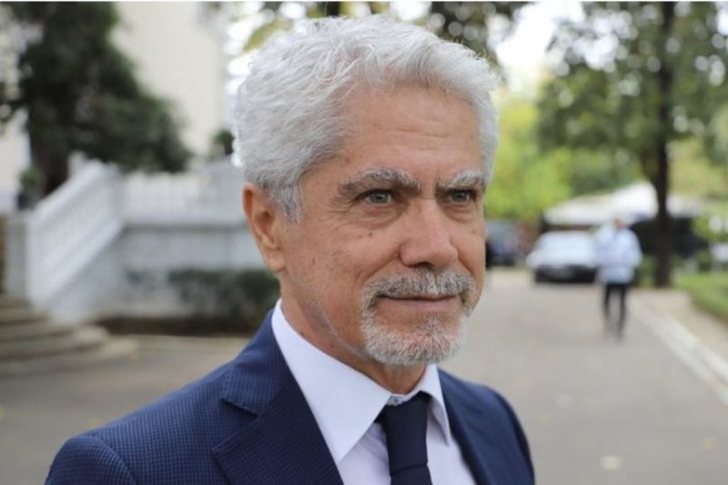
After the fall of the dictatorship, the Albanians did not ...

On the day he was supposed to be arrested, he woke up ...

CNA has launched another investigation that could lead to ...

Irfan Hysenbelliu is a businessman that we call "Irfan the...

In March 2026, CNA launched another investigation centered...
The arrested mayor of Tirana, Erion Veliaj, with 13 charge...

The Special Board of Appeal (KPA) decided this Monday ...

The KPA vetting decided this Thursday to dismiss the p...

Suela Salavaçi, a prosecutor in the Prosecutor's Offic...

The Special Board of Appeal reinstated the prosecutor ...

A road accident occurred this evening on Nikolla Zoraqi St...

Three people were shot and wounded in Elbasan last night b...
A serious incident occurred this Tuesday in the Yrshek are...

An accident occurred this Tuesday on "Dituria" street in K...

All of Southern Europe will face changing weather conditio...

Albania was hit by temperatures significantly higher than ...

For the first time, Pogradec welcomed the Inter-Lake Chess...

Albania has achieved a record for the employment of foreig...

US Secretary of State Marco Rubio arrived in Manila on Jul...

In the space of a few days, Ukrainian President Volodymyr ...

The spokesman for the Iranian Foreign Ministry warned Bulg...

Autoritetet italiane sekuestruan pako me afër 800 kilogram...

At a time when industrial products are increasingly taking...

Trust among people is not just a three-syllable word. It c...

Master of humor Todi Llupi has passed away at the age of 7...

The ninth edition of "MIK Festival" kicked off with one of...

Construction company licenses will have a validity period ...

The Centralized Purchasing Operator recently opened a tend...
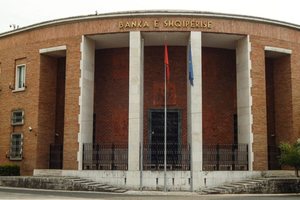
The new draft law "On the Bank of Albania" provides that t...

This Tuesday, one US dollar is bought for 81.2 lek and sol...