


Territorial Reform/ Berisha warns Rama: We will get Albania back on its feet
DP leader Sali Berisha has spoken about extending the dead...

DP leader Sali Berisha has spoken about extending the dead...

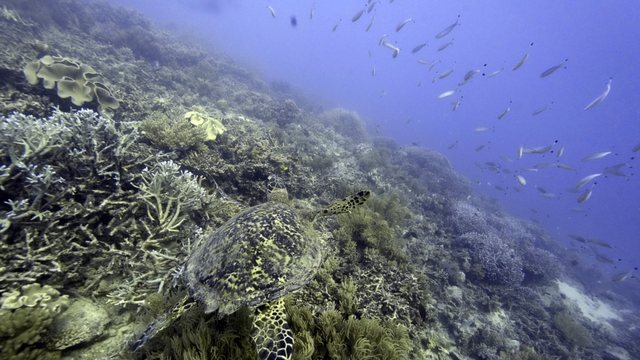
Thousands of meters deep in the Pacific Ocean there are large deposits of minerals necessary for the transition to renewable energy.
Mining companies are ready to collect this underwater treasure, spread over an area larger than half of the United States. But not much is known about the deep-ocean ecosystem and the impact that mining operations can have.
These black stones make up some of the world's most important minerals, including cobalt, manganese and nickel.
The company "Metals" based in Canada took them out of the seabed, at a depth of about five thousand meters.
The company has access to about 1.6 billion tons of them, says chief executive Gerard Barron.
"That's enough to build 280 million medium electric vehicle batteries. So enough to transform all American cars," he says.
As the world moves away from fossil fuels, demands for metals are increasing. Meeting global climate goals will require nearly 20 times more nickel and cobalt by 2040 than is used now.
"At the center should be the safe supply of these metals, but also the minimization of the consequences for the planet and the ecosystem", says Mr. Barron.
It is estimated that there are more metals like these on the seabed than in all the reserves on earth.
Mr. Barron says they are extracted without exploiting people, as is the case in the cobalt mines of the world's leading producer, the Democratic Republic of Congo; or the clearing of tropical forests in Indonesia, which is seen as the main supplier of nickel.
But there will be environmental consequences. The deep sea is one of the most extreme environments in the world, but there is life there too.
"Extremely cold, dark, very high pressure, definitely up to 5,000 meters. Very low food values... but amazingly, life exists," says Adrian Glover of the Natural History Museum in London.
He leads a group that studies life in great depth. He says that many species are difficult to identify.
"You land on the seabed and at first glance, it doesn't look like there's much life there. You see the built-up masses, the mud. Just through the microscope, you see that there's a lot of biodiversity," says Mr. Glover.
His team has identified more than 5,000 species that have never been seen before. Their adaptation to the ocean ecosystem remains a great unknown.
The impact that noise, light and mud plumes from mining operations would have on ocean life remains a mystery.
The International Seabed Authority is working to regulate this new industry. Mr. Glober and others are advising him on areas to protect.
"It's similar to fishing, where you try to figure out which areas need to be protected and where you can fish," he says.
Meanwhile, environmental groups are calling for a moratorium, along with more than 20 national governments and more than 30 major companies.
But the "Metals" company plans to apply for the start of operations at the end of next year, bringing back into the spotlight the controversy over deep sea mining./ VOA


We all know that bananas tend to ripen very quickly. But ...
Often appearing in images with completely different hu...

Our beautiful kitten is a precious and equal member of...

A wild animal has appeared for the first time in the "Divj...
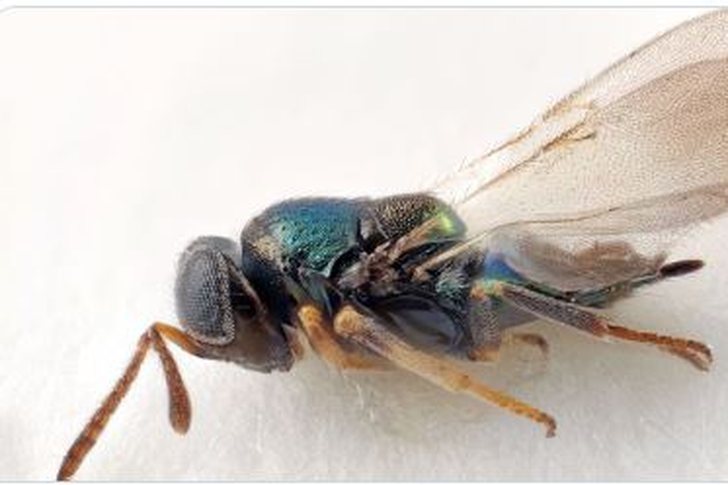
Wasp Dalek 2023 has been the year of the wasp, with 619 new...

Scientists have discovered that New Year's Eve is the wors...

At the end of 2023, reports on the most powerful and most ...

As the holidays approach and the festive spirit spreads ac...

Surely many of us have at least once followed superstition...

Kudo që të jeni natën e 31 dhjetorit, festimet për Vitin e...

What a rare discovery! This bird (chlorophanes spiza) has ...

In a year filled with extraordinary events, "The Simps...
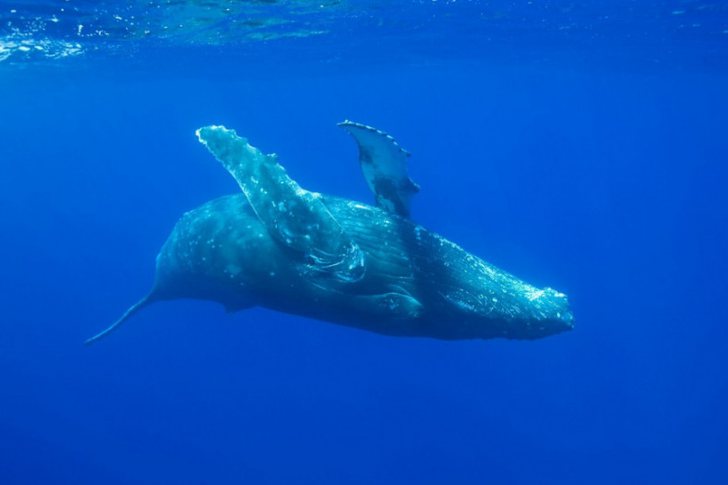
For the first time, scientists have managed to establish c...

Duke studiuar pjesë të ADN-së së Neandertalit që mbartin e...

A European Honey Buzzard was fitted with a satellite track...
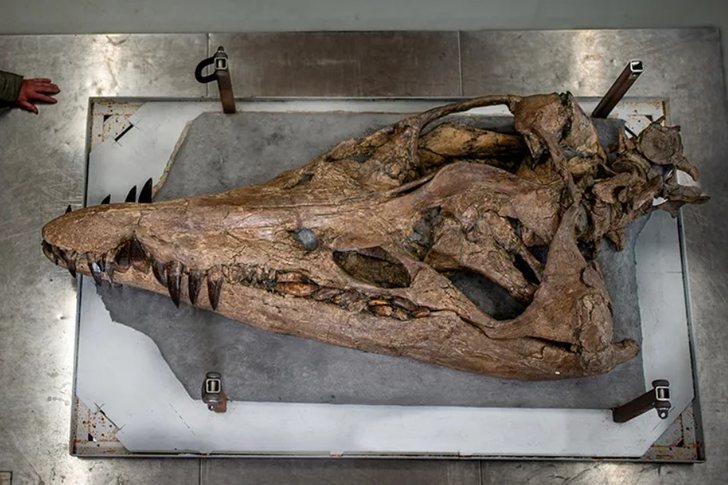
The fossilized skull of a sea monster has been excavated f...
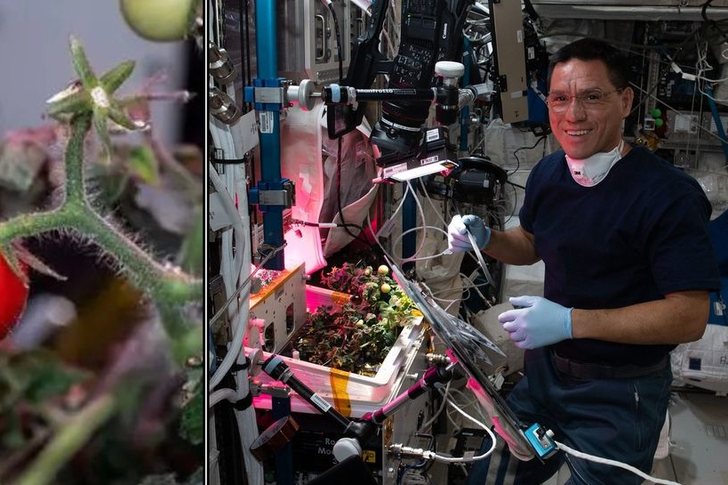
A mystery has recently been solved by astronauts who were ...
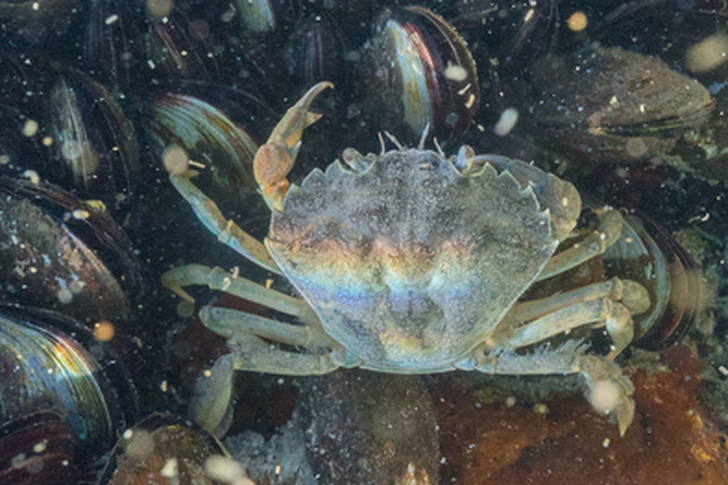
When scientists realized that about 10 billion snow crabs ...

The cars save driver data at least every two minutes. This...

Social networks have become a real tester of our emoti...

CNA has launched another investigation that could lead to ...

Irfan Hysenbelliu is a businessman that we call "Irfan the...

In March 2026, CNA launched another investigation centered...
The arrested mayor of Tirana, Erion Veliaj, with 13 charge...

The Special Board of Appeal (KPA) decided this Monday ...

The KPA vetting decided this Thursday to dismiss the p...

Suela Salavaçi, a prosecutor in the Prosecutor's Offic...

The Special Board of Appeal reinstated the prosecutor ...
Citizen MH, 61, a fisherman, was found dead near the islan...

Another phase of the international operation, codenamed "T...

Police have arrested a 34-year-old woman at Rinas Airport ...

A serious accident has occurred on the Lezhë-Shëngjin axis...

This Wednesday, our country will be under the influence of...

All of Southern Europe will face changing weather conditio...

Albania was hit by temperatures significantly higher than ...

For the first time, Pogradec welcomed the Inter-Lake Chess...

Prime Minister Andy Burnham has announced that most bus fa...

France's parliament has passed a law to ban social media f...

US Secretary of State Marco Rubio arrived in Manila on Jul...

In the space of a few days, Ukrainian President Volodymyr ...

At a time when industrial products are increasingly taking...

Trust among people is not just a three-syllable word. It c...

Master of humor Todi Llupi has passed away at the age of 7...

The ninth edition of "MIK Festival" kicked off with one of...

Businesses will no longer be required to simply register t...

Despite economic growth and income in recent years, Albani...

This Wednesday, one US dollar is bought for 81.4 lek and s...

Construction company licenses will have a validity period ...