

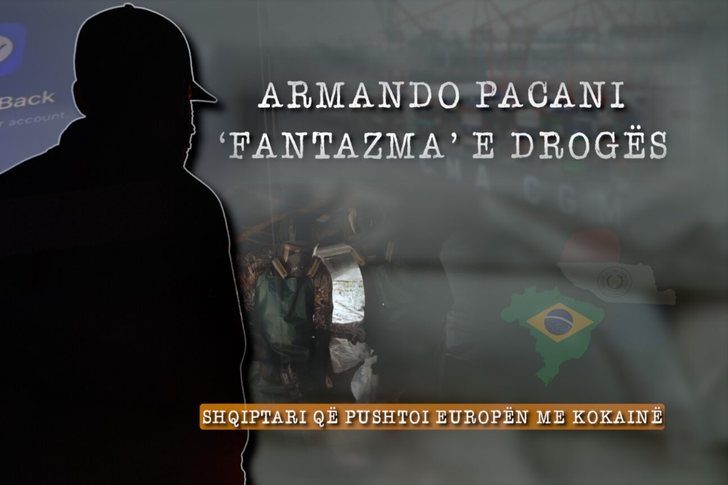
"Most Wanted" in Brazil/ Who is the mysterious Albanian who smuggled tons of cocaine from Latin America to Europe?
Klodiana Lala, on her show "On Target", has revealed t...


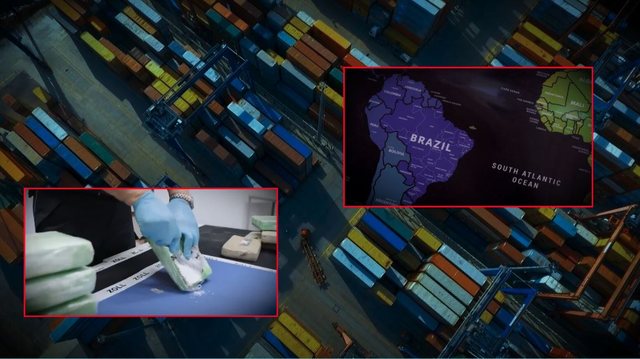
Apparently, everything had started to become worrying since Alvarenga himself and the organization he led were laundering drug money. This apparently did not sit well with the Americans themselves, who in their communications and those later published in the 'Panama Papers', spoke of the existence of several offshore companies, whose source of income was the money earned from the criminal activity of international cocaine trafficking. Alvarenga, who was under investigation, was living in the capital of Paraguay, Asuncion.
American Investigations
Rodrigo Alvarenga is not new to the mechanism of money laundering. Since he has already been investigated in the US, for the same criminal offense as cited in the 'Panama Papers', for the existence of several offshore companies created specifically to launder illegal sources of income from drug activity. Likewise, Alvarenga, in addition to being a supplier of internationally trafficked narcotics, is also responsible for maintaining, with the help of associates, a structure in which several companies were used to circulate the resources obtained from the sale, purchase of drugs. of goods and payment of friends.
What made the existence of this organization even more frightening was the fact that this association with a typical criminal nature was said to function on the basis of their Constitution. As they considered it the book of rules for the internal and external functioning of the work they had undertaken to carry out illegally. A booklet with very few articles in it, but sufficient to regulate an enterprise that would not only bring them a lot of profits, but also where the roles should be very clearly defined, where no one should do anything on their own, otherwise the end of each one would depend on the head of each one, where we said that one name would shine, that of Armando Pacani, the Albanian originally from Përmet, who according to investigations conducted by the Brazilian authorities bought tons of cocaine from Alvarenga and his friends, which he was waiting for in Germany.
In at least three episodes, out of many others recorded by authorities in Brazil, he emerges as one of the largest wholesalers of cocaine purchases from Brazil by the organization that, as we said, was led by Alvarenga.
But what is the first episode of drug trafficking for which Pacani is accused?
And how was it possible to identify him as a potential buyer of narcotics in Europe, by the organization called 'ORCRIM' led by Alvarenga, where the judiciary in Brazil is today seeking individualized decisions for these two characters.
This operation took place at a time when the entire world was in lockdown due to the Covid-19 pandemic, but it seemed like the ideal moment for Pacani and his friends from Brazil to collaborate.
Brazilian investigations
What we can say about the investigations is that it all started after a communication with the Federal Prosecutor's Office in Brazil, from which it was reported that on June 12, 2020, in the city of Hamburg in Germany, in a warehouse where products of the company CD Markmann GMBG are stored, the seizure of a quantity of drugs was reported.
At that time, German police found 316 kg of cocaine in this warehouse hidden inside bags of tonic extract.
But during the raid on the warehouse, the German police of the city of Hamburg found that the amount of cocaine seized was smaller than what had actually entered the port, or was stored. This is because in total 190 manipulated bags were found, which meant that the amount of the stored substance was greater than the total seized. Calculating that the real amount was more than 1.5 tons of cocaine. This would be the starting point of an investigation that would uncover the organization headquartered in Brazil. As well as investigate the companies and people involved. Which would then lead to the identification of a criminal structure, which had its own functional and hierarchical pyramid, dedicated mainly to the transport of large shipments of cocaine to Europe, through ports from southern Brazil, in particular from the city of Rio Grande.
Here, where for the first time the identity of the Albanian Armando Pacani appears, who bears several code names such as 'Forbes', 'Globe' or 'Albanian'.
Brazilian Investigations
The one who initially procures the drugs from Paraguay is Rodrigo Paredes Alvarenga, who then sends the cargo to the ports of Brazil, with the aim of transporting them further to Europe, where one of the drug buyers is an Albanian citizen known as Armando Pacani. The latter is also known as 'Forbes', 'Globe' or 'Albanian'. Meanwhile, the one who transports the drugs to the ports, operating in Santa Catarina and Rio Grande Do Sul, is Andrade Luiz Miranda Do Nascimenti, known as 'Andrezajo'.
According to in-depth investigations by Brazilian authorities, Alvarenga's first and main collaborator in the port of Rio Grande do Sul is a businessman also known by the code name 'Ronaldo'. He owns a number of companies that deal with port logistics. Which allows the latter, due to the acquaintances he has in this port, to move drugs more freely. A partnership that grew further with the success of the first shipment. Which is also clearly seen in other shipments that pass through the port of Rio Grande and end up in those of Europe.
Where two or three of these deliveries were received by Armando Pacani himself.
Brazilian investigations
After 'Amdrezajo' brings the drugs to the Port of Rio Grande, Alvarenga, who is part of the 'ORCRIM' company, is waiting for him there, being responsible for purchasing drugs abroad.
He is joined by Cesar Oliveira de Oliveira Junior, known as 'Cesinha', or 'Ronaldo'. The latter is a businessman in the port logistics sector, owner of a conglomerate of companies in Rio Grande and Santa Catarina.
Who together, according to the investigations, would lead the criminal organization, thus constituting the first echelon. While an independent organization was also identified that would carry out the orders coming from their bosses. People who would deal with the logistics on the ground, from the moment the drugs would be purchased in Paraguay until their arrival in Brazil. This key person identified is Milton Cardoso Da Cruz known as 'Rocha', who has seven soldiers as subordinates who respond to his orders.
This group was so powerful that to understand its strength and activity, it is enough to look at the amount of tons that this organization transported in a short time from Brazil to Europe. The organization, headed on one side by Alvarenga and on the other by Milton, is known to have also carried out other shipments of narcotics to various buyers in Brazil, in addition to air shipments outside the national territory. A record amount of cocaine which was also ascertained from the seizures carried out by law enforcement authorities, not including here, 17 tons of cocaine that were thought to have been sold in the meantime
Brazilian Investigations
Throughout the investigations, 12,189 tons of cocaine were seized, with an approximate value of R$2,742,525,000. Furthermore, the transport of several cocaine shipments that were not seized was verified. It is estimated that at least 17 tons of cocaine were sold directly or indirectly by 'ORCRIM', which would increase the aforementioned value to R$3,825,000,000.
But let's focus on the first case, where the collaboration of this organization with the Albanian Armando Pacani is mentioned.
That of the seizure on December 6, 2020, at the Port of Hamburg in Germany of a quantity of 316 kilograms of cocaine, but which appears not to have been the actual quantity that had arrived from Brazil, as Pacani had been so quick and subtle in executing the operation to remove the drugs from the port that he had been one step ahead of the German federal police in sniffing it out.
Brazilian Investigations
December 6, 2020.
Operation 'Hinterland'.
German police in Hamburg located and seized a significant quantity of drugs inside a shipment of mimosa extract from the company TANAC SA, shipped from the port of Rio Grande. The drugs were found after CD MARKMANN GMBH, the recipient of the mimosa extract, reported a break-in at its warehouse, with the removal of some of the products. It is estimated that the quantity of drugs shipped corresponded to 1.7 tons of cocaine, of which only 316 kg were seized, resulting in the rescue of a large part of the drugs from European recipients.
According to the already in-depth investigations between the authorities in Brazil and those in Germany, the cocaine shipment was provided by Rodrigo Akvarenga and his associates. While the land transport of the drugs, from Paraguay to Rio Grande, was directed by Milton Cardoso Da Cruz (Rosha) and operated by his subordinates.
Where in Rio Grande, the drugs were packaged by Andrate and Cesar, who 'filled' the containers and sent them to Europe. It was also discovered that the cocaine had been purchased by Albanian Armando Pacani and that the shipment had been lost upon arrival in Europe, which was also confirmed by the breaking of the warehouse where the shipment containing the drugs was located.
There, where it was discovered that the European connection of 'ORCRIM' saved a large part of the cocaine that was 1.7 tons. According to the Brazilian authorities, the leaders of 'ORCRIM', a criminal organization where one of the drug buyers in Europe was the Albanian Armando Pacani, due to the large sums of money they secured from cocaine trafficking, the need arose to launder this money. From where it was found that they had been distributed in two laundering centers where in the middle of the collaboration between Alvarengas and Cesar Oliveira De Olivera Junior was a character known as Jaslio Rodrigues Da Rosa, who served as a liaison between them as well as an accountant and lawyer responsible for the legal advice of 'ORCRIM', who drafted fictitious contracts to justify the financial flow and created strategies for the maintenance of criminal products that came as a result of the cocaine operations undertaken by 'ORCRIM'.
Brazilian Investigations
In relation to Andrate, it was found that, using family members, shell companies and 'mixtures', as well as his partners, they created mechanisms that allowed the purchase of goods and their circulation. with the ultimate aim of giving a legal appearance to the proceeds from international drug trafficking.
But as we said, these were not the only shipments that the criminal organization was able to bring to Europe, as investigations revealed at least 7 drug shipments that were sent from Brazil, thus flooding the ports of the old continent with cocaine, and they were only able to do this thanks to a sophisticated network of collaborators.
INVESTIGATIONS
During the investigation, it was established that the constitution of a real empire allowed those involved to hide assets and launder money, as well as to enjoy luxury cars and high-end real estate. Detailed reports showed participation in seven drug shipments abroad. According to these data, Rodrigo and Cesar invested R$ 994,000,000 with the money earned from drugs in 2021, with the aim of purchasing a company. Where by purchasing this company, the group aimed to secure another source for money laundering and operate in the shipment of drugs to Europe.
So powerful and organized were the leaders of the criminal organization, which included Armando Pacani as a buyer of cocaine in Europe, that they were even considering investing in planes. Which would then be used to transport the narcotics outside the territory of Brazil. Planes and luxury vehicles that they hid in the name of third parties.
INVESTIGATIONS
During the investigation, it was found that the persons suspected of this criminal activity have access to and move millions of dollars in their own and third-party bank accounts,
What is interesting in this whole story is the coded way the group communicated with each other where Alvarenga and his men used a secret language in international drug trafficking. So when they talked about the vehicles they had to use in these operations, they addressed the motor vehicles as 'mules'. While to talk they chose telephone terminals like in the old days, or messaging applications where they always used coded names with which they addressed each other. This was in order to make it difficult for law enforcement to decipher these conversations, and to avoid their punishment.
INVESTIGATIONS
What is striking is the fact that Alvarenga, even after several incidents, has continued negotiations with the aim of reorganizing new shipments. In a way, showing the high regenerative ability of repositioning and replacing lost limbs and the tendency to perpetuate criminal activity, as demonstrated by telephone and telematic interceptions.
But Alvarenga seems to have been powerful even behind bars, as he continued to run the organization. This is because outside of prison, they continued to organize new cocaine shipments. Meanwhile, the head of this group, in this case Rodrigo Alvarenga, used his dual citizenship to evade the law by frequently moving outside Brazil. So much so that the organization had created such a system of secrecy that it was possible to understand during telephone interceptions that they were aware of police raids on the gang's addresses.
Brazilian Investigations
There are reports that even after their arrest, upon their release, some people associated with Alvarenga have resumed efforts to send new shipments of narcotics./ In Target

Klodiana Lala, on her show "On Target", has revealed t...
A serious accident has occurred on the Lezhë-Shëngjin road...
New details are being learned about the case of teenagers ...
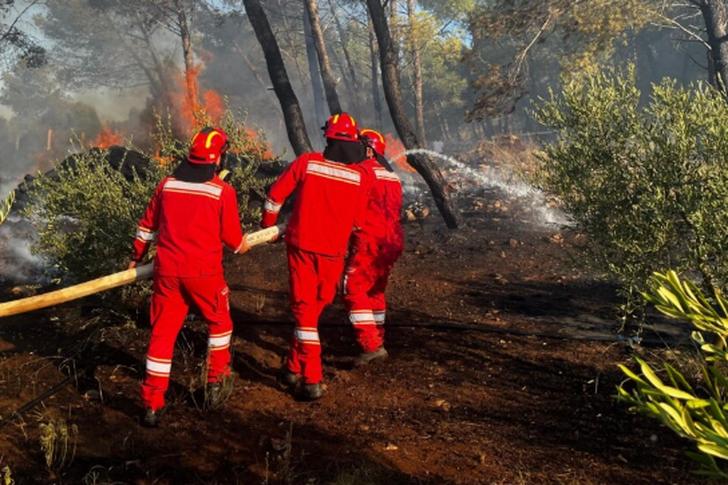
A fire has spread to the village of Iliras in Memaliaj. T...
Two people are wanted, suspected of injuring 38-year-old R...
A quantity of explosive material has exploded outside a ba...
At around 19:00, in the Çelepias neighborhood, Berat, in t...
A serious accident occurred this Monday, around 11:00, in ...
The Lushnja police have reacted to the case of a 43-year-o...
A case of attempted cultivation of narcotic plants has bee...
A 65-year-old citizen was detained today by the Police for...
A call has arrived at the Tirana police operations room re...
A flat in Bulqiza has been engulfed in flames. As a resul...
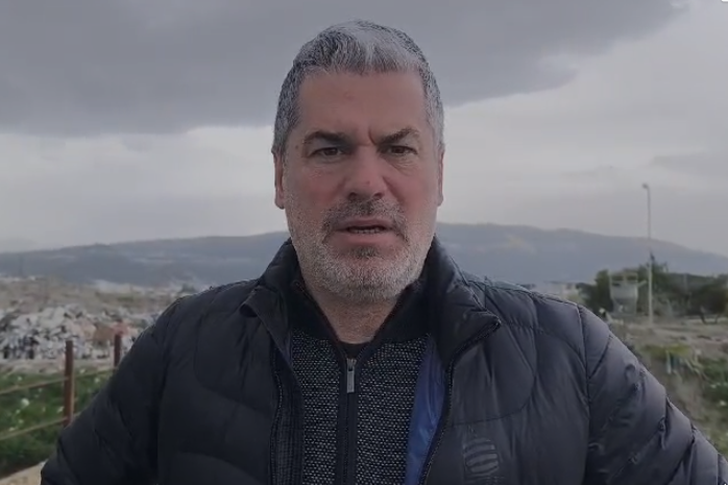
The Mayor of Vlora, Ermal Dredha, spoke about the fire tha...
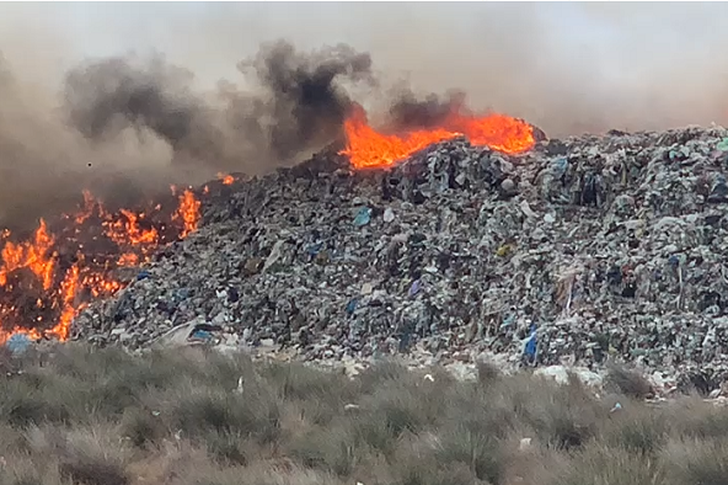
It is reported that the waste field in Vlora has been engu...

A car has left the road on the Berat-Dimal axis, result...

This Saturday evening, on the Çorrovodë-Hambull axis, in Skr...
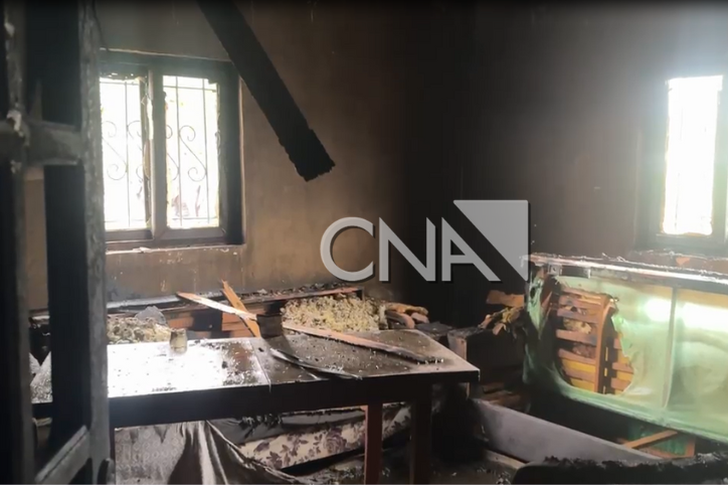
A house in the village of Gajush, Lezha, on the prison roa...
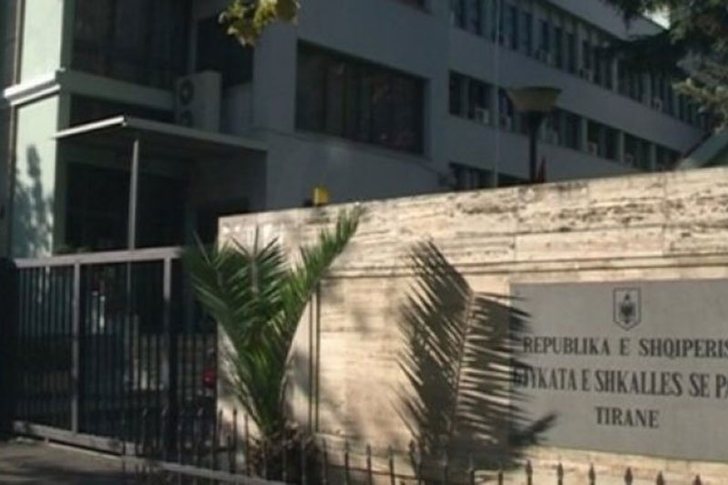
The court has issued security measures for several people ...
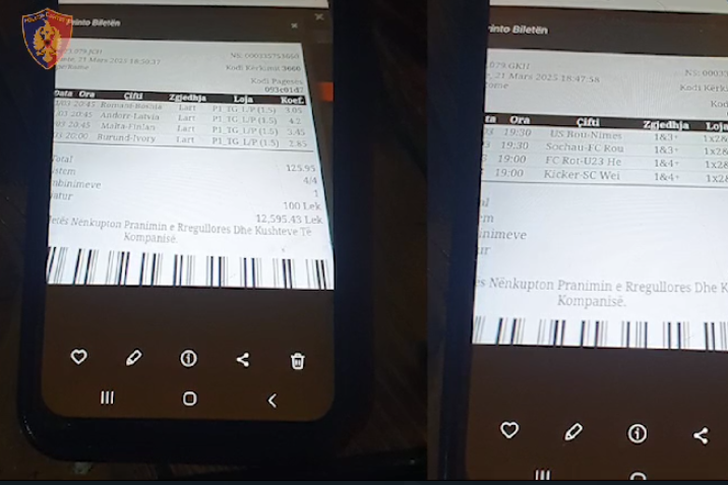
The "Cazino" operation to crack down on gambling activitie...

CNA has launched another investigation that could lead to ...

Irfan Hysenbelliu is a businessman that we call "Irfan the...

In March 2026, CNA launched another investigation centered...
The arrested mayor of Tirana, Erion Veliaj, with 13 charge...

The Special Board of Appeal (KPA) decided this Monday ...

The KPA vetting decided this Thursday to dismiss the p...

Suela Salavaçi, a prosecutor in the Prosecutor's Offic...

The Special Board of Appeal reinstated the prosecutor ...
A conflict occurred this Thursday evening in the toy area ...
A person has died today on Orikum beach. According to repo...

Footage emerges from the serious accident that occurred th...
A Shkodra traffic police officer was hit with hard objects...

Children without parental care, for whom alternative famil...

On Thursday, our country will be under the influence of st...
A serious accident that occurred this Wednesday with the c...

The Institute of Geosciences has shared a forecast for wea...
The European Union Office in Kosovo has called on all poli...
Serbian President Aleksandar Vučić, at a press conference ...
For the first time since the launch of the euro, European ...

Artificial intelligence (AI) models from the American comp...

At a time when industrial products are increasingly taking...

Trust among people is not just a three-syllable word. It c...

Master of humor Todi Llupi has passed away at the age of 7...

The ninth edition of "MIK Festival" kicked off with one of...
The average sale price of apartments in Tirana reaches rec...
This Thursday, one US dollar is bought for 81.5 lek and so...

The price of diesel reached 206 lek per liter from 198 lek...
Businesses will no longer be required to simply register t...