


Erion Veliaj's shadows in protest
Veliaj through Arta Dade rejects Edi Rama'...

Veliaj through Arta Dade rejects Edi Rama'...

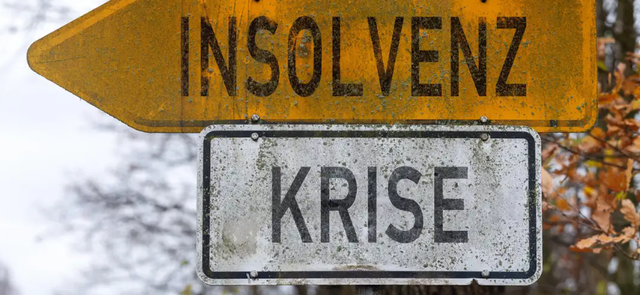
The number of corporate bankruptcies in Germany in the first three quarters of this year reached an 11-year high. Who is being hit hardest and can the situation improve soon?
"The wave of bankruptcies continues," Reuters quoted Volker Treyer, chief analyst at the German Chamber of Industry and Commerce (DIHK). "Small and medium-sized companies in particular are getting into trouble," he said on Friday.
A DIHK survey showed that almost one in three companies with fewer than 20 employees fear a deterioration in the business situation. These companies account for about 85 percent of all companies in the country.
On the same day (December 12, 2025), the Federal Statistical Office announced that by the end of September, German courts had registered 18,125 requests to open bankruptcy proceedings against companies - almost 12 percent more than in the same period last year. This made the number of company bankruptcies in Germany in the first three quarters of 2025 the highest in eleven years.
The smaller, the more vulnerable
That small companies are particularly vulnerable is also confirmed by economics professor Stefan Müller. Bankruptcies "are happening mainly in the small business sector," the head of bankruptcy research at the Leibniz Institute for Economic Research in Halle told DW. When it comes to the number of employees, "the average size is ten employees, but most companies are smaller."
Although it does not play a decisive role in this analysis, the current wave of bankruptcies is also visible in the private sector: the number of personal bankruptcies also increased in Germany last year. In the first nine months of this year, 57,824 consumer bankruptcies were registered - eight percent more than in the same period last year.
Impact on the labor market
Although the "sword of bankruptcy" mainly lies over small businesses with only a few employees, the number of jobs lost or seriously endangered has also increased significantly due to the increase in bankruptcies in partnership and capital companies.
This was calculated by the Leibniz Institute for Economic Research, which determined that around 170,000 jobs were affected this year. Before the coronavirus pandemic, there were fewer than 100,000.
Klaus-Heiner Rell, an economist at the Institute for German Economics in Cologne, would not like to overestimate the impact of this trend on the labor market. Although, as he wrote to us, "bankruptcies contribute to a slight increase in unemployment, the development of the situation is not dramatic."
Stefan Müller sees the situation differently. According to his calculations, in 2025 we should "count on around 200,000 affected jobs - which is relatively high. In the years before the pandemic, it was around half this number". Some of these jobs "will probably actually be lost, because bankruptcies lead to company closures".
However, he also points out that many jobs are being created in other companies. The effects on the labor market are "generally tolerable. It should not be forgotten that in the process of market cleansing, workers often move from weak companies to good ones."
Expected developments?
For Stefan Müller, the current figures are not entirely unexpected: "In general, an increase in the number of bankruptcies could be expected. However, the scale is somewhat surprising." Klaus-Heiner Rell is not surprised: "In principle, this development was expected; given the duration of the economic weakness, the number of bankruptcies could have been even higher."
Rell does not see the reasons for the high number of bankruptcies solely on the side of entrepreneurs: "The main reason is probably the almost three-year slow economy, with an economy in stagnation or slightly declining."
Energy prices, Russia's war in Ukraine, and the transition to climate neutrality are also contributing to this, making it even more difficult for companies to do business.
"To what extent delayed reform policies and individual companies with delayed adaptations have contributed to the problems is difficult to determine," Rel says.
Steffen Müller also doesn't want to place the blame on just one party: "The reasons for bankruptcy are always very individual." Problems often arise from wrong individual decisions, such as poor product selection, conflicts between management and employees, disputes with important owners or other stakeholders.
"When you add to this rapidly rising costs, structural changes, geopolitical uncertainties and tariffs, individual weaknesses and mistakes lead more quickly to bankruptcy," says Müller. His conclusion is: "That completely healthy and well-positioned companies that are among the best in their industry should disappear simply because of weaker framework conditions - this probably doesn't happen often."
Just a small spark of hope
The Association of Bankruptcy Administrators and Supervisors in Germany (VID) views the current situation relatively calmly. VID President Christoph Niering told the German Press Agency: "After the offsetting effects of the coronavirus period and the associated increase in bankruptcies, development is returning to normal." However, this is not yet "a trend reversal, but light at the end of the tunnel."
Stephen Müller puts it similarly: "In 2026, we will probably be around the high level of 2025." However, this is only "conditionally good news, because we have slowly reached the red zone." So there should be no deterioration. Because a look at the main group of partnerships and capital companies shows: "We last faced similar proportions 20 years ago."
Economist Klaus-Heiner Rell also sees a glimmer of hope: "If the economy grows by around one percent next year, as various institutes expect, bankruptcies should also calm down." However, the reduction in the number of bankruptcies will not come by itself: "Structural problems such as US tariffs, competition from China and energy costs remain present."/ DW


US officials announced that the US Coast Guard is tracking...

The situation at the checkpoints with farmers and the Gree...

A Russian general has been killed in an explosion in Mosco...

US President Donald Trump announced that he has appointed ...

Several thousand activists from across Serbia joined stude...
NATO Secretary General Mark Rutte has described Russian Pr...

This Sunday afternoon, a telephone conversation took place...
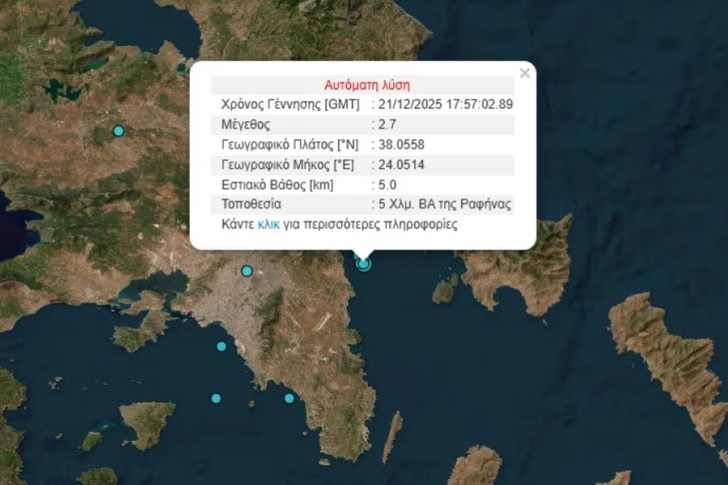
Two earthquakes measuring 2.9 and 2.7 on the Richter scale...

With a reinforced presence at the blockades, farmers in Gr...

France's armed forces have been deployed to help vaccinate...
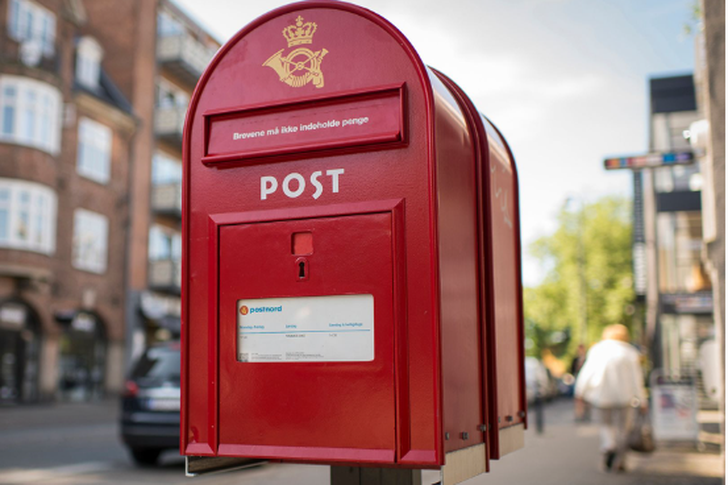
The Danish postal service will deliver its last letter on ...

Mijëra njerëz janë mbledhur në plazhin Bondi të Sidneit pë...
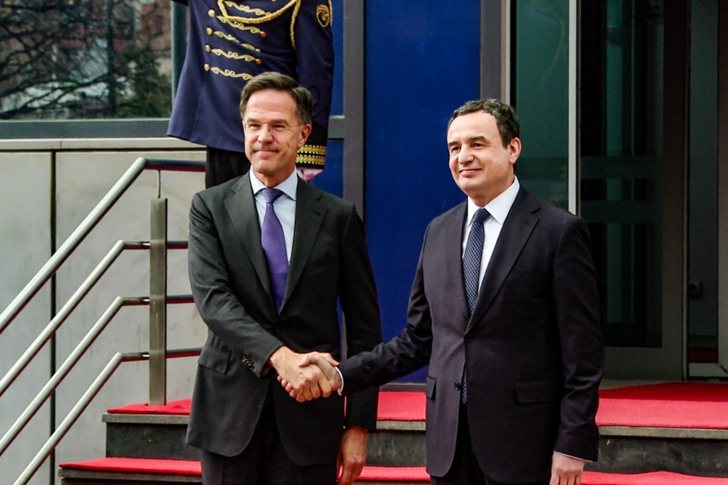
NATO membership is more than a political desire for Kosovo...

A senior Kremlin official has downplayed the chances of ma...
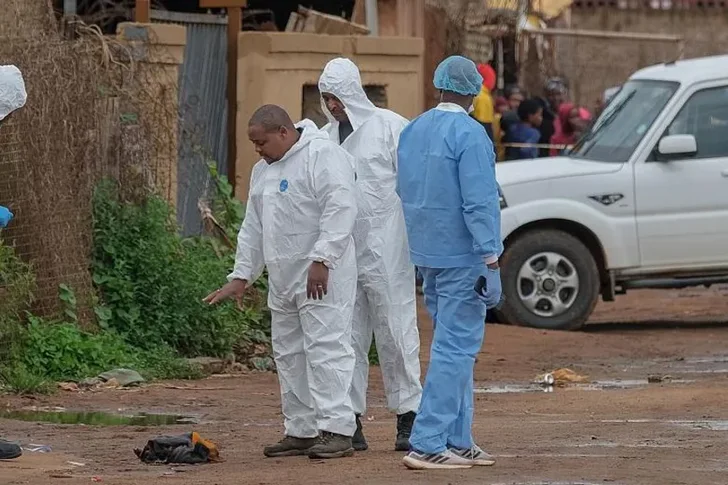
A serious incident has occurred in South Africa, where a m...
Kosovo Police said that during a search of the house and s...
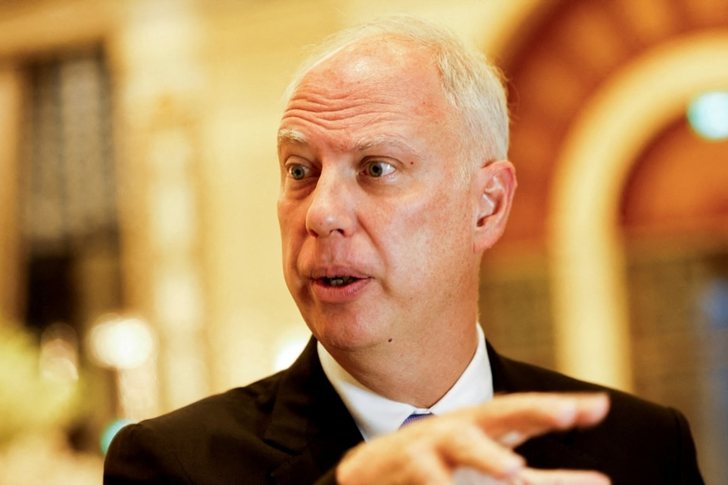
Kirill Dmitriev, a senior Kremlin negotiator, said Russia ...
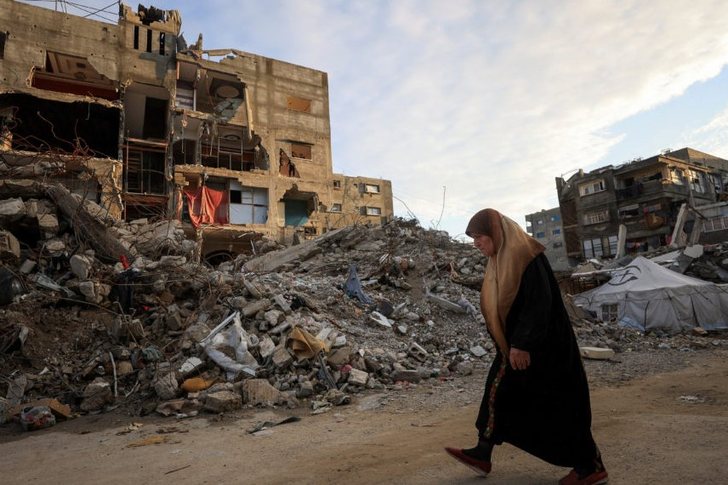
The Israeli army has killed six Palestinians, including a ...

Police officers have shot dead a man armed with a knife wh...
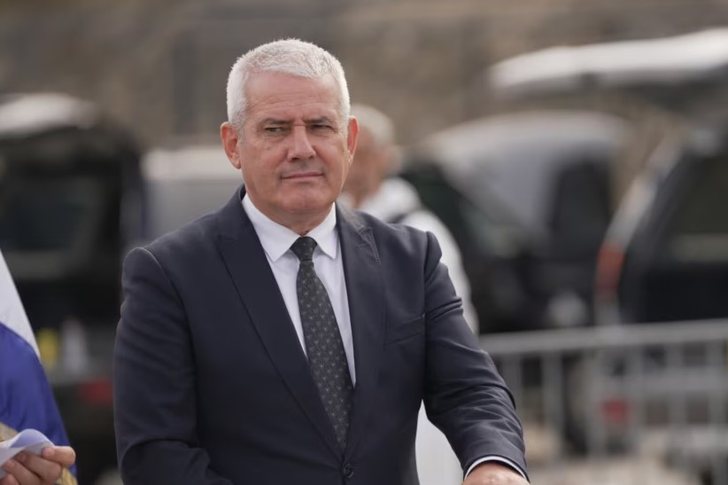
Kosovo's acting Minister of Internal Affairs, Xhelal Sveçl...

There have been 12 days of protests in the capital, which ...
Dritan Prençi is the SPAK prosecutor who is sleeping on th...

The in-depth investigations that SPAK conducted into Ajola...
SPAK's standards, the way it investigates, how it secures ...

The Special Board of Appeal (KPA) decided this Monday ...

The KPA vetting decided this Thursday to dismiss the p...

Suela Salavaçi, a prosecutor in the Prosecutor's Offic...

The Special Board of Appeal reinstated the prosecutor ...

Policia e Vlorës ka finalizuar operacionin e koduar “Sigur...

New details have emerged regarding the serious accident th...

An Albanian businessman was arrested this afternoon in Gre...

A serious accident has occurred on the Korça-Ersekë axis, ...
Today our country will be affected by stable weather condi...

A tragic accident occurred this Friday afternoon in Kameni...

Today our country will be affected by unstable weather con...

On Thursday, our country will be affected by relatively un...
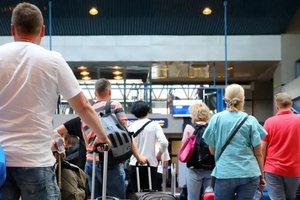
Good news for those who fly: After years of negotiations, ...

It took more than two years, but now the EU can begin acce...

US President Donald Trump announced that the US military h...

Iran has taken new measures to strengthen the protection o...

Several archaeological excavations conducted during this s...

At the Museum of Fine Arts in Chambéry, France, an exhibit...

Korça has transformed this weekend into the capital of cel...

Korça is ready to open the summer season with one of the c...
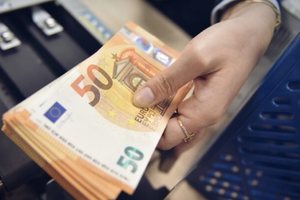
This Saturday, one US dollar is bought for 81.5 lek and so...

The Governor of the Bank of Albania, Gent Sejko, shared to...

Business lending has increased in the first half of this y...

The labor market has shown worrying trends in early 2026. ...