


For the first time since Brexit, the United Kingdom rejoins the EU's Erasmus program
Young people across the UK will be able to study or gain ...


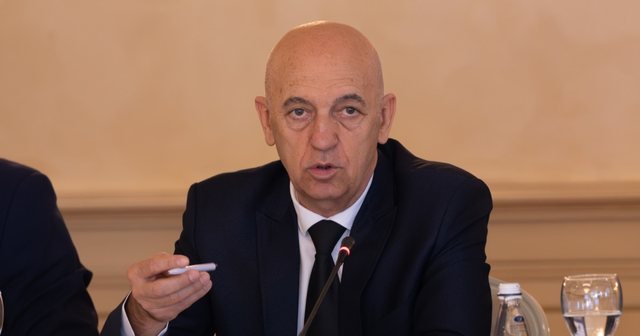
The Supreme Court on Wednesday annulled the decision of the Kosovo Prosecutorial Council to dismiss Besim Kelmendi from the position of acting chief state prosecutor, saying his dismissal was unlawful.
In a media release, the court said it has returned the case to the Council for reconsideration and reinstatement.
"The Supreme Court has approved as grounded the appeal filed by Besim Kelmendi, Acting Chief State Prosecutor, and has annulled the decision KPK.nr.1056/2025, dated November 20, 2025, as unlawful," the announcement states.
Kelmendi was dismissed last month after reports that he had allegedly collaborated in 1999 with a Serbian judge on the Recak Massacre case, which she considered a fabricated event.
He has denied these allegations.
His dismissal sparked controversy over the legality of the decision, as it was voted on by only five members of the Prosecutorial Council. The remaining members considered that there was no quorum, and called the decision an "institutional coup".
Kelmendi appealed to the Supreme Court after the Basic Court rejected his appeal against dismissal.
The Supreme Court found on Wednesday that the Prosecutorial Council's decision was "unlawful, arbitrary and baseless."
"It is contradictory in itself from the fact that such a decision is based on (legal basis), and this creates uncertainty as to how such a body is able to make decisions without a specific legal basis and referring to provisions that do not give it authorization to act in the form and manner in which it acted," the Supreme Court said.
According to her, the decision of the Prosecutorial Council was taken "in a procedure not based on the law, from the fact of the agenda, its setting, the change of the agenda, voting, proceeding, conclusion, reopening or new meeting to the contested decision to dismiss."
The decision to dismiss Kelmendi was contested by non-governmental organizations that monitor the justice system, who argued that it was a decision taken in the absence of a quorum at the KPK meeting and that it was an "illegal, arbitrary and abusive" decision.
The international community also reacted to the decision. The US Embassy in Pristina called for the laws to be respected and the proper legal procedures to be followed, while the European Union Office assessed that Kelmendi's dismissal hinders necessary reforms in the Prosecutorial Council and disregards the principles of law, undermining the country's progress towards the European bloc.
The Prosecutorial Council made a decision to dismiss Kelmendi one day after he appeared before the Kosovo Special Prosecution Office as a witness regarding his work in court at the time the Recak massacre occurred.
Kelmendi, in a press conference held on November 19, denied reports that he had collaborated with Serbian judge Danica Marinkovic in 1999, who was in charge of the Recak massacre case.
At the time, Marinkovic worked as a judge at the District Court in Pristina, and had described the massacre as a "fictional event."
45 Albanian civilians were killed in that massacre.
Kelmendi admitted that he had appeared before the Prosecution as a witness. According to him, at that time he was employed at the District Court in Pristina as a professional associate, emphasizing that he performed the work of a clerk, therefore he denied the accusations that he was Marinkovi?'s assistant.
His statements came after allegations by local media in Kosovo, Paparaci, that Kelmendi had been involved in handling the Recak case in 1999.
According to him, Marinkovic was the judge who "disappeared evidence of the Recak massacre."
The claims made at the time by Serbian judge Marinkovic about the Recak massacre are in line with the current narrative that the Serbian authorities have about this event.
William Walker, who served as head of the Organization for Security and Cooperation in Europe (OSCE) Verification Mission in 1999, documented the crimes committed in this village.
After the Racak massacre in March 1999, NATO attacked military and police targets in the former Yugoslavia, leading to the country's liberation and independence years later. /REL

Young people across the UK will be able to study or gain ...

Presidentja e Komisionit Evropian ka mbajtur një fjalim në...
Belarus President Alexander Lukashenko has called for imme...
Kosovo has signed an agreement with the American military ...
Bashkimi Evropian ka filluar heqjen e disa masave ndëshkue...

Los Angeles prosecutors have filed charges against Nick Re...

Edhe para se Komisioni Evropian të paraqiste propozimet e ...
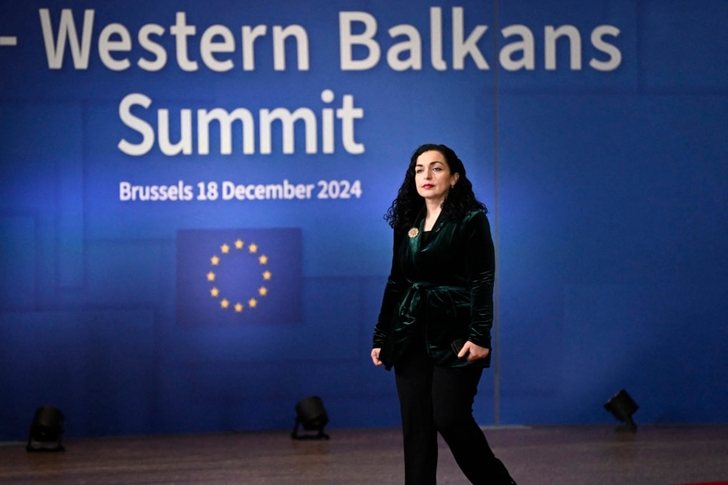
European Union leaders gather in Brussels on December 18 a...

Donald Trump has ordered a "complete and total" blockade o...
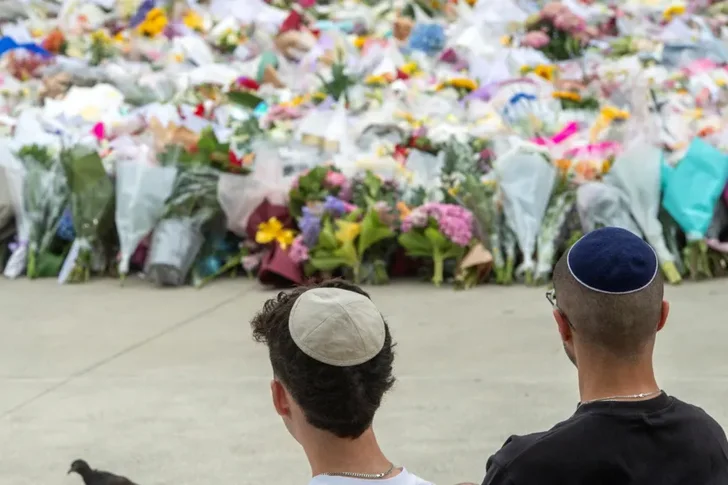
Naveed Akram, the suspected survivor of Sunday's mass shoo...
The President of Belarus, Alexander Lukashenko, stated tha...

Starting January 7, tourists visiting the Trevi Fountain i...

US President Donald Trump will address the nation with a l...

After laying off hundreds of thousands of government emplo...

Hungary announced that it has signed a five-year contract ...
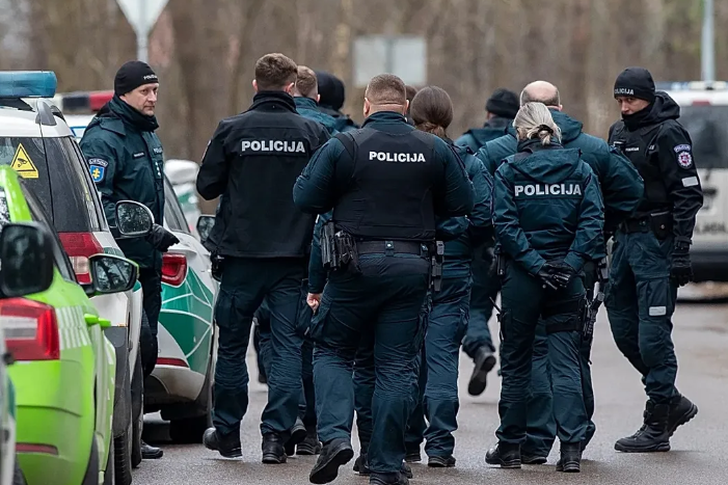
Tuesday's operation involved more than 140 officers from t...

The acting Minister of Industry, Entrepreneurship and Trad...
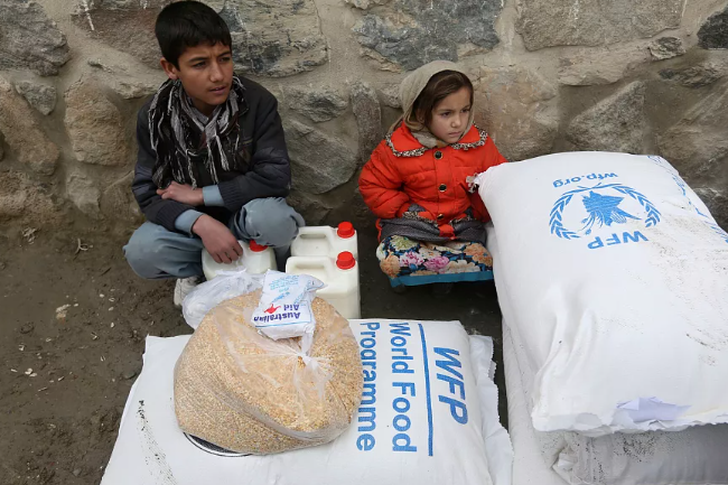
More than 17 million people in Afghanistan are facing cris...
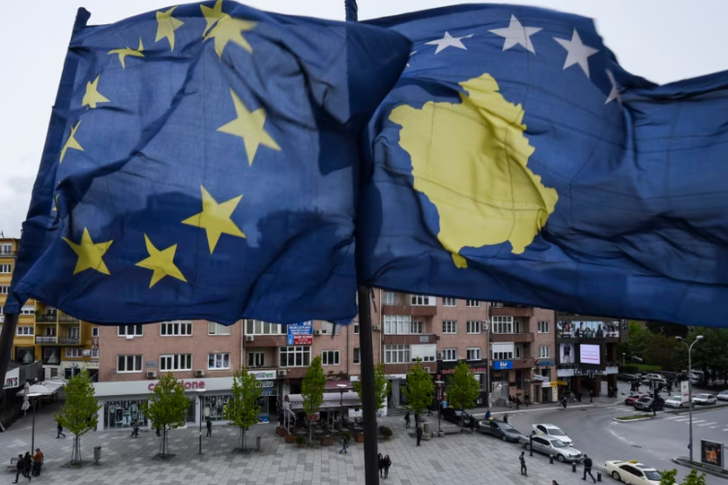
The Democratic League of Kosovo has sent a letter to the P...

British Prime Minister Keir Starmer has ordered an investi...

CNA has launched another investigation that could lead to ...

Irfan Hysenbelliu is a businessman that we call "Irfan the...

In March 2026, CNA launched another investigation centered...
The arrested mayor of Tirana, Erion Veliaj, with 13 charge...

The Special Board of Appeal (KPA) decided this Monday ...

The KPA vetting decided this Thursday to dismiss the p...

Suela Salavaçi, a prosecutor in the Prosecutor's Offic...

The Special Board of Appeal reinstated the prosecutor ...
Citizen MH, 61, a fisherman, was found dead near the islan...
Another phase of the international operation, codenamed "T...
Police have arrested a 34-year-old woman at Rinas Airport ...

A serious accident has occurred on the Lezhë-Shëngjin axis...

Over 18,000 foreign citizens from 140 countries have appli...

This Wednesday, our country will be under the influence of...
All of Southern Europe will face changing weather conditio...

Albania was hit by temperatures significantly higher than ...

Prime Minister Andy Burnham has announced that most bus fa...

France's parliament has passed a law to ban social media f...

US Secretary of State Marco Rubio arrived in Manila on Jul...
In the space of a few days, Ukrainian President Volodymyr ...

At a time when industrial products are increasingly taking...

Trust among people is not just a three-syllable word. It c...

Master of humor Todi Llupi has passed away at the age of 7...

The ninth edition of "MIK Festival" kicked off with one of...

Businesses will no longer be required to simply register t...

Despite economic growth and income in recent years, Albani...

This Wednesday, one US dollar is bought for 81.4 lek and s...

Construction company licenses will have a validity period ...