

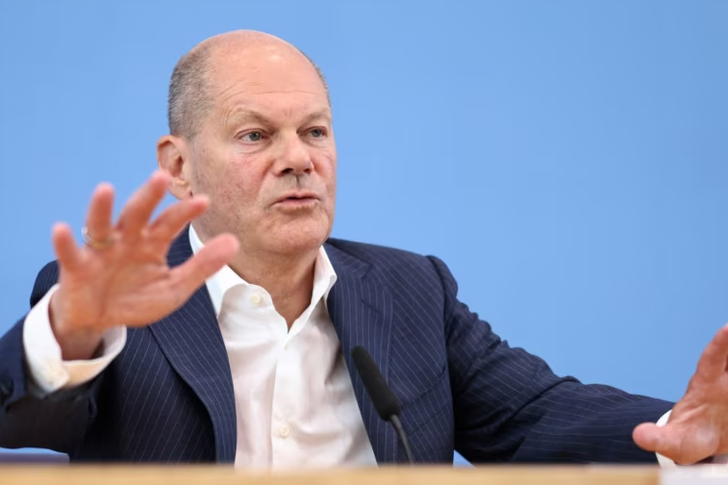
Scholz warns Netanyahu: Time for agreement
There have been several attempts to reach a cease-fire...


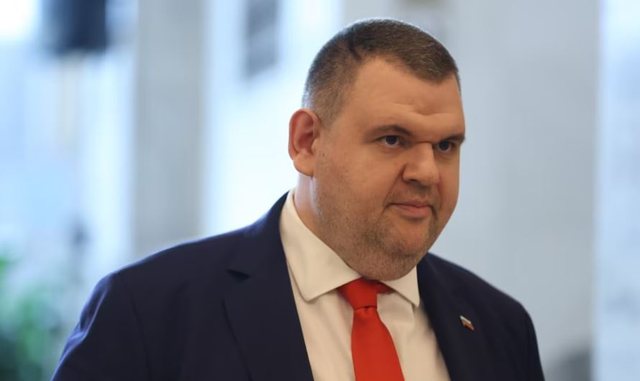
Delyan Peevski, politician and one of the most powerful oligarchs in Bulgaria, is an enigmatic figure. Apart from a few hotels he is said to frequent, no one knows where he lives.
He is rarely seen on the streets and prefers to be escorted to parliament by a convoy of cars and security guards.
However, if you ask any Bulgarian politician who is to blame for the current political crisis, as Bulgaria faces its seventh snap election in three years, most will likely point to the 44-year-old Peevski.
This oligarch has been operating behind the scenes for years. He controls most of the newspapers and media, and thus has a large hand in shaping public opinion.
In 2018, the international organization Reporters Without Borders echoed accusations of "corruption and interference between the media, politicians and oligarchs" in Bulgaria, which Peevski denies, saying that his political opponents put pressure on groups international human rights organizations to include his name in reports.
Having served as a member of Parliament since 2009, and held several state positions, including that of the head of Bulgaria's counterintelligence agency, Peevski has considerable influence over political figures and state institutions.
Political unrest
In 2023, this media mogul began to regularly attend parliamentary sessions and spoke to the media. At the beginning of 2024, he became the leader of the Movement for Freedom and Rights (DPS), the party that has traditionally represented the Turkish and Muslim ethnic minorities of Bulgaria.
In June, he led the party in the parliamentary elections, which came second, winning 47 of the 240 parliamentary seats in total.
While he has been a rising star in politics, Bulgaria has entered an unprecedented phase of political turmoil. From 2009 to 2021, the center-right party, GERB, led by Boyko Borisov, has led almost without interruption.
However, since 2021, Bulgaria has experienced six pairs of parliamentary elections. GERB won four of them, but never managed to form the government.
To an ordinary Bulgarian, Peevski is the epitome of the shadowy world of corruption and organized crime that many believe has engulfed the state.
He may be one of the least reliable politicians in Bulgaria.
In a recent poll, only two percent of Bulgarians said they trust him, compared to 88 percent of respondents who think otherwise.
Under the Magnitsky Act, the United States has imposed sanctions on Peevski, accusing him of corruption and influence peddling, "in order to protect himself from public prosecution, and to extend control over key state institutions and sectors."
The United Kingdom has also imposed sanctions on him, saying that Peevski was involved "in attempts to exercise control over key institutions and sectors of Bulgarian society, through bribery and the use of its own media."
Peevski, on the other hand, as a media magnate and politician, has started a legal context to the sanctions and constantly denies the accusations against him.
He has started legal proceedings in the US for the lifting of sanctions, claiming that the charges are politically motivated.
"toxic" partner
His damaged reputation means that many Bulgarian politicians now refuse to work with him.
For them, Peevski is "toxic", said Dimitar Bechev, a lecturer at the Oxford School of Global Studies, as well as a senior researcher at the Brussels-based Carnegie Europe Institute.
Hristo Ivanov, one of the leaders of the pro-Western reformist coalition We Continue the Change - Democratic Bulgaria (PP-DB), told the Bulgarian Service of Radio Free Europe, on July 30, that "Bulgaria's fundamental problem is 'the state of caught', which in recent years has been personified mostly with Peevski".
Many Bulgarian politicians have now begun to believe that any cooperation with this media mogul will lose them votes.
The coalition, We continue the change – Democratic Bulgaria (PP-DB), may have already seen the consequences of a close cooperation with Peevski's DPS party in the period from June 2023 to April this year.
In Bulgaria's last parliamentary elections, held in June, his supporters abandoned the coalition en masse.
The GERB party, which has worked closely and publicly with Peevski, has recently faced a steady bleeding of voter support.
Swinging for reforms
Bulgarian politicians have also accused Peevski of constant wavering when it came to reforms.
At the time of the creation of a coalition between the two largest political parties in Bulgaria, at the time, GERB and PP-DB, which led the country in 2023-2024, both parties pledged military aid to Ukraine, support for the euro , and full membership of Bulgaria in the Schengen zone.
However, the more reform-minded PP-DB has also proposed measures that would reduce the power of the Prosecutor General and eliminate Russian influence in the security services.
When GERB backed away from the proposed reforms, the governing coalition fell apart in March.
In an interview given to Radio Free Europe in April, Nikolay Denkov, one of the rotating prime ministers in the Government, blamed Peevski for increasing pressure on GERB and the leader of that party, Boyko Borisov, to break up the governing coalition.
Deep party divisions
There are many who see the upcoming parliamentary elections, scheduled for October, as a turning point, due to deep party divisions within Peevski's DPS.
After ascending to the head of the party, in early 2024, Peevski began to remove from the party, members who are close to Akhmed Dogan, the former long-time leader of the DPS party.
This faction is now fighting him, and Dogan himself – honorary leader of the party – is demanding Peevski's resignation.
As a result of divisions within the party, analysts have said that Peevski may fail to secure a seat in Parliament, or will have too few lawmakers close to him.
Other parties have discussed the possibility of Peevski's isolation in the upcoming October elections.
"We have to accept that we will work with those who are against Peevski in the DPS", said Ivanov from the PP-DP coalition. "Finally, we must have wise strategies, when opportunities arise, and get rid of corruption in the state."
Bulgaria is facing all these developments at a time when it is also isolated in the European Union and is losing support in the European bloc.
Bulgaria is the country with the highest rate of poverty and corruption in the EU.
The head of the EU, Ursula von der Leyen, is waiting for Bulgaria to propose a European commissioner, but the political situation has meant that Sofia has not yet made a decision.
Although the EU has accepted an economic plan worth 6 billion euros, Bulgaria has little chance of seeing those funds until it completes the reforms required by the EU, including taking anti-corruption measures. .
The political situation inside Bulgaria may have also damaged regional security.
Sofia is not actively involved in regional security discussions, said Matthew Boyce, a senior fellow at the Washington-based Hudson Institute who served for a time as a deputy assistant in the US secretary of state's office.
Vessela Tcherneva, deputy director of the European Committee for Foreign Relations, has warned that "if the state does not manage to get out of this political blockade", then this situation "will increase the possibility that states like Russia will have influence on an EU member state and NATO"./REL

There have been several attempts to reach a cease-fire...
Hamas, the Palestinian group designated a terrorist or...
Paris capped two and a half weeks of the Olympic Games...
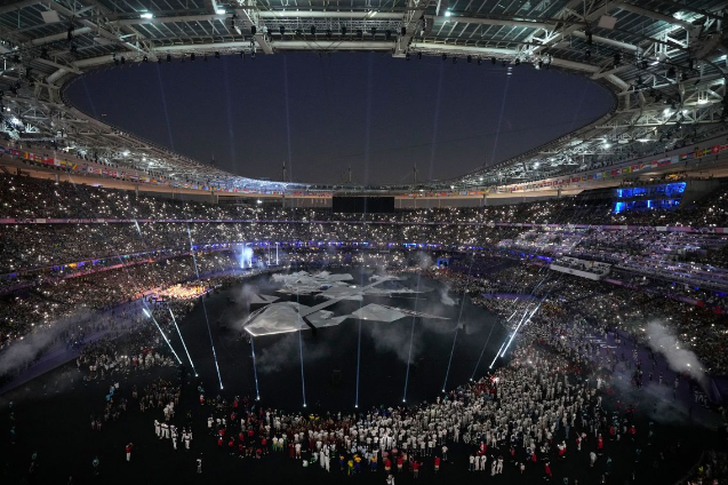
The closing ceremony of the Olympic Games was held in ...
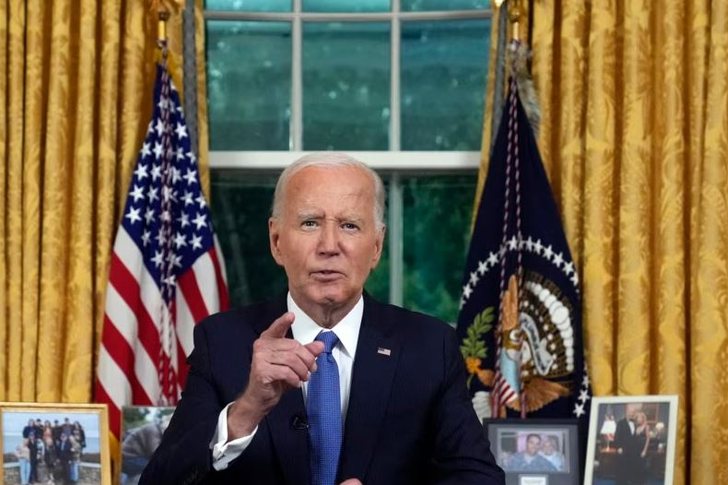
The President of the USA, Joe Biden, has revealed why ...
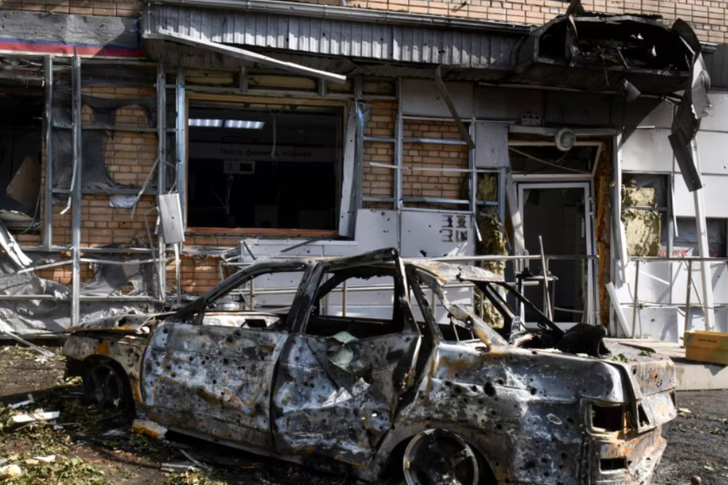
Russia claimed on Sunday that it has halted the advance of...
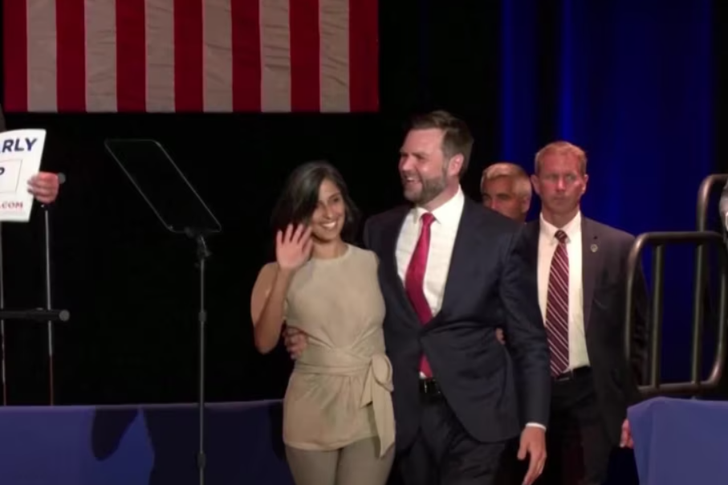
Republican nominee Donald Trump last month announced t...
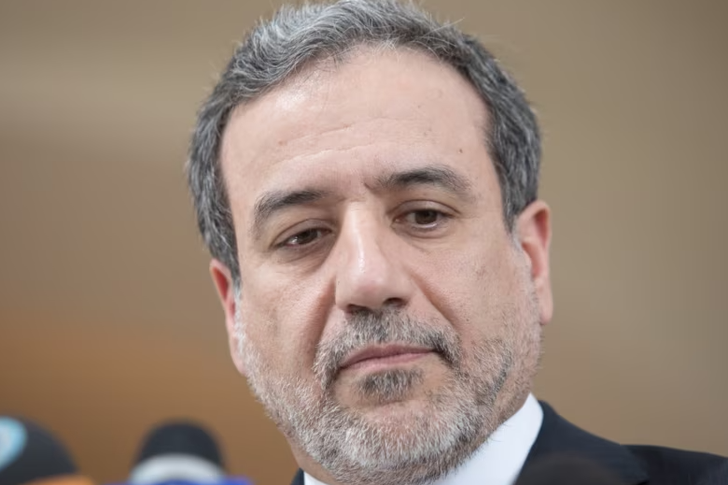
Abbas Araghchi, Iran's former nuclear negotiator, a Wester...
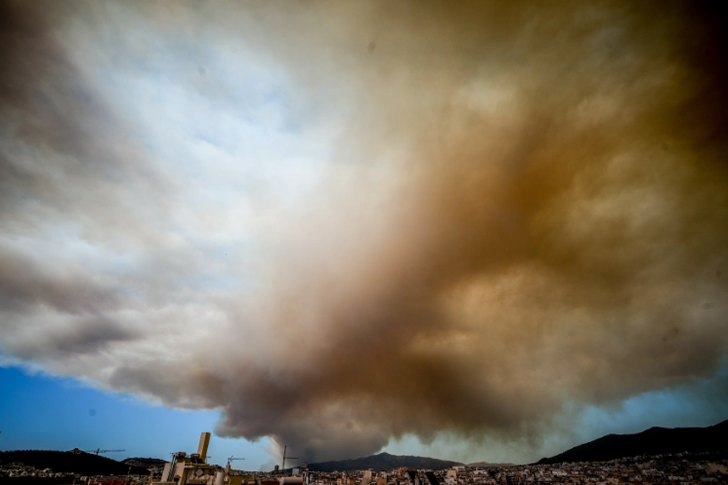
While the firefighters are fighting the fire in Varnav...
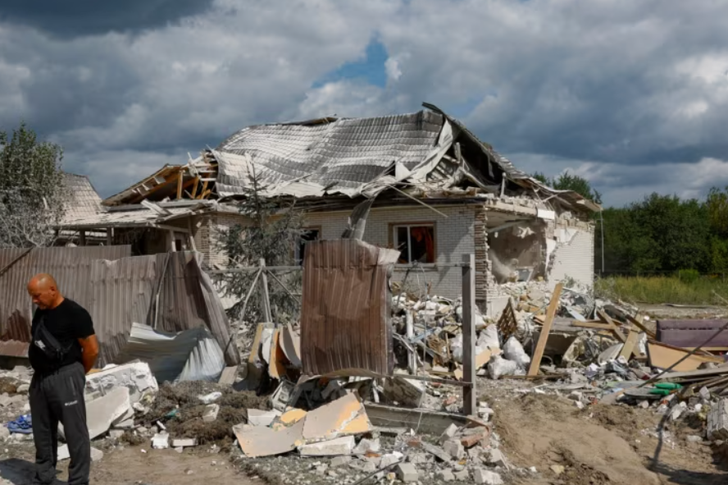
The President of Ukraine, Volodymyr Zelenskiy, indirec...
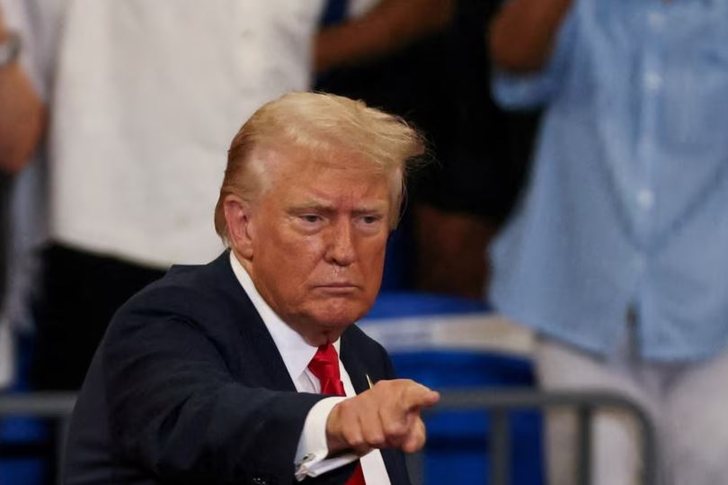
Republican presidential candidate Donald Trump's campa...

Turkey restored access to the Instagram platform after...

Serbian President Aleksandar Vucic said on Sunday that...
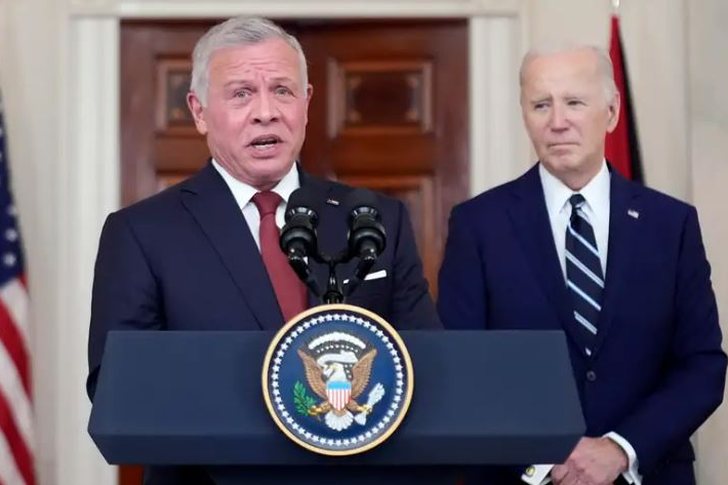
Some Arab countries behind the scenes maintain close relat...
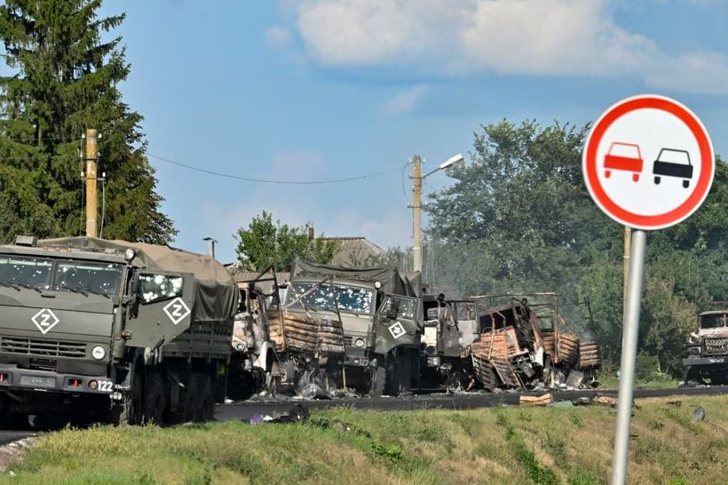
Ukrainian President Volodymyr Zelensky has admitted for th...
The eventual addition of punitive measures of the Euro...

Thousands of protesters marched in Belgrade on Saturda...
Belarus' Foreign Minister summoned Ukraine's Charge d'...
The socialist politician, Salvador Illa, was sworn in on S...
The United States announced on Friday that it will send $1...
CNA has launched another investigation that could lead to ...

Irfan Hysenbelliu is a businessman that we call "Irfan the...
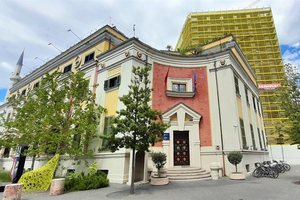
In March 2026, CNA launched another investigation centered...
The arrested mayor of Tirana, Erion Veliaj, with 13 charge...

The Special Board of Appeal (KPA) decided this Monday ...

The KPA vetting decided this Thursday to dismiss the p...

Suela Salavaçi, a prosecutor in the Prosecutor's Offic...

The Special Board of Appeal reinstated the prosecutor ...
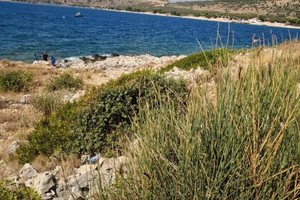
Citizen MH, 61, a fisherman, was found dead near the islan...
Another phase of the international operation, codenamed "T...

Police have arrested a 34-year-old woman at Rinas Airport ...

A serious accident has occurred on the Lezhë-Shëngjin axis...

The Institute of Geosciences has shared a forecast for wea...
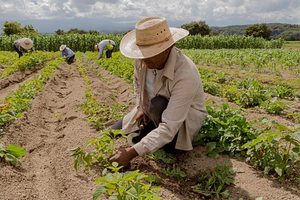
Rising energy and fertilizer prices are expected to contin...

Over 18,000 foreign citizens from 140 countries have appli...

This Wednesday, our country will be under the influence of...
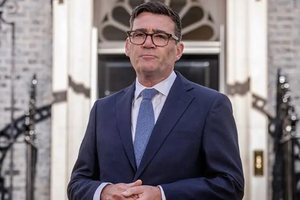
Prime Minister Andy Burnham has announced that most bus fa...

France's parliament has passed a law to ban social media f...
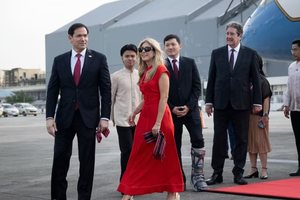
US Secretary of State Marco Rubio arrived in Manila on Jul...
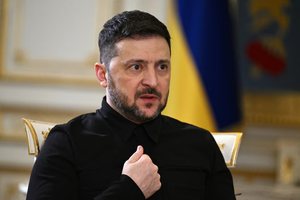
In the space of a few days, Ukrainian President Volodymyr ...
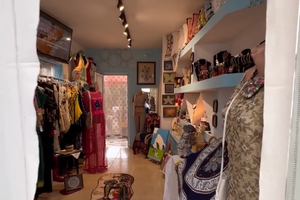
At a time when industrial products are increasingly taking...

Trust among people is not just a three-syllable word. It c...

Master of humor Todi Llupi has passed away at the age of 7...

The ninth edition of "MIK Festival" kicked off with one of...

Businesses will no longer be required to simply register t...

Despite economic growth and income in recent years, Albani...
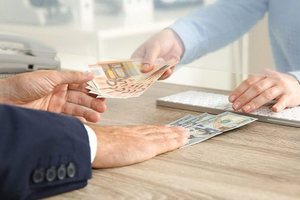
This Wednesday, one US dollar is bought for 81.4 lek and s...

Construction company licenses will have a validity period ...