



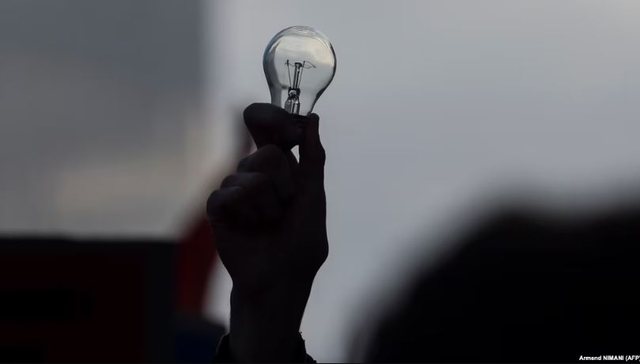
Shaban Dobratiqi's electricity bill for the month of December was almost three times higher than in the previous month.
From the 78 euros he paid in November, he will have to pay 228 euros for the last month of the year. The reason, Dobratiqi - who lives alone with his wife in a neighborhood of Pristina - says he does not know.
"The apartment is the same, the electrical equipment is the same. I use a small heater... even four hours during the day and after 10:00 p.m. a little more... I doubt that the billing is a flat rate. Even if I wanted to, I wouldn't be able to spend three times more" , says Dobratiqi, who has already complained to the Kosovar Electricity Supply Company (KSCO).
Similarly to him, Rexhep Kosumi - also from Prishtina - his electricity bill has gone up with an inexplicable increase: from 257 euros for November to 511 euros for December. He reveals that he uses electrical appliances to heat the house for his family of 5.
On Wednesday morning, he also complained to KESCO.
"They told me that you spent it all and I have to pay the bill. I did not make the payment today, because I am waiting to receive my pension and pay it in installments. This is unacceptable" , says Kosumi for Radio Free Europe.
In recent days, many citizens have made similar complaints on social networks, expressing doubts about the increase in the price of electricity. KESCO has denied such a thing, saying that the invoices for the month of December are a consequence of the higher expenditure of electricity.
However, not everyone is convinced of this.
Hamdi Malushaj, director of the "Evroenergie" company, which deals with analysis and studies of energy issues in the market of Kosovo and Germany, suspects that there are misuses by the electricity distribution and supplier company. He says that KESCO, which was privatized in 2013, is not monitored by anyone and is not transparent.
"Based on citizens' complaints, the Government of Kosovo should create a professional evaluation commission to verify what actually happened. And, in a professional way, clarify and know who is guilty", says Malushaj for Radio Evropa e Lire.
According to him, the amount of electricity production and import should also be looked at, in order to prove whether there was more electricity consumption or not.
Radio Free Europe sent questions to KESCO about the increase in bills and the amount of energy produced in November and December, but received no response.
For this issue, neither the Energy Corporation of Kosovo (KEK) nor the Office of the Energy Regulator (ERO) responded to REL.
Through a public reaction, on December 26, the Council for the Protection of Human Rights and Freedoms (KMDLNJ) requested urgent investigations by the State Prosecutor's Office for what it said were "abnormal bills" for electricity.
Neither the Prosecutor's Office nor the Government of Kosovo answered Radio Free Europe's question whether they will take any action.
According to the latest tariffs, approved in April by ERO, for consumers who spend up to 800 kilowatts per hour in a month, the price during the day is 7.79 cents per kilowatt, while for those who spend more than 800 kilowatts, the part on top of that was calculated at a price of 14.45 cents.
From 10:00 p.m. to 7:00 a.m., the price per kilowatt is 3.34 cents for those using up to 800 kilowatts and 6.81 cents for those using more.
Prices began to take off early last year, when Russia launched its invasion of Ukraine.
From September of last year to April of this year, the Government of Kosovo has subsidized consumers who have saved at least 5 percent of electricity per month, compared to the same month of the previous year. These customers have benefited from double the percentage saved.
In August, the Institute for Development Policy - INDEP, which deals with energy issues, asked the Government of Kosovo to continue subsidizing citizens, but this has not happened.
According to KESCO, the lack of subsidy is one of the reasons why citizens notice an increase in bills.
Kosovo has the capacity to produce about 800 megawatts of electricity per hour, while its needs, on winter days, reach up to 1,300 megawatts per hour.
One of the reasons for the underproduction is the decades old power plants.
The data of the Statistics Agency of Kosovo, published in November, show that the production of electricity during the month of September of this year has fallen compared to the current produced during the same period of the previous year.
Last year, according to an earlier ERO report, more than 750 thousand megawatts of electricity were imported, while about 6.35 million megawatts were produced by the power plants of the Kosovo Energy Corporation.
According to KAS, this year, until September, more than 246 thousand megawatts were imported./ REL



Donald Trump has scored a victory in his fight against cha...

A 19-year-old fell from a cliff this Wednesday in Dibë...
Former European Commission President Jacques Delors, f...
The Eiffel Tower was closed to the public until furthe...

The well-known Albanian singer, Soni Malaj has a sozi and ...
As fighting continues in Gaza, Israelis and Palestinians a...
Zambia's Foreign Minister Stanley Kakubo has resigned ...
Israeli forces carried out new airstrikes on Wednesday...
A serious incident happened in Tetovo. Some people had a ...

Oil exports to the planet's two most populous countrie...
The Central Election Commission of Kosovo suspended th...
The European Union has called to investigate cases of ...
The very popular German politician from the ranks of t...

We all use social media but which apps we use the most dep...

Egypt probably has a plan with several stages to end t...
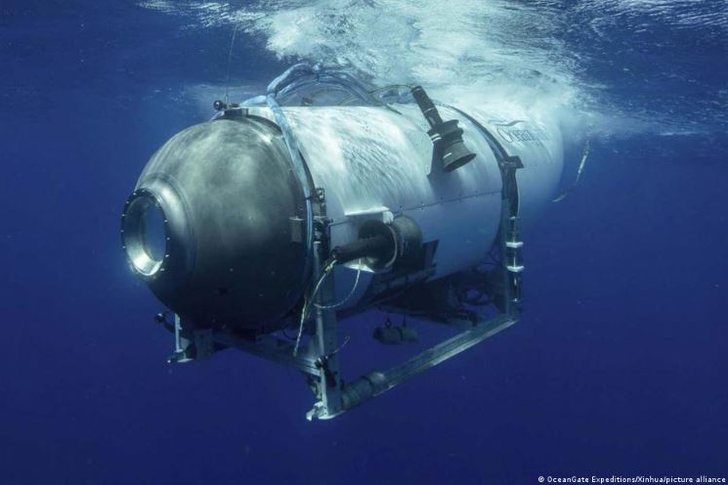
During 2023 there has been a lot of fake news, especia...

Enjoying experiences, not stressing about money, and h...

Although in 2022 the Sunshine State was named the no. ...

The film, starring Jason Momoa, was not well received ...
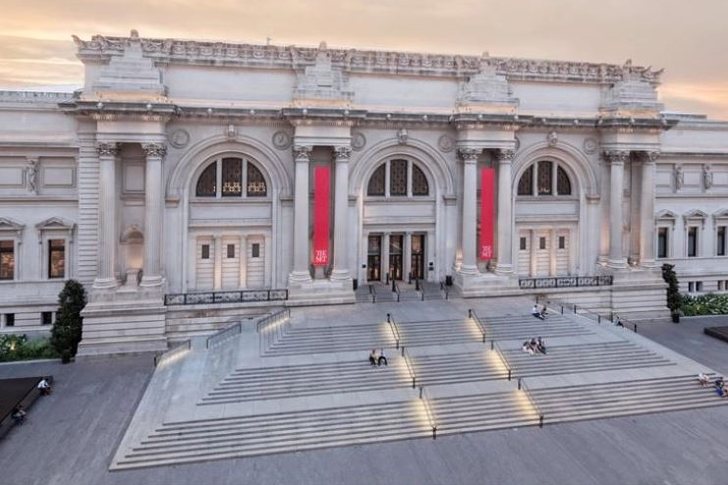
The Metropolitan Museum of Art recently announced that...
A 39-year-old citizen has been arrested in Lezha, after se...

CNA has launched another investigation that could lead to ...

Irfan Hysenbelliu is a businessman that we call "Irfan the...

In March 2026, CNA launched another investigation centered...

The Special Board of Appeal (KPA) decided this Monday ...

The KPA vetting decided this Thursday to dismiss the p...

Suela Salavaçi, a prosecutor in the Prosecutor's Offic...

The Special Board of Appeal reinstated the prosecutor ...
A conflict for weak motives was recorded today in the vill...
An accident involving three vehicles occurred a few minute...

55-year-old Belere Plaka, who was injured today with a sho...
Police Announcement: Following preliminary information...

By noon, cloudiness is expected to prevail in almost all o...

Children without parental care, for whom alternative famil...
On Thursday, our country will be under the influence of st...
A serious accident that occurred this Wednesday with the c...

Peru and Venezuela will restore diplomatic relations, the ...

United States President Donald Trump has left open the pos...

Israeli Prime Minister Benjamin Netanyahu will travel to t...
A bipartisan group of US lawmakers is calling for a Europe...
In my research at the Central State Archives, specifically...

At a time when industrial products are increasingly taking...

Trust among people is not just a three-syllable word. It c...
Master of humor Todi Llupi has passed away at the age of 7...
War, weather and supply disruptions could send gas prices ...
The number of active enterprises in Albania continued to g...
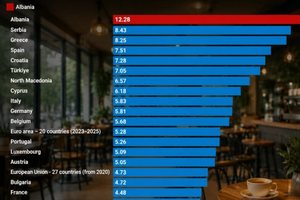
In Albania, the bar-cafe has long become an almost unique ...

This Friday, one US dollar is bought for 81.7 lek and sold...