


European Song Festival 2024: Not so apolitical
The European Broadcasting Union (EBU), which organizes the...


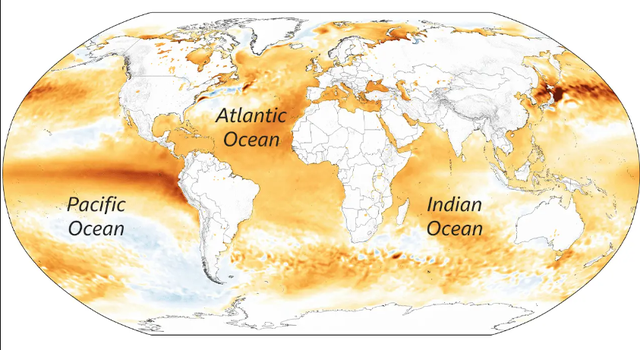
Fueled by climate change, the world's oceans have broken temperature records every day over the past year.
According to an analysis by the BBC, gases that warm the planet are responsible, but El Niño has also affected the warming of the seas.
Super-hot oceans have hit marine life hard and fueled a new wave of coral bleaching.
Copernicus also confirmed that last month was the warmest April in terms of air temperatures, extending that streak of month-specific records.
For decades, the world's oceans have been Earth's "get out of jail" when it comes to climate change.
They not only absorb about a quarter of the carbon dioxide that humans produce, but also absorb about 90% of excess heat.
But over the past year, the oceans have shown the most worrying evidence yet that they are struggling to cope, with the sea surface particularly feeling the heat.
From March 2023, the average surface temperature of the global oceans began to move increasingly above the long-term norm, reaching a new record in August.
Recent months have brought no respite, with sea levels reaching a new global average of 21.09 degrees Celsius in February and March this year, according to Copernicus data.
As the chart below shows, not only has every day since May 4, 2023 broken the daily record for the time of year, but on some days the gap has been wide. Some 47 days broke the record for that day of the year by at least 0.3 degrees Celsius, according to the BBC's analysis of Copernicus data.
Never before in the satellite era has the record margin been so wide.
The biggest record-breaking days were August 23, 2023, January 3, 2024, and January 5, 2024, when the previous temperature was beaten by about 0.34 degrees Celsius.
Major impact on marine life
According to a recent study, this human-driven ocean warming is having significant impacts on global marine life and may even be shifting the seasonal cycle of sea temperatures.
Perhaps the most significant consequence of recent warming has been the massive bleaching of corals globally.
These major ocean "nurseries" turn white and die because the waters they live in get too hot. They are a critical element in the ocean ecosystem, home to about a quarter of all marine species.
In the UK, rising sea temperatures are having an impact, with a number of creatures having completely disappeared from coastal sites - for example, some species of barnacles.
The El Niño effect
An important factor that has made last year more impactful on seas around the world has been the El Niño weather phenomenon, adding to human-caused greenhouse gas emissions.
El Niño began in June 2023, after an extended period of cooler La Niña conditions, and peaked in December, although it has since faded./ CNA

The European Broadcasting Union (EBU), which organizes the...

Former North Korean propaganda master Kim Ki Nam has died ...

AstraZeneca is withdrawing its Covid-19 vaccine worldwide,...

The United States is optimistic that a cease-fire deal in ...

The citizens of North Macedonia have started voting on Wed...
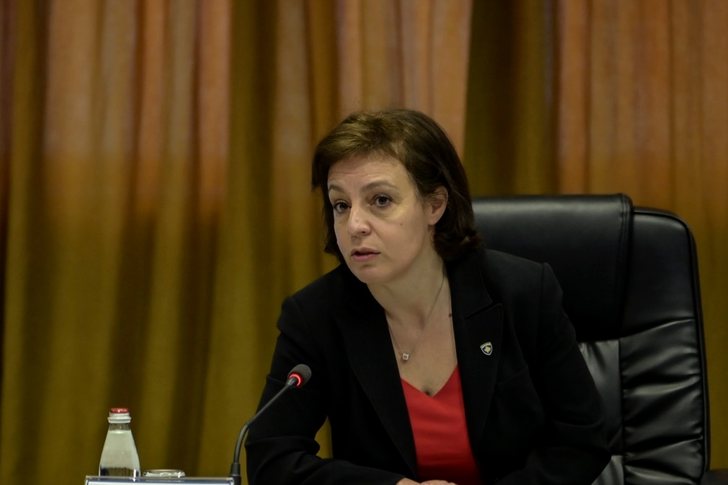
The Foreign Minister of Kosovo, Donika Gërvalla-Schwarz, s...

Chinese leader Xi Jinping will spend most of his five-...

Russia has declared the human rights group, Freedom House,...

Vladimir Putin began his fifth term on Tuesday as Russia's...

US officials say foreign countries like China intimidate, ...

Ukrainian counterintelligence investigators have foile...

The Government of Kosovo has announced that the Ministry o...

Moscow warned on Monday that it would strike British m...
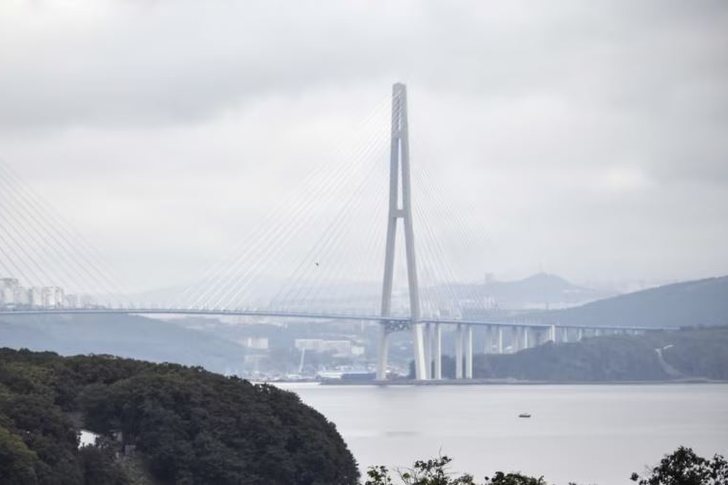
Një gjykatë në lindjen e largët të Rusisë, qytetin Vla...

Many experts say the copper trade is facing a "supercycle"...

For the fifth time, Vladimir Putin will take a long wa...

Orthodox Easter was celebrated on Sunday - but there w...

Moscow warned on Monday that it would strike British m...

A spokesperson for the US State Department told VOA th...

The militant group Hamas says it has accepted a ceasefire ...

CNA has launched another investigation that could lead to ...

Irfan Hysenbelliu is a businessman that we call "Irfan the...

In March 2026, CNA launched another investigation centered...
The arrested mayor of Tirana, Erion Veliaj, with 13 charge...

The Special Board of Appeal (KPA) decided this Monday ...

The KPA vetting decided this Thursday to dismiss the p...

Suela Salavaçi, a prosecutor in the Prosecutor's Offic...

The Special Board of Appeal reinstated the prosecutor ...

Citizen MH, 61, a fisherman, was found dead near the islan...

Another phase of the international operation, codenamed "T...

Police have arrested a 34-year-old woman at Rinas Airport ...

A serious accident has occurred on the Lezhë-Shëngjin axis...

The Institute of Geosciences has shared a forecast for wea...

Rising energy and fertilizer prices are expected to contin...

Over 18,000 foreign citizens from 140 countries have appli...

This Wednesday, our country will be under the influence of...

Prime Minister Andy Burnham has announced that most bus fa...

France's parliament has passed a law to ban social media f...

US Secretary of State Marco Rubio arrived in Manila on Jul...

In the space of a few days, Ukrainian President Volodymyr ...

At a time when industrial products are increasingly taking...

Trust among people is not just a three-syllable word. It c...

Master of humor Todi Llupi has passed away at the age of 7...

The ninth edition of "MIK Festival" kicked off with one of...

Businesses will no longer be required to simply register t...

Despite economic growth and income in recent years, Albani...

This Wednesday, one US dollar is bought for 81.4 lek and s...

Construction company licenses will have a validity period ...