

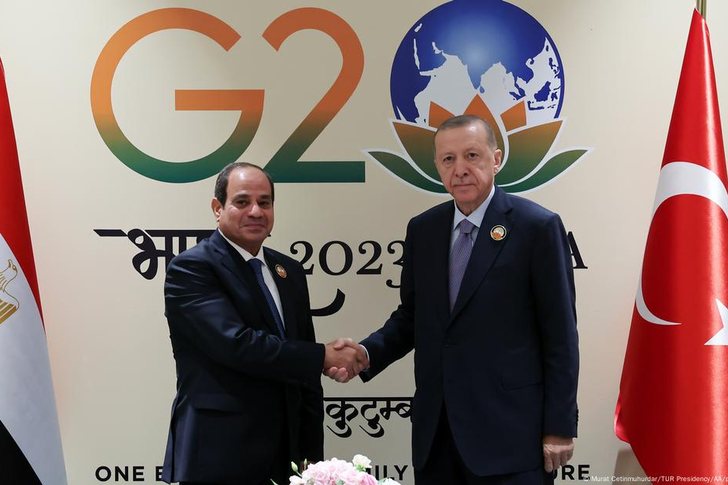
Israel brought Turkey and Egypt closer!
"Some want to reconcile me with Al-Sisi. I reject that. I ...


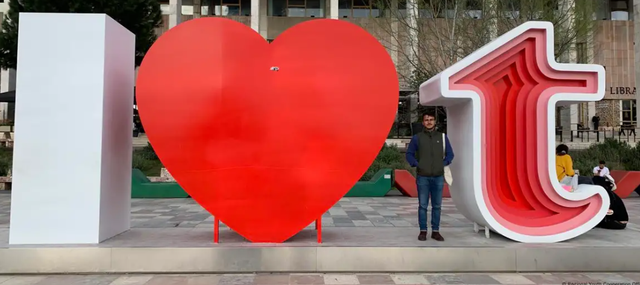
The continued lack of political will to foster cooperation between Bosnia and Herzegovina and Albania is disappointing evidence of missed opportunities for mutual benefit in the Western Balkans.
Timuri, a 26-year-old from Sarajevo, studies languages ??and literature and loves to travel and explore the world. One Wednesday on a sunny day he decided to take a long bus ride from Sarajevo to Tirana. At around 8am he started his ten-hour journey in a mini-van. First stop Podgorica.
"There is no direct bus line from Sarajevo to Tirana. First you have to go to Podgorica, change buses there and then get to Tirana", explains Timuri. "I must mention that the bus from Sarajevo to Podgorica was one of the worst I've ever been on. Actually, it wasn't even a bus; it was a vehicle for about twenty people, a van for transporting illegal migrants who keep their heads down when they cross the border…” he adds with a laugh.
Removal of roaming charges
To reach Podgorica the bus crosses the state border over the Tara River to reach the Š?epan Polje border crossing and enter Montenegro. It was definitely the worst road I've ever traveled, and that border is so inconvenient, those containers, a disaster," adds Timuri. At noon, Timuri arrived in Podgorica, where he waited for two hours to continue his journey by bus to Tirana. "I must say that the removal of roaming charges between the countries of the Western Balkans makes this trip easier," says Timuri.
In 2019, the countries of the Western Balkans, including Bosnia and Herzegovina and Albania, signed an agreement in Belgrade to remove roaming charges. "Before, without the removal of roaming, the reception was complicated, because you didn't even have internet," says Timuri.
The best Podgorica-Tirana bus
At four in the afternoon, the bus to Tirana arrived to pick up its passengers in Podgorica.
"That bus was much better; it was a great connection. The trip was fast, the easiest part of the trip," says Timuri with a sigh. After three hours the bus from Podgorica arrived in Tirana.
Although the road distance between Sarajevo and Tirana is a little more than 300 km, Timur's journey by regular bus lines took 10 to 11 hours.
Timur's journey from Sarajevo to Tirana highlights the relations between the two Balkan countries, which are so close, but also so far. His odyssey underscores the urgent call for road improvements and the strengthening of extended diplomatic ties to facilitate travel between Bosnia and Herzegovina and Albania.
Little cooperation between Albania and Bosnia and Herzegovina
Another evidence of the lack of connections between these countries is the absence of an embassy of the Republic of Albania in Sarajevo, as well as an embassy of Bosnia and Herzegovina in Tirana. Despite the insistence and the questions sent to the Foreign Ministry of Bosnia and Albania regarding the lack of exchange of embassies, none of them were ready to answer.
Both historically and today there is a lack of economic, commercial, diplomatic, cultural and interstate cooperation between these two countries of the Western Balkans. Lema Balaj, an Albanian who grew up in Bosnia and Herzegovina, moved to Albania in 2008 for work, but her family continues to live in Bosnia. She has three brothers who live and work in Tuzla and a sister who lives in Grada?ac, so she maintains close ties with Bosnia, and often visits Tuzla. In addition to repeating the complaints that Timurit mentioned, she adds that there is another problem: ethnic profiling at the border.
Lema, who has both a Bosnian and an Albanian passport, has personally experienced inequality while traveling between the two countries. When she crosses the borders with the Bosnian passport, she has no problems, but with the Albanian passport, she is often faced with detailed checks of the vehicle and questions.
"Just having an Albanian passport is enough to arouse suspicion at any checkpoint, causing further checks. Unfortunately, this is the reality for Albanians," she explains.
Albanians in Bosnia and Herzegovina
The presence of Albanians in Bosnia is early. Records date back to the Ottoman period. Many Albanians have migrated to Bosnia, especially during the First and Second Yugoslavia due to the difficult living conditions in their countries of origin such as Albania, Kosovo, Montenegro and Macedonia. Traditionally they are mainly located in urban centers. The largest number of Albanians live in Sarajevo.
The number of Albanians in Bosnia has changed over the years. The most recent data on the number of Albanians in Bosnia and Herzegovina dates back to 2015, obtained from a report by the Council of National Minorities of Bosnia and Herzegovina. According to this report, about 10,000 Albanians live in the Federation of Bosnia and Herzegovina. There is an 'unusual' presence of Albanians in Republika Srpska. However, these statistics are not confirmed by the authorities, and are data provided by Albanian non-governmental organizations.
Sanadin Voloder, a journalist from Mostar whose research focuses on Albanian culture and relations between the two countries, highlights the problems with the data from the recent census in Bosnia:
"Albanians are aware of the political situation and atmosphere in Bosnia and Herzegovina, so they declared themselves as Bosniaks in the last census," Voloder explained. Today there is no exact data on the number of Albanians in Bosnia and Herzegovina, but "it can let's talk about about 25,000 Albanians in Bosnia and Herzegovina," concluded the journalist.
"We cannot see any difference between us and the Albanians, except for their names and surnames," comments Voloder, emphasizing the natural integration of the Albanian community into Bosnian society.
People know that I am Albanian just by my name
Another Albanian, Abi Muhtari, came from North Macedonia to Sarajevo at the age of two and today has Bosnian, Macedonian and Swiss citizenship.
"I am Albanian, but my homeland is Bosnia and Herzegovina," explains Muhtari. Remembering with a smile on his face his childhood in Sarajevo, where he still lives, he says:
"We have never experienced discrimination; in fact, we are no different from the majority population. People only know that I am Albanian when they hear my name, and even in this case it does not change anything."
Through the prism of others
"Albanians and Bosniaks may be the only two nations in the Balkans that have so much in common and yet know so little about each other. Most of what they know about each other is through the prism of others," explained Ramadan Ramadani, analyst in the "Nisma" institute in North Macedonia. Bosnia and Herzegovina and Albania have had two completely different destinies. Today's Bosnia was part of the Socialist Federal Republic of Yugoslavia, while Albania itself was a Socialist Republic.
"I remember our elders fantasizing about Albania and seeing Hoxha as a hero, because they didn't know what was really happening," says Muhtari. Even today, the situation is no better. "As an Albanian, I don't know Albania, so how can I expect someone else, eg a Bosniak, to know it?"
A few hundred kilometers of travel separate Sarajevo from Tirana, and because they are close places, they remain largely unknown to each other. "The early presence of Bosniaks from the late Ottoman period in a territory that is today Albania and the coexistence of millions of Bosniaks and Albanians in the same state, i.e. in the former Yugoslavia, can be a living legacy of coexistence and a basis for got to know each other better," concluded Ramadani.
Bosniaks in Albania
During the Austro-Hungarian occupation of Bosnia and Herzegovina in 1878 over 160,000 Bosnian Muslims were displaced from their homes seeking refuge in neighboring countries such as North Macedonia, Kosovo, Turkey and Albania. In Albania they are known as "muhajira", which means "refugee" in Turkish. In Albania they settled mainly between Durrës and Tirana, especially in Shijak, becoming an integral part of the cultural landscape of Albania. Despite the integration, the Bosniak minority maintains its language.
Bosniaks are recognized as a minority with the adoption of the Law on the Protection of National Minorities in Albania in 2017. But while data exists for other minorities, such as Greeks, Macedonians, Montenegrins, Armenians, Roma and Balkan Egyptians, information on Bosniaks is scarce. . The Albanian Institute of Statistics (INSTAT) does not have data on Bosniaks, but according to Fikret Klari?, President of the 'Zambak' association of Bosniak-Albanians in Albania, it is estimated that around 7,000 Bosnian-Albanians live in the Durres area.
Complicated identity
The story of Lema Balajs encompasses the complex fabric of identities and experiences in the Balkans. Born in 1984 in Serbia, she comes from an Albanian family originally from Prizren. Her family emigrated seeking refuge and opportunity in the former Yugoslavia, eventually settling in Bosnia in 1988, where she opened a bakery.
The outbreak of war in 1992 forced them to flee to Albania before returning to Kosovo and then back to Bosnia in 1999. During these upheavals, the family's oven symbolized stability. Although she proudly identifies as Albanian, growing up in Bosnia highlights the complex nature of ethnic and national identity in a region characterized by diversity and division.
Growing up in Bosnia, Lema always spoke Bosnian, in addition to her mother tongue, the Albanian dialect spoken by her family. Reflecting on the challenges faced by Albanians in integrating with the wider community due to their strong connection to their roots and traditions, she recalls that "Albanians tried to stay together, preserving our cultural heritage instead of mixing with Bosnian society".
However, Lema's personal experience was different, as she went on to high school, an unusual path for Albanian women during that period. Recalling her school years, she adds: "when I enrolled in high school and university, when I said my name, everyone asked me 'where are you from?' and when I said that I am Albanian, they were surprised that I was studying".
Despite her deep connection with the Albanian identity, she does not deny the fact that after moving to Albania in 2008, she has felt closer to her Bosnian identity.
"When I came to Albania for the first time in 2008, I applied to a Bosnian company that was looking for staff in Albania and they accepted me, because I had written in my CV that I knew the Albanian language. But when I got here, I realized that I didn't know the Albanian language, I only knew the dialect of my village and I had done all my studies in Bosnian and Serbian, I had never studied in Albanian, it took me some time to change the dialect and get used to the Albanian language."
In addition to the language barrier, she emphasizes the difficulty of integration into Albanian society, despite her Albanian origins. "Actually, when I came to Albania for the first time, I couldn't integrate with the Albanians, and there were Serbian families living and working in Albania and I was closer to them than to the Albanians, because my mentality, the way I grew up, the food that I ate, the music I listened to fit them," explains Lema.
Albanian cultural center
With the desire for mutual recognition between Albanians and Bosniaks, as well as all Bosniaks and Herzegovina, a group of intellectuals, academics, businessmen and activists of Albanian origin in Sarajevo have come together to strengthen relations and promote mutual understanding between these peoples. that are so close, but also so far. Among them is Abi Muhtari, the initiator of the opening of the Albanian Cultural Center in the center of Sarajevo.
Since its opening a year ago, the Albanian Cultural Center has not had much opportunity to flourish, but its goal is "to better know Albanians and Bosniaks, Bosniaks and Herzegovinans through culture," explained Muhtari. The continued lack of political will to promote cooperation between Bosnia and Albania is a disappointing testament to the missed opportunities for progress and mutual benefit in the Western Balkans./ DW

"Some want to reconcile me with Al-Sisi. I reject that. I ...
The Justice Department on Tuesday announced criminal charg...
The arrest and indictment of Telegram network founder ...
A decision on whether to reclassify marijuana as a less da...
Although it may seem like the presidential election in the...
The Parliament of North Macedonia opened today the debate ...
The European Union (EU) has warned Serbia that maintaining...
NATO Deputy Secretary General Mircea Geoan announced o...
Russian bombing has destroyed about 50% of Ukraine's elect...
The Israeli military says it has killed a Hamas militant w...
Georgia was once seen as a safe place for journalists. But...
Organizata Botërore e Shëndetësisë thotë se vaksinat kundë...
Rising mortgage costs and higher rents have combined with ...
A major search and rescue operation is underway in the Eng...
Russian President Vladimir Putin has arrived in Mongolia, ...
The President of Ukraine, Volodymyr Zelensky, says tha...
A man found frozen in a Pennsylvania cave in 1977 has ...
After eight seasons of "Game of Thrones", more than 2,000 ...
Turkey said it has arrested a Kosovo citizen on charge...
Ahead of the German government's talks with the CDU/CSU Un...

CNA has launched another investigation that could lead to ...

Irfan Hysenbelliu is a businessman that we call "Irfan the...

In March 2026, CNA launched another investigation centered...
The arrested mayor of Tirana, Erion Veliaj, with 13 charge...

The Special Board of Appeal (KPA) decided this Monday ...

The KPA vetting decided this Thursday to dismiss the p...

Suela Salavaçi, a prosecutor in the Prosecutor's Offic...

The Special Board of Appeal reinstated the prosecutor ...
Footage emerges from the serious accident that occurred th...
A Shkodra traffic police officer was hit with hard objects...
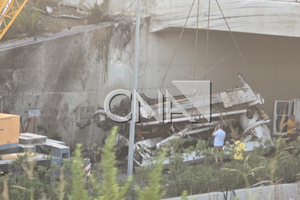
This Wednesday, around 4:00 PM, a serious accident occurre...
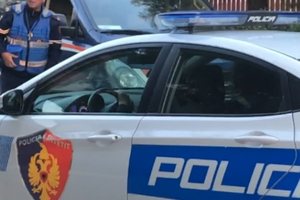
Tirana Police have shared details regarding the accident t...
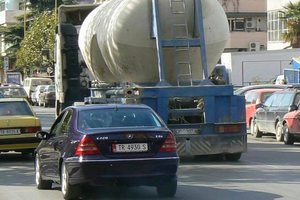
A serious accident that occurred this Wednesday with the c...

The Institute of Geosciences has shared a forecast for wea...
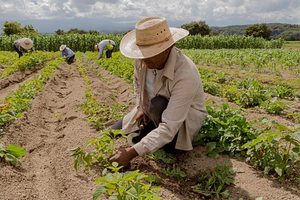
Rising energy and fertilizer prices are expected to contin...
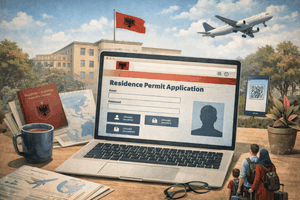
Over 18,000 foreign citizens from 140 countries have appli...
The trial of ousted Venezuelan President Nicolas Maduro on...
US President Donald Trump has issued another warning to Ir...
Prime Minister Andy Burnham has announced that most bus fa...
France's parliament has passed a law to ban social media f...

At a time when industrial products are increasingly taking...

Trust among people is not just a three-syllable word. It c...

Master of humor Todi Llupi has passed away at the age of 7...

The ninth edition of "MIK Festival" kicked off with one of...

The price of diesel reached 206 lek per liter from 198 lek...

Businesses will no longer be required to simply register t...

Despite economic growth and income in recent years, Albani...

This Wednesday, one US dollar is bought for 81.4 lek and s...