

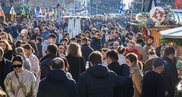



It seems that Kosovo will have fewer inhabitants in the coming years. Their escape to different countries of the world is expected to happen now that the visas have been removed. The fear has increased that Kosovo will be left without youth and workforce
Citizens of Kosovo have already acquired the right to travel without visas through the countries of the Schengen area, consisting of 27 European countries.
This process also brought concerns about the impact that visa liberalization may have on youth migration.
According to the data of the Statistics Agency of Kosovo, during the year 2022, about 41,500 inhabitants left Kosovo. Employment was among the reasons cited for emigration.
The World Bank has indicated that according to forecasts, the labor market will continue to be affected by legal labor migration even after visa liberalization, as in the past.
Other countries of the Western Balkans went through the same phase. Serbia, Montenegro and North Macedonia gained the right to visa-free travel through Schengen in December 2009, while Albania and Bosnia and Herzegovina a year later.
The head of the Independent Union of the Private Sector of Kosovo (SPSPK), Jusuf Azemi, has said that visa liberalization will also affect the private sector.
According to him, the owners of various companies have the first six months of this year as a kind of test as the last opportunity to provide the best working conditions before there is a shortage of labor.
After June, Azemi fears a mass migration of citizens.
"Only those who have not seen the real situation know that this year there is also a shortage of workers, I expect that in the second part of this year we will have an acceleration, a greater flow of people fleeing from Kosovo on bail to find a job with better conditions. The owners of the companies have the first six months of this year as a kind of test and at least offer conditions that fulfill the labor law and the collective agreement, but if we continue with this situation as it is with the workers and the private sector, something that needs to be established I will definitely leave".
Further, he said that the state of Kosovo's private sector should be refreshed and be in a better state, since the lack of workers has taken its toll, adding that the best part of workers has been lost.
According to him, in Kosovo the minimum wage should be 500 euros.
"We have many meetings with private sector workers to be stable in Kosovo in the workplace, to perform services properly, I think that the minimum wage should be 500, with the payment of travel and the removal of food and with this option I think that maybe this mass exodus will be prevented, otherwise even 600 and 700 and how does it cover these two, this is pointless, you know that until now the law and the agreement between the owner and the worker have not been respected, and this has caused us to be in such a state", he said.
Azemi also mentioned a figure that he wished was not true, saying that up to 150 thousand workers will be less than in previous years.
"We know that there are shortages everywhere in the world, but in Kosovo, for such a large number to run away from a small number of the population is very serious, which unfortunately I hope that this information of mine is not true, but I am afraid that this year we will have 100-140 thousand workers less than in previous years".
Meanwhile, the president of the Kosovar Alliance of Businesses Agim Shahini, in a presentation to the media, has shown that based on a research by the "Riinvest" Institute, it is expected that in 2024, 150 thousand citizens will leave Kosovo.
"And the study of this institution (Riinvest) has confirmed our warning data of the study. On average, this can be approximately correct, because if there are 360 ??to 380 thousand workers, who are currently contributors, and the labor force in Kosovo can also be about 850 thousand workers, the rest of the vast majority are unemployed. It turns out that that figure of about 150 thousand citizens of the country will seriously endanger Kosovo and this is an emptying of Kosovo. Unfortunately, they are not only unemployed workers, but a number of them are workers who are at work and have employment contracts.
Shahini has shown that according to an analysis by AKB, about 50 thousand workers may have received work contracts for other countries.
"It means that if within three years 150,000 have left with regular work documents, in 2024 another 150,000 will go as tourists. Since December, Germany has liberalized the market where every citizen of the Western Balkans, who goes to Germany as a tourist, if he comes into contact with an employer, he can enter into a contract for a very short time".
Even the businessman Ramiz Kelmendi has raised the alarm that with the liberalization of visas from this month many citizens will flee the country and his claims are that a vacuum will be created in society.
Kelmendi mentions two elementary issues that will have an impact from visa liberalization. He mentions that there will be a reduction in production, starting with daily bread for citizens.
In addition, the owner of Elkos Group, Ramiz Kelmendi, says that from this month businesses will suffer from a lack of labor.
"I didn't like to see such a large number of young people who for the sake of interests and a better economic life that is very necessary for them, bad to prevent them from going... A vacuum will be created here extraordinary, there will be a shortage of hundreds and thousands of loaves of bread per day that will not be sold, there will be a shortage of hundreds and thousands of coffees that will not be drunk and the budget will be depleted, because in most cases it is consuming and their lack will affect tremendously. But their return is impossible, they will never return, except that we will have sporadic cases, but they are not massive".
Kelmendi says that as long as there is no economic growth, there can be no increase in the number of workers.
"The growth is in the framework of economic developments and growth, while there is no economic growth, there is no increase in the number of employees, while we expect that a large part of the citizens will leave the country, there is a fear of maintaining the existing situation with the number of the smallest citizens".
Meanwhile, the president of the Chamber of Commerce, Lulzim Rafuna, in a statement to the media, has emphasized that during meetings with business owners, the warning of the flight of female workers was raised as a concern.
But, as he said, he had the same concerns even before the decision to liberalize visas was made. He said that two sectors suffer more than all from the lack of workers.
"More pronounced is the construction sector and that of gastronomy. These are the two sectors where the lack of labor force has been observed the most in recent years, but even now the trend is moving, it is known that the power that is less qualified dominates here and they tend to for a better salary move from Kosovo".
He also emphasized the need for the Government to create different strategies that stimulate especially the new generations, so that they can see "the future within Kosovo"
A report published by the institute "Riinvest" regarding current and future challenges for the labor market, reveals disturbing data regarding the flight of workers.
"Somewhere around 18% of workers in the private sector have already warned their employers that they will quit their jobs and try to migrate. So, we are talking about an alarming figure that translates to me in absolute terms under the assumption that we have somewhere around 300 thousand workers employed in the private sector in Kosovo, it falls to about 55 thousand employed to leave Kosovo".
He added that during the last year in a survey, over a third of young people aged 16 to 25 plan to migrate in the next three years.
From January 2024, citizens of Kosovo will be able to travel without visas to all countries of the Schengen zone, except Spain.
From January 1, 2024, citizens of Kosovo will be able to travel without visas to the countries of the Schengen area.
The liberalization of visas enables citizens of Kosovo, who have biometric passports, to stay up to 90 days - within six months - in any of the 27 member states of the Schengen area.
But, despite the fact that Spain is part of Schengen, Kosovars will not be able to travel to this country, since official Madrid does not recognize Kosovo's independence or its passports.
The Prime Minister of Kosovo, Albin Kurti, stated on January 1 that for years citizens were deprived of the right to move without visas in the Schengen area.
Kurti asked citizens who travel without visas to respect the requirements and criteria, "because this is how we respect and elevate our country".
"We have waited too long, we have been deprived of many opportunities. Therefore, this is an important day, a great injustice is being removed and an important right is being won, the right to travel without visas in the Schengen area".
Meanwhile, the president of Kosovo, Vjosa Osmani, described as a "historic achievement" the entry into force of the decision to liberalize visas for Kosovo.
Visa-free travel is for tourist visits, family matters or similar. However, visa liberalization does not mean work permits or other benefits.
Kosovo was the last country in the Western Balkans, whose citizens could not move freely in the Schengen area until now./ Monitor.al

Ukraine attacked a Russian military unit near Yevpator...
Russia and Ukraine began 2024 with attacks against each ot...
The Islamic State (IS) has claimed responsibility for ...

The singer Ledina Çelo has been and continues to be one of...
Vendet nordike kanë regjistruar temperaturat e tyre më të ...
British media The Sun has published a video showing a hosp...
The President of Russia, Vladimir Putin, announced on Thur...
Serbian Foreign Minister Ivica Dacic said on Thursday ...
Deeply rooted in Lebanese society, the Islamist group Hezb...
The Taliban have arrested women in the Afghan capital ...
Presidentja e Kosovës, Vjosa Osmani ka zhvilluar sot n...
Ministri i Brendshëm i Kosovës, Xhelal Sveçla, ka dekl...
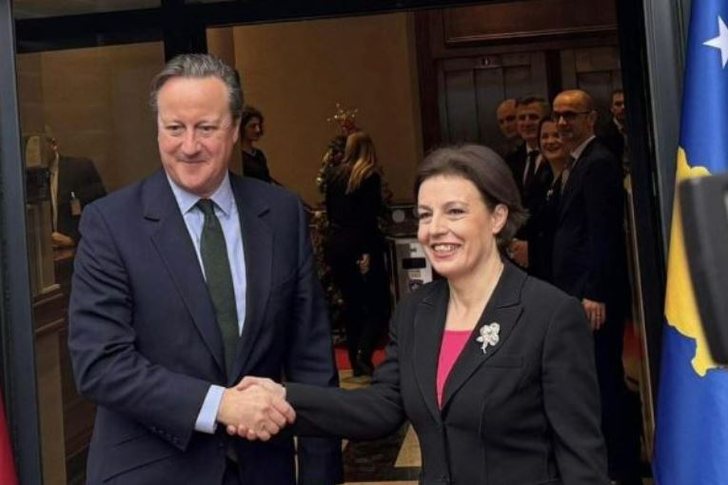
Ministri i Punëve të Jashtme të Britanisë së Madhe, Da...

He has been in the ranks of the German Liberal Party (...

Judge Mary Kay Holthus was attacked in the courtroom while...

A serious family crime has occurred in Massachusetts, Unit...
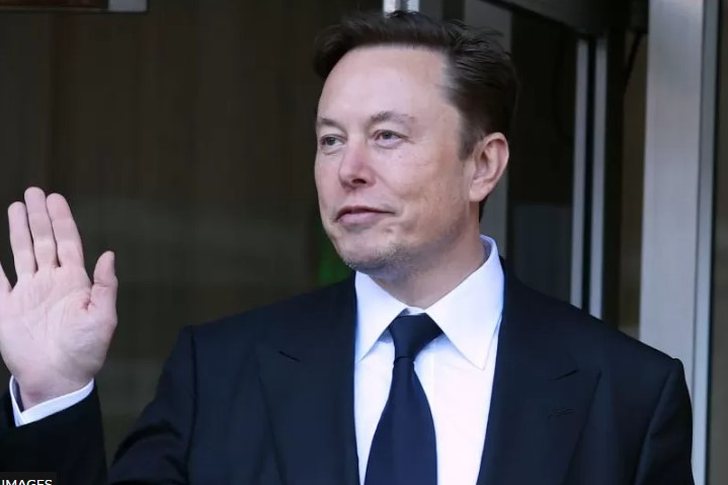
SpaceX has been accused of illegally firing eight work...
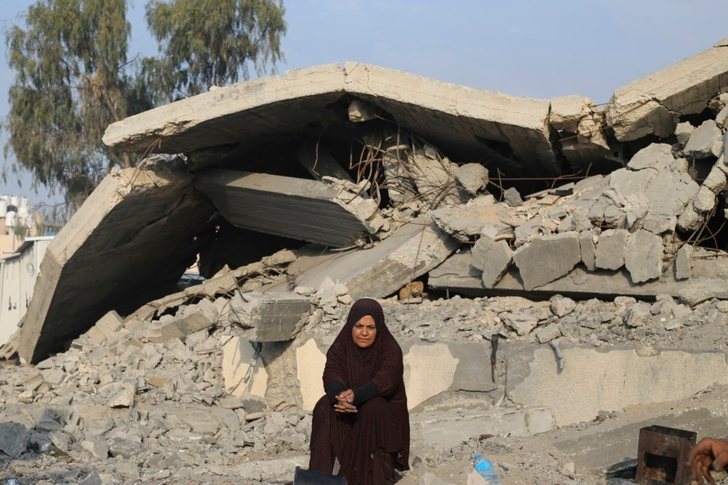
The United States has not seen acts in the Gaza Strip ...

Britain is facing an alarming shortage of the most com...
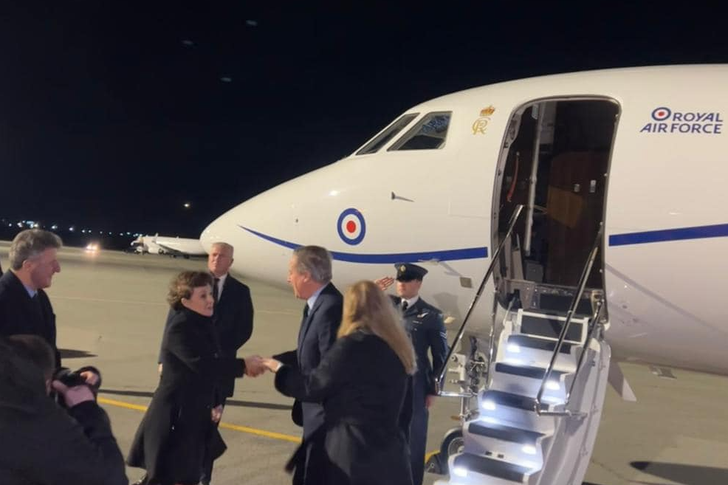
The Foreign Minister of the United Kingdom, David Came...
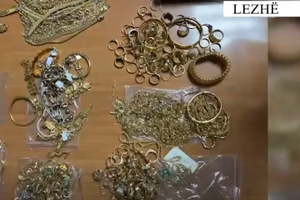
A 39-year-old citizen has been arrested in Lezha, after se...

CNA has launched another investigation that could lead to ...

Irfan Hysenbelliu is a businessman that we call "Irfan the...

In March 2026, CNA launched another investigation centered...

The Special Board of Appeal (KPA) decided this Monday ...

The KPA vetting decided this Thursday to dismiss the p...

Suela Salavaçi, a prosecutor in the Prosecutor's Offic...

The Special Board of Appeal reinstated the prosecutor ...
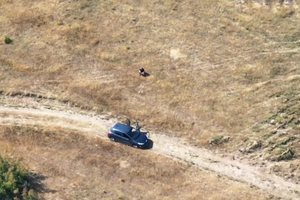
Police Announcement: Following preliminary information...

New details from the operation being carried out in Fier t...
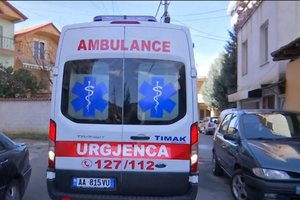
The 17-year-old, who was seriously injured yesterday after...
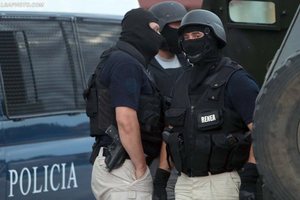
RENEA is headed towards Roskovec after the murder that occ...

By noon, cloudiness is expected to prevail in almost all o...

Children without parental care, for whom alternative famil...

On Thursday, our country will be under the influence of st...
A serious accident that occurred this Wednesday with the c...
US President Donald Trump will host his Ukrainian counterp...
The Basic Court in Pristina found the former mayor of Pris...
The European Union Office in Kosovo has called on all poli...
Serbian President Aleksandar Vučić, at a press conference ...

At a time when industrial products are increasingly taking...

Trust among people is not just a three-syllable word. It c...
Master of humor Todi Llupi has passed away at the age of 7...
The ninth edition of "MIK Festival" kicked off with one of...
The number of active enterprises in Albania continued to g...
In Albania, the bar-cafe has long become an almost unique ...

This Friday, one US dollar is bought for 81.7 lek and sold...
The average sale price of apartments in Tirana reaches rec...