


Foreign currencies do not emerge from the crisis / Exchange rate, September 22, 2024
Today, on September 22, 2024, in the foreign exchange ...


Recently, for the second time this year, the European Central Bank lowered interest rates, in an effort to bring the growth of the Eurozone economy out of sluggishness.
A similar move is expected to be undertaken by the Federal Reserve this week, lowering interest rates for the first time, after a two-year tightening cycle.
Although the reduction of interest rates has started, the leaders of the central banks continue to share the concern that this reduction should be cautious and that inflation may again reserve bitter "surprises".
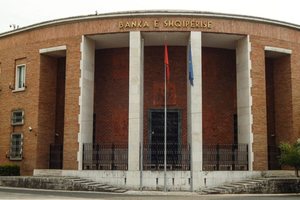
The dilemmas of reducing interest rates have already involved Albania as well. In July, the Bank of Albania followed the European Central Bank and lowered the base rate for the first time since 2020.
The current inflation values ??in Albania justify a further easing. In August, inflation fell to 2%, the lowest level in three years and below the Central Bank's 3% target.
However, core inflation remains slightly higher and recorded a slight increase in the summer months, at the level of 2.4%.
Core inflation is generally considered a more reliable barometer of inflationary pressures because it strips price growth of the impact of products that are inherently highly volatile.
According to the Bank of Albania, internal inflationary pressures, especially related to the increase in the cost of labor (but perhaps also to the overvaluation of the Lek, especially in the sectors related to tourism) remain worrying.
Of the 2.1% average inflation for the second quarter of this year, 1.9 percentage points (over 90% of total inflation) was the contribution of domestic inflation.
However, unlike what is happening in the Eurozone, the progress of economic activity in Albania seems better.
The economy grew by 3.6% in the first quarter, unemployment is near historic lows, while wages continue to rise (also thanks to a boost from the public sector), although the first quarter of this year brought a significant slowdown.
Another factor that may dictate a more cautious attitude is the rapid growth of credit.
The data show that the growth of the loan portfolio for the economy is at the highest levels since 2008. Especially the loan for real estate is showing a very high growth, which for the business segment reaches more than 30%.
The Bank of Albania clearly expressed its concern about the rapid growth of credit in the last financial stability statement, even in June it reacted by imposing a countercyclical addition to the capital adequacy ratio for the first time.
A further reduction of the base rate, in this situation, may create ground for further credit growth, despite the parallel prudential measures.

In theory, the reduction of Lek interest rates, which are still lower compared to the Euro, will also reduce the returns from savings and investment products in Lek, so it does not provide incentives for reducing the Euroization of the economy, one of the main objectives of the Bank of Albania in recent years.
Perhaps a theoretical factor in favor of lowering interest rates for the Lek could be the exchange rate.
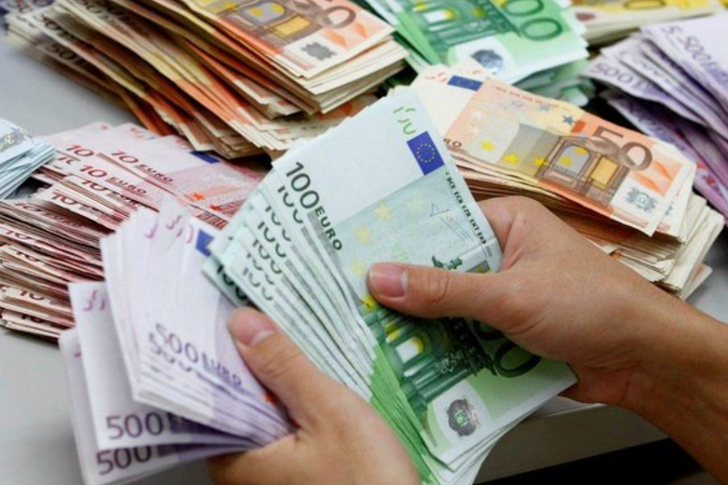
The exchange rate between the Euro and the Lek is at the lowest historical levels, levels that have put the exporting sectors of the economy to the test, while reducing the value of Albanians' savings, which are mostly kept in Euros.
During the summer, the Bank of Albania tried not to allow the Euro exchange rate to drop below the limit of 100 lek, however this limit was also broken after the month of August.
However, in the case of Albania, the change in interest rates does not seem to have played a determining role in exchange rate trends. The lek has continued to strengthen even after 2023, despite the fact that the interest rates of the Euro have been higher.
At the next meeting in October, the Supervisory Council of the Bank of Albania must balance these factors to decide whether it is appropriate to continue with the reduction of interest rates.
But it is now becoming more obvious the need to increase the weight of the exchange rate performance, more precisely the weakening of the Euro, in decision-making.
The economic theory and the economic history of many developing countries teach a lot about the uselessness of continuous strengthening of the country's currency and the need to balance some objectives./ Monitor.al

Today, on September 22, 2024, in the foreign exchange ...

The government issued for consultation the draft for t...

In 2024, 24.5% of enterprises have sold products/services ...
Today, on September 21, 2024, in the foreign exchange ...
From September 1, the salary increase for mayors, vice-may...

Today, on September 20, 2024, in the foreign exchange mark...

The state budget collected ALL 463.8 billion until the mon...

Today, on September 19, 2024, in the foreign exchange mark...

Today, on September 18, 2024, in the foreign exchange mark...
Today, on September 17, 2024, in the foreign exchange mark...
The loan for the rehabilitation of the Durrës - Rrogozhin ...
From October 1 of this year, there will be an increase...
Today, September 16, 2024, in the foreign exchange market,...

Restrictions on the labor market for high-level profes...

The acceleration of wage growth rates in the last year...
Interest rate cut expectations have pushed the 12-mont...

The announced change of the pension scheme will be precede...
Today, on September 13, 2024, in the foreign exchange ...
The current account deficit narrowed for the second qu...

The average gross monthly salary reached the level of ...

CNA has launched another investigation that could lead to ...

Irfan Hysenbelliu is a businessman that we call "Irfan the...

In March 2026, CNA launched another investigation centered...
The arrested mayor of Tirana, Erion Veliaj, with 13 charge...

The Special Board of Appeal (KPA) decided this Monday ...

The KPA vetting decided this Thursday to dismiss the p...

Suela Salavaçi, a prosecutor in the Prosecutor's Offic...

The Special Board of Appeal reinstated the prosecutor ...

A road accident occurred this evening on Nikolla Zoraqi St...

Three people were shot and wounded in Elbasan last night b...

A serious incident occurred this Tuesday in the Yrshek are...

An accident occurred this Tuesday on "Dituria" street in K...

All of Southern Europe will face changing weather conditio...

Albania was hit by temperatures significantly higher than ...

For the first time, Pogradec welcomed the Inter-Lake Chess...
Albania has achieved a record for the employment of foreig...

US Secretary of State Marco Rubio arrived in Manila on Jul...

In the space of a few days, Ukrainian President Volodymyr ...

The spokesman for the Iranian Foreign Ministry warned Bulg...

Autoritetet italiane sekuestruan pako me afër 800 kilogram...

At a time when industrial products are increasingly taking...

Trust among people is not just a three-syllable word. It c...

Master of humor Todi Llupi has passed away at the age of 7...

The ninth edition of "MIK Festival" kicked off with one of...

Construction company licenses will have a validity period ...
The Centralized Purchasing Operator recently opened a tend...
The new draft law "On the Bank of Albania" provides that t...
This Tuesday, one US dollar is bought for 81.2 lek and sol...