


The price of olive oil reaches a record, goes up to 1,100 ALL/liter
The sale price of olive oil this year reaches record level...



The Bank of Albania has published the complete changes it approved at the beginning of this month in the regulation "On risk management in the activity of non-banking financial entities". The regulation in question attempts to define some detailed criteria in risk management practices in consumer lending by non-bank financial institutions.
In the confirmed version of the regulation, the restriction that a non-bank financial institution will not be allowed to grant more than two consumer loans to the same borrower at the same time has been confirmed.
However, compared to the initial variant consulted in September with stakeholders, the approved regulation has increased the ceiling value of loan installments in relation to the net monthly income of borrowers.
The debt service ratio against income (DSTI) will be calculated as the value of the total monthly installments of existing loans, including the loan for which it is being applied for, divided by the net income of all co-borrowers.
The value of the debt service ratio against income should not exceed the value of 60% (from the 40% that was in the initial draft regulation).
This value can be higher in cases where the borrower has sufficient evidence, provided in the internal regulations of the subject, that the higher level of the DSTI ratio does not affect the usual living expenses and consequently the payment of the loan obligations.
In any case, net income after debt service must not be less than the borrowers reasonable living expenses.
In the initial version, the draft regulation provided that exceptional cases should not exceed 10% of the amount of new loans granted by the entity for a calendar year, but this specific limitation has been removed in the approved version of the regulation.
The entity draws up internal procedures on the calculation of the debt service ratio against income (DSTI), as well as defines more limited requirements as it relates to the level of the indicator for borrowers with irregular or fluctuating income, or for borrowers with currency and whose income is different from the currency of the loan.
The new regulation also stipulates that the financial institution, before concluding a loan contract and during the process of monitoring the loan in its duration, must assess the solvency and risk profile of the borrower, based on sufficient, accurate and updated.
The subject provides necessary data and information provided by the borrower himself and from other reasonable internal or external sources of the subject, which may affect the solvency of the borrower, in particular the sustainability of income, the history of payments, the probability of change in income (increase or decrease), as well as all other financial obligations.
In particular, the entity must perform reasonable verifications and take necessary steps to verify information regarding the source of solvency, in cases of borrowers who are self-employed or have seasonal or other irregular income.
The entity must ensure that the borrower's ability to pay to meet the obligations under the loan agreement is not based on a significant expected increase in the borrower's income, unless the documentation provides sufficient evidence. The lender must avoid inducing unnecessary financial hardship and creating an over-indebtedness situation for the borrower.
The entity must assess the current and future ability of the borrower to meet the obligations under the loan agreement, considering also the potential effect on scenarios of interest rate increases in the case of contracts with variable rates and unfavorable exchange rate fluctuations. +
The entity must determine in the internal procedures, the information that will be used to assess the borrower's solvency, depending on the amount, type of loan and source of income. The information includes necessary and appropriate data or documents related to at least employment, financial conditions and stability of income; sources of loan repayment; financial commitments and expenses for their fulfillment; the collateral (for collateralized lending). The subject in assessing the borrower's solvency must consider the factors affecting the current and future repayment capacity of the borrower, including his living expenses.
The subject must perform the assessment of the solvency, based on the joint solvency of the co-borrowers, in cases where the loan request is presented jointly by more than one borrower.
Other explicit limitations provided in the draft regulation are that non-bank financial institutions cannot enter into consumer credit contracts with persons under the age of 18; cannot conclude consumer credit contracts with persons qualified as disabled, or with persons who make decisions under the assistance of another person.
Restrictions that affect the non-repayment of the loan obligation; they cannot conclude consumer credit contracts during the 22:00 to 07:00 hours; cannot conclude consumer credit contracts with persons who appear in the registers created by entities for persons who are not allowed to conclude a credit contract./ Monitor Magazine

The sale price of olive oil this year reaches record level...

Today, on October 29, 2024, in the foreign exchange market...
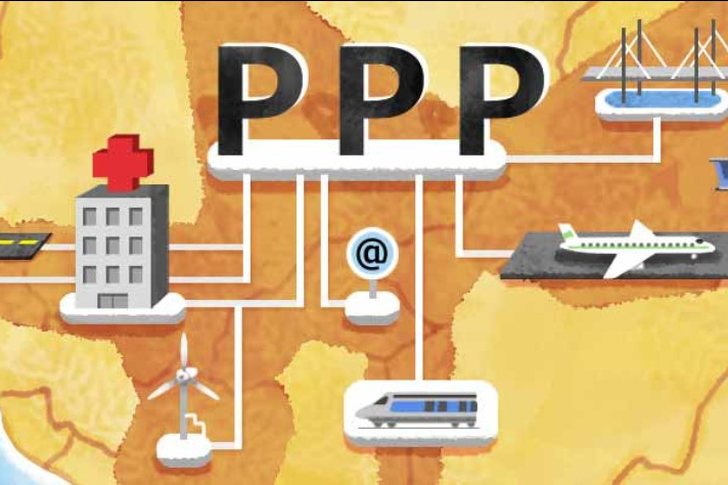
The value of new contracts with Public-Private Partnership...

In 1993, Albania adopted the Social Security Law, which re...

Today, on October 28, 2024, in the foreign exchange market...
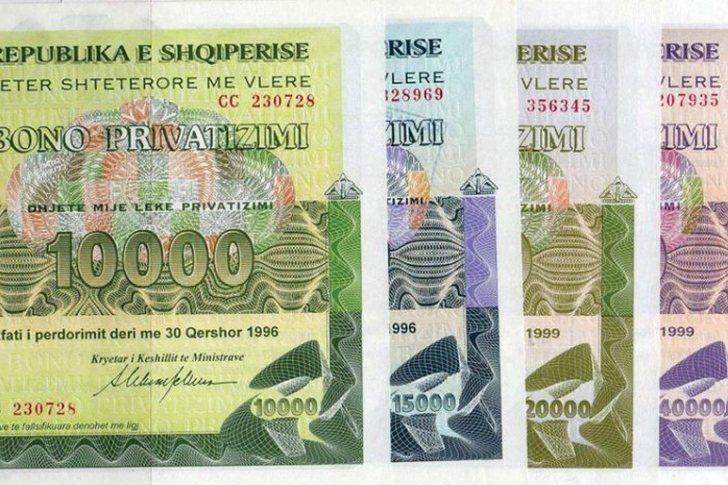
According to official data, the Albanian state has produce...

Today, on October 27, 2024, in the foreign exchange ma...
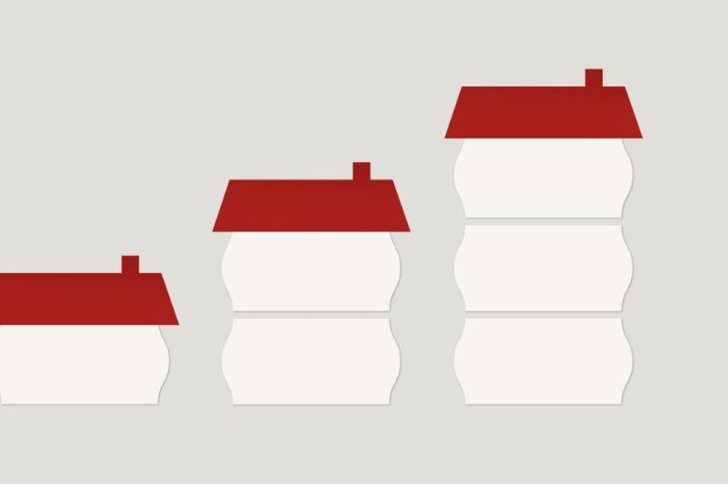
After the financial crisis of 2007-09, global house prices...

Today, on October 26, 2024, in the foreign exchange market...

The Housing Trends 2024 report, compiled by real estate ag...

Albania is not only not benefiting from the trend of nears...

Today, on October 25, 2024, in the foreign exchange market...

The 10-year bond yield fell again at the October auction. ...

New home loan interest rates in lek fell again in August, ...

As it was warned, on the coastline, only accommodation str...

Today, on October 24, 2024, in the foreign exchange market...

Climate changes, but also the most extreme natural phenome...

Today, on October 23, 2024, in the foreign exchange market...

The expenses of Albanians for health are increasing year a...

The Bank of Albania continued its purchase program in the ...

CNA has launched another investigation that could lead to ...

Irfan Hysenbelliu is a businessman that we call "Irfan the...

In March 2026, CNA launched another investigation centered...
The arrested mayor of Tirana, Erion Veliaj, with 13 charge...

The Special Board of Appeal (KPA) decided this Monday ...

The KPA vetting decided this Thursday to dismiss the p...

Suela Salavaçi, a prosecutor in the Prosecutor's Offic...

The Special Board of Appeal reinstated the prosecutor ...

A tourist has lost her life on Orikum beach, where she was...

Two people were arrested and two others were prosecuted af...

At around 08:40, in neighborhood no. 10, Korça, a "Benz" t...

New details are being learned regarding the incident that ...

For the first time, Pogradec welcomed the Inter-Lake Chess...

Albania has achieved a record for the employment of foreig...

Today our country will be under the influence of relativel...

Another humanitarian aid shipment from Germany has arrived...

The United Kingdom's new Prime Minister, Andy Burnham, has...

United States President Donald Trump has imposed 50% tarif...

US President Donald Trump responded with harsh rhetoric to...

US President Donald Trump said on Monday that Israeli Prim...

At a time when industrial products are increasingly taking...

Trust among people is not just a three-syllable word. It c...

Master of humor Todi Llupi has passed away at the age of 7...

The ninth edition of "MIK Festival" kicked off with one of...

The new draft law "On the Bank of Albania" provides that t...

This Tuesday, one US dollar is bought for 81.2 lek and sol...

Deputy Minister of Economy and Innovation, Enkelejd Musabe...

This Monday, one US dollar is bought for 81 lek and sold f...