


Foreign currencies, in "crisis" / Exchange rate, October 26, 2024
Today, on October 26, 2024, in the foreign exchange market...



After the financial crisis of 2007-09, global house prices fell by 6% in real terms. But before long, they grew again and passed their pre-crisis peak.
When the Covid-19 pandemic hit, economists predicted a collapse of the property market.
In fact, there was a boom as people who worked from home began to look for new homes in suburban areas. Then, from 2021 onwards, as central banks raised interest rates to reduce inflation, fears grew that there would be a dramatic fall in house prices.
In fact, real prices fell by only 5.6% and are now rising rapidly again. The housing sector seems to have a remarkable ability to adapt to new conditions, whatever they may be. Perhaps he will defy gravity in the coming years as well.
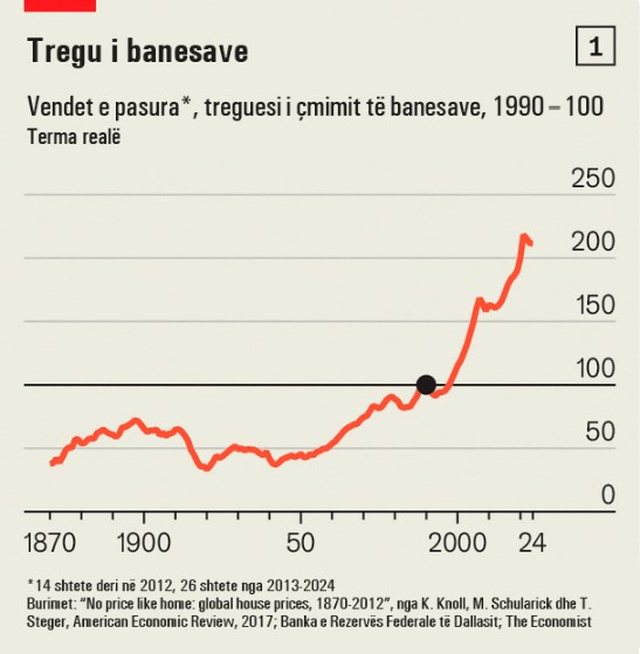
Over its history, the housing sector has grown from a once negligible asset class to one of the largest in the world. Around 1950, housing prices in rich countries were stable in real terms (see chart 1).
Builders built homes where people wanted them, preventing prices from skyrocketing in response to demand. The spread of infrastructure in the 19th and early 20th centuries also helped to moderate prices, argues a study by David Miles, a former researcher at the Bank of England, and James Sefton of Imperial College London.
By allowing people to live further from work, better transportation increased the amount of economically useful land, reducing competition for space in urban centers.
The events after World War II reversed all these processes, creating the cycle we live with today.
Governments got into the business of subsidizing mortgage loans. People in their 20s and 30s were having lots of babies, increasing the need for housing. Urbanization increased the demand for housing in places that were already crowded.
During the second half of the 20th century, land use regulations were added. It became more difficult to build infrastructure, making cities less expandable. Metropolises that had once built housing rapidly, from London to New York, stopped.
In all rich countries, housebuilding expressed as a percentage of population peaked in the 1960s, then fell steadily to about half today. Housing prices began to rise steadily.
Recent years have been less disruptive to housing markets than even the most optimistic analysts predicted three years ago. While central banks have raised interest rates, many mortgage holders haven't felt it.
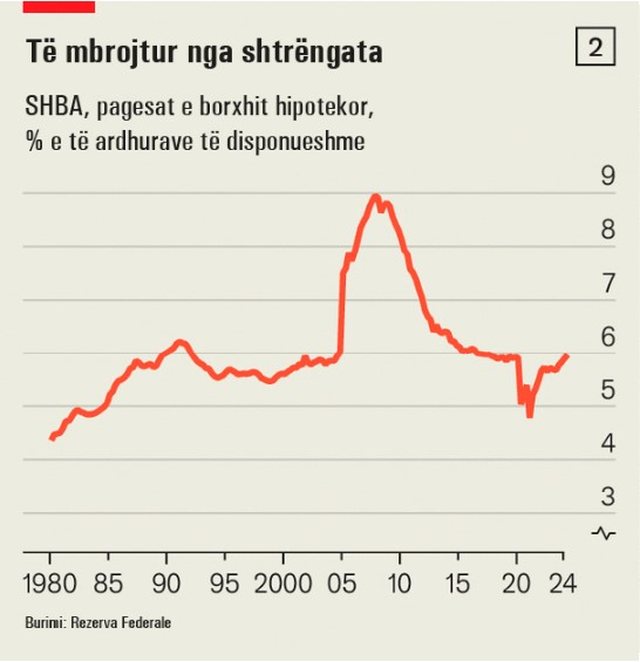
Before and during the pandemic, many people took out fixed-rate mortgages, protecting them from high fees. In America, where many people have a 30-year mortgage rate, household mortgage interest payments as a share of income remain stable (see chart 2).
Young buyers are facing higher mortgage costs. But rapid income growth is counteracting this effect. Wages in all G10 member states are 20% higher than they were in 2019.
In some countries there have been fluctuations. For example, in Germany, New Zealand and Sweden, real house prices have fallen by more than 20% since the peak of the pandemic. However, in other countries, house prices fell only slightly and an increase is expected.
US housing prices hit new highs almost every month. In Portugal, prices are also rising. Other countries with weak housing markets are experiencing changes.
From 2011 to 2019, housing prices in Rome fell by more than 30% in nominal terms as Italy faced a sovereign debt crisis. Now they are growing again.
In the short term, house prices will probably continue to rise. Falling interest rates will help in this regard. In America, the rate for a 30-year fixed mortgage loan has fallen by nearly 1.5 percentage points since its recent peak.
In Europe, fixed-rate borrowers will soon be able to refinance at lower rates as central banks cut interest rates. But there are also deeper forces at work. Three factors will ensure that for decades to come, the housing boom cycle will continue.
The first has to do with demographics. The Economist calculates that the foreign-born population of rich countries is growing at an annual rate of 4%, the fastest growth in history. Immigrants need a place to live, which, according to studies, would drive up rents and house prices.
A recent study by Rosa Sanchis-Guarner at the University of Barcelona, ??which looked at Spain, found that a 1% increase in the rate of emigration increases average housing prices by 3.3%.
In response to record arrivals, politicians from Canada to Germany are cracking down on immigration. But even taking into account the stricter policies, rich countries will probably continue to accept more immigrants than before.
The need to care for an aging population is likely to trump the desire to tighten borders. Bank Goldman Sachs calculates that if Kamala Harris wins the US presidential election, net immigration will fall slightly, to 1.5 million a year, from more than 2 million in 2024. If Donald Trump wins, immigration is expected to fall to 1.25 million a year .
The second factor is related to cities. When Covid-19 hit in 2020, many people thought that urban areas would lose popularity. With the rise of telecommuting, in theory, people could live anywhere and work from home, being able to buy larger homes for less money.
But it didn't happen like that. People are working from home a lot more than they used to, but big cities are still attractive. In America, 37% of businesses are located in large urban areas, the same percentage as in 2019.
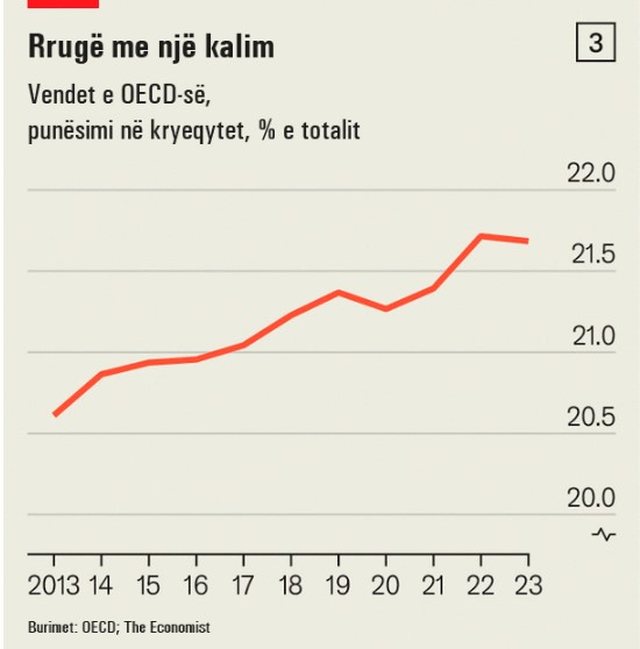
The Economist calculates that the share of total employment in the capitals of rich countries has increased in recent years (see chart 3). In Japan, South Korea and Turkey, more jobs are being created in capital cities than elsewhere.
They enable even more entertainment: the share of British bars and pubs located in London has increased since the time of the pandemic. All this increases the competition for housing space, where the supply of housing is already limited.
The third factor is infrastructure. In many cities, commuting has become more tiring, making more people want to live close to work.
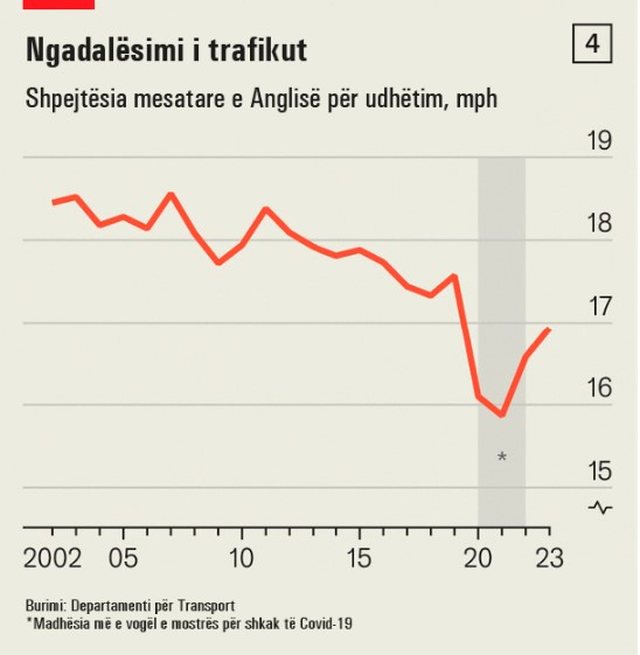
In Britain, the average speed of travel has fallen by 5% in the last decade (see chart 4). In many US cities, traffic is near all-time highs, according to data from the Texas A&M Transportation Institute.
Many governments find it almost impossible to build new transport networks to ease the traffic load. California's high-speed rail, intended to connect the cities of Los Angeles and San Francisco, will probably never be built.
Some economists hope that a turnaround is taking place and acceptance of new home construction is increasing. Those people who agree to have new apartments "in their yard", have won the argument and seem to have convinced some politicians.
Some states are changing land use rules to encourage construction. In early 2022, building permits in New Zealand hit an all-time high, causing property prices to fall.
However, with the exception of New Zealand, the impact of the pro-new housing movement remains small. A paper by economists Knut Are Aastveit, Bruno Albuquerque and André Anundsen found that the "elasticity of supply" of US housing (the degree to which construction responds to higher demand) has fallen since the 2000s.
We find no evidence that there has been an overall increase in construction since the pandemic.
The problem remains more acute in cities, where regulations are stricter. In San Jose, America's most expensive city, only 7,000 homes were authorized for construction last year, far below the rate of a decade ago. But even in cities like Houston and Miami, which pride themselves on avoiding the mistakes made by other big cities, construction is slow.
Over the next few years, housing markets may face a variety of shocks, from fluctuations in economic growth and interest rates to banking collapses.
But given the long-term effects of demographics, urban economics and infrastructure alignment, a 2017 prediction made by Messrs Miles and Sefton seems fair.
He notes that "in many countries, housing prices are likely to continue to rise faster than incomes." The largest asset class in the world is likely to become larger and larger./ Monitor.al

Today, on October 26, 2024, in the foreign exchange market...
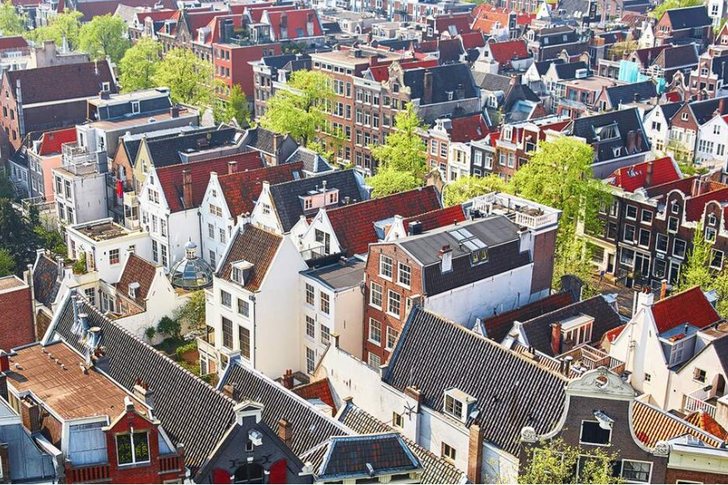
The Housing Trends 2024 report, compiled by real estate ag...
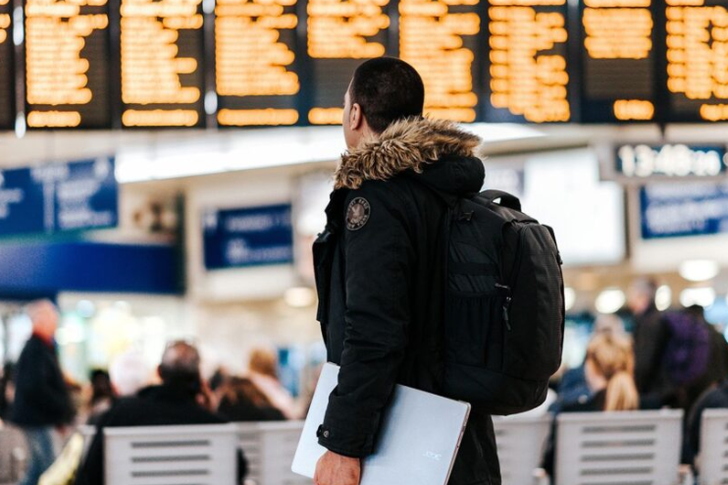
Albania is not only not benefiting from the trend of nears...

Today, on October 25, 2024, in the foreign exchange market...

The 10-year bond yield fell again at the October auction. ...

New home loan interest rates in lek fell again in August, ...

As it was warned, on the coastline, only accommodation str...
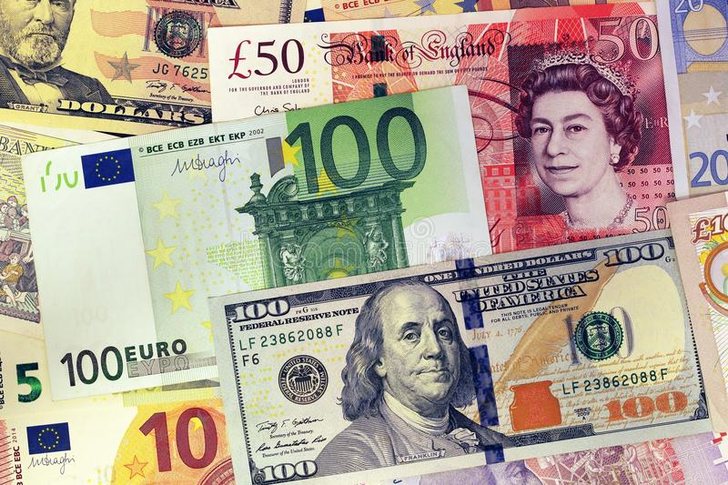
Today, on October 24, 2024, in the foreign exchange market...
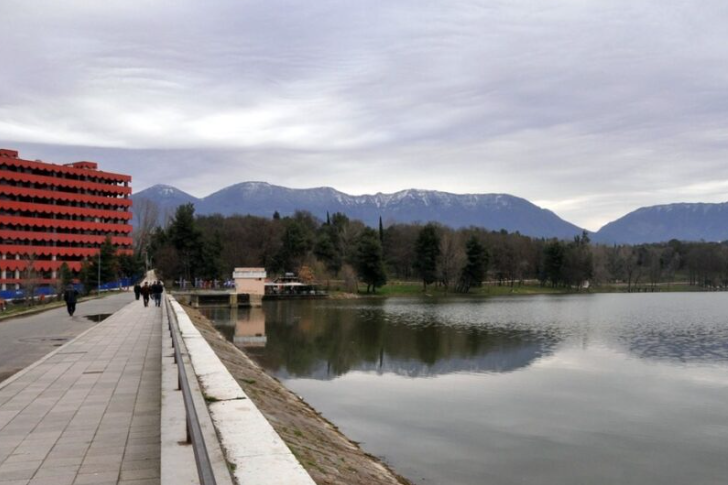
Climate changes, but also the most extreme natural phenome...

Today, on October 23, 2024, in the foreign exchange market...

The expenses of Albanians for health are increasing year a...

The Bank of Albania continued its purchase program in the ...

In the foreign exchange market, today, October 22, 2024, t...

After the dismissal of the lawsuit by the Constitutional C...

A large investment advertised as strategic of 2 billion eu...

In the foreign exchange market, today, October 20, 2024, t...

All those citizens who have worked in the former cooperati...

In the foreign exchange market, today, October 19, 2024, t...

In the foreign exchange market, today, October 19, 202...
In recent years, Albania's development partners are devoti...

CNA has launched another investigation that could lead to ...

Irfan Hysenbelliu is a businessman that we call "Irfan the...

In March 2026, CNA launched another investigation centered...
The arrested mayor of Tirana, Erion Veliaj, with 13 charge...

The Special Board of Appeal (KPA) decided this Monday ...

The KPA vetting decided this Thursday to dismiss the p...

Suela Salavaçi, a prosecutor in the Prosecutor's Offic...

The Special Board of Appeal reinstated the prosecutor ...

Footage emerges from the serious accident that occurred th...

A Shkodra traffic police officer was hit with hard objects...

This Wednesday, around 4:00 PM, a serious accident occurre...

Tirana Police have shared details regarding the accident t...

A serious accident that occurred this Wednesday with the c...

The Institute of Geosciences has shared a forecast for wea...

Rising energy and fertilizer prices are expected to contin...

Over 18,000 foreign citizens from 140 countries have appli...

The trial of ousted Venezuelan President Nicolas Maduro on...

US President Donald Trump has issued another warning to Ir...

Prime Minister Andy Burnham has announced that most bus fa...

France's parliament has passed a law to ban social media f...

At a time when industrial products are increasingly taking...

Trust among people is not just a three-syllable word. It c...

Master of humor Todi Llupi has passed away at the age of 7...

The ninth edition of "MIK Festival" kicked off with one of...

The price of diesel reached 206 lek per liter from 198 lek...

Businesses will no longer be required to simply register t...

Despite economic growth and income in recent years, Albani...

This Wednesday, one US dollar is bought for 81.4 lek and s...