


Germany's fear of debt
Debts, the mountain of debts, the burden of debts - in man...


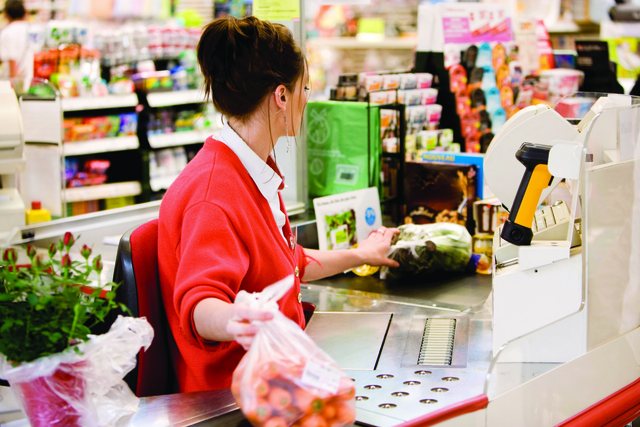
After the departure of tourists, shopping for grocery basket items in supermarkets falls. For basket products, consumption continues to decrease, mainly for sugar, rice, while for sunflower oil, dairy and cereal products, purchases are increasing compared to years.
For importers of food goods, in addition to the end of the tourist season, the contraction of consumption has been influenced by high prices and emigration of the population.
Representatives of the supermarket chain "Big Market" told "Monitor" that in the January-October period there was an 8.5% decrease in purchases of basket products compared to the same period last year.
The representatives of "Big Market" estimate that the drop in demand, in addition to the departure of tourists, was also influenced by high prices. The tightening of food products has led to their replacement with the same but cheaper products.
"Compared to the previous year, during this year a decrease in the amount of consumption is observed.
For the first quarter there was a decrease of 7.6%, in the second quarter 9% and in the third quarter a slight increase of 0.5%. According to estimates in the January-October period, we have a decrease of 8.5% in purchases in general of basket products.
The summer period had a slight increase in consumption, caused by the arrival of tourists for vacations. With their departure, of course, purchases have begun to decline slightly again.
The drop in consumption was also influenced by the increase in prices for basket products, where buyers chose to reduce basket products or choose alternatives with lower prices for the same products, choosing price before quality".
According to the data of the importing and packaging company of food goods, "Teuta", among the goods of the food basket that have recorded a decrease in sales in the months of October-November is rice with a contraction of 5% and beans 1%, compared to October-November 2022.
For products such as sunflower oil, sales in the period October-November 2023 compared to years have increased by 56%, for cereals sales have increased by 14% and sugar, by 5%.
On the other hand, in relation to years, there was also a change in prices. According to the data of the "Teuta" company, in the period October-November 2022, the average selling price of sunflower oil was 350 ALL per liter.
For the same period of this year, the average selling price for sunflower oil is 201 ALL per liter, marking a decrease of 34%.
The price drop was also noted for the sugar product. The average price of sugar in the months of October-November 2023 reached 100 ALL per kg from 115 ALL/kg that was last year (15% decrease).
In the basket products, there was an increase in prices in the months of October-November for rice, beans and cereals. Rice from 152 Lek per kg that was sold for the months of October-November last year, this year has reached the average price of 156 Lek (an increase of about 3%).
Last year, the average selling price of packaged beans was 214 per kg, while for 2023 the average selling price is 247 ALL per kg, with an increase of about 15.5%. The average sale price for cereals has increased by 1.5%.
The weight of expenses for food and non-alcoholic beverages among Albanian families continues to remain the highest compared to European countries. The expenses of Albanians in 2022 for food and non-alcoholic beverages accounted for 39.7% of the family budget expenses according to INSTAT data.
The high weight of expenditure on food in Albania compared directly to European countries is one of the main indicators for the level of low income of Albanian families, high prices and poverty.
According to INSTAT, in 2022, the average monthly consumption expenses for a Family Economic Unit, consisting on average of 3.7 people, are estimated at 88,367 ALL, 4.5% higher than in 2021.
The rest of the expenses with a weight of 9.8% were energy, water and rent payments. 6.5% of the expenses are for furnishing and maintenance. The share of spending on transport in 2022 was 6.9%, on restaurants and bars 7.3% and on clothing and footwear, 5%.
The average expenditure on food in the food basket in Europe according to Eurostat reaches 13.6%, about 3 times lower than Albania. The country with the lowest expenditure on food, which shows the well-being of society in Europe, is England, with 7.9%.
In other developed countries such as Ireland, Luxembourg and the Netherlands, expenditure on food accounts for between 9 and 11.7% of income.
European countries spend more on housing, water, electricity, paid rent, with 24.1% of the total, against 9.8% of Albanian families. While 8.5% is spent on restaurants in Europe.
Even in Albania's neighboring countries, the indicator of the weight of expenditure on food is very low. In Greece, according to Eurostat data, it is 16.7%, in Montenegro 20.7%, in North Macedonia it is 30.6% for 2019 and Bosnia-Herzegovina 32.2%.
Data for Kosovo are missing, but previous indicators were lower than Albania.
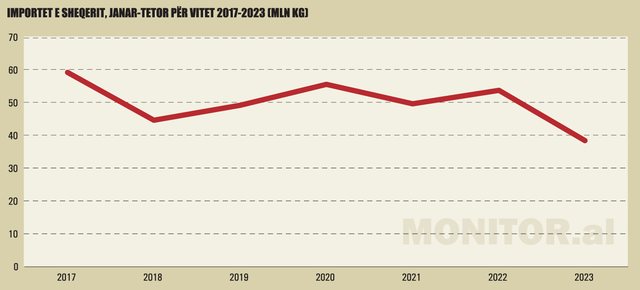
Sugar imports followed the downward trend. According to Customs data, in the period January-October 2023, 38.4 million kg of sugar were imported. Compared to the same period last year, imports fell by 28%.
Importers say that in the country, sugar consumption continues this decline, despite the fact that the wholesale price is 30% cheaper than last year. The main reasons for the drop in sales, according to them, remain the emigration of young people and the drop in demand from the agro-processing industry, since the sale prices of sugar have decreased.
The selling price of wholesale sugar, according to importers, is currently 100 ALL per kg from 130 ALL per kg that was sold years ago. The change in the price of sugar has been influenced by the drop in its sale on the stock exchange and the change in the exchange rate of the dollar, the currency with which sugar is bought on the stock exchange.
"Sugar consumption has decreased since last year. First there is the decline from consumers. There are no residents in Albania due to emigration, mainly young people who leave. While tourism has had a positive impact, but not so pronounced.
The daily consumption of sugar comes from the consumer and the industry", one of the managers of the sugar importing company emphasizes for "Monitor".
According to the importers, the downward trend in sugar consumption started after the Covid-19 pandemic, also due to the advice of doctors not to use too much of it.
The processing industry also had a strong impact on the decrease in imports. In the processing factories, in the month of September, at the peak of the season, the production of Albanian jams, marmalades and compotes was halved, due to the lack of fruits.
Nevion Telha, agronomist in the area of ??Korça, explained earlier to "Monitor" that this year's orchard production was reduced, since in the flowering period all the trees were affected by high humidity.
The region of Korça is very suitable for agricultural products, especially the area of ??Pojan cultivates several varieties of plums that serve as raw material for agro-industry.
Mr. Telha underlined that from 8,000 to 10,000 ha of planted land in the Korça area with the "Tropojana" plum variety, only 20% of them were productive.
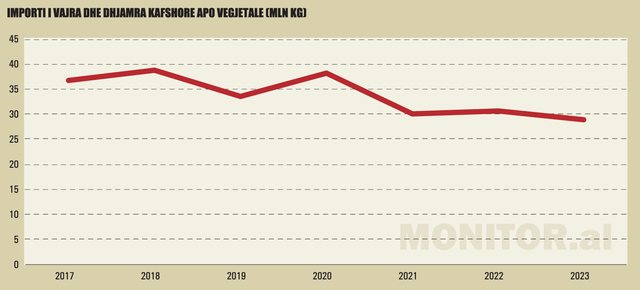
Imports of the period January-October 2023 for the group "Oils and animal or vegetable fats", according to INSTAT data, fell by 6% compared to years.
The arrival of tourists in the summer months completely changed the consumption of sunflower oil. Until the beginning of June 2023, importers claimed that sales were about 40% lower than last year, due to emigration and overproduction of olive oil.
In the January-October period, sunflower oil sales are 10 to 15% higher than last year, according to the manager of one of the oil importing companies. The main reason for the increase in sales, according to him, remains the high number of tourists.
"Sales of sunflower oil have been more in supermarkets and hotels in the area of ??Durrës and Vlora. For the month of November, with the departure of tourists, there was a decrease in sales, but we anticipate an increase in them in December due to the end-of-year holidays. Compared to years, sunflower oil sales are higher.
In addition to tourists, the drop in olive oil production has also had an impact," said one of the oil wholesalers.
Another factor that has influenced the increase in demand is the decrease in the price of sunflower oil. Importers said that wholesale prices for this product have been stabilized in the market for a year. Currently, according to them, sunflower oil is being sold in bulk at a price below 200 ALL per liter (150 to 180 ALL per liter).
The decline in the price of sunflower oil began in June 2022, when oil began to be imported from Ukrainian deposits to border countries, as sea transport was blocked by the war.
In July 2022, the price of oil decreased by 24% compared to the selling price after the war.
After the beginning of the Russia-Ukraine war and the difficulties created in the import of sunflower oil, the prices in the Albanian market increased by about 33%. In March 2022, the price of sunflower oil was traded at 330 ALL per liter from 249 ALL per liter in February (32.5% increase).
After this period, the price increased by about 9% and reached 370 ALL per liter, while in the middle of April, the retail oil price reached the peak of 400 ALL per liter.
For importers, the decrease in olive oil production also had an impact on the increase in sales. The production of olive oil, according to farmers and processing factories, this year is almost 60% less than last year.
While the price of olive oil sold by the farmer has reached 800 Lek per liter, 50% more expensive than last year, and bottled oil is being sold at 1,200 to 1,300 Lek per liter.
Retail product prices for dairy products have been raised several times by companies. Milk processors point out that the strong increase in prices for dairy products peaked in August last year, due to the increase in milk prices from high animal feed costs after the start of the conflict in Ukraine and high energy costs.
The increase in prices significantly reduced consumer demand.
Representatives of processing factories claim that currently, consumption has returned to the growth trend.
Luis Ndreka, representative of the company ADG (former Lufra) told "Monitor" that after the summer, in the September-November period, the demand for dairy products is higher compared to years, due to the reduction in the prices of the main products and the offers many promotional.
"In the months after summer, the demand is higher, compared to years. I emphasize the period after summer for two reasons. First, because after the summer we can really distinguish consumption from local consumers, considering that the tourists have left.
Secondly, because given the consecutive increases in the prices of dairy products last year, it would be unfair to compare the demand for example in June 2022 with June 2023, since the prices in June 2022 have been lower than June 2023.
Naturally, the demand has been higher in June 2022. To summarize, from September to November, we are practically at the same prices as we have been years in the same period, the demand is higher.
But it should be borne in mind that last year, we did not apply offers/promotions, while this year, to encourage consumption, we applied such amounts. So we can say that the real price of products is a little lower compared to the same period last year.
During this year, the dairy products of the "Lufra" brand, according to Mr. Ndreka, have not had an increase in prices, but a decrease in some of them.
"The price of butter has decreased by about 40% this year. Even the price of cheese has fallen by about 10-20%. These are two products that work with stock and if the stock levels are high then the price drop is also higher.
For other products, which for us constitute the largest volumes, the price reduction through promotions/offers is on average 2-3%".
The increase in prices from the milk processing industry started from March last year and continued gradually until August 2022, the month in which they reached their peak. For this reason, according to Ndreka, it brought a 10 to 15% drop in demand in the first 6 months of 2023, compared to the same period of 2022.
With the departure of tourists, the effects on consumption are also being felt by milk processors. "Definitely, as every year, with the departure of tourists, our sales drop significantly. According to our analysis, most of the consumption falls due to the departure of tourists, but also a part due to the decrease in consumption per consumer.
Yoghurt and buttermilk are products that are consumed more in summer, due to the high temperatures", underlines Mr. Lunch.
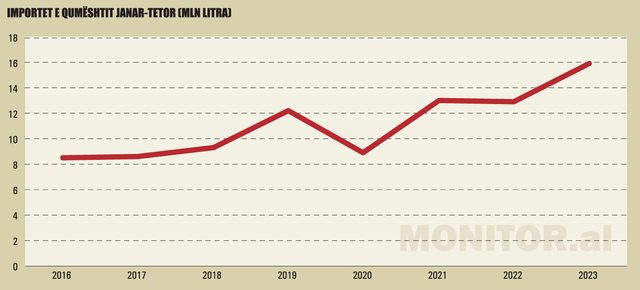
Milk imports continue to increase. In the January-October period, according to Customs data, imports increased by 23% compared to the same period in 2022. In the months of January-October 2023, 15.9 million liters of milk were imported, the highest amount coming from out for the years 2016-2023.
The increase in imports is driven by problems with domestic production. "Albanian farms are under pressure to produce at a cheaper cost, as they compete directly with raw milk that comes by truck from the region and Europe, but also indirectly with the processed and packaged product on the shelf, which puts pressure on the farm and the processor ", says Mr. Lunch.
Mr. Ndreka explains the reasons why the increase was noted for both categories of imported milk, packaged milk and milk that comes as raw material ready for processing.
"Firstly, because many companies, with the increase in domestic dairy prices, become more competitive, bringing in cheaper imported packaged products.
Secondly, it comes because the demand in summer due to tourists is increasing every year. Naturally, to meet the market demand during the summer season, Albanian companies will import more milk from other countries, because Albanian farms cannot increase their production by 40, 50 or 60% only during the summer months. ".
Imports of cereals in the period January-October 2023 increased by 7% compared to years, according to INSTAT data.
Bread producers claim that currently, consumption is decreasing compared to the summer months, due to the departure of tourists. The decline in consumption started from the middle of September, with about 20% less than in the summer period.
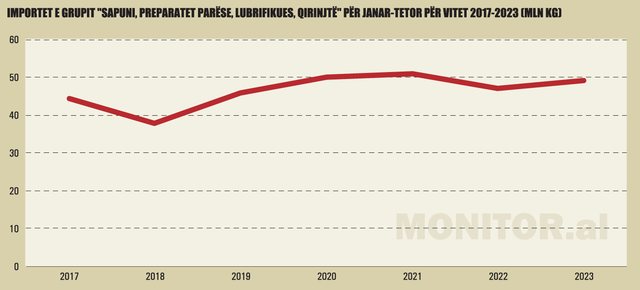
Imports of the group "Soap, primary preparations, lubricants, candles" for the months of January-October also increased by 4% compared to years. Importers of detergents said that the demand continues to be the same compared to years.
According to the companies, the demand for shampoos, soaps and detergents was at normal levels even during the summer season.
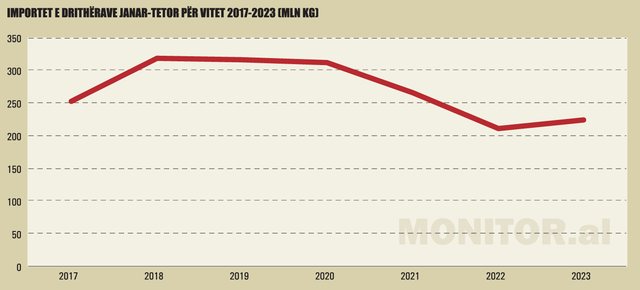
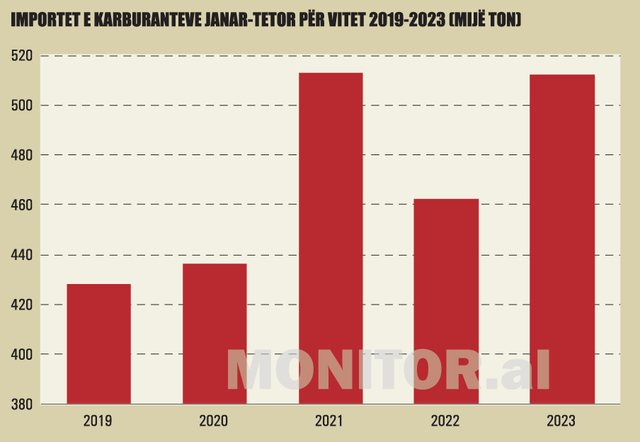
Fuel imports for the months of January-October have increased by 10% compared to years, according to data from the Ministry of Finance.
The President of the Hydrocarbons Association, Luigj Aliaj, told "Monitor" that the improvement in consumption has been influenced by a number of factors, such as the increase in the number of tourists, the increase in quotas for agriculture, as well as the decrease in consumption in 2022 due to price increase which artificially gives an increase effect in the following year.
At the beginning of March 2022, the prices of oil in the country increased by about 35% from 192 ALL per liter, reaching 260 ALL per liter. The government intervened with the establishment and operation of the Transparency Board until June 7, 2023 for price stabilization.
Even after the abolition of the Transparency Board, oil prices in the country failed to return to the level before the start of the conflict in Ukraine. The Association of Hydrocarbons has reiterated its concern that the increase in prices is mainly influenced by the high taxes on fuel, accounting for almost 70% of the price.
In Albania, oil is charged with 5 state taxes, such as: excise duty, turnover tax, carbon tax, VAT and relicensing tax and 3 taxes that are paid through concessions, such as marking, scanning and pump taxes.
Of the three concessionary taxes, oil is charged at 4.6 lek per liter, according to the Hydrocarbon Association./ Monitor.al

Debts, the mountain of debts, the burden of debts - in man...

Today, December 17, 2023, the US dollar is bought at 94.4 ...
The progress of the indicators that are monitored with...

Today, December 16, 2023, the US dollar is bought at 93.8 ...

The project for the transformation of the entrance of ...
Since the Territorial Reform of 2015, the local government...

Today, December 15, 2023, the US dollar is bought at 9...

Tabelat e buxhetit faktik të vitit 2022, të cilat janë mir...

Eurostat data show that the value of remittances that ...
The affair of the incinerators with 178 million euros ...
Eurostat data show that the value of remittances that ente...
Economic activity in our country peaked in the third quart...

Today, December 13, 2023, the US dollar is bought at 9...

For the first time in its history as an open economy, ...
The official unemployment rate in Albania reached 10.5...

Sot më 12 dhjetor 2023, dollari amerikan blihet me 94 ...
In November last year, the average inflation in the Eu...

Komisioni Europian (KE) ka paralajmëruar në raportin e...

Today, December 11, 2023, the US dollar is bought at 93.9 ...
The chairman of the association of exporters of Albania, E...

CNA has launched another investigation that could lead to ...

Irfan Hysenbelliu is a businessman that we call "Irfan the...

In March 2026, CNA launched another investigation centered...
The arrested mayor of Tirana, Erion Veliaj, with 13 charge...

The Special Board of Appeal (KPA) decided this Monday ...

The KPA vetting decided this Thursday to dismiss the p...

Suela Salavaçi, a prosecutor in the Prosecutor's Offic...

The Special Board of Appeal reinstated the prosecutor ...

This Wednesday, around 4:00 PM, a serious accident occurre...

Tirana Police have shared details regarding the accident t...

New details have emerged regarding the accident that occur...

New details have emerged from the serious accident that oc...

A serious accident that occurred this Wednesday with the c...

The Institute of Geosciences has shared a forecast for wea...
Rising energy and fertilizer prices are expected to contin...

Over 18,000 foreign citizens from 140 countries have appli...

The trial of ousted Venezuelan President Nicolas Maduro on...

US President Donald Trump has issued another warning to Ir...

Prime Minister Andy Burnham has announced that most bus fa...

France's parliament has passed a law to ban social media f...

At a time when industrial products are increasingly taking...

Trust among people is not just a three-syllable word. It c...

Master of humor Todi Llupi has passed away at the age of 7...

The ninth edition of "MIK Festival" kicked off with one of...

The price of diesel reached 206 lek per liter from 198 lek...

Businesses will no longer be required to simply register t...

Despite economic growth and income in recent years, Albani...

This Wednesday, one US dollar is bought for 81.4 lek and s...