


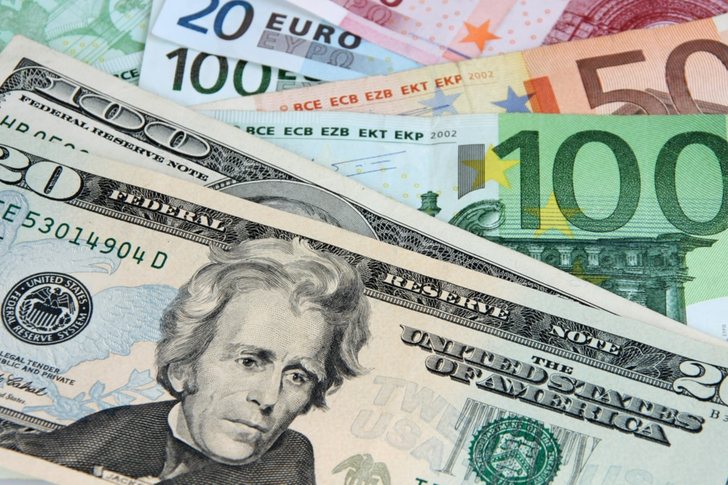
Foreign currencies rise slightly / Exchange rate, August 24, 2024
Today, on August 24, 2024, in the foreign exchange market,...


In the latest news from the economy in the region or Southeast Europe, what caught our attention this week are:
The Stellantis company launched its Fiat Grande Panda electric car in the Serbian city of Kragujevac, where it has invested almost €200 million (including a €48 million subsidy from the Serbian government), in a factory expected to start full production in October. employing 1,000 people; The French group Saint-Gobain has successfully launched its second gypsum board production plant in Turda, Central Romania.
The new line, which represents an investment of over 50 million euros, extends over 14,000 m2 and includes advanced equipment for grinding, calcining, plate forming, drying and stacking of plasterboard;
The Italian company Ariston has started the construction of a new factory in Nis, Serbia, with a planned investment of 75 million euros for the production of household electrical appliances; Sparkasse Bank will grant a loan of up to 2 million euros to the company Makprogres DOO Vinica.
Makprogres is a local family-owned company with 640 employees, producing and selling food products under the brands Vincinni, Donia, Sun Valley, Fantasia and Natura, in more than 60 countries worldwide.
In Albania, the most important news of the last days are two:
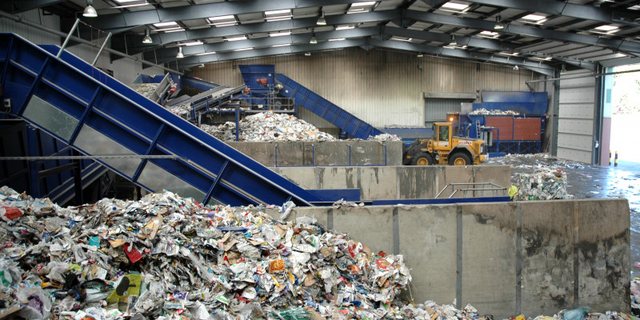
First, a new draft law on waste management, where the government brings back to the attention the import of waste that it considers non-hazardous, while a debate has opened in the country about a ship with dangerous slag whose origin and the whole process are not being understood subsequent transportation, without talking about the uncertainty of what will happen when they return to the port of Durrës.
The other news is related to the establishment of the refugee camp - based on an agreement with the Italian government - in Shengjin, which, unlike other projects that drag on for months, has moved very quickly and will be ready to receive the first guests who in September.
The contrast between the news produced by Albania and which are not propaganda news is great with the economic news produced by other countries.
The contrast between the "tasks" that a government is expected to perform in order to promote a sustainable economy, to increase the well-being of its citizens and their quality of life, and what it is actually doing, is just as great.
Its main focus at the moment seems to be on the "processing" of waste and import refugees, at a time when the country has other, much bigger and more urgent problems.
The garbage problem actually exists, but in a completely different dimension. At the height of tourism, their management leaves much to be desired.
In coastal areas, garbage has spread everywhere, leaving a negative impression on tourists, who are complaining like never before on social networks, making the worst possible advertisement for tourism Albania.
Wastewater flows in Vlora, as the government has left it up to businesses to invest in the construction of sewage treatment plants at a cost of up to 100,000 euros. The entities, even though they pay all taxes to the state, are being forced to do the work of the government.
The latter, during the period 2017-2023, has paid from taxpayers' money about 13 billion lek (130 million euros) for the construction of three incinerators, which today practically do not exist, let alone work.
This did not prevent the Ministry of Finance from increasing the payments for the concessions, where one of the increased offices was precisely the incinerator of Tiranws.
The problem of immigration also exists, but in that of the unstoppable flight of Albanian citizens, which has reached such proportions that it is affecting all economic indicators from the labor market to consumption, not to mention the long-term effects on the productivity of the economy of the pension scheme. But the government does not even dare to mention these problems, let alone accept them.
We do not see that this government makes even a propaganda effort to reduce corruption, which remains among the highest in Europe, according to recent polls, despite the justice reform, which was mostly imposed by international institutions.
Nor is there any serious move to unlock EU funding for agriculture or to enter into negotiations with other international institutions that provide funding to agriculture, which has cut off significant investments (in those cases where they were given without a friend). , blocking this vital sector at a time when consumption was increasing due to tourism, leaving large spaces for imports.
What economic stability and quality of life can be promised with these policies?! Instead of Albania entering the stage of sustainable development and investing heavily in the quality of life, the government is turning the wheel in the opposite direction.
Why should the government focus on these sectors of receiving waste, where world experience has shown that they are the typical sectors where the mafia has a long hand even in countries with stronger control and management institutions.
While we are all aware of the pronounced institutional weakness in the country, where even the police force has been accused by the head of SPAK of criminalization.
Or that we risk becoming like the Mexican model with happy resort islands, as the investment in Sazan Island is being advertised, only for a few tourists and outside the limits of the resorts, poverty, crime and corruption rule!
The "garbage" economy cannot be the main branch of the Albanian economy, moreover, the Albanian government that promotes this model has not shown any management skills./ Monitor Magazine

Today, on August 24, 2024, in the foreign exchange market,...
From Tirana-Ndroq-Plepa to the ancient caravan route Vlorë...

Credit to businesses grew by 12% on average in the first s...
Today, on August 23, 2024, in the foreign exchange market,...
Greece is located in Southeast Europe, forming part of the...
Today, on August 22, 2024, in the foreign exchange mar...
The inflation level in July measured according to the Euro...
For the months of January-July 2024, imports of the gr...
Card payments are growing rapidly this year as well. Acco...

Today, on August 20, 2024, in the foreign exchange mar...
The euro exchange rate continues to fall this week, settin...

From January to July of this year, the budget allocated on...
Exports have continued with the negative performance e...

Today, on August 20, 2024, in the foreign exchange mar...
The total income for the 7-month period reached about ALL ...
The internal market for Albanian government debt securitie...

Today, on August 19, 2024, in the foreign exchange mar...

In one of the loudest cafes in the area of the former Bl...
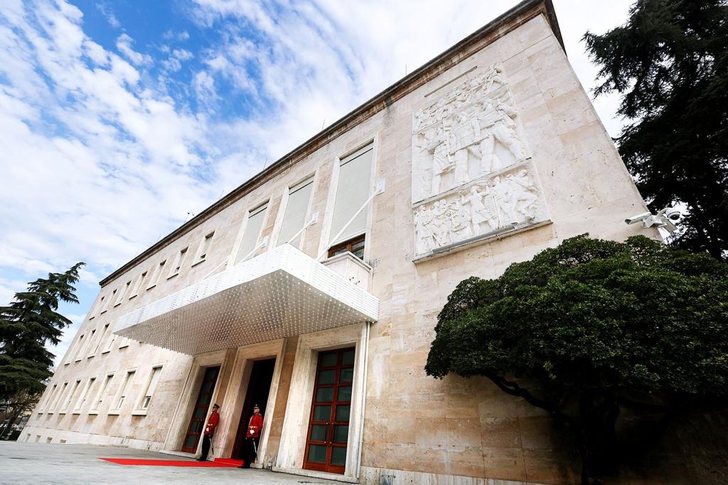
The government will again change the state budget for ...
Despite the overproduction of cherries, processors are buy...

CNA has launched another investigation that could lead to ...

Irfan Hysenbelliu is a businessman that we call "Irfan the...

In March 2026, CNA launched another investigation centered...
The arrested mayor of Tirana, Erion Veliaj, with 13 charge...

The Special Board of Appeal (KPA) decided this Monday ...

The KPA vetting decided this Thursday to dismiss the p...

Suela Salavaçi, a prosecutor in the Prosecutor's Offic...

The Special Board of Appeal reinstated the prosecutor ...
A road accident occurred this evening on Nikolla Zoraqi St...
Three people were shot and wounded in Elbasan last night b...
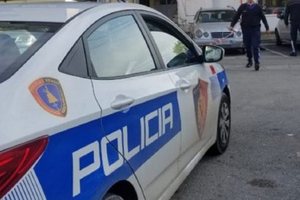
A serious incident occurred this Tuesday in the Yrshek are...
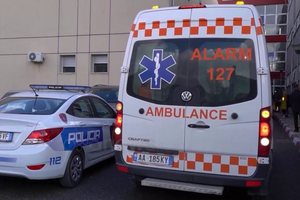
An accident occurred this Tuesday on "Dituria" street in K...
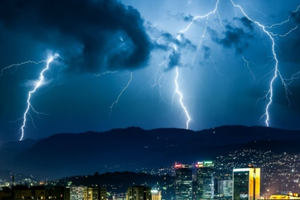
All of Southern Europe will face changing weather conditio...
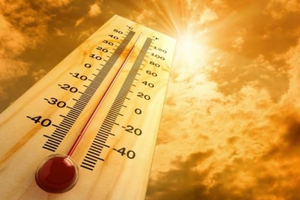
Albania was hit by temperatures significantly higher than ...
For the first time, Pogradec welcomed the Inter-Lake Chess...
Albania has achieved a record for the employment of foreig...

US Secretary of State Marco Rubio arrived in Manila on Jul...
In the space of a few days, Ukrainian President Volodymyr ...

The spokesman for the Iranian Foreign Ministry warned Bulg...
Autoritetet italiane sekuestruan pako me afër 800 kilogram...

At a time when industrial products are increasingly taking...

Trust among people is not just a three-syllable word. It c...

Master of humor Todi Llupi has passed away at the age of 7...

The ninth edition of "MIK Festival" kicked off with one of...

Construction company licenses will have a validity period ...
The Centralized Purchasing Operator recently opened a tend...
The new draft law "On the Bank of Albania" provides that t...
This Tuesday, one US dollar is bought for 81.2 lek and sol...