


Bad weather in the country/ Electrician loses his life
The bad weather that swept the country on Tuesday evening ...

The bad weather that swept the country on Tuesday evening ...

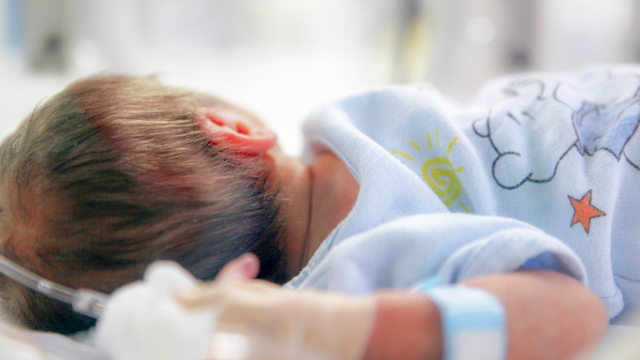
The Ministry of Health has prepared a draft law "On sexual and reproductive health" that aims to guarantee the sexual and reproductive rights of individuals.
The draft law is in the consultation phase and aims to provide legal regulation mainly for assisted medical reproduction techniques and termination of pregnancy, including surrogate pregnancies.
The draft law charges the Ministry of Health with responsibility for defining criteria, regulations and their operation in the service of sexual and reproductive health.
According to the draft law, termination of pregnancy is carried out in an accredited public or non-public health institution, which meets the conditions defined in this law and in the relevant instruction of the minister responsible for health. Voluntary termination of pregnancy is carried out according to approved protocols. The decision to terminate the pregnancy is made at least 3 days after receiving the information. In the event that the period of 3 days leads to exceeding the deadlines established in this law, the doctor may decide that this deadline is not respected. Voluntary termination of pregnancy can be carried out within the first fourteen weeks of pregnancy, at the request of the pregnant woman and must meet the following requirements:
a) To be performed by a specialist obstetrician-gynecologist.
b) To be performed with the express written consent of the pregnant woman.
c) To be carried out with the consent of the parent or legal guardian for minors under the age of 16.
ç) Unmarried minors over the age of 16 can give their own consent to the voluntary termination of pregnancy, but at least one of the parents or the legal guardian must be informed of her decision. This notification will not be carried out if the minor has convincing reasons that the notification will lead to a clear risk of domestic violence, threats, coercion, abuse or abandonment.
The doctor who is requested to terminate the pregnancy voluntarily, in the first visit, must inform the woman about the medical risks that the termination of pregnancy brings, as well as the possible health problems of the medical intervention. The rights, assistance and advantages guaranteed by law for the family, the mother and the child, as well as for the adoption possibilities of the children expected to be born.
According to the draft law, assisted medical reproduction techniques are also used to prevent some diseases of genetic origin that can be transmitted from parent to child. Users of these techniques will be heterologous married or cohabiting couples as well as single women.
The application of RMA techniques for the treatment of infertility begins after the age of 18 and ends at the age of 53.
Embryos and unfertilized eggs can be frozen until the woman reaches the age of 53. After this age, eggs or embryos, if not donated, must be destroyed.
The application of RMA techniques in health institutions that implement these techniques are done according to clinical protocols approved by the ministry responsible for health and are carried out by a team of professionals specialized and licensed in this field, according to the legislation in force.
The criteria that licensed health structures must meet to apply RMA techniques and the approval procedure are determined by order of the minister responsible for health.
All the data of the users of these techniques constitute confidential data and are subject to the legislation in force.
Donors of reproductive cells for heterologous fertilization donate reproductive cells to the health institution that will perform the RMA procedure and that has a bank for the storage of reproductive cells, or embryos.
The donor of reproductive cells is obliged to undergo the necessary examinations and laboratory tests to check his/her state of health.
The age of female donors for egg donation starts after the age of 18 and ends at the age of 35. For male donors, sperm donation begins at the age of 18 and ends at the age of 45.
Donation will be anonymous and must guarantee the confidentiality of donor identity data from reproductive cell banks and donor registries. the health institution where the donation is made, signs a written agreement with the donor, which defines the rights and obligations of the parties.
The donation will be revocable only when the donor requests the donated reproductive cells, to use for himself, always if on the date of the request they will be available.
The maximum authorized number of children born in Albania, generated with reproductive cells of the same donor, both for the sperm donor and for the egg donor, should not be higher than 5 (five). In special cases, exceptions can be made, when the woman or couple wants a second or third child from the same donor.
All donations must be declared by the health institution performing the RMA procedure in the national RMA registry in order to identify the donations. the health institution and all persons authorized to have access to the National RMA Registry must preserve the donor's anonymity.
The right to medically assisted reproduction includes the right to reproduce for heterosexual couples and single women.
Medically assisted reproduction can also occur when there is an agreement between a woman who carries in her womb and gives birth to a child for another woman who is unable to bear children.
Any woman over 18 to 50 years of age, with full capacity to act, can be a beneficiary or user of the techniques regulated in this law, as long as she gives her written consent to their use, freely and conscientious.
The woman can be a beneficiary or user of the techniques regulated in this law regardless of her civil status.
If the woman is married or cohabiting, the consent of her husband or cohabitant will also be required.
In the information given to the woman, before giving the approval for the application of these techniques, it will be included in any case, also about the possible risks for her, during the treatment, during the pregnancy as well as for the child, which may derive from motherhood at a clinically unsuitable age.
The fertility specialist or the reproductive cell bank's team of experts performs the general examination and genetic analysis and finally accepts or rejects the donor.
The health institution must ensure the protection of the personal and medical data of the donor and recipient, according to the legislation in force on the protection of personal data. The format and method of administration of health data and documents, paper and electronic, is determined by the minister responsible for health.
The personal data of children born with assisted reproduction techniques will be regulated according to the legislation for the protection of sensitive data.
In no case, the civil registration will not reflect data that may indicate the character of generation.
Neither the mother woman nor the husband, after having given their formal written consent, before the implementation of the RMA techniques with the contribution of the donor, cannot dispute the personal marital data of the child born as a result of this fertilization.
Licensed public and non-public health institutions must have a registry of cases that have performed RMA procedures.
The registry of public and non-public health institutions that perform RMA procedures should interact with the National Registry of RMA, which is administered by the ministry responsible for health.
The manner of operation and administration of the National Register of RMA is determined by the Decision of the Council of Ministers.
The bill prohibits the following:
a) Use of the embryo for commercial and experimental purposes.
b) Genetic manipulation in the embryo.
c) Trafficking of reproductive cells and embryos.
d) Mixing of reproductive cells.
dh) Carrying out IVF techniques for the purpose of gender selection, before implantation in a woman's uterus, except in cases where it is required to prevent a serious inherited disease related to the gender of the child.
e) Performing cloning in human beings.
ë) Carrying out assisted medical reproduction, when the reproductive cells come from individuals with genetic links defined in the Family Code.
Surrogacy is made on the basis of a written agreement between the woman who wants to have a child, but who is in conditions of medical impossibility, and the woman who will carry the fetus in her uterus and give birth to the child on behalf of the former.
A woman who wants to have a child must be infertile or find it impossible to have a pregnancy in her body for anatomical, medical reasons or a high risk to her health, in case she becomes pregnant.
The surrogate woman must not use her own eggs to achieve pregnancy.
The surrogate mother must be over 25 years old and have given birth to at least one child.
The procedures and conditions that must be met for a surrogate pregnancy are defined in the relevant protocol approved by order of the minister responsible for health.
Children born according to the technique of assisted medical reproduction through surrogacy are subject to the provisions of the Family Code for surrogacy.
Reproductive cells, embryos and ovarian tissue that are left over from the application of in vitro fertilization techniques and that are not transferred to the woman in a cycle of RMA can be stored in banks authorized by the minister responsible for health according to a deadline defined in the agreement between the institution health and donors.
1. The individual has the right to ask the institution that stores his reproductive cells to dispose of them after a written request. The couple has the right to ask the institution that stores the embryo to destroy it after a written request from both partners.
2. Possible uses for cryopreserved embryos, as well as cryopreserved reproductive cells and ovarian tissue, may be:
a) Their use by the wife herself and her husband.
b) Donation for reproductive purposes./ Monitor.al


This Friday we are introducing you to some of the main pre...

The head of the PL, Ilir Meta, appeared paranoid after...

MP Monika Kryemadhi has commented on Ilir Meta's attacks o...

The head of the Freedom Party, Ilir Meta, has twisted ...

MP Monika Kryemadhi has stated that at the moment the mari...

MP Monika Kryemadhi made fun of Ilir Meta as the latter is...

Tonight on the show Opinion with Blendi Fevziu, MP Monika ...

MP Monika Kryemadhi stated in the Opinion show the causes ...

MP Monika Kryemadhi tonight in Opinion spoke about the rep...

April 18 marks the World Monuments Day, many of which are ...

The member of the Municipal Council, Ilir Alimehmeti has d...

After the threats and attacks against the head of SPAK Alt...

After high temperatures, snowfall has returned to the Sout...
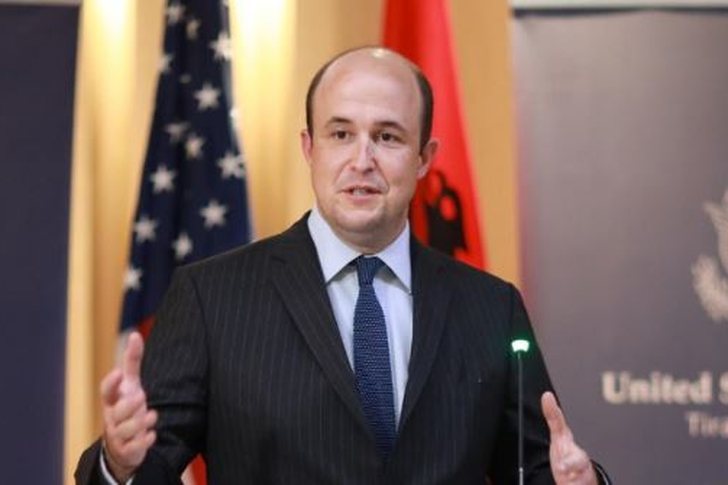
The US Chargé d'affaires in Tirana, David Wisner, duri...
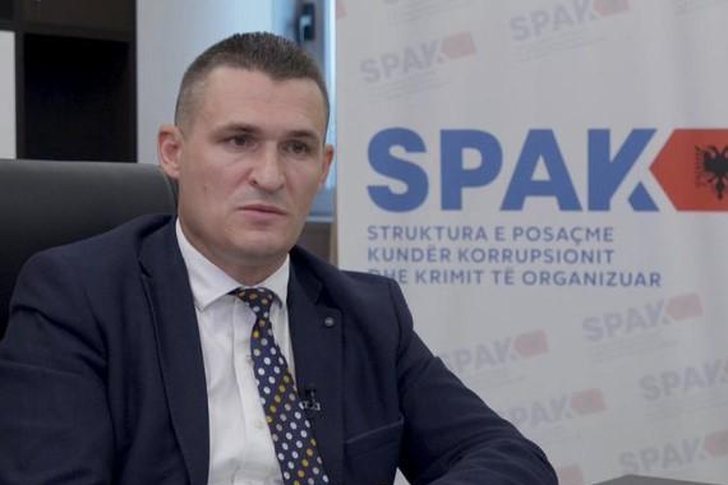
The charge d'affaires of the United States in Tirana, ...
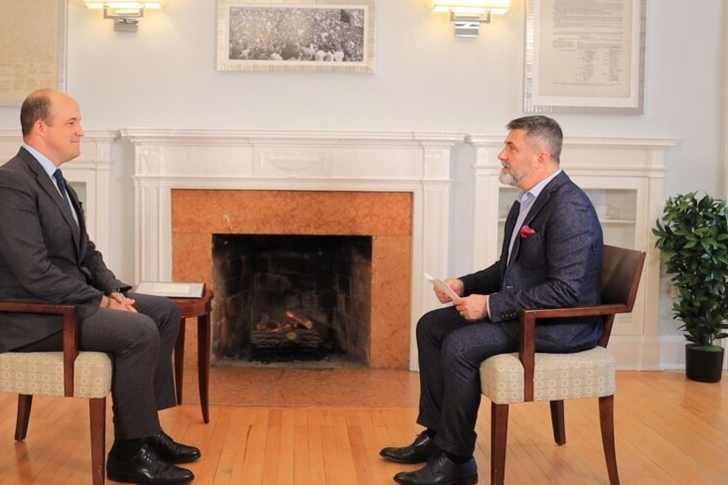
The charge d'affaires of the United States in Tirana, Davi...

The Greek media "Ta Nea" has today published an articl...

Former chief prosecutor Shkëlqim Hajdari commented on ...

The Advisor for Economic Affairs in the DP and at the same...

Lawyer Spartak Ngjela revealed the scheme of what is h...

CNA has launched another investigation that could lead to ...

Irfan Hysenbelliu is a businessman that we call "Irfan the...

In March 2026, CNA launched another investigation centered...
The arrested mayor of Tirana, Erion Veliaj, with 13 charge...

The Special Board of Appeal (KPA) decided this Monday ...

The KPA vetting decided this Thursday to dismiss the p...

Suela Salavaçi, a prosecutor in the Prosecutor's Offic...

The Special Board of Appeal reinstated the prosecutor ...

The bad weather that swept the country on Tuesday evening ...

A road accident occurred this evening on Nikolla Zoraqi St...

Three people were shot and wounded in Elbasan last night b...

A serious incident occurred this Tuesday in the Yrshek are...

This Wednesday, our country will be under the influence of...

All of Southern Europe will face changing weather conditio...

Albania was hit by temperatures significantly higher than ...

For the first time, Pogradec welcomed the Inter-Lake Chess...

Prime Minister Andy Burnham has announced that most bus fa...

France's parliament has passed a law to ban social media f...

US Secretary of State Marco Rubio arrived in Manila on Jul...

In the space of a few days, Ukrainian President Volodymyr ...

At a time when industrial products are increasingly taking...

Trust among people is not just a three-syllable word. It c...

Master of humor Todi Llupi has passed away at the age of 7...

The ninth edition of "MIK Festival" kicked off with one of...

Businesses will no longer be required to simply register t...

Despite economic growth and income in recent years, Albani...

This Wednesday, one US dollar is bought for 81.4 lek and s...

Construction company licenses will have a validity period ...