

Escape from Shenkoll prison/ Court makes decision for three employees
The three Shënkoll prison employees who were arrested afte...


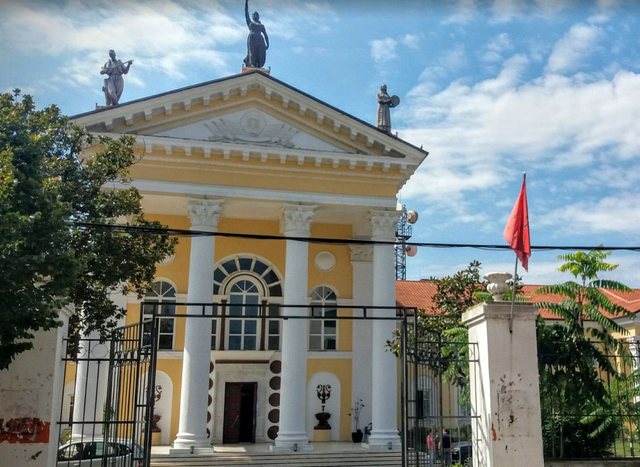
Cultural monuments in Albania have been totally abandoned.
This alarm has also been raised by the British daily newspaper, "The Telegraph", which wrote an article about the historical buildings in our country, neglected by the Ministry of Culture.
" The Telegraph " writes that neglect has begun to threaten the survival of churches and monasteries.
Prestigious British media emphasizes that there is a lack of investment in monuments that are part of cultural heritage.
In fact, even where there are investments, they are very few and rare.
The stories begin with Mirela Kumbaro when she was Minister of Culture and continue today.
The alarm about the abandonment of historic buildings, for which the Ministry of Culture is responsible, is now being raised by a British media outlet.
“They languish in various states of disrepair, some are on the verge of collapse, and the frescoes that contribute so much to their unique aesthetic are under threat from damp and crumbling roof structures. Rural depopulation is only adding to the risk of further neglect and damage, the British media points out. Since 2005, Unesco has listed the monasteries as part of an Albanian World Heritage Site, which encompasses a wider group of historic buildings and includes the historic city of Gjirokastra, with its medieval layout, cobbled streets and intact Ottoman architecture. It also includes mosques and castles in the neighbouring region of Berat,” the article says, among other things.
Full article:
While many of the world's most important cultural sites are struggling with the pressures caused by too many tourists, one of them - a beautiful and unique group of ancient buildings in Albania - is struggling because there are too few of them.
At least that is the argument of heritage activists hoping to preserve the remote but historic monasteries and churches of the Drino Valley. They aim, with the support of the World Monuments Fund (WMF), to significantly increase visitor numbers, raising the profile and securing the future of these magnificent sites.
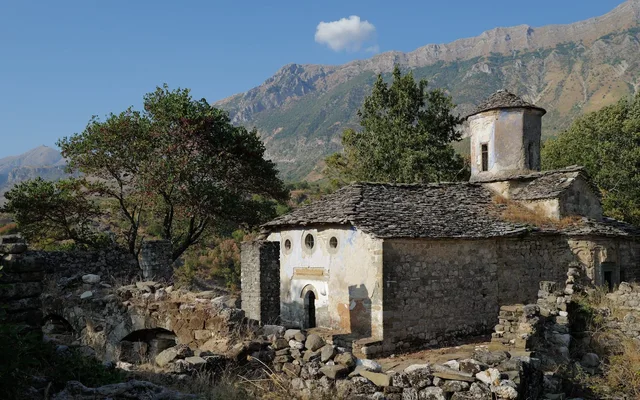
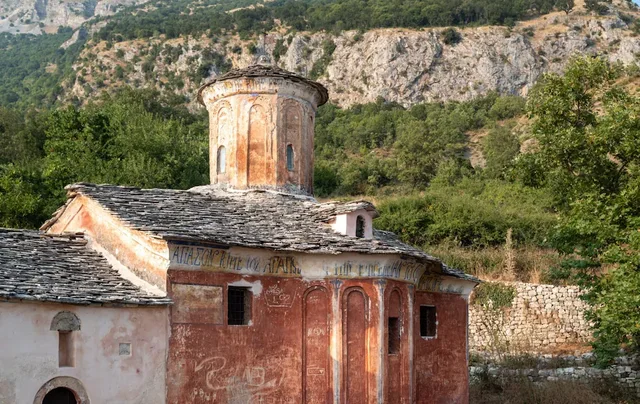
The abandoned monasteries, about a dozen of them, are clustered in the hills south and east of the city of Gjirokastra on both sides of the Drino River, which runs through southern Albania. They usually consist of a small complex of monastic buildings clustered around a central church and date from the 16th and 17th centuries - the period after the Byzantine Empire had given way to the Ottomans. However, some were founded hundreds of years earlier.
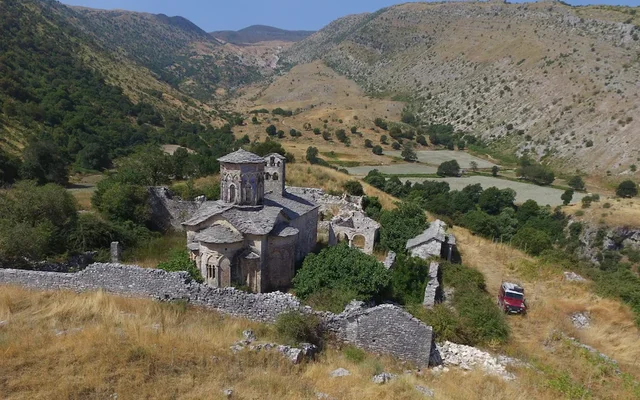
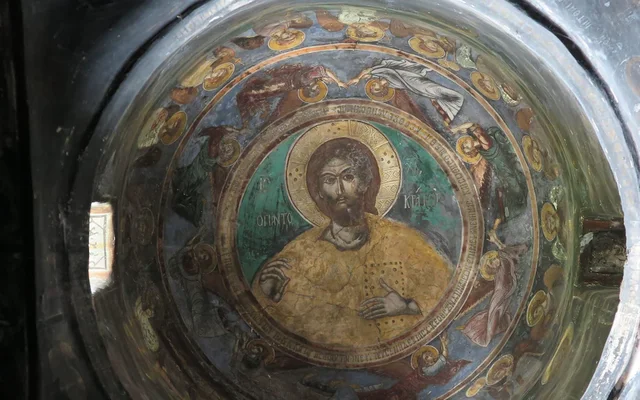
Among the most atmospheric are St. Cyril and St. Julita in Dhuvjan, which may have been founded in the 6th century but certainly dates to 1089, St. Mary of the Spile among the limestone cliffs above Saraqinisht with its stunning frescoed dome, and the atmospheric painted interiors of the Church of St. Nicholas in Dhuvjan and the Church of the Prophet Elijah in Stegopoul. They have survived largely untouched by modern encroachment partly because of their remote locations on the hills and mountains above the fertile plains of the valley. But while isolation has helped protect them from development, neglect is now beginning to threaten their survival.
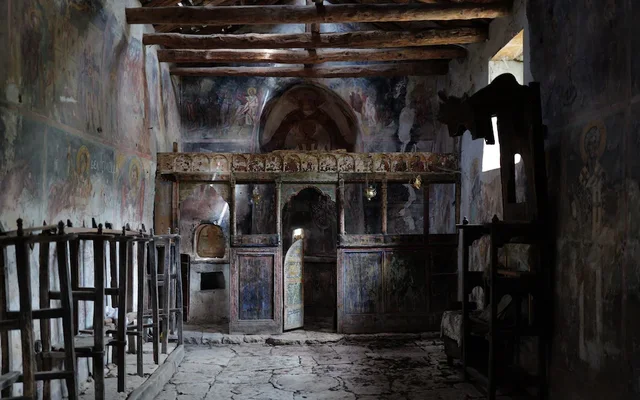
They languish in various states of disrepair, some on the verge of collapse, and the frescoes that contribute so much to their unique aesthetic are under threat from damp and crumbling roof structures. Rural depopulation is only adding to the risk of further neglect and damage, the British media points out. Since 2005, Unesco has listed the monasteries as part of an Albanian World Heritage Site, which encompasses a wider group of historic buildings and includes the historic city of Gjirokastra, with its medieval layout, cobbled streets and intact Ottoman architecture. It also includes mosques and castles in the neighbouring region of Berat.
But last month, the WMF focused new attention on them. The monasteries were included in the WMF’s latest biennial “watch list” of 25 historic sites around the world that are currently facing major challenges, including neglect, climate change, tourism and natural disasters.
Although visitor numbers to Albania are on the rise, the Drino Valley remains largely undiscovered by tourists, and the WMF sees this as an opportunity. It argues that increased tourism can provide a sustainable way to support the long-term conservation of these sites, while celebrating the valley’s history and boosting the local economy.
He proposes the development of a cultural route for tourists. This would connect the monasteries of the valley and would include the restoration of existing paths and access roads, signage and information for visitors, training of local guides, and the cooperation of local businesses and other stakeholders.
At first glance, the idea seems like a favorable proposition, but striking the right balance between tourism and heritage is not easy. Richard Hodges, President Emeritus of the American University of Rome, was involved in the original project to obtain UNESCO World Heritage status for Gjirokastra in 2005. He agrees that these magnificent churches deserve to be better known; “their frescoes are absolutely stunning,” he says.
But he stresses the need to tread carefully when aiming to increase visitor numbers. “A priority is to preserve these treasures with an assessment of conservation priorities before encouraging the ever-increasing number of tourists to Gjirokastra (which is the second most popular visitor destination in Albania) to visit these jewels.”
There is also no doubt that some of the magic of these stunning churches will be lost when they are restored and become part of a tourist trail. But then if they don't, we risk slowly losing them altogether./ CNA

The three Shënkoll prison employees who were arrested afte...

This Friday we are introducing you to some of the main hea...
For several weeks now, Albanian emigrants have been applyi...

The Delegation of the European Union has reacted to the fr...

Justice Nuredin Dumani testified in the Special Court, rev...
CNA learned today that two members of the RTSH Steerin...

Following legal violations with the procedures for electin...
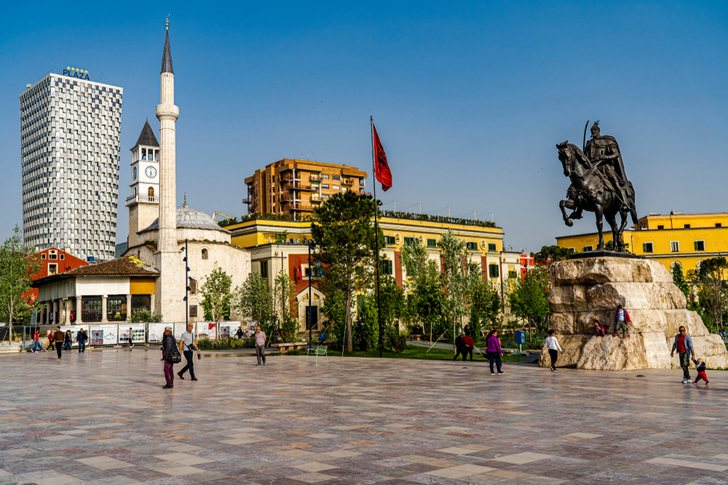
Albania will host the World Law Congress in 2027. The new...

This Thursday, we are introducing you to some of the main ...

AMA Director Armela Krasniqi has reacted harshly to the di...
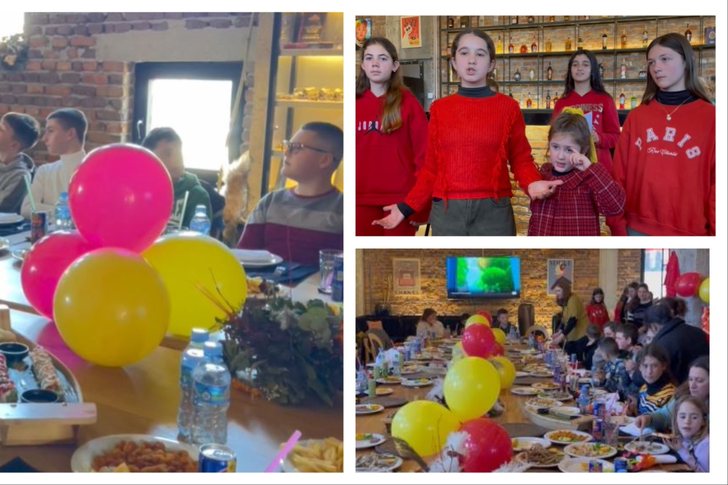
"New Year's Eve Celebrations Around the World" is the proj...

A special event took place at the Vatican, where Pope Fran...

The Special Prosecution Office has decided to postpone the...
Journalist Ermal Mulosmani shared today a little bit of wh...
The expiration dates of expired passports and cards are be...

The Kosovo Criminal Court has drawn lots to determine ...
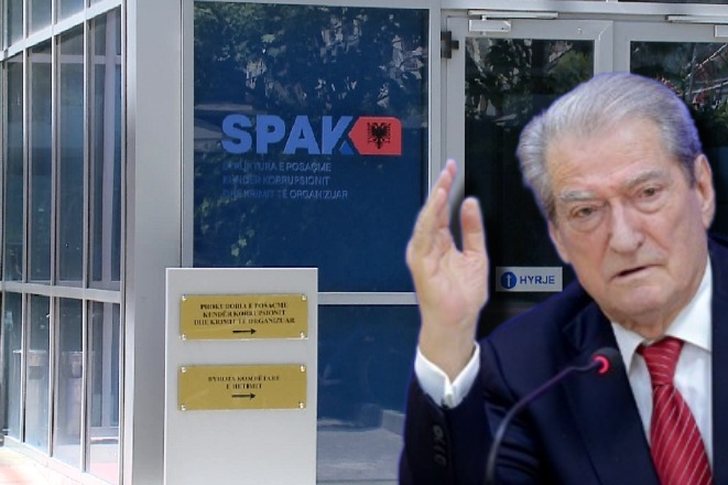
The hearing for DP leader Sali Berisha and the 4 defendant...
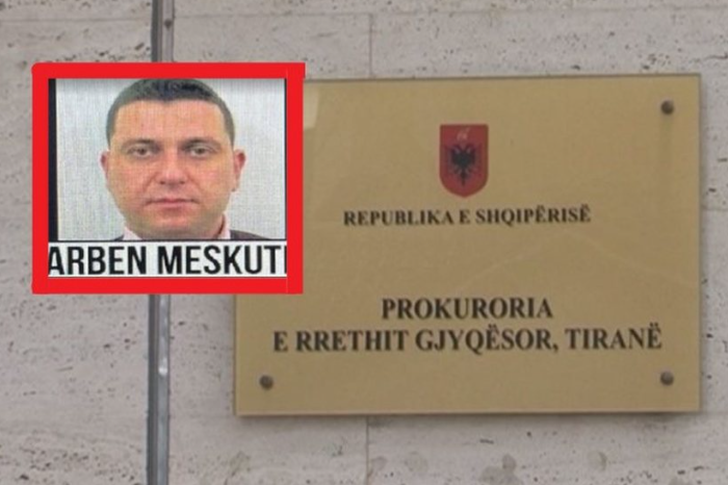
The Special Court rejected Arben Meskuti's request to chan...

The investigations against Mayor Erion Veliaj continue. SP...

The first preliminary hearing at the GJKKO for the "Toyota...

CNA has launched another investigation that could lead to ...

Irfan Hysenbelliu is a businessman that we call "Irfan the...

In March 2026, CNA launched another investigation centered...
The arrested mayor of Tirana, Erion Veliaj, with 13 charge...

The Special Board of Appeal (KPA) decided this Monday ...

The KPA vetting decided this Thursday to dismiss the p...

Suela Salavaçi, a prosecutor in the Prosecutor's Offic...

The Special Board of Appeal reinstated the prosecutor ...
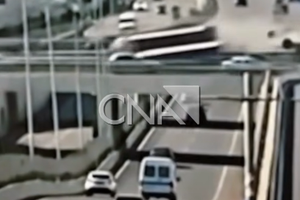
Footage emerges from the serious accident that occurred th...

A Shkodra traffic police officer was hit with hard objects...
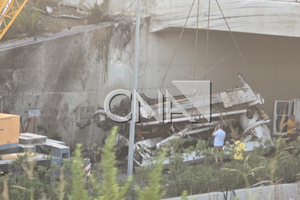
This Wednesday, around 4:00 PM, a serious accident occurre...

Tirana Police have shared details regarding the accident t...

On Thursday, our country will be under the influence of st...
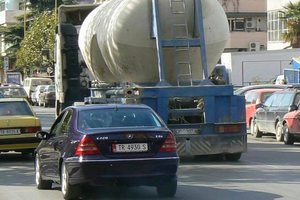
A serious accident that occurred this Wednesday with the c...

The Institute of Geosciences has shared a forecast for wea...
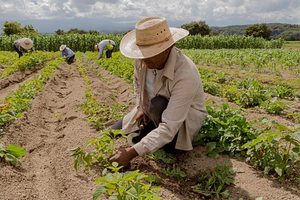
Rising energy and fertilizer prices are expected to contin...

Artificial intelligence (AI) models from the American comp...
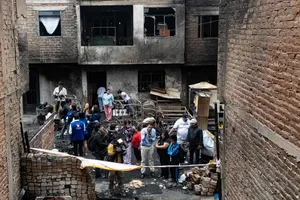
At least 10 people have died after a fire broke out in a h...
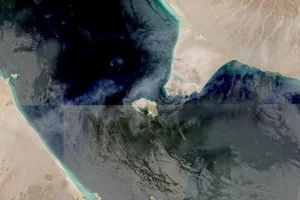
Yemen's Houthis have claimed to have attacked two Saudi oi...

The trial of ousted Venezuelan President Nicolas Maduro on...

At a time when industrial products are increasingly taking...

Trust among people is not just a three-syllable word. It c...

Master of humor Todi Llupi has passed away at the age of 7...

The ninth edition of "MIK Festival" kicked off with one of...
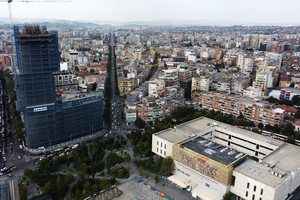
The average sale price of apartments in Tirana reaches rec...

This Thursday, one US dollar is bought for 81.5 lek and so...

The price of diesel reached 206 lek per liter from 198 lek...

Businesses will no longer be required to simply register t...