

Fotolajm - Modern tourism for foreigners
As the summer season is approaching and the temperatures a...



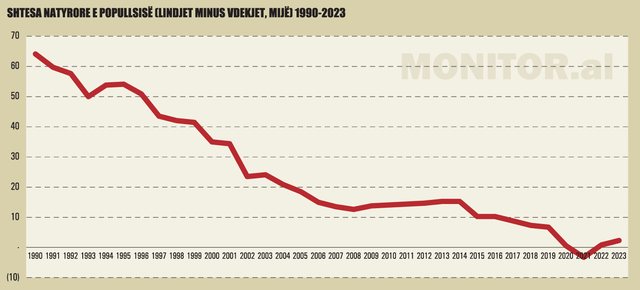
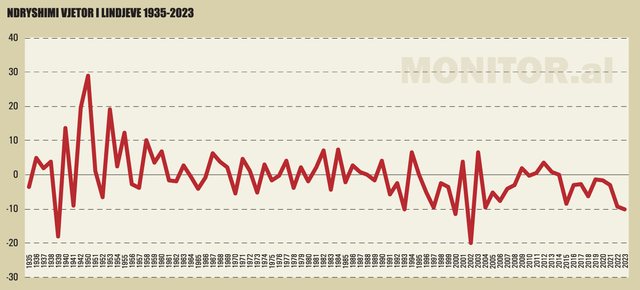
Fertility rates have fallen steadily in these three decades, but in the last two years, they have accelerated, signaling a worsening of the phenomenon in the coming years.
In 2023, just 22,210 babies were born across the country, the lowest level since 1934 when official annual data was reported.
The data show that even in the Second World War, more people were born in Albania than today. For example, in 1942 over 36 thousand babies were born at a time when the number of women of reproductive age was lower than today.
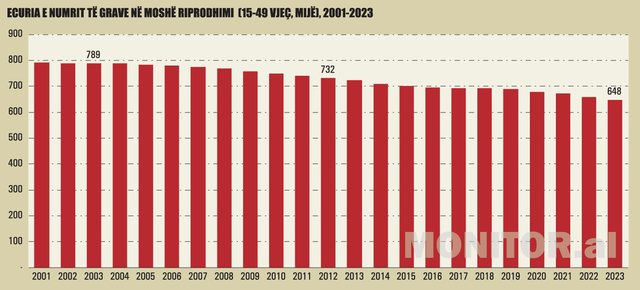
In 1950, when the communist dictatorship regime was established, 47,291 babies were born, according to data from the INSTAT archives, while the number of women of reproductive age (15-49 years) was only 259,472 thousand.
Just over 22,000 babies were born last year, while the number of women of reproductive age was 647,884, or three times higher than in the 1950s.
It is understandable that since the 50s-60s, Albania, like Europe, has evolved in terms of family planning, gender equality, the integration of women in the labor market, but in our country there is still a greater percentage of women who give birth to fewer children than they want.
Demographers and sociologists are worried that births in Albania have fallen beyond all predictions.
The pessimistic scenario for population growth until 2060 developed by INSTAT predicted that in 2023, 27,281 babies would be born, but in reality only 22,210 were born, or 19% less than the most pessimistic expectations.
Majlinda Nesturi, gender statistics expert at the United Nations office in Albania, said that the emigration of the reproductive age population has the highest impact on the decline in births among all other factors.
Ms. Nesturi says that there is also a lower tendency for births, which is not foreseen in the projection hypotheses.
The 2019-2031 population projections from INSTAT did not take into consideration the high immigration rates and the decline in fertility, so the demographic indicators have had a higher deterioration compared to all scenarios.
Experts claim that the policy is too late to implement a set of measures, which should focus on curbing immigration and identifying tools that can help young couples to have children.
Professor Ilir Gëdeshi, who has been studying phenomena related to emigration for years, notes that interventions for the emigration of young people should be done in two directions.
First, emigration, especially of the brain, must be curbed and this can be achieved by providing better prospects for young Albanians to stay in Albania for their education and then career.
The second intervention concerns the creation of conditions for the return of those who left, especially those who study abroad, as they are a valuable asset that can provide comprehensive assistance.
Ermira Galanxhi, experienced expert in demographic issues, said that interventions are needed to improve the economic situation of young families.
According to her, a detailed examination of the needs of young families by region is needed and then a package of policies to help them with the costs of raising children should be drawn up.
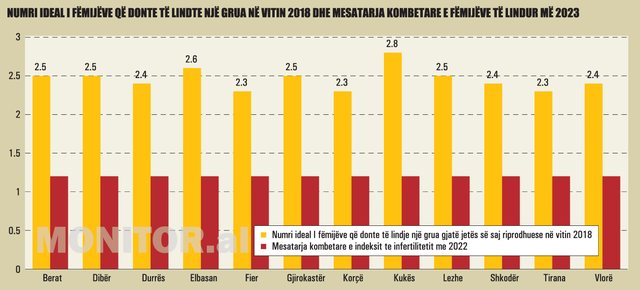
Despite the economic and social changes, Albanian society still preserves the values ??of tradition and family. Albanian women still want to give birth to more children than they have.
Data from the Demographic and Health Survey, which was conducted in 2018, showed that a woman of reproductive age (15-49 years) will give birth to more than two children.
Six years ago, women were asked what was the ideal number of children they would like to have in their lifetime. The results showed that 100 women wanted to give birth to at least 250 children, a figure higher than the parental replacement rate that guarantees natural population growth.
Indeed, these women gave birth to far fewer children than they would have in their ideal. Six years after the survey, 100 women of reproductive age had given birth to only 121 children, not even half of what they considered ideal in 2018.
The practices of other countries, which have experienced the decline of fertility rates before us, show that the most effective tool was the support of newly married families.
In 2003, Spain adopted a fertility reform in which working mothers with children up to three years old were exempted from personal income tax. Tax breaks were extended to mothers who gave birth to more children. Also, a baby bonus of 2,500 euros was given for each birth.
Many of these facilities were withdrawn in 2010 as a result of the economic crisis, but studies found that births in Spain between 2004 and 2010 increased by 5%.
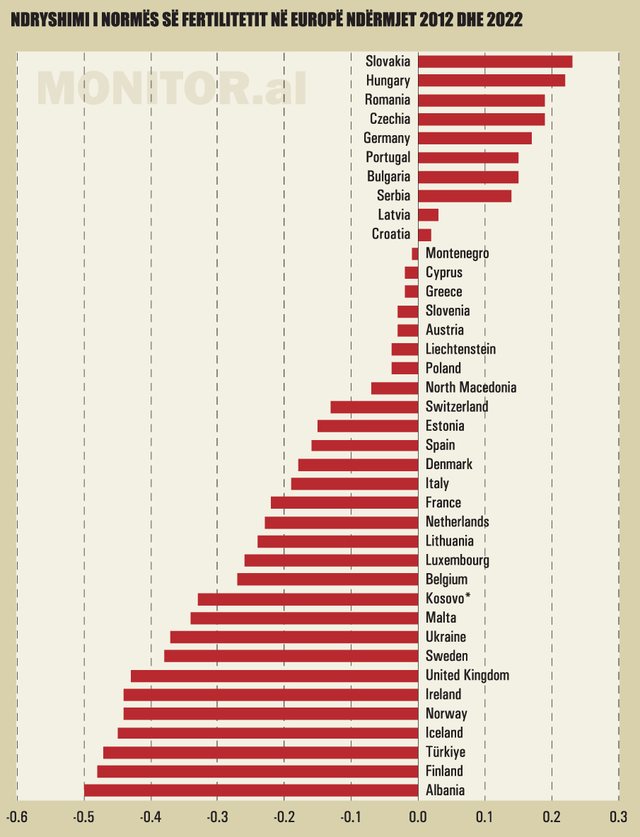
Comparable Eurostat data shows that Albania has seen the largest decline in fertility from 2021 to 2022. Official data from Eurostat shows that the fertility rate in Albania was 1.71 children per woman in 2012 and in 2023 it dropped to 1.21 children per woman.
This means that in 2012, in our country, 100 women gave birth to 171 children, while in 2022, 100 women gave birth to only 121 children. Comparing the data with other European countries, it can be seen that Albania has the biggest drop in fertility per woman with 0.5 children less than in 2012.
In 2022, according to Eurostat, Albania left behind only Spain, Ukraine and Malta that reported less than 1.2 children per woman. In 2022, Italy was also better than Albania with a fertility rate of 1.24 children per woman. The large drop in births in 2023 is expected to worsen the fertility rate below 1.2 children per woman.
On the other hand, even in 2022, France led Europe with the highest fertility rate with 1.79 children per woman, followed by Romania, Montenegro, with 1.71 children per woman.
Currently in Europe, births have fallen below the population replacement rate of 2.1 per woman, which means that the continent's population, excluding immigration, is declining. (see the chart Change in the fertility rate in Europe between 2012 and 2022)
Postponing the age of marriage, career goals and in many cases economic impossibility are causing Albanian women to give birth to fewer and fewer children.
INSTAT reported that in 2022, the birth rate has decreased for the 20-24, 25-29 and 35-39 age groups, while for the older age groups it has recorded a slight increase. In 2022, the average age at birth is 29.5 years.
Also, the gender ratio at birth has worsened, since for every 100 girls born, 107 boys were born in 2022. This ratio is higher than the natural ratio, which is 105 for our country.
The Gross Reproduction Coefficient (GRC) is a good indicator for measuring the growth of future generations. It measures the rate at which women replace themselves during their reproductive years. The method of calculating the KBR is the same as that of the ISF, but in this case only the births of female babies are taken into account.
In 2022, the KBR is 0.59, which means that women in Albania are about 41% away from replacing themselves. This indicator is directly influenced by the reproductive behavior of women.
With this progress, the population of Albania will suffer an irreversible decline, as there will be fewer and fewer women, who are the basis of reproduction.
The KBR is rapidly deteriorating as in 2021, it was 0.63, which means that women in Albania are about 37% away from replacing themselves. The indicator is directly influenced by the reproductive behavior of women and the preference to give birth to boys.
Several surveys and methodologies developed by INSTAT and various non-governmental organizations indicate a worsening of the immigration phenomenon in the third decade, since the fall of the communist regime. One of them, which measures emigration and diaspora, shows that from 2011 to 2020, about 600,000 people left the country.
Other data from Eurostat report that 80% of asylum seekers from Albania are under 35 years old. As the data show, the most vital part of the population is emigrating to create a family. The emigration of young people is also reflected in another indicator, the baby bonus.
Government spending to financially reward newborns increased from 2019-2022, but on the other hand, births in the country during the same period fell faster. Year after year, the bonus was benefited by children with Albanian parents who were born abroad, but who still have civil status in Albania.
Babies born in 2023 were down over 11% compared to 2022, but baby bonus payments were up. The baby bonus in more than 40% of its value has gone to babies born abroad, despite the fact that the government intended to use this financial tool to improve births in the country.
From 2019 to the end of 2023, the government has paid out over 141 million euros in the form of a baby bonus, but on the other hand, the number of births in the same period has dropped by 22%.
At the end of December last year, the Council of Ministers approved a condition, in which the bonus is benefited by parents of babies who had 180 days in Albania in the previous year. These data will be obtained from the TIMS system.
Also, the government decided that the bonus should be benefited by foreigners who have settled in Albania as asylum seekers or refugees, who decide that their child's citizenship should be Albanian.
The total number of beneficiary babies, according to the Monitoring data of the Ministry of Health, is for 161,943 newborns. Based on the number of births for the years 2019-2022, according to INSTAT data, it is 108,535 births, which means that 33% or 53,408 babies benefiting from the bonus live abroad.
In Albania, the decline in births has been more aggressive due to high emigration in recent years. A survey by "Gallup International" ranked Albania among the top 10 countries in the world for the high rate of emigration in the period 2019-2021./ Monitor.al

As the summer season is approaching and the temperatures a...
SPAK's investigations and the arrest of Erion Veliaj's...

The State Police has made a work report for the month of M...

Unions in Greece will hold protests on April 2 and 4. As ...
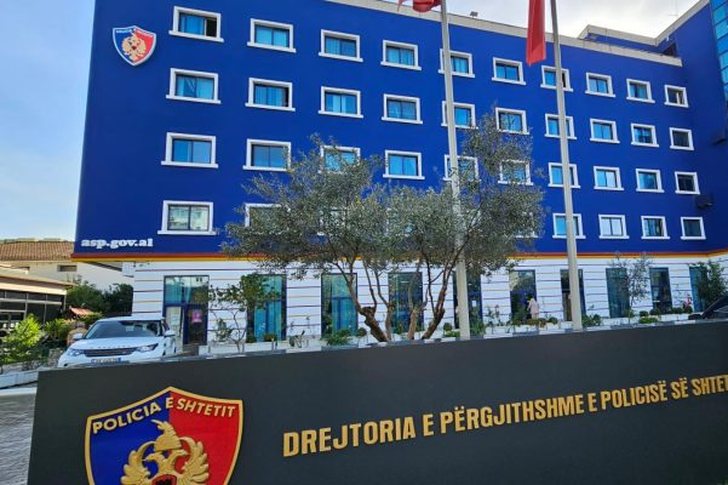
The Center for Police Cooperation in Greece has notified t...

The "5D Kontruskion" file put the important directors of E...
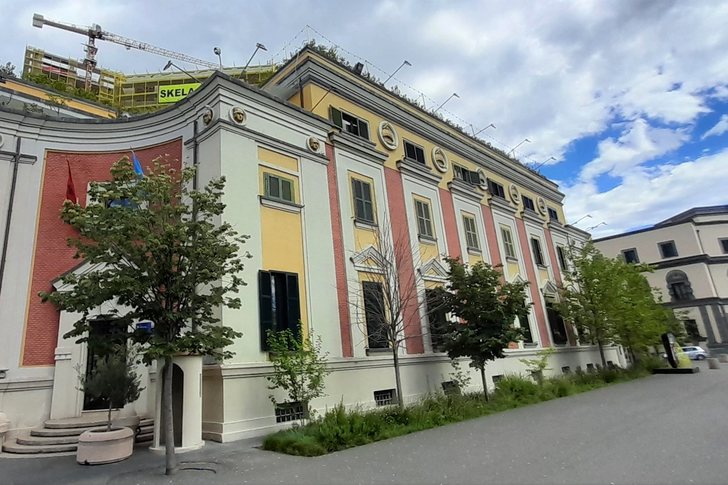
The political leader of the DP in Tirana, Belind Këlliçi, ...

Irfan Hysenbelliu is one of the media examples of how ...

In the file that CNA was able to provide regarding the inv...
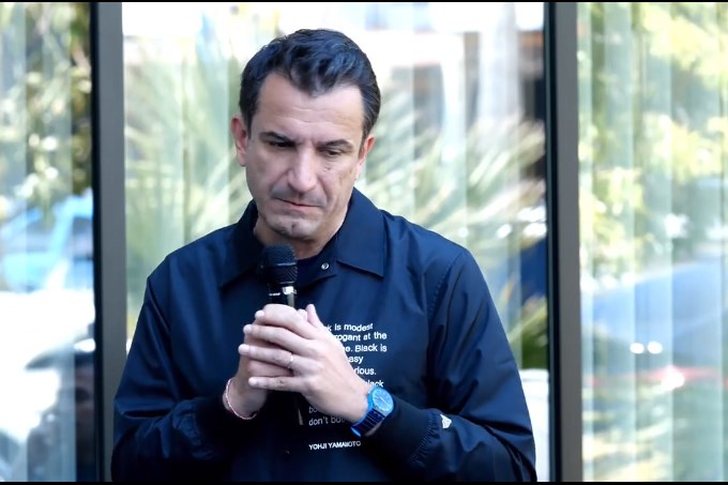
CNA has disclosed the investigation file of the direct...

CNA has secured the investigative file for the directors a...
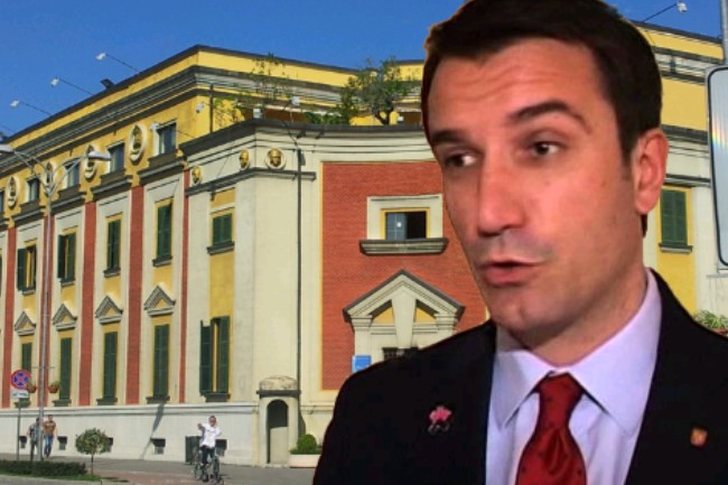
New details come to light from the investigative file on t...
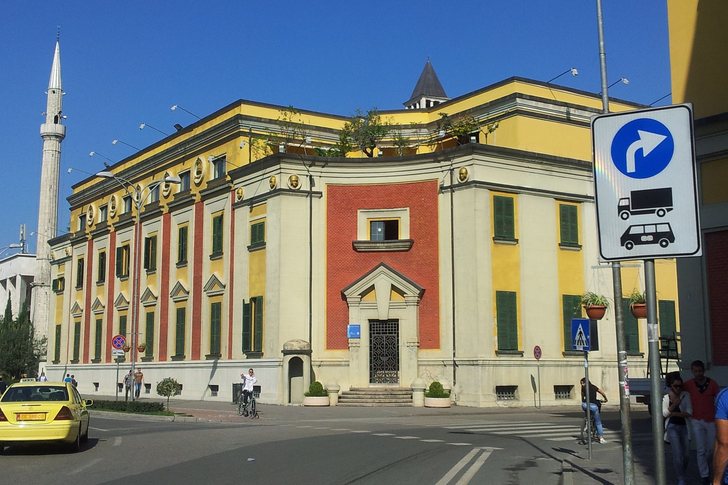
The Special Prosecutor's Office has revealed that the ...

Besimtarët katolikë po kremtojnë Pashkët. Ndërkohë po mbah...
Rigels Xhemollari, the head of Qëndresa Cittarë, has ironi...

Luli Basha does not stop being funny and delirious. In...

Former Prime Minister Sali Berisha, during a virtual meeti...

Today, CNA announced that the winner of the race for D...

Other facts and details of the fraud of Mariglen Qatos and...
CNA has been able to provide the complete file of the ...

CNA has launched another investigation that could lead to ...

Irfan Hysenbelliu is a businessman that we call "Irfan the...

In March 2026, CNA launched another investigation centered...
The arrested mayor of Tirana, Erion Veliaj, with 13 charge...

The Special Board of Appeal (KPA) decided this Monday ...

The KPA vetting decided this Thursday to dismiss the p...

Suela Salavaçi, a prosecutor in the Prosecutor's Offic...

The Special Board of Appeal reinstated the prosecutor ...

Footage emerges from the serious accident that occurred th...

A Shkodra traffic police officer was hit with hard objects...

This Wednesday, around 4:00 PM, a serious accident occurre...

Tirana Police have shared details regarding the accident t...

A serious accident that occurred this Wednesday with the c...

The Institute of Geosciences has shared a forecast for wea...
Rising energy and fertilizer prices are expected to contin...

Over 18,000 foreign citizens from 140 countries have appli...

The trial of ousted Venezuelan President Nicolas Maduro on...

US President Donald Trump has issued another warning to Ir...

Prime Minister Andy Burnham has announced that most bus fa...

France's parliament has passed a law to ban social media f...

At a time when industrial products are increasingly taking...

Trust among people is not just a three-syllable word. It c...

Master of humor Todi Llupi has passed away at the age of 7...

The ninth edition of "MIK Festival" kicked off with one of...

The price of diesel reached 206 lek per liter from 198 lek...

Businesses will no longer be required to simply register t...

Despite economic growth and income in recent years, Albani...

This Wednesday, one US dollar is bought for 81.4 lek and s...