

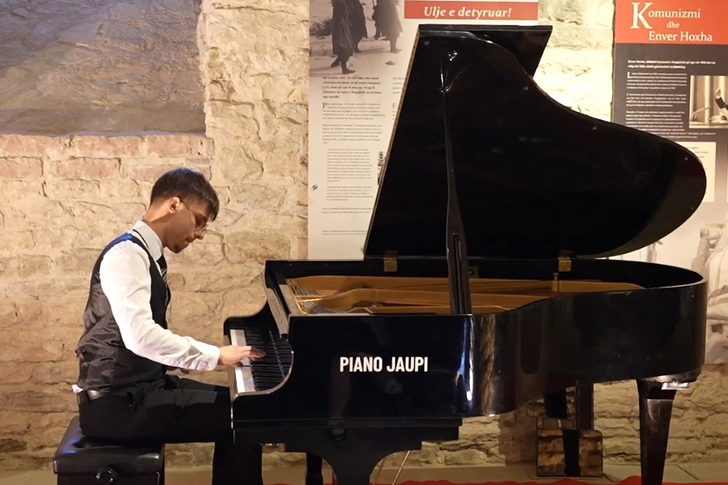
“GjiroClassica” brings classical music to the heart of Gjirokastra
Artists from Albania and Kosovo light up the stage of the ...


By Uran BUTKA
The totalitarian regime essentially attacked true culture and art, to create a culture and a tendentious, ideologized art, to raise the anthem to the red pashas, ??as happened with the class works of socialist realism . The Pipa family, one of the most cultured and anti-conformist families in Albania, was punished because it did not side with the communist regime. Mustafa Pipa, a well-known jurist, was a member of the Court of Dictation, when this court was independent, during the time of Zog. Myzafer Pipa, the son, trained for justice in Padua, shone as a champion of culture (he directed the cultural magazine "Fryma"), of patriotism (as an anti-fascist, he was exiled by the fascists in Ventotene and by the Nazis in the Pristina camp) and especially of sublime justice.
He defended with unprecedented courage the innocent nationalists, democrats and clerics who were convicted by military courts in 1945-46, publicly opposing Koçi Xoxe, Aran Çela, etc., but was arrested and tortured using barbaric methods against him, such as irons red-hot in the fire, with which they pierced his body to the bone, until he died in torture. His brother, Arshi Pipa, who had a doctorate in philosophy in Florence, a lecturer in high schools in Tirana and Durrës, did not agree with the Stalinist regime and the conformist socialist-realist culture.
He was arrested for his links to the Postriba Movement and imprisoned in prisons and extermination camps such as Burrel, Vloçisht, etc., which he described in his work “The Prison Book”. In 1957, he escaped from Albania. Professor of philosophy and literature at some of the most renowned universities in America, Arshi Pipa, was distinguished for his creativity and scientific studies in the fields of literary criticism, Albanian and world language and literature, politics, sociology, journalism, etc. Although far from his country, he was seen by the communist regime as a dangerous enemy, and even the Prime Minister of Albania, Mehmet Shehu, was eliminated because, according to Enver Hoxha’s accusation, “he had an affair with Arshi Pipa’s niece!”
The blind process of primitive revenge, of annihilation and alienation, primarily operated against prominent noble and bourgeois families, who supported and were included in the ranks of the National Front, Legality, or the Northern Leaders. The large families; Lepenica, Muço, Dosti, Golemi, Ermenji, Quku, Hekali, Fratari, Cfiri, Bushati, Cakrani, Pali, Petrela and many others, were punished because they were connected to the 'National Front'; the Kupi, Çoba, Luli, Allamani, Mena, etc. families because they were with legality and so on. For example, the head of the Kazazi family, Halit Kazazi, a nationalist and anti-communist, was shot without trial by communist terrorists. Jup Kazazi, who graduated in political science in Italy, resigned as minister of fascism and fought against the Italians in the battle of Reç, August 1943.
The main leader of the anti-communist resistance of Postriba, he committed suicide, surrounded in 1946, to avoid falling into the hands of the communist rulers. His brother, Seit Kazazi, was also killed, this one a law graduate, former commander of the ballistic battalion "Besnik Çano", who fought in Kosovo, where the fighter of this battalion, Hamit Troplini, also fell a martyr. The other brothers, Zenel and Hamid Kazazi, were sentenced to heavy imprisonment. As if that wasn't enough, the communists shot their uncle, Abdulla Kazazi, and their uncle, Rifat Kopliku, without trial. Rasim Kazazi died from torture in his cell. Cousins ??Sabri, Bektesh and Bexhet Kazazi were sent to prison. The entire Kazazi family was persecuted, dispossessed, and the children were deprived of their schools.
This tragic fate was also suffered by the families who refused to join the NC Front, which was nothing more than the disguised KP. The family of Muharrem Bajraktari, although it refused to join the Communist Front, fought against the Italians, the Germans, and the Communists. But it suffered a tragic fate. Muharrem Bajraktari himself, after resisting with weapons until 1946, escaped from Albania, while his brother, Bajrami, wounded in the attempt, was imprisoned and shot. The Kryeziu family of Gjakova, with Gani, Hasan and Said Kryeziu, collaborated with the National Liberation Movement, without joining the Front.
But it was hit and destroyed by the National Liberation Forces of Albania and at the same time by the National Liberation Forces of Kosovo, when the black leaders were fighting against the Germans to liberate Gjakova. From the famous Gashi tribe of Tropoja, Ramë Muja was especially distinguished, who formed one of the first anti-fascist detachments in Albania, but the communists caused him three deaths at once: they poisoned him with the help of a woman, then they took him dead to an ambush and shot him with a gun, to show that they killed him in an attempt and not by treachery, then they hung him on a rope in old Tropoja.
The same thing happened to the great warrior families of Preng Cali from Kelmendi, Mehmet Ali Bajraktar from Hasi, Ymer Bardhoshi from Puka, Ndue Pal from Dukagjini, Llazar Fundo from Korça and other families who helped and shed the blood of their sons in the patriotic war against the Serbian, Italian and German invaders, but who did not join the Communist Front, according to the totalitarian slogan: “Either with us, or against us”. Communism shot, imprisoned, and interned the prominent heads of these old Albanian families, who had defended their homeland and freedom generation after generation, while it interned the women and children in the camps of Tepelena, Vloçisht, etc.
And, if it did not spare these patriotic and anti-fascist families, the regime proved ruthless towards the families of those people who had collaborated with the Italians or the Germans, such as; Shefqet Vërlaci, Gjon Markagjoni, Mustafa Kruja, Kolë Bib Miraka, Halil Alia, Hysni Dema, Prenk Previzi, Vizhdan Risilia, Kadri Cakranit etc. Of course, collaborationism is morally and legally condemnable at all times, but the responsibility is personal. However, communism generalized this as a phenomenon and for one person, it punished a family with all its innocent children generation after generation, persecuted and stained a tribe, a province, an organization or a party, even Kosovo, for collaborationism. This anti-human and anti-national policy served the unlimited power of the Albanian communists, but also Yugoslav interests in Albania and Kosovo.
The peak of the communist government's feverish activities to annihilate the Albanian right, which included noble families, was the creation and functioning, from the end of
1944 onwards, of military courts, a Russian-Yugoslav experience. The Special Court of Tirana alone, from March 1 to April 13, 1945, tried in 31 sessions, 60 nationalist intellectuals from prominent pro-Western families. After the war, even the few noble families that had joined the National Liberation Front were gradually eliminated, remembering that they were fighting for a democratic Albania.
A good part of them were integrated into the democratic opposition groups, due to their different opinions, but also as a reaction against the establishment of the communist dictatorship in Albania. However, opposition was not allowed, because those who acted outside the National Liberation Front were considered enemies and were immediately annihilated. Deputy Gjergj Kokoshi, a doctorate holder at the University of Paris, a great patriot and democrat, who had put everything into the National Liberation War, the first Minister of Education after the war, declaring that; "where there is no pluralism, there is no democracy", ended up dead in Burrel prison, while 37 opposition figures from large families, such as; Suat Asllani, Sami Qeribashi, Qenan Dibra, Musine Kokalari, etc., were shot and imprisoned. Musineja, from the prominent Kokalari family, the first Albanian writer, an intellectual with broad democratic culture and vision, graduated in the West for Arts, founder of the Social Democratic Party (October 1943), publisher of the newspaper "Zëri i Lirisë", declared in court:
“I am not guilty. I am not a communist and this cannot be called a crime. You won the elections, but I should not be in prison. I am Sami Frashëri's student. With me you want to condemn the Renaissance…”! This fate also suffered the “Opposition Group of Deputies”, which had its beginnings in February 1945. “The current regime of Albania is a totalitarian regime and is not suitable for our country for this reason. I think that a regime in the form of Western democracy would have been suitable for Albania”, – declared Shefqet Beja in court, whom the communists hanged with a rope.
Sheh Ibrahim Karbunara, a patriot and a cultured cleric, signatory of the Independence, organizer and delegate to the Lushnja Congress, supporter of the anti-fascist war and opposition MP, was shot along with his son Hysen and his family was persecuted. The prominent intellectual, scientist and MP Selaudin Toto, founder of the Institute of Sciences in Albania, translator of Edith Durham, was also executed.
The class struggle knew growth and terrible successes. The state machinery worked with blood. Enemies, Anglo-American agents, saboteurs were invented. Engineers Abdyl Sharra and Kujtim Beqiri, from prominent families of Vlora, were hanged, as were well-known engineers Sulo Klosi and Riza Alizoti from families with history.
Those suckers of well-known families, who survived the genocide of the first post-war years, were annihilated throughout the entire socialist period. The culmination of this "holocaust" is the massacre under the pretext of the bomb at the Soviet embassy. Intellectuals who had no connection to this incident were shot without trial and without guilt, such as Sabiha Kasimati, one of the most prominent women in Albania, the first Albanian scientist, Pjerin Guraziu, Jonuz Kaceli who was killed in the investigation, Zyhdi Herri, Manush Peshkëpia, Reiz Selfo and Tefik Shehu from Gjakova, Anton Delhysa from Prizren, Mehmet Shkupi, Gafur and Myftar Jegeni and Haki Kodra from Dibra e Madhe and others, and were buried at midnight tied with barbed wire in a common grave near the Beshirit Bridge.
I will dwell briefly on the Jegeni family, which contributed during the time of the Albanian League of Prizren, in the Dibra assemblies and in the fight for the defense of Albanian lands with Shaqir beg Jegeni, Tefik beg Jegeni and Riza beg Jegeni. From this family, two other prominent figures later emerged, Gafur and Myftar Jegeni, academics with studies completed in Italy, soldiers of the National Army, who fought on April 7, 1939 against the fascist occupation, Gafurri in Vlora and Myftari in Durrës with Abaz Kupi. After the war, they withdrew into private life, because they did not want to serve the communist regime.
They were both arrested and shot without trial in 1951 along with 22 other intellectuals and their families were exiled for 40 years. The absurdity of the communist persecution was that, in addition to their families, all the other families of the Jegeni tribe were also exiled, thanks to the zeal of their son-in-law, Haxhi Lleshi. In 1976, the President of the Republic, Haxhi Lleshi, exiled his wife Haxhire Lleshi (Jegeni) to Mollas after 40 years of marriage, along with their son Rushiti, as well as his wife's brothers and cousins, thus setting a typical Stalinist example of how class warfare should be waged in Albania!
Large families were deprived of their lives, their dignity, but also of their properties, which were illegally seized and nationalized, even their villas and houses, where the “red pashas” were placed. The suffering and humiliation in communist prisons was a shameful and horrific page, it is enough to remember Burrel, where the most prominent men of the nation tragically ended; Spaçi, where the greatest revolt of political prisoners broke out, from which four martyrs were shot: Pal Zefi, Dervish Bejko, Hajri Pashaj and Skënder Daja, from well-known families, and hundreds of others were re-convicted; Vlo?isht (let us remember the bloody self-sacrifice of Sulejman Vu?iterna and the walling of the helpless on the embankment of the prisoners' canal), the Tepelena camp (I can't get the patched shirt of Genc, ??the son of Muharrem Bajraktar, out of my mind.
We were in a class in Tepelena, he came to school in the height of winter barefoot, with chambermaid's stockings and only a shirt with patches all over it, sewn with his mother's hair) and other prisons, where the most illegal tortures were applied and where many people from large families lost their lives in slave labor, whose graves are still unknown today. In prisons, sentences "for agitation and propaganda" (!), were re-applied, so that the convicted from these families would not come out alive. Xhelal Koprencka, from the prominent Koprencka family of Skrapar, was re-sentenced five times and was finally shot. About 12 types of inhuman torture were applied. Myzafer Pipa's body was pierced with red-hot iron until the iron touched the bone, until he died, while Drita Kosturi had her teeth and hair lost from the use of electric shock and other monstrous crimes.
The monstrous class struggle particularly hit the prominent families branded as reactionary. The class hatred towards them and their completely innocent generations reached the proportions of the fury of wolves, as Mid'hat Frashëri puts it. Any relationship, even amorous, between young people of different class affiliations was punished. The most typical, but also the most sensational, case was the attitude towards Prime Minister Mehmet Shehu himself, when his son became engaged to a girl from the prominent Turdiu family. Not only was this relationship violently broken off, but the Prime Minister paid for it with suicide or murder, while his wife was imprisoned and died there from torture. A lesson for everyone else!
Children from large families were deprived of higher education, civil service, art, and even sports, and of the regular army, except in labor units. Remember those talented people from our class who were just shining in high school, who for a gesture, a word, or a verse, even for nothing, were expelled from school or imprisoned, such as; Bilal Xhaferi, Pjetër Arbnori, Visar Zhiti, Sherif Merdani, Maks Velo and hundreds of others, ending with the poets of Bërzeshtë, Vilson Blloshmi and Genc Lekë who were shot for a few lyrical verses in the 70s, as well as the teacher and exiled poet Avzi Nelaj, whom the dictatorship under the leadership of Ramiz Ali, hanged on a rope in the days when it was giving up its spirit. If that wasn't enough, he buried her vertically in a deep pit and installed a high-voltage concrete pole above the corpse, so that not even a mole could be found!
The communist regime also employed pseudoscience, as in all the countries of the Evil Empire. The role of heredity, genes, and tradition was denied, the subject of genetics was removed from schools, and noble families and their heirs were executed, to make way for a caste of subjugated, supposedly ignorant people. Instead of natural evolution, violent revolution was raised to a cult, instead of reason, the guillotine was erected, instead of citizenship, blind obedience was established.
Dr. Mentor Petrela, one of the scions of Tirana's prominent families, told me that an American scientist, studying the DNA of the Tsar of Russia, executed by the Bolsheviks, concluded that it would take today's Russian about 150 years to reach the level of the Tsar's DNA. The blow and polishing that was done to the brain of our nation by communism, as well as the unnatural half-century interruption of genes, brought incalculable damage to Albanian being and life, not only at that time, but also today. This is best proven by the difficult and traumatic transition of these years of democracy, where a non-noble and non-civic mentality and mind, idiolatry and false idols, which came from nothing, have dominated.
The reason is that communism destroyed the system of moral and civic values ??elaborated over centuries and did not establish a system of values ??on which today's life and civilization function. We are in an existential crisis of values ??that the individual and our society need to be cohesive, healthy and balanced within themselves and integrated outside of them. The system of human values ??orients and saturates individual and social life, helps the Albanian man to become a noble citizen and protects society from today's moral and spiritual destruction.
Because we are heading towards a moral desert, where arbitrariness, moral depravity, abuse of power, illegal profiteering and Rasputinism are dominating. The moral deformation of today's Albanian life comes from the blow and abandonment that was made to the traditional system of human values, but also from today's lack of effort to gradually make possible a common system of values ??related to humanism, Albanian identity, mutual respect, solidarity, tolerance, altruism, moral ethics, cooperation, fair competition, correctness towards the rule of law, etc., such prominent traits of personalities and large families./Memorie.al

Artists from Albania and Kosovo light up the stage of the ...
Famous choreographer of Albanian origin, Angjelin Preljoca...
International Museum Day has been celebrated around the wo...

Tonight is the final night of the European song contest, E...
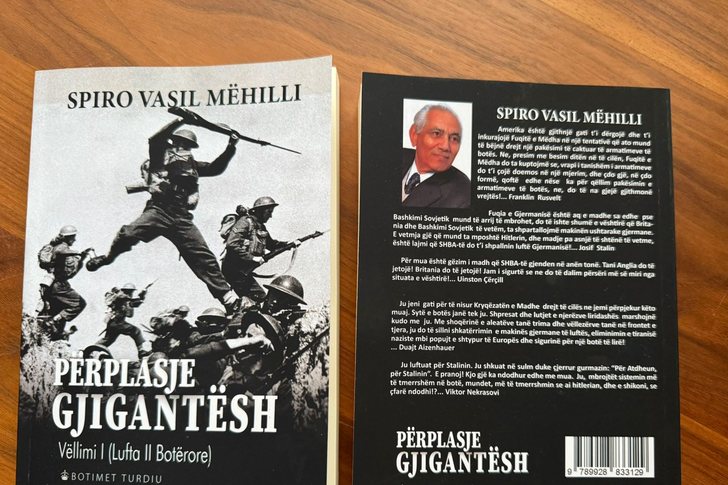
The writer, Prof. Dr. Spiro Vasil Mëhilli, in the framewor...

The Eurovision final will be held tonight, May 17, in Base...
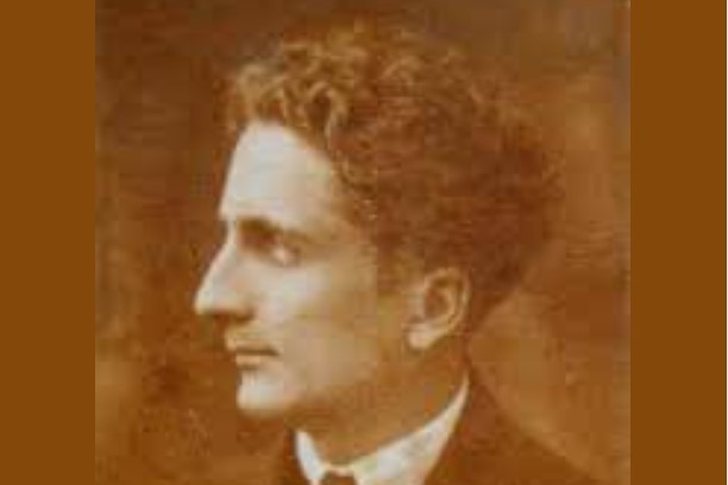
A scientific symposium was held today at the University of...
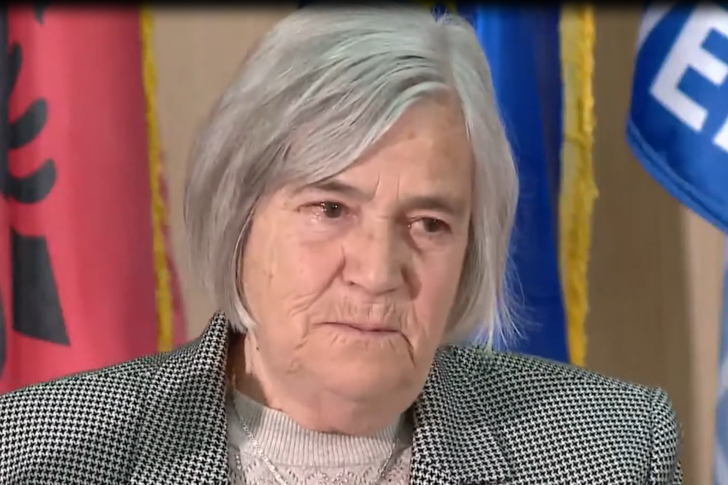
At today's symposium "Llazar Fundo - prominent figure of A...
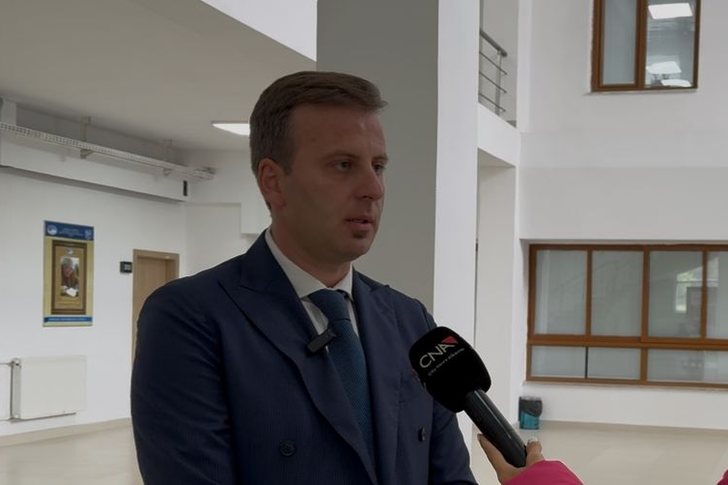
Lecturer of the Department of History and Geography at "Fa...
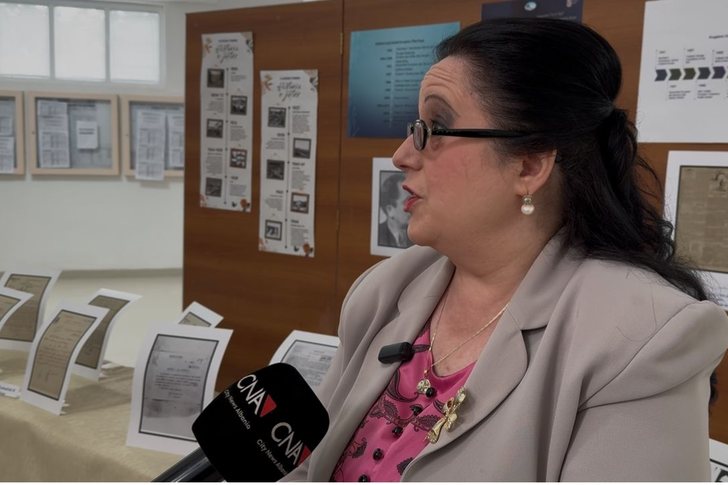
The pedagogue of the Department of Language and Literature...
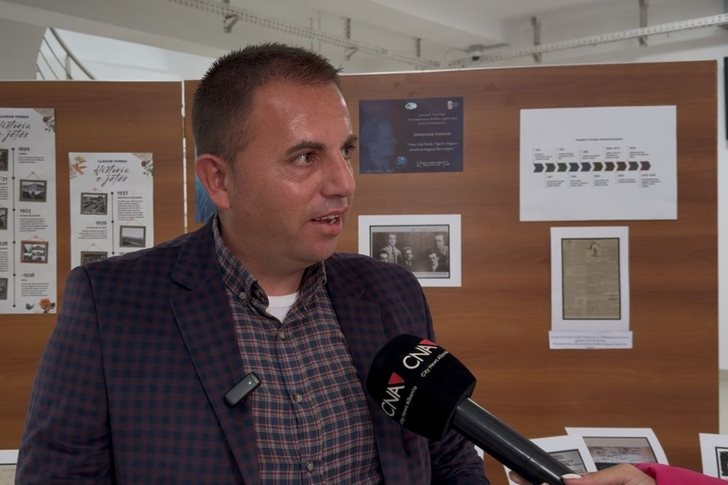
The Head of the Department of Language and Literature at "...
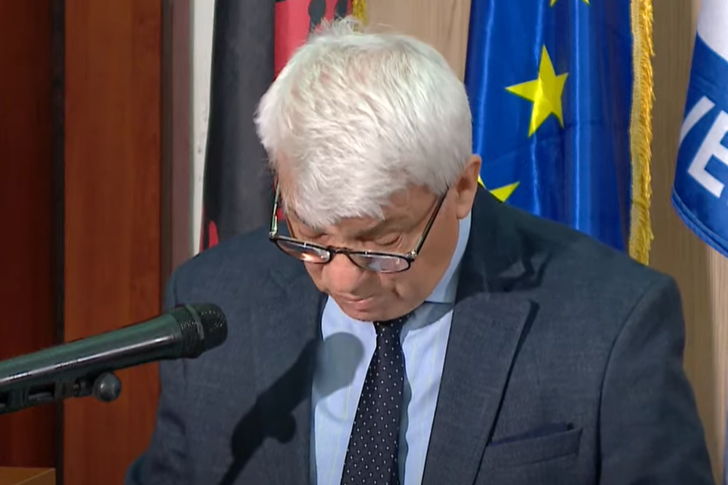
Professor Gjergji Pendavinji emphasized that Llazar Fundo ...
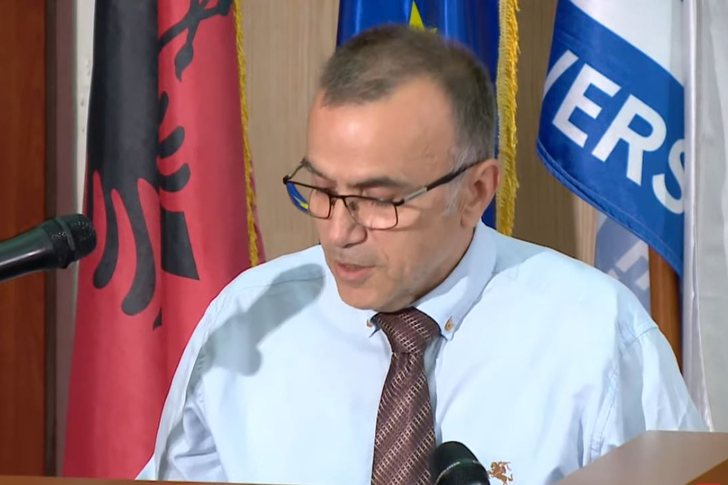
The Rector of "Fan Noli" University, Lorenc Ekonomi, spoke...
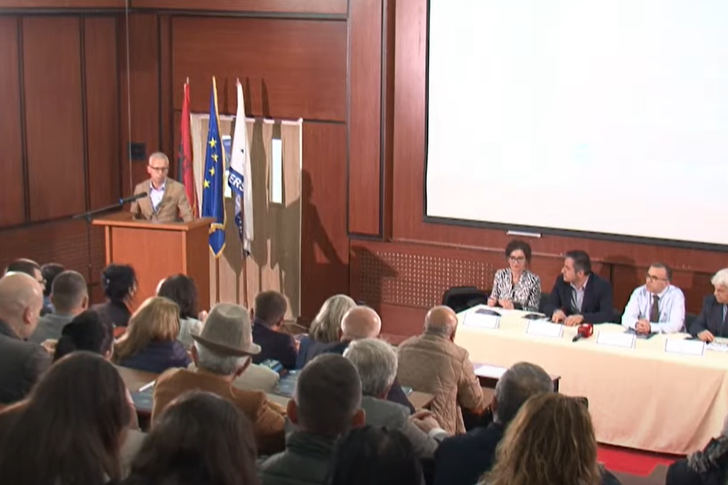
The Mayor of Korça, Sotiraq Filo, has become part of the L...
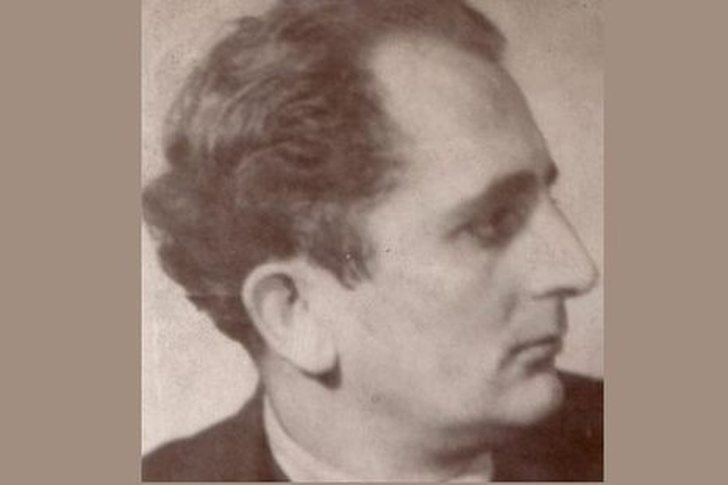
Today , the Scientific Symposium "Llazar (Zai) Fundo - a p...

Albania qualified yesterday evening for the Eurovision fin...

Tonight, "Shkodra Elektronike" representing Albania will t...
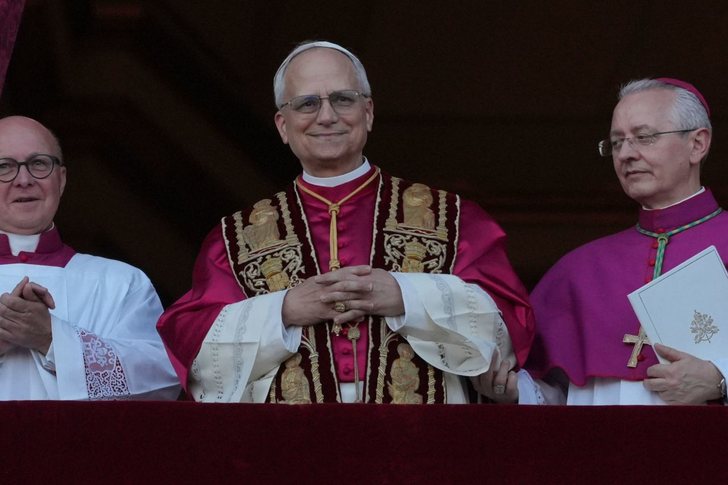
American Cardinal Robert Francis Prevost has been elected ...

Renowned actor Visjan Ukcenaj has prepared a song for the ...
Eduart Çala, one of the prominent figures of Albanian stag...

CNA has launched another investigation that could lead to ...

Irfan Hysenbelliu is a businessman that we call "Irfan the...

In March 2026, CNA launched another investigation centered...
The arrested mayor of Tirana, Erion Veliaj, with 13 charge...

The Special Board of Appeal (KPA) decided this Monday ...

The KPA vetting decided this Thursday to dismiss the p...

Suela Salavaçi, a prosecutor in the Prosecutor's Offic...

The Special Board of Appeal reinstated the prosecutor ...
A road accident occurred this evening on Nikolla Zoraqi St...
Three people were shot and wounded in Elbasan last night b...
A serious incident occurred this Tuesday in the Yrshek are...

An accident occurred this Tuesday on "Dituria" street in K...

This Wednesday, our country will be under the influence of...

All of Southern Europe will face changing weather conditio...

Albania was hit by temperatures significantly higher than ...

For the first time, Pogradec welcomed the Inter-Lake Chess...

Prime Minister Andy Burnham has announced that most bus fa...

France's parliament has passed a law to ban social media f...

US Secretary of State Marco Rubio arrived in Manila on Jul...

In the space of a few days, Ukrainian President Volodymyr ...

At a time when industrial products are increasingly taking...

Trust among people is not just a three-syllable word. It c...

Master of humor Todi Llupi has passed away at the age of 7...

The ninth edition of "MIK Festival" kicked off with one of...

Businesses will no longer be required to simply register t...

Despite economic growth and income in recent years, Albani...

This Wednesday, one US dollar is bought for 81.4 lek and s...

Construction company licenses will have a validity period ...