


100th anniversary of Antoni Gaudí's death/ Pope Leo XIV celebrates solemn mass at Sagrada Familia
One of the most important events of the Year of Gaudi is t...


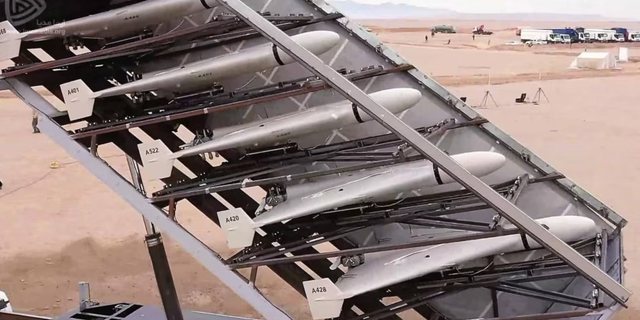
Just over three months into the Gulf conflict, the importance of low-cost, mass-produced weapons systems, particularly drones and munitions, has been highlighted, and the limitations of relying on expensive defense technologies to counter them have become apparent, according to Nathan Diller, head of defense technology company Mach Industries.
Diller, a retired United States Air Force colonel, said in an interview with Radio Free Europe that the conflict has heightened the urgency for allied countries to strengthen military industry supply chains and create more manufacturing resilience, drawing parallels with lessons emerging from Russia's war in Ukraine.
"When we see low-cost drones and cheap munitions being shot down by very expensive systems, that's a lesson we can't learn fast enough ," said Diller, who served as assistant director for Aeronautics in the White House Office of Science and Technology Policy during US President Donald Trump's first term.
As a former fighter pilot, Diller said traditional military capabilities remain key, but newer technologies could have reduced the cost and duration of the Iran-Israel conflict, making deterrence quicker.
"It's taken two decades to ignore this approach to war and this approach to mass production ," he said, adding that recent US government initiatives, supported by Congress, are helping to strengthen future deterrence, he said.
"The factory is the weapon"
Diller said one of the most important lessons from the use of unmanned systems in conflicts from Ukraine to the Middle East is that the production capacity itself has become a strategic asset.
"What surprises me is that we still haven't realized the extent to which the factory is the weapon itself ," he said.
According to Diller, a country's ability to quickly produce and adapt military equipment could become a decisive factor in future conflicts and deterrence strategies.
"The speed at which a country can create such a factory will be directly proportional to our ability for future prevention," he said.
"The rapid development of these factories, where hardware devices can develop at the pace of software, is a cornerstone for future peace and prosperity," Diller added.
Speaking about the current conflict in the Gulf region, Diller said that continued diplomatic engagement between Iran, Israel and the US, along with a pause in large-scale missile exchanges, gives reason for cautious optimism, despite recent ceasefire violations.
"The fact that talks are continuing is positive ," he said, referring to ongoing efforts aimed at preventing a wider regional conflict after more than 100 days of confrontation.
"The fact that there are no missiles in the air every day is a good thing," Diller said, adding that efforts to prevent the spread of weapons of mass destruction are helping to make the world safer.
His comments came before the US attacked Iran on Tuesday after blaming it for the downing of a US helicopter near the Strait of Hormuz.
While politicians are increasingly questioning whether repeated ceasefire violations are becoming more costly than the conflict itself, Diller argued that a level of uncertainty remains essential to military deterrence.
"Strategic uncertainty is a necessity," he said, adding that the inability of adversaries to fully anticipate the consequences of their actions often discourages escalation. /REL

One of the most important events of the Year of Gaudi is t...

Working hours vary considerably across Europe, with some c...
The still uncounted votes of the diaspora for the early pa...

While the number of active conflicts in the world has reac...

Anti-immigration protests have spread to parts of the Unit...

The housing crisis in Spain is reaching alarming levels, w...
The US military has carried out airstrikes in Iran in resp...

Artificial intelligence is rapidly transforming the health...
Bulgaria's newly appointed Defense Minister, Dimitar Stoya...

NASA has named its crew for its next major mission to the ...
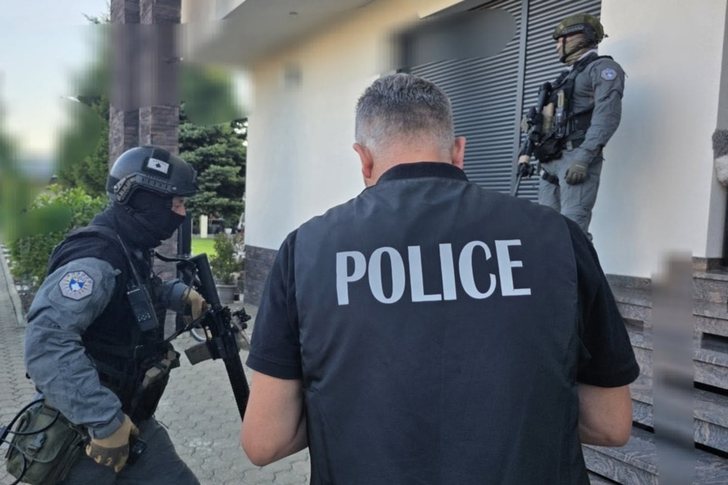
Five people have been arrested in Kosovo on suspicion of i...

Six Georgian citizens appeared before a Paris court on Tue...
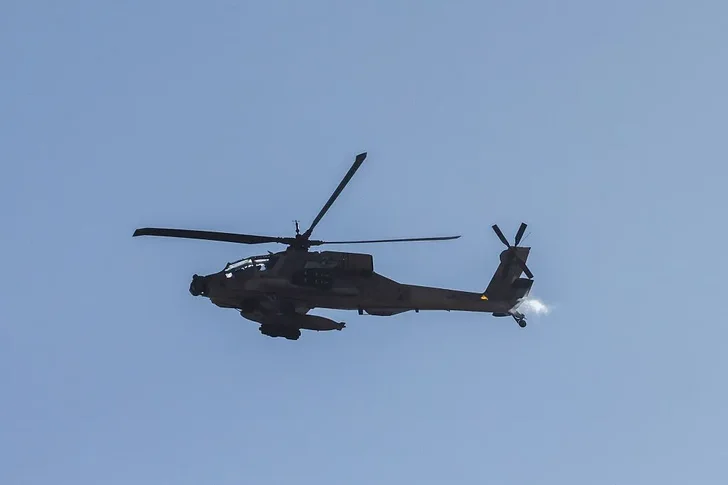
President Donald Trump has accused Iran of shooting down a...

Pope Leo XIV arrived in Barcelona this Tuesday, in what ma...
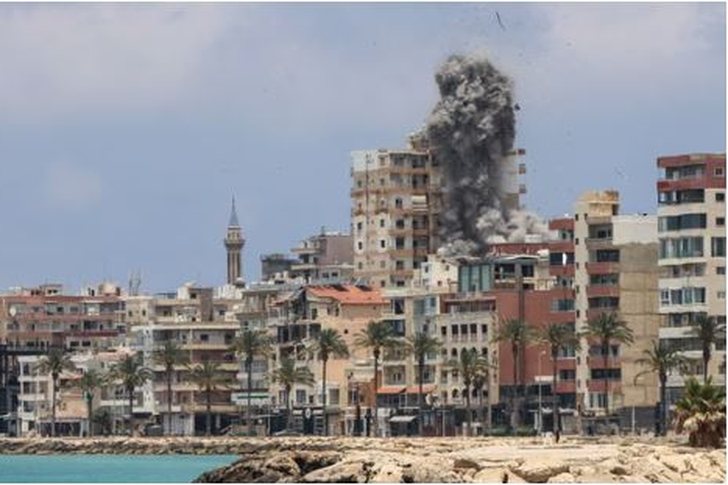
Israel has bombed the city of Tyre, killing eight people a...

Zëdhënësi i Kremlinit, Dmitry Peskov, deklaroi sot se nuk ...

Two students and a teacher were injured in a stabbing inci...
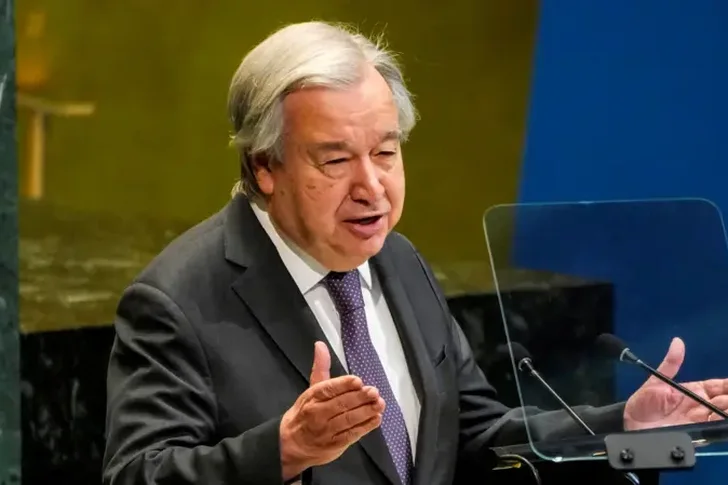
Antonio Guterres says he is deeply alarmed by the new esca...
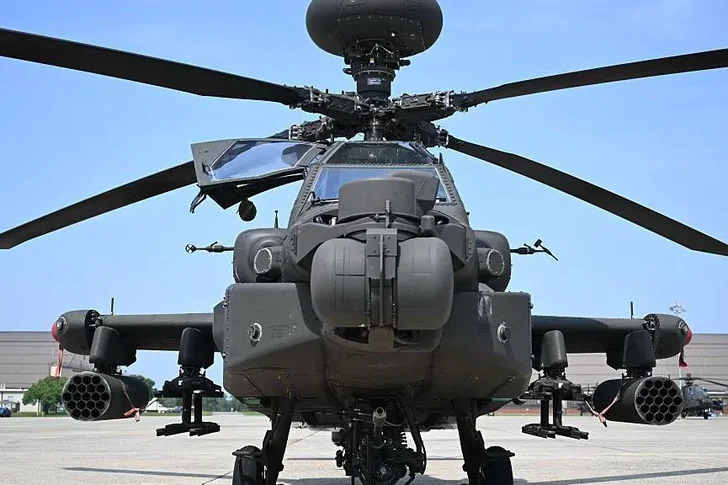
Two crew members of a US military helicopter that crashed ...

Authorities in the city of Utsunomiya in Japan have captur...
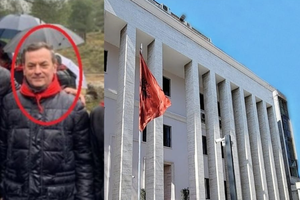
CNA has put under scanner the assets of Sokol Sadushi, the...

A 39-year-old citizen has been arrested in Lezha, after se...

CNA has launched another investigation that could lead to ...

Irfan Hysenbelliu is a businessman that we call "Irfan the...

The Special Board of Appeal (KPA) decided this Monday ...

The KPA vetting decided this Thursday to dismiss the p...

Suela Salavaçi, a prosecutor in the Prosecutor's Offic...

The Special Board of Appeal reinstated the prosecutor ...

Police have revealed details of the incident that occurred...
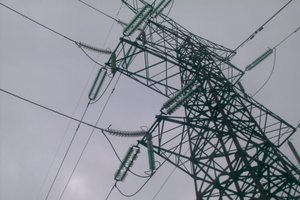
According to preliminary information, a person in his 60s ...

A triple accident occurred on the Peqin-Elbasan axis n...
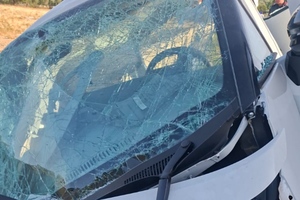
The police have provided details regarding the accident th...

The public sector took the lead in absorbing the workforce...

Today, our country will be under the influence of unstable...

The Institute of Geosciences has today shared a forecast r...

Company leaders can improve productivity by investing in a...

Oil prices fell in early trading on Monday, falling furthe...

Although Albania does not have a developed industry on the...
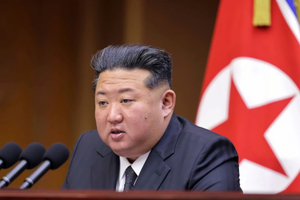
North Korea is said to have achieved some impressive resul...
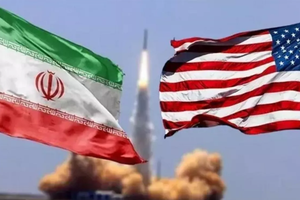
US Ambassador to the United Nations, Mike Waltz, said toda...
Two windows, a century of history and the metaphysics of p...

In my research at the Central State Archives, specifically...

At a time when industrial products are increasingly taking...

Trust among people is not just a three-syllable word. It c...

After strong savings growth in the years following the pan...

This Monday, one US dollar is bought for 81.5 lek and sold...

This Sunday, one US dollar is bought for 81.5 lek and sold...

This Saturday, one US dollar is bought for 81.7 lek and so...