


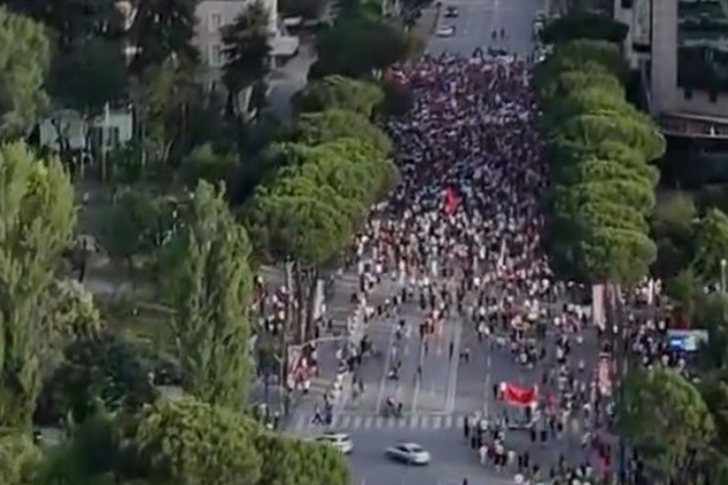
"Rama, resign!"/ The 57th civic protest against the government is being held today
This Sunday, the 57th civic protest against the government...

This Sunday, the 57th civic protest against the government...

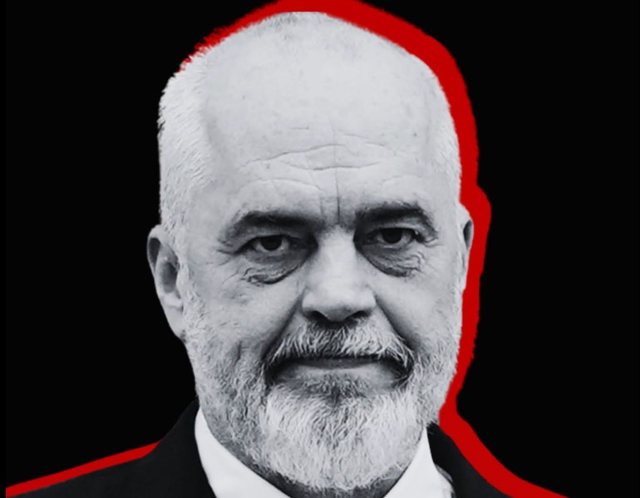
Even though in a long and annoying attempt to convince us that the Prime Minister has finally reflected on everything that has been happening this turbulent summer, his long speech on Friday showed us, more than ever, uncertainty and fear of getting to the bottom of the truth.
Although he tried to offer us a new political interpretation of the situation, he did not dare to accompany his approach, to the same extent, with a critical analysis of the causes that made this reflection of his necessary, if we can take it as such.
The immediate reaction of some of his followers, who hastily presented the "Besa" platform as a historical turning point in the relationship between the government and citizens, further exposed this paradox.
While some of the most zealous MPs, who are characterized by their ability to speak without thinking, who, since the protests began, have not been able to spit anything against protesting citizens, suddenly found themselves faced with a new line of conduct and the need to reexplain a new political reality: that the Prime Minister himself presents the protest as a factor that requires institutional reflection.
In this context, the question arises as to what the reflection that the Prime Minister attempted to make means and how true it is.
Because political reflection is not simply a change in the language of communication.
It is not just a reformulation of the symbolic relationship between government and citizens. Reflection is a process of self-evaluation that requires the acceptance of limits, mistakes, and responsibility.
In political culture, reflection is about the ability and courage to question oneself.
Since Socrates, we have been taught that no individual or institution possesses a monopoly on truth.
In politics, this takes on a special dimension.
Power, in a democratic order, is not legitimized only by votes, but also by the ability to correct itself, to accept failures, and to understand that along with the lack of empathy, civic resentment and anger also grow.
So, a government is not only evaluated by the projects it implements, but also by the way it deals with its criticisms, failures, and mistakes.
This is precisely where the main problem of Mr. Prime Minister's reflection lies.
The declaration of the need for more transparency, communication and proximity to citizens, the "denunciation" of the abusive behavior and arrogance of the public administration, the loss of citizens' trust in the majority he leads are positive indicators in themselves.
But a complete and true reflection also requires an analysis of the reasons and causes that have sparked the civic reaction.
If the goal is to restore lost public trust, then the “Besa” platform is not enough.
The analysis must also include the factors that have led to the loss of trust and, not only that, to the increase in anger towards the government and its people.
Without this dimension, reflection is just a new communication strategy and not a real process of political responsibility.
The choice of the term "Besa" constitutes a clever rhetorical finding due to its cultural and moral connotation.
In Albanian tradition, besa represents a deep ethical commitment, a relationship where the word given is accompanied by personal responsibility.
But, in modern theory of the democratic state, there is a fundamental distinction between moral trust and constitutional security.
Modern democracies are not built on the assumption that citizens should trust the Prime Minister or the individuals who exercise power.
They are built on the idea that power should be limited through institutions, procedures, and control mechanisms.
In this sense, the problem for Albanians is not whether or not the Prime Minister is trustworthy. The problem is the lack of mechanisms that force the government to be accountable, and conversely, that punish it.
So, the concern of citizens is why there are no mechanisms that force the government to be accountable even when personal trust is lacking.
This distinction is essential, because trust is a moral category, while accountability is an institutional category.
A stable and functioning democracy does not rely on the virtue of individuals, but on structures that limit the possibility of abuse of power.
Since the Prime Minister himself sought support for his argument from the 19th-century French aristocrat and philosopher, Alexis de Tocqueville, I think this makes it necessary to see whether the philosophical reference the Prime Minister chooses matches the political content of his platform.
It is important to emphasize that Tocqueville remains one of the fundamental thinkers of modern democracy, precisely because he did not limit himself to describing democratic institutions, but analyzed the social and cultural conditions that make democracy sustainable.
In his most prominent work, "Democracy in America," his main concern was the preservation of liberty in the face of the natural tendency of power to expand to its detriment.
For Tocqueville, democracy is not only protected by periodic elections.
It relies on an active society, on governance institutions, on civic organizations, and on the ability of individuals to act outside the direct control of the state.
He warned of a new form of despotism, not necessarily brutal and violent, but of a centralized administration that gradually weakens civil liberties, making society increasingly dependent on power.
From this perspective, does the Prime Minister's reference to Tocqueville aim for a political platform that increases and strengthens the role of citizens in controlling power, or does it aim to rebuild the relationship of trust with power?
These two objectives are not the same.
Tocqueville is not a philosopher of a government that demands greater trust from citizens.
He is the philosopher of democracy, where citizens should have sufficient means and strength to limit and impose themselves on the government.
If the “Besa” platform aims for a new era of democratic development, then the key test is not only the government’s ability to listen more, but whether or not it is willing to strengthen the role of citizens in the institutions that control power.
So, essentially, the issue is not whether the Prime Minister or a government should reflect or not. The issue is the nature of this reflection and how genuine it is.
A full reflection is not limited to declaring a new relationship with citizens.
It requires an analysis of how power is exercised, its limits, and the mechanisms that guarantee accountability.
If the philosopher Tocqueville was chosen as a philosophical reference in the Prime Minister's speech, then the fundamental lesson he gives us must also be accepted: democracy is not protected by unconditional trust in the Prime Minister, but by institutions that force the power of the Prime Minister and his government to be controllable and accountable.
Therefore, there is no value in what the Prime Minister says or how he says his next refrain for reflection.
What is important is whether this reflection managed to touch the core of the problem.
Because, in a democracy, the most important reflection is not what the government does for itself, but when the government agrees to submit to the citizens and their interests.


In a normal democratic society, when the state fails, inst...

"Listen here, don't be stupid. Be a little subservient!" ...
BESA is perhaps the most serious conceptual attempt ever m...
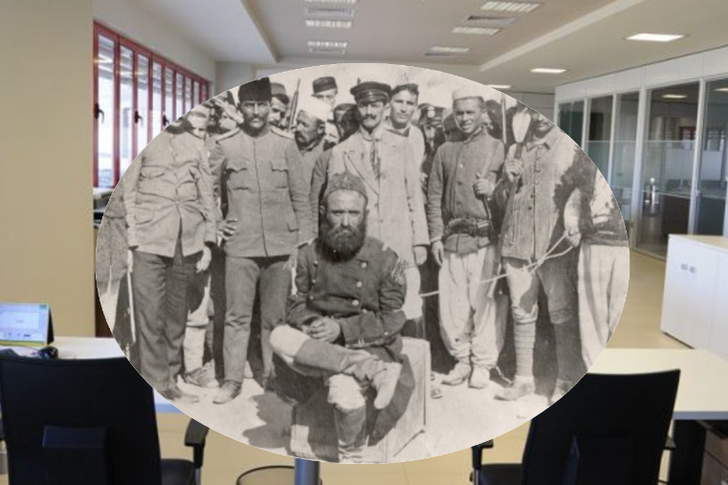
In his speech today to the Socialist Party Parliamentary G...
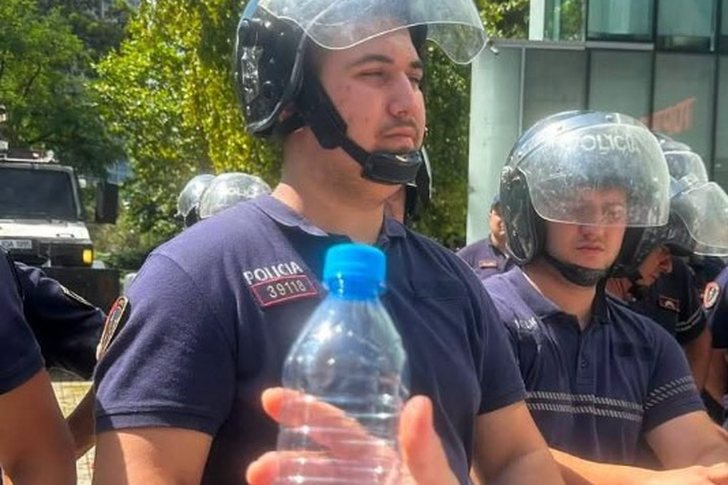
Mr. Minister! I read and heard your reaction to the posit...
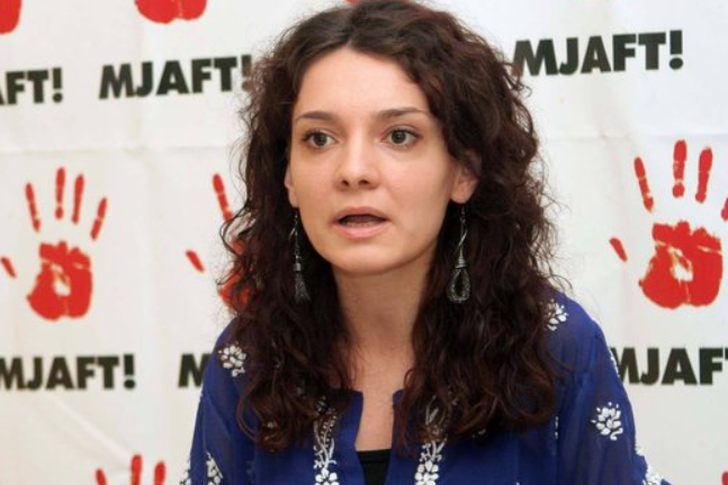
I must say from the beginning, I have liked MP Elisa Spiro...
For 53 days, the Pelicans, "perched" on wooden sticks, con...

According to recent comparisons with the European Unio...
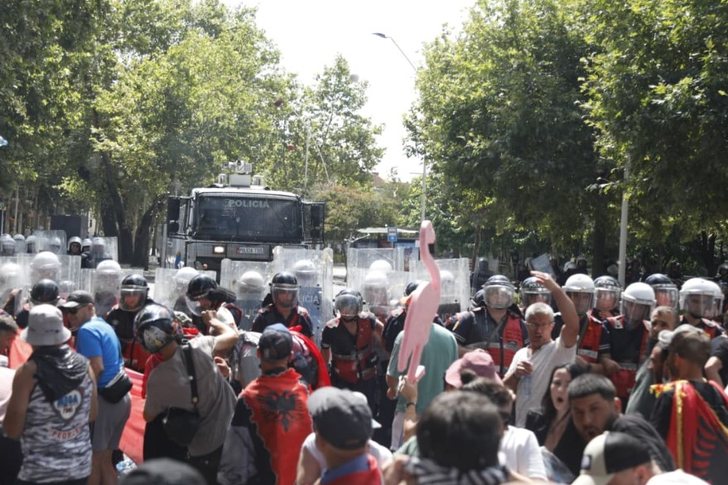
After the protest, the "violence" and debate have shifted ...
"A perfect dictatorship has the appearance of a democracy,...
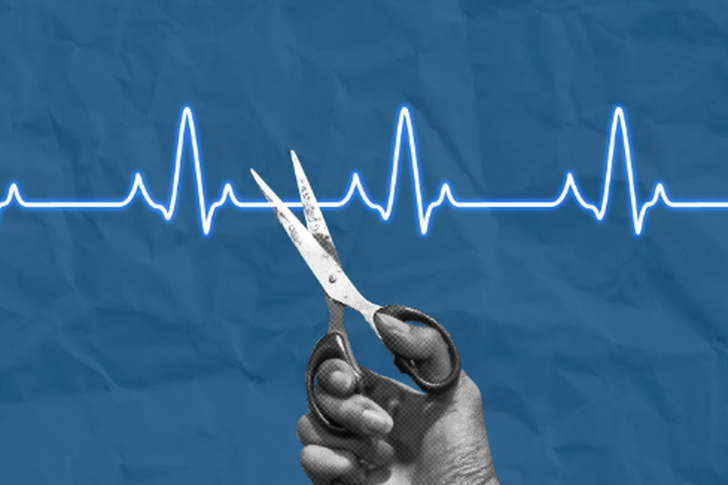
I am in favor of euthanasia and the adoption of a euthanasia...
It has been mentioned so many times in writings and quotes...
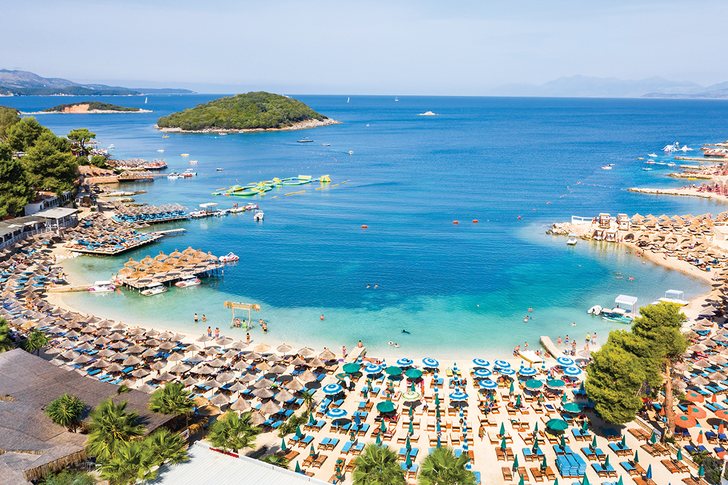
Are Albanians from Kosovo the beauty of Albanian tourism? ...
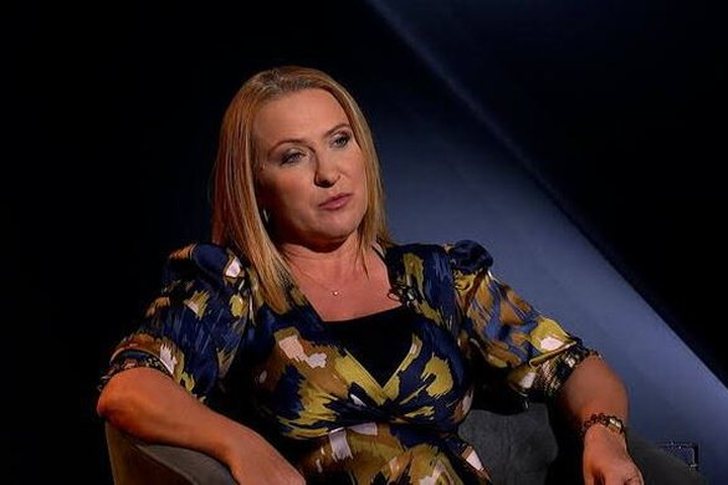
The statement by Snezhana Paunovic, Minister in the Govern...
A case reported by two animal protection associations has ...

The emergence of new faces in politics is always good news...
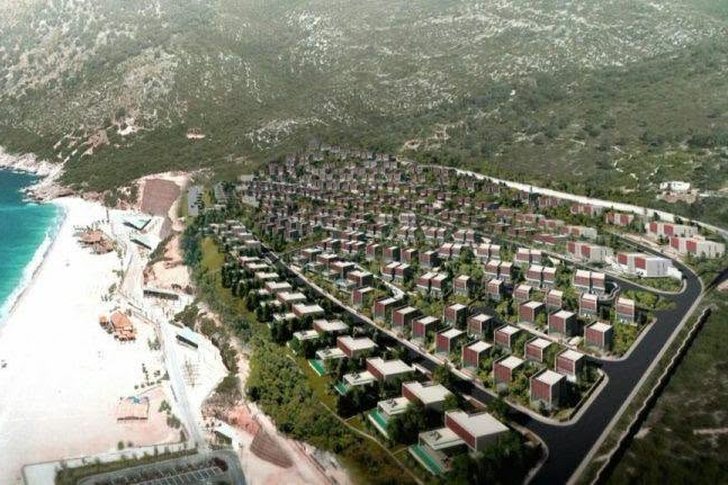
The Prime Minister of Albania promised the European Commis...
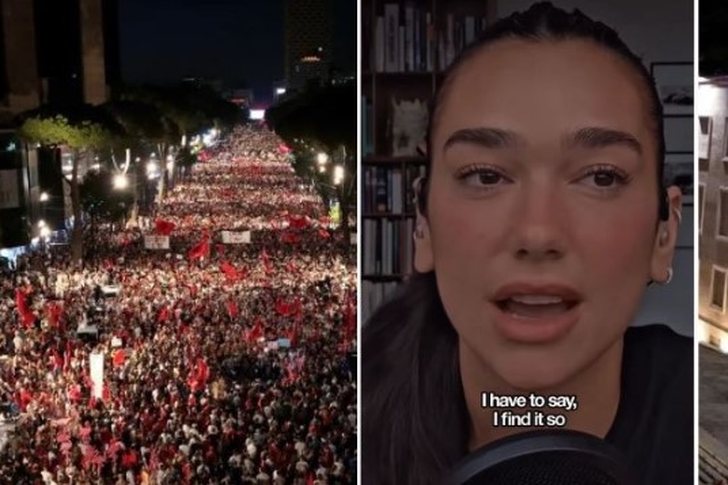
The government is not listening because it does not unders...
In these hot summer days, along with the foul-smelling flo...
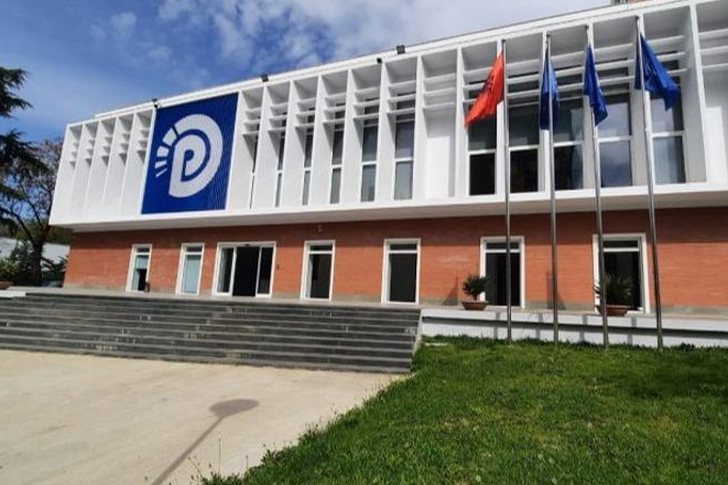
Yesterday's boycott by the Democratic Party of the plenary...
CNA has put under scanner the assets of Sokol Sadushi, the...
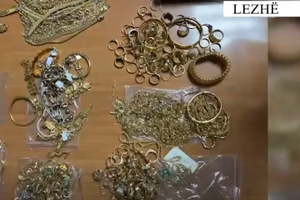
A 39-year-old citizen has been arrested in Lezha, after se...

CNA has launched another investigation that could lead to ...

Irfan Hysenbelliu is a businessman that we call "Irfan the...

The Special Board of Appeal (KPA) decided this Monday ...

The KPA vetting decided this Thursday to dismiss the p...

Suela Salavaçi, a prosecutor in the Prosecutor's Offic...

The Special Board of Appeal reinstated the prosecutor ...
Police have revealed details of the incident that occurred...
According to preliminary information, a person in his 60s ...
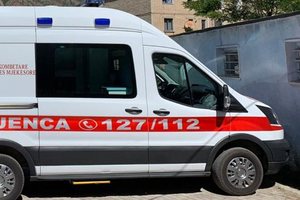
A triple accident occurred on the Peqin-Elbasan axis n...
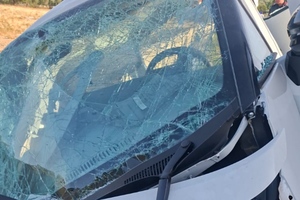
The police have provided details regarding the accident th...
Company leaders can improve productivity by investing in a...

Today, our country will be under the influence of stable a...

As the year 2026 is in its second half, the world is exper...

Today, our country will be under the influence of stable a...
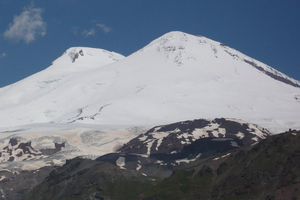
A tragic event occurred this Sunday on Mount Elbrus in the...
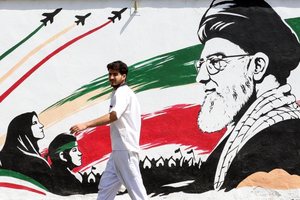
Tehran said it had halted retaliatory attacks against US a...
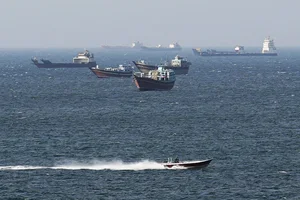
An oil tanker exploded in the Strait of Hormuz after hitti...

Ten people were killed and dozens more injured by flooding...
Two windows, a century of history and the metaphysics of p...
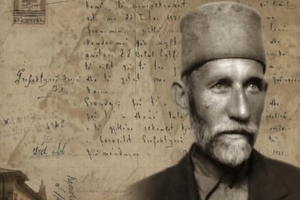
In my research at the Central State Archives, specifically...

At a time when industrial products are increasingly taking...

Trust among people is not just a three-syllable word. It c...

This Sunday, one US dollar is bought for 81.5 lek and sold...
This Saturday, one US dollar is bought for 81.7 lek and so...
War, weather and supply disruptions could send gas prices ...
The number of active enterprises in Albania continued to g...