

USA, the need to raise the borrowing limit
US officials are warning that China and Russia would b...


Among the countless predictions about the effects of the Russian invasion of Ukraine in February 2022, one of those that has been most emphasized in the Western Balkans was the hope that this conflict would mark the end of Western illusions about the possibility of cooperation with authoritarian and chauvinist regimes. .
Especially in Sarajevo, Pristina and Podgorica, the United States and the European Union were expected to see the Aleksandar Vu?i? regime in Serbia for what it really is: a Kremlin satellite state sowing discord through a network of regional proxies aimed at expanding the machinations of themselves in coordination with Moscow, to sabotage NATO and EU membership aspirations of Bosnia-Herzegovina, Kosovo and Montenegro.
And as a result of the change of approach there would finally be consequences for Belgrade. This did not happen. In fact, over the past year, the United States, even more than the EU, has increased its cooperation with Serbia's near-autocratic president.
At the same time, Washington has reoriented its attitude towards the region and its foreign policy priorities in the Balkans. While in the context of the War in Ukraine, the Biden administration insists on the principle "nothing for Ukraine without Ukraine", which means that Ukrainians must be involved in any kind of negotiations regarding the end of the conflict.
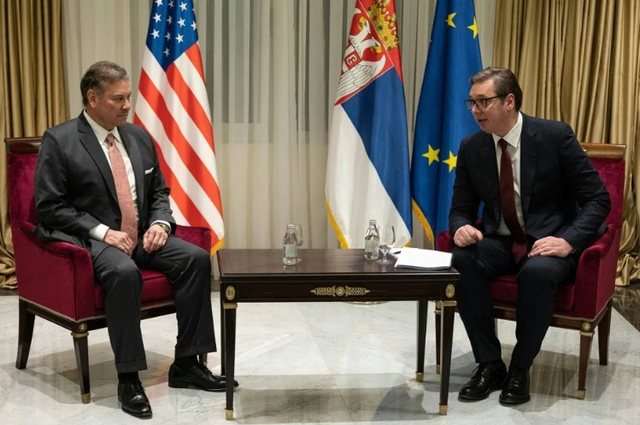
But in President Biden's broader pro-democracy agenda, none of its principles apply to the Western Balkans. The US ambassadors in Sarajevo and Belgrade meet with Vucic to discuss the actions of Bosnian Serb separatist leader Milorad Dodik.
They do so by claiming "the importance of supporting the sovereignty, territorial integrity, multi-ethnic character and functional federal institutions of Bosnia", but without the presence of a single Bosnian official. The US ambassador to Serbia, Christopher Hill, has repeatedly criticized the Kosovo government for what he claims is its failure to adhere to the 2013 Brussels Agreement, which was intended to create a path to mutual recognition and normalization. diplomatic relations between the two countries.
But Hill has little to say about Serbia's refusal to implement the core provisions of that agreement itself. In fact, Belgrade is so demanding regarding Kosovo that in the last agreement in Brussels and Ohrid, brokered by the European Union to (re)start the normalization process, Vucic refused to sign the document.
He claimed he had verbally agreed. But within a few hours he declared that he would not respect any article of that agreement. Meanwhile, even in Montenegro, the United States has emerged as the main supporter, together with Serbia, of a heterodox coalition of supposed reformers, whose most important members are a bloc of Serbian nationalist and clerical parties, which Washington recognizes them as being directly financed by Russia.
The country's incoming president, Jakov Milatovic, has emerged as a pro-European moderate, and his newly formed party, Europe Now, is expected to dominate the upcoming parliamentary elections in June. But he was earlier Minister of Economic Development in the short-lived cabinet of Zdravko Krivokapic, a hard-line Serbian nationalist with close ties to both Belgrade and Moscow.
Even his presidential campaign was supported by the entire Serbian nationalist establishment in Montenegro, and even by convicted Serbian war criminals like Vojislav Sesel. Celebrations of his victory were accompanied by a marked dominance of Serbian flags and sectarian anthems for Kosovo.
But why does Washington maintain such close relations with Belgrade? The reason is not difficult to explain. However, this is a policy completely at odds with the Biden administration's stance on Ukraine. Following Russia's invasion of Ukraine, the Biden administration recognized that the overall political and security situation in the Western Balkans had become unstable.
Bosnia, Kosovo and Montenegro were the hot spots, and they could easily be used by Moscow to create a second front in Europe. As such, it was in the interest of the United States to take over the Western Balkans after 2 decades of delegation to Brussels.
And the State Department has concluded that it needs partners who can deliver on their promises. In the Western Balkans, this means generally relying on the less pluralistic regimes in the region. As Majda Ruge, a member of the European Council on Foreign Relations, rightly observed: "Western governments constantly treat Belgrade as the indispensable player in the main issues facing the Western Balkans. Whatever the issue at hand, the president of Serbia, Aleksandar Vu?i?, is the first person they contact. Part of this approach is understandable: power in Serbia is concentrated in Vu?i?".
But this means neglecting Sarajevo, Pristina and Podgorica, despite the fact that all three are clearly pro-Western in orientation and Montenegro is a NATO member country. This happens because the internal politics of the three states is very divided, mainly due to the direct intervention of external powers, first of all Serbia, but also Croatia, at least in the case of Bosnia.
Apparently, the Biden administration believes that peace in the Balkans requires focusing the interests of the strong on the weak, focusing the interests of those most likely to create instability over those seeking to protect themselves. This is the kind of realpolitik calculation that has inspired decades of US policy in volatile regions.
It is what Washington has tried to do with Pakistan, Egypt, Saudi Arabia, and even Russia in previous years. And the result speaks for itself. But the real problem is that even if the Biden administration were to reconsider its policies, it's unclear whether it would make much of a difference at this point.
US President Joe Biden's missteps in the region have been so significant that he may not be able to salvage his reputation among the communities most affected by his decisions, which aim to be the most pro- American in the region.
Taken with cuts
Note: Jasmin Mujanovi?, political scientist specializing in Southeast European politics. Author of the book "Crisis of democracy in the Balkans./ Adapted from CNA.al

US officials are warning that China and Russia would b...
As in Albania, in Greece too, the occupation of beache...

North Macedonia seems to take measures against the social ...

An explosion was heard near the Kosovo Police station in t...
Huge crowds are gathering in central London ahead of the ...
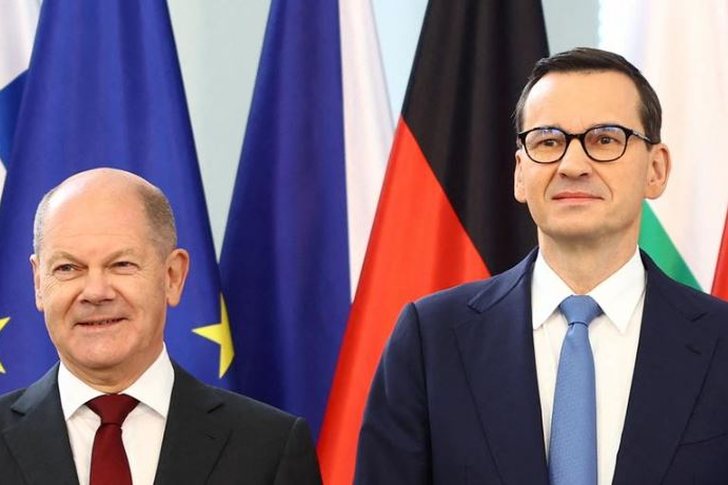
Germany and Poland have deepened economic and even militar...

Një burrë nga Kentaki me një rekord të gjatë kriminal ësht...
The Government of Serbia has approved measures requiring t...
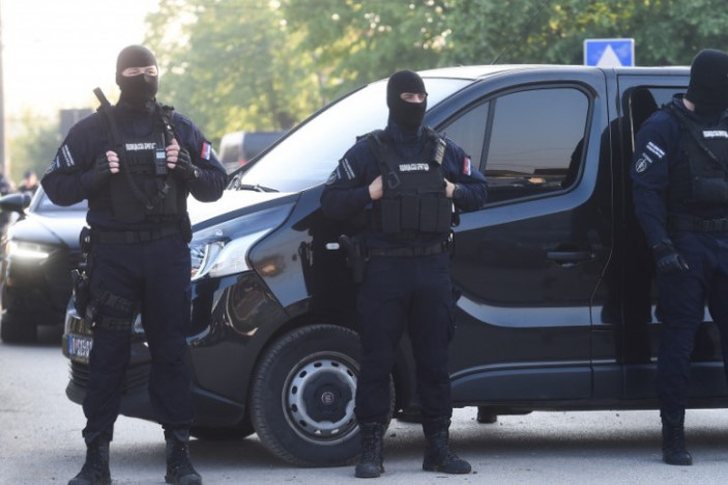
The government of Montenegro will declare Sunday, May ...

Belgian police on Thursday arrested seven people suspected...
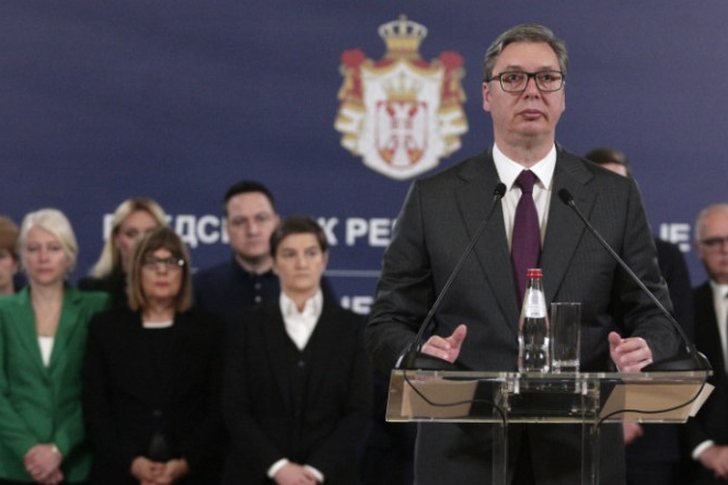
The President of Serbia, Aleksandar Vucija, said that the ...

The head of Russia's Wagner Group has threatened to withdr...
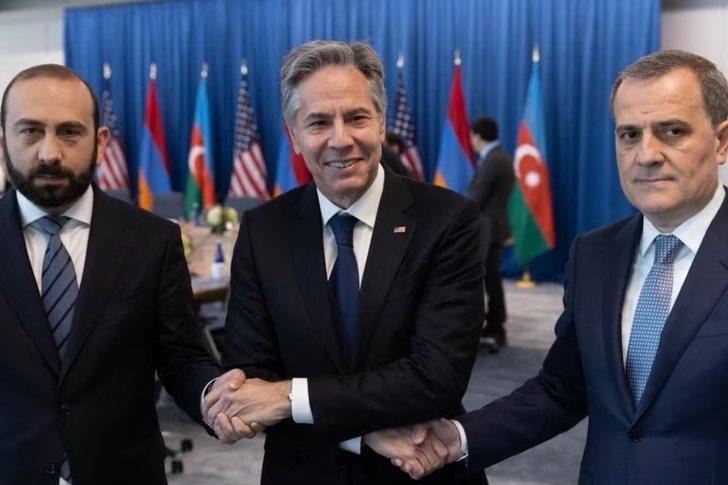
Azerbaijan and Armenia made significant progress in ad...

Shefat e teknologjisë janë thirrur në Shtëpinë e Bardh...
The EU has described the decision of the Kosovo govern...
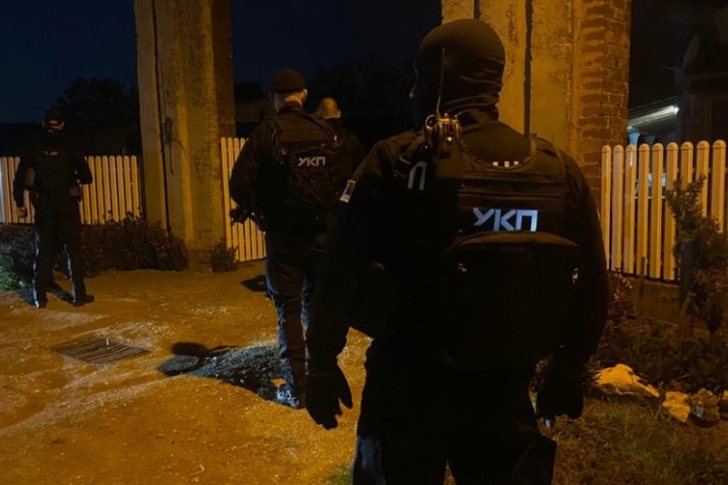
The author of the attack in Serbia was arrested near Kragu...
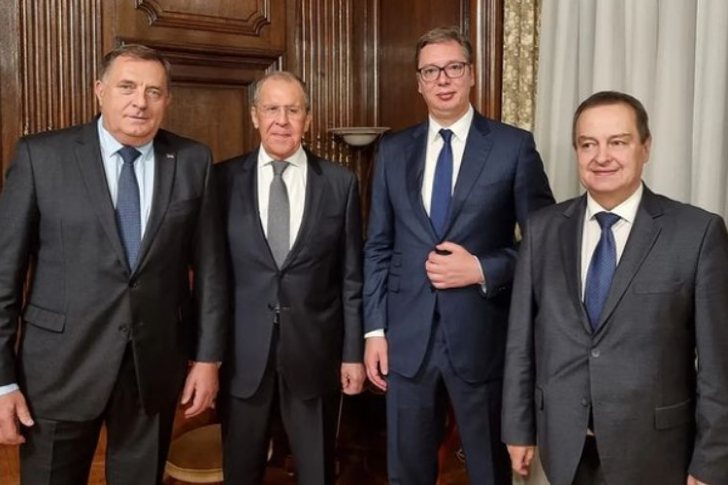
Although it is facing a major military defeat in Ukrai...
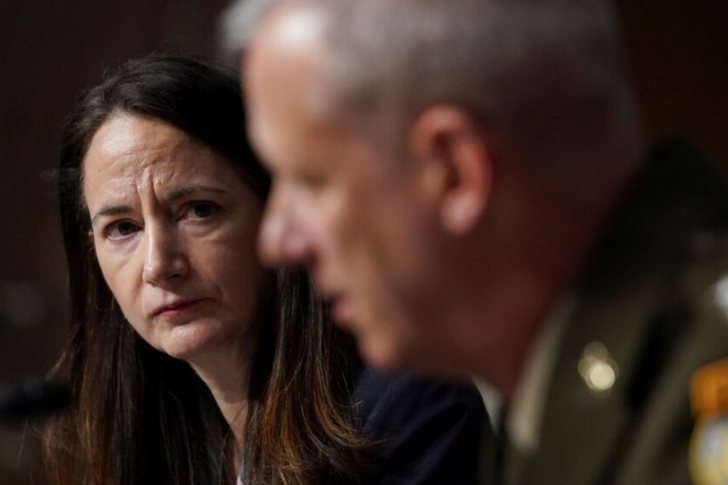
Vladimir Putin may abandon his plans to soon subdue Ki...
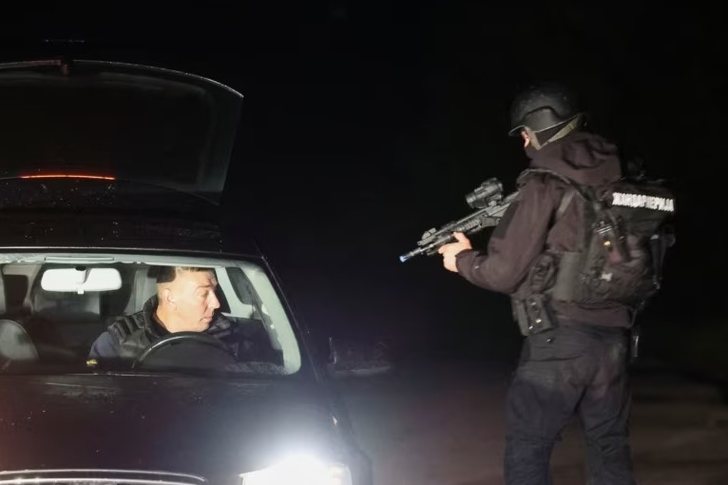
Së paku tetë persona u vranë dhe disa të tjerë u plagosën ...
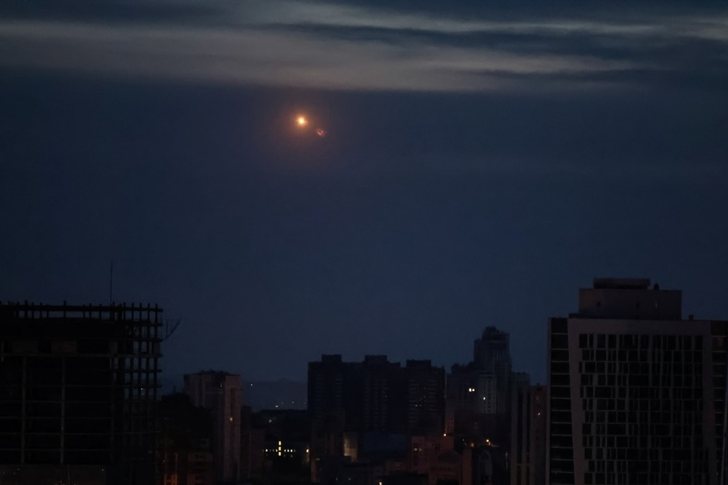
Disa shpërthime u dëgjuan të enjten për 15 deri në 20 minu...

A 39-year-old citizen has been arrested in Lezha, after se...

CNA has launched another investigation that could lead to ...

Irfan Hysenbelliu is a businessman that we call "Irfan the...

In March 2026, CNA launched another investigation centered...

The Special Board of Appeal (KPA) decided this Monday ...

The KPA vetting decided this Thursday to dismiss the p...

Suela Salavaçi, a prosecutor in the Prosecutor's Offic...

The Special Board of Appeal reinstated the prosecutor ...

An accident involving three vehicles occurred a few minute...

55-year-old Belere Plaka, who was injured today with a sho...
Police Announcement: Following preliminary information...

New details from the operation being carried out in Fier t...

By noon, cloudiness is expected to prevail in almost all o...

Children without parental care, for whom alternative famil...

On Thursday, our country will be under the influence of st...

A serious accident that occurred this Wednesday with the c...

Israeli Prime Minister Benjamin Netanyahu will travel to t...
A bipartisan group of US lawmakers is calling for a Europe...

US President Donald Trump will host his Ukrainian counterp...
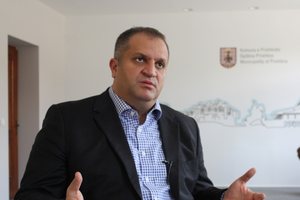
The Basic Court in Pristina found the former mayor of Pris...

In my research at the Central State Archives, specifically...

At a time when industrial products are increasingly taking...

Trust among people is not just a three-syllable word. It c...

Master of humor Todi Llupi has passed away at the age of 7...
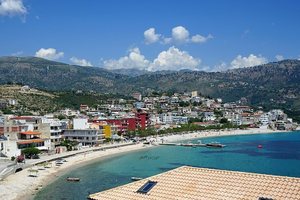
The number of active enterprises in Albania continued to g...
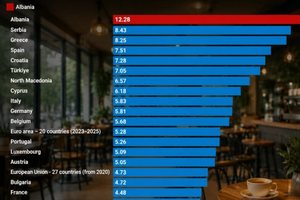
In Albania, the bar-cafe has long become an almost unique ...

This Friday, one US dollar is bought for 81.7 lek and sold...
The average sale price of apartments in Tirana reaches rec...