


Fight in Shkallnur/ 36-year-old man is hit by two citizens, the area is "armored"
A conflict for weak motives was recorded today in the vill...

A conflict for weak motives was recorded today in the vill...

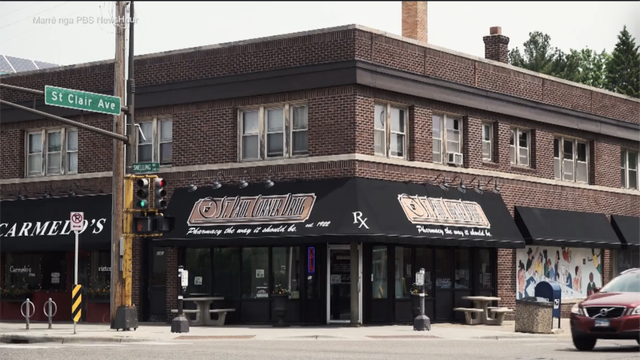
The drug supply system in the United States, from production in the factory to sale in the pharmacy, is complex and unclear. Congress and some states' local legislatures have proposed laws requiring transparency and reducing exorbitant prices. PBS correspondent Fred de Sam Lazaro recounts personal experience at his neighborhood pharmacy and that many small pharmacies complain that the current system is hurting them financially.
When I go to the neighborhood pharmacy to get the medicine, I have thought that the part of the medicine price that I pay myself, about $500, makes a reasonable profit for the pharmacy.
But, surprisingly, the employees ask me to go to another pharmacy in the future, because for this medicine, their pharmacy makes a loss.
"If you pay $578 for the medicine and only get $500 back, then that's not a sustainable model. This is the situation we are in now", says John Hoeschen, owner of the pharmacy "St. Paul Corner Drug”.
This traditional pharmacy has been here for 100 years. The owner is not sure how long it can last. He mainly blames the so-called intermediary companies (PBMs) that manage the drug insurance network. The latter are the main danger for Mr. Hoeschen's pharmacy. They are what determine which drugs are covered by insurance, the price assigned to the drug for the pharmacy, and the payment that the customer must make himself.
Brokerage companies were originally created to control rising drug insurance costs by creating and updating lists of drugs that are, or are not, covered by insurance.
Over time, these brokerages themselves have grown into multi-billion dollar businesses.
“They bill the insurance company Blue Cross $40, they give me $7. Where does the $33 go? To the intermediary company," says Mr. Hoeschen.
These intermediary companies have also entered the sales sector with their business. Instead of actually lowering drug prices, intermediary companies do the opposite, say representatives of manufacturing companies.
"They earn more from drugs with high prices. Producers already receive less than half of the price at which the medicine comes to the market", says Mr. Ubl.
But representatives of intermediary companies blame the producers and say that without these intermediary companies, the situation would be much worse.
"These companies have been successful in lowering the costs of drugs and making them available to millions and millions of Americans," he says.
The group of intermediary companies accuse drugmakers of raising prices and exploiting intellectual property laws to keep prices high, as happened with insulin when the companies were forced to lower the artificially high price themselves.
Mr. Ubl also responds to the case of insulin. He says that when prices started to fall, many brokerages asked their patients to stick with brands that hadn't cut prices, leaving patients with larger payments.
"This is because they made more profit from higher priced drugs. This is a classic example of why the system should be changed", says Mr. Ubl.
Dr. S. Vincent Rajkumar says that the system is so complex that very few people understand it and meanwhile prices only go up. He says that the tension will increase in the future.
"There was an outcry because of families losing children with type 1 diabetes to high insulin prices. Americans were outraged when they realized they could go to Canada and find the same medicine at a tenth of the price. An activist movement was created that brought about change," says Dr. Rajkumar.
But what does all this mean for the neighborhood pharmacy?
"I get letters every month from one of the big networks offering to buy my data, and customer cases, basically buy me outright," says Mr. Hoeschen.
He has tried to buy time by selling new products, such as nutritional supplements and offering vaccination services, in the hope that reforms at the federal and state level will bring some relief./ VOA


Ukraine and Hungary are preparing to hold a meeting betwee...

After the publication of the first results of the general ...

Broadcasting authority RTUK decided on Thursday to ban the...

Mexican and US officials agreed to keep border crossings o...
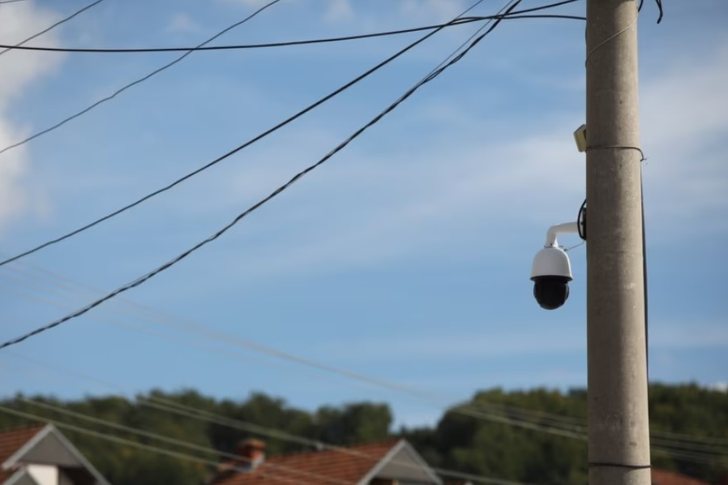
In Kosovo's Serb-majority municipalities, the police began...
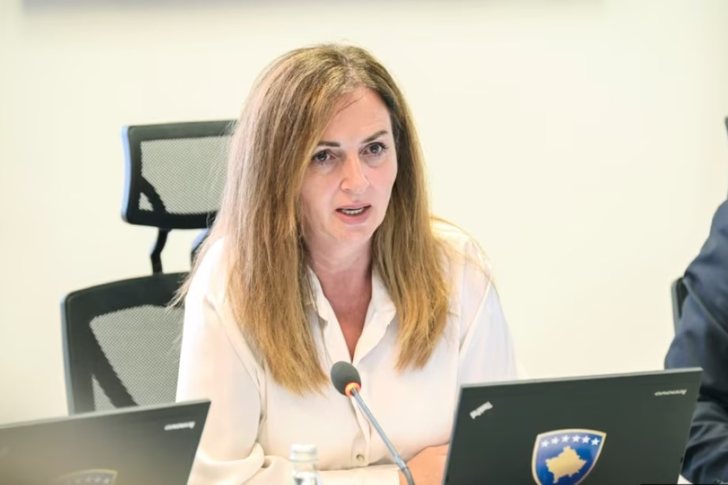
The Minister of Education, Science, Technology and Inf...
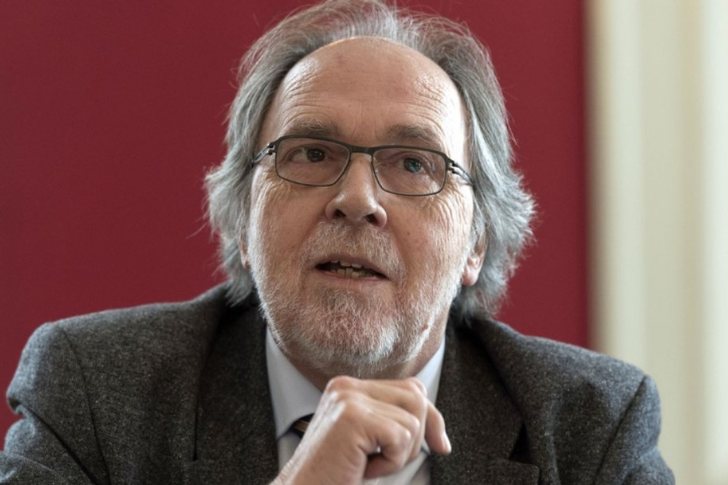
The former rapporteur at the Council of Europe, Dick Marty...

A plane with 34 passengers has landed on a frozen lake in ...

The German government approved the export of arms and ...
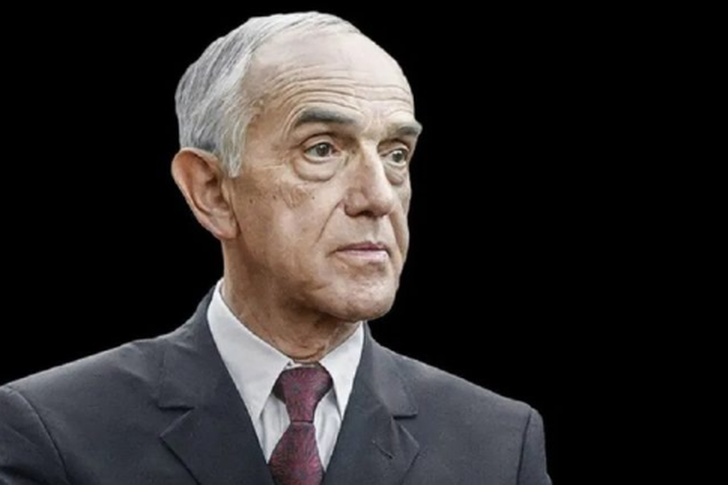
Gaston Glock, the Austrian engineer who created the Glock ...

The White House has approved another military aid for ...

Gjermania aktualisht po përballet me një mungesë në se...

The Minister of Defense of Kosovo, Ejup Macedonci, has...
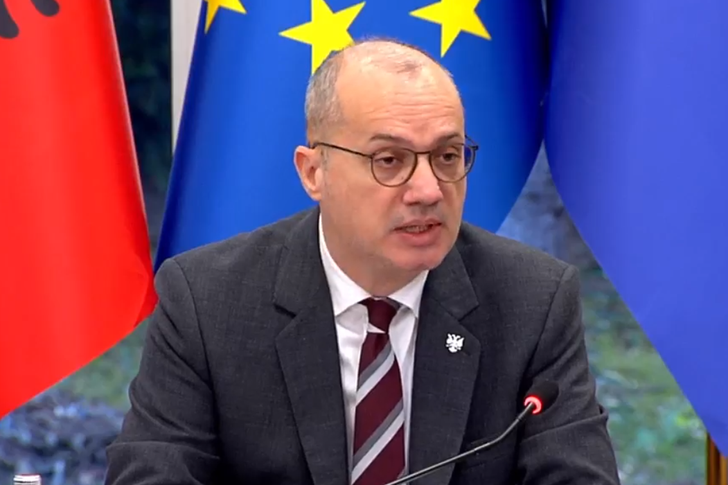
The Minister for Europe and Foreign Affairs, Igli Hasa...
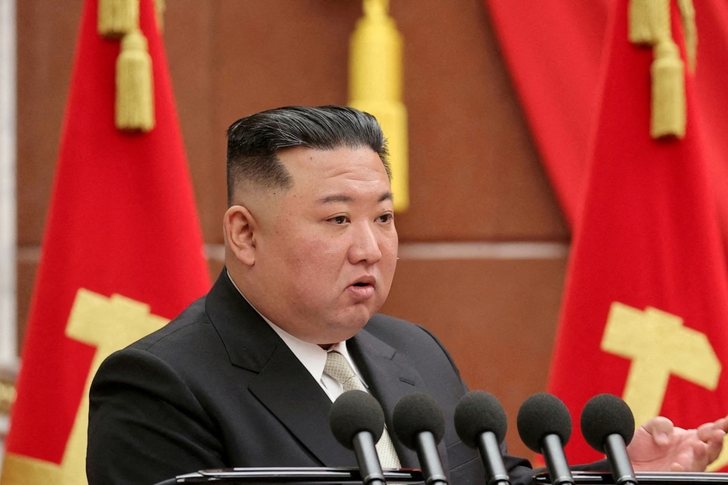
North Korean leader Kim Jong Un has called for increas...

After months of delay, the Turkish parliament's Foreig...

Oil prices fell nearly 2% on Wednesday, erasing the pr...

Almost half of this year's oil and gas exports went to the...

Turkey has increased the monthly minimum wage to over ...

The Uniko show from Spartak Koka to Klan Plus revealed...
A 39-year-old citizen has been arrested in Lezha, after se...

CNA has launched another investigation that could lead to ...

Irfan Hysenbelliu is a businessman that we call "Irfan the...

In March 2026, CNA launched another investigation centered...

The Special Board of Appeal (KPA) decided this Monday ...

The KPA vetting decided this Thursday to dismiss the p...

Suela Salavaçi, a prosecutor in the Prosecutor's Offic...

The Special Board of Appeal reinstated the prosecutor ...

A conflict for weak motives was recorded today in the vill...

An accident involving three vehicles occurred a few minute...

55-year-old Belere Plaka, who was injured today with a sho...

Police Announcement: Following preliminary information...

By noon, cloudiness is expected to prevail in almost all o...

Children without parental care, for whom alternative famil...

On Thursday, our country will be under the influence of st...

A serious accident that occurred this Wednesday with the c...

United States President Donald Trump has left open the pos...

Israeli Prime Minister Benjamin Netanyahu will travel to t...

A bipartisan group of US lawmakers is calling for a Europe...

US President Donald Trump will host his Ukrainian counterp...

In my research at the Central State Archives, specifically...

At a time when industrial products are increasingly taking...

Trust among people is not just a three-syllable word. It c...

Master of humor Todi Llupi has passed away at the age of 7...

War, weather and supply disruptions could send gas prices ...
The number of active enterprises in Albania continued to g...
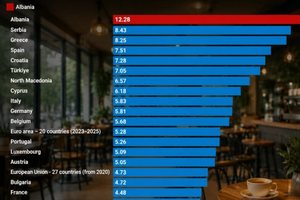
In Albania, the bar-cafe has long become an almost unique ...

This Friday, one US dollar is bought for 81.7 lek and sold...