

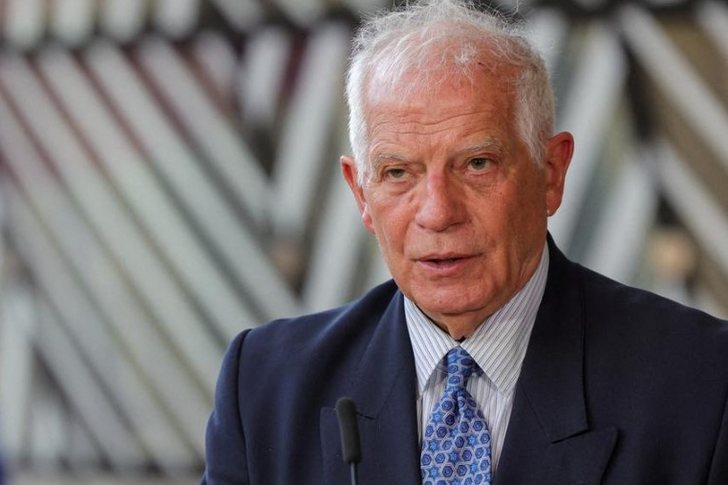
Borrel: Takim urgjent me Vuçiç dhe Kurtin
Përfaqësuesi i Lartë i BE-së, Josep Borrell, ka thirru...



Portugal has become the latest country to trial four-day working weeks, following the lead of Belgium, the UK and others.
This initiative was sparked by the COVID-19 pandemic, with workers and employers rethinking the importance of flexibility and benefits in the workplace.
The idea is simple – employees would work four days a week while being paid the same and earning the same benefits, but with the same workload.
Therefore, companies that reduce working days will operate with fewer meetings and more freelance work.
Touted as the future of employee productivity and work-life balance, advocates suggest that if implemented employee satisfaction increases, and so does productivity.
Unions across Europe are calling on governments to implement the four-day working week, but which countries have embraced the idea and how is it going so far?
Belgium introduces a four-day work week for employees who want it.
Belgium became the first country in Europe to pass laws to work only four days a week.
In February 2022, Belgian workers gained the right to complete a full work week in four days instead of the usual five without loss of pay.
The new law came into effect on November 21 last year, allowing employees to decide whether to work four or five days a week.
But this does not mean that they will work less - they will simply condense their working hours into fewer days. Belgian Prime Minister Alexander de Croo said he hoped the change would help make Belgium's notoriously rigid labor market more flexible and make it easier for people to combine their family life with their career.
He also added that the new model should create a more dynamic economy.
Portugal becomes the latest European country to announce such a decision.
Following the success of other trial programs on the continent, Portugal has taken the plunge and joined a growing list of countries dealing with the seven-day working concept.
UK companies that ran a six-month trial of the four-day working week are now planning to make the shortest working week permanent after hailing the experiment as "hugely successful".
Dozens of companies took part in the six-month pilot program - the largest of its kind - which was launched in June last year to study the impact of shorter working hours on business productivity and the well-being of their workers, as well as environmental impact and gender equality.
Some 61 UK companies and more than 3,300 employees signed up for the programme, run by researchers at the Universities of Cambridge and Oxford and Boston College, as well as 4 Day Week Global and other advocacy groups such as Campaign 4 UK Daily.
An overwhelming majority of around 92 per cent of the companies that took part in the trial have decided to keep the four-day week policy after the trial period, hailing it as a "major advance" earlier this year.
As with Portugal's new trial, employees were expected to follow the "100:80:100 model".
Scotland and Wales will join the movement.
In Scotland, a government trial is due to start in 2023, while the Welsh Government announced in May that it was also considering such a decision.
The decision was the culmination of a campaign promise made by the ruling Scottish National Party (SNP).
Workers will have their hours cut by 20 percent, but will not suffer any loss in compensation.
SNP will support participating companies with around £10m (€11.8m).
The government pointed to a recent poll carried out by the Institute for Public Policy Research (IPPR) in Scotland, which showed that 80 per cent of people who responded to the idea were very positive about the initiative.
Respondents said the program would greatly improve their health and happiness.
Scotland pointed to Iceland and its strong results as a big reason to take a chance on the four-day working week.
Some Scottish businesses have already started their shortened working weeks, with Glasgow-based UPAC Group recently saying its employees will enjoy a four-day week with equal pay after running a successful pilot programme.
In Wales, the Petitions Committee in the Senedd (the Welsh parliament) recommended on 24 January that the Welsh Government carry out a pilot scheme, after publishing a report on the idea.
Jack Sargeant, member of the Senedd and chairman of the committee, told the Nation Cymru website that Wales should lead the way in exploring the four-day week.
The Welsh Government is considering the possibility of a trial after commissioning a report by the Future Generations Commissioner, which recommended that the four-day working week trial be carried out in the public sector.
Spain starts a trial phase
After the small leftist party Más País announced last year that the government had agreed to their request to launch a modest pilot program of a four-day work week, Spain launched a pilot project in December.
This project will help SMEs to shorten their working week by at least half a day, without reducing wages.
This is a test to see if productivity can be increased. Companies that sign up can get help from a 10 million euro government fund, but they must devise ways to increase productivity that offset wage cost overruns, Spain's Industry Ministry said.
These improvements must be implemented within one year, while the company must remain in the program for at least two years.
For the first year, the government will partially fund salary costs and help fund training to improve efficiency.
Iceland: One of the leaders in the four-day work week
Between 2015 and 2019, Iceland carried out the world's largest pilot of a 35- to 36-hour work week (cut from the traditional 40 hours) with no calls for a proportional pay cut.
About 2,500 people participated in the testing phase.
To ensure quality control, the results were analyzed by the British institute Autonomy and the non-profit Icelandic Association for Sustainability and Democracy (ALDA).
This plan was called a success by Icelandic researchers and unions who negotiated a reduction in working hours. The study also led to significant change in Iceland, with nearly 90 percent of the working population now having reduced hours or other accommodations.
Researchers found that workers' stress decreased and there was an improvement in work-life balance.
Sweden's mixed reactions to the four-day week
In Sweden, a four-day work week with full pay was tested in 2015 with mixed results.
The proposal was to try six-hour days instead of eight without loss of pay, but not everyone was happy with the idea.
Even the left parties thought it would be too expensive to implement this on a large scale.
But positive results were seen within the orthopedics unit of a university hospital, which switched 80 nurses and doctors to a six-hour workday and hired new staff to make up for lost time.
The response of the medical staff was positive, but the experiment also faced a lot of criticism and was not renewed.
However, some companies, such as car manufacturer Toyota, chose to keep reduced hours for their workers.
The car firm decided to do this for mechanics 10 years ago and stuck to its decision.
Finland has not introduced a four-day working week, despite widespread claims.
Earlier this year, the northern European country briefly hit international headlines after it reportedly cut working hours dramatically.
The Finnish government allegedly wanted to introduce a four-day work week as well as a six-hour day.
However, this turned out to be fake news, which the government then had to correct.
Current Prime Minister Sanna Marin tweeted about the idea in August 2019, but it has not been included in the government's agenda.

Përfaqësuesi i Lartë i BE-së, Josep Borrell, ka thirru...

European ships are joining the race to find the missing Ti...

Two decades of research and a pandemic have led to a boom ...

A 26-year-old Chinese woman, known as Xu Yitong, recently ...
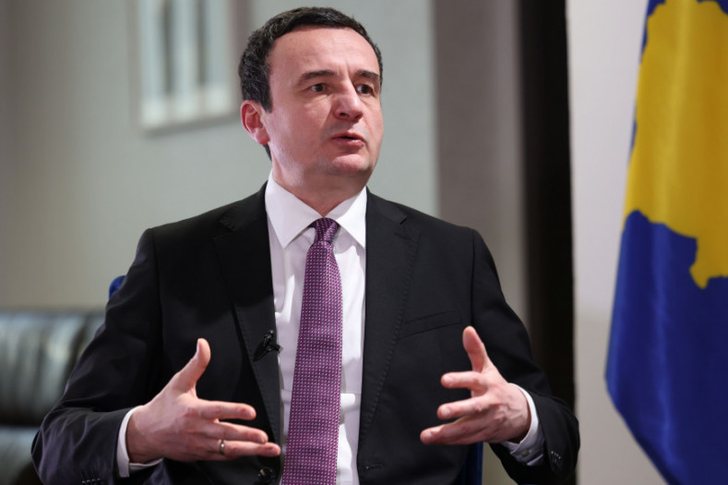
The European envoy for the Kosovo-Serbia talks, Gabrie...

The meeting called by the European envoy for the Kosov...
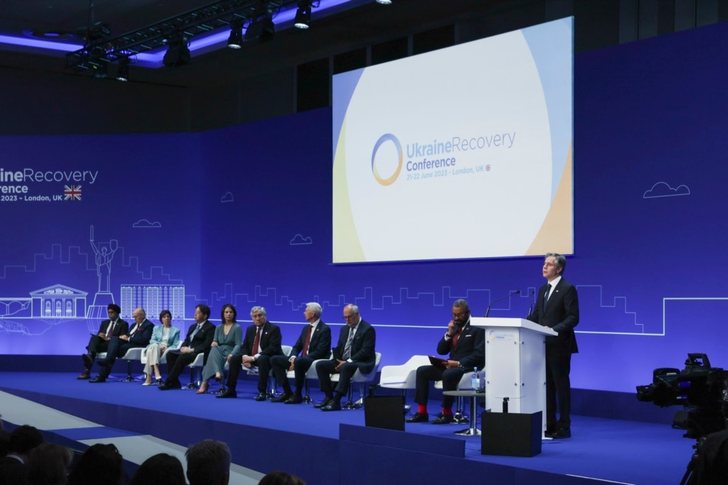
LONDON (AP) – Ukraine's allies have pledged several billio...

Serbian Interior Minister Bratislav Gashič said on June 21...

The Association of Journalists of Kosovo (AGK), through a ...

About 900,000 Palestinians living in the West Bank are cla...
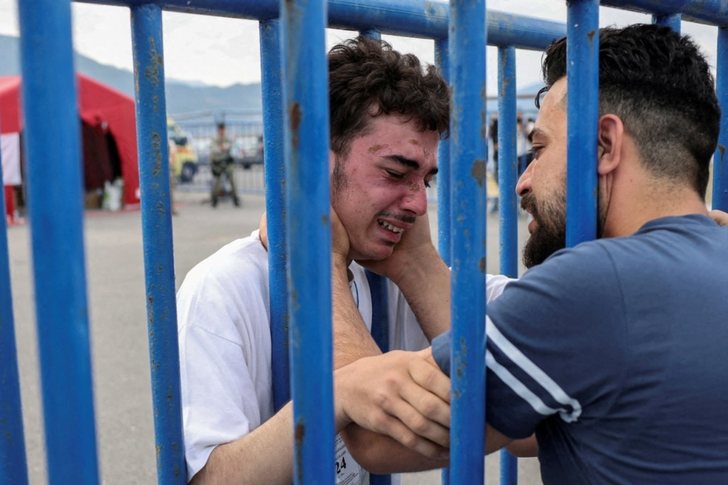
Greece is under increasing pressure to launch an investiga...

The Ukrainian president, Volodymyr Zelensky, has said that...

India's leader, Narendra Modi, is being given a grand rece...

The spokesperson of the European Union, Peter Stano, has s...
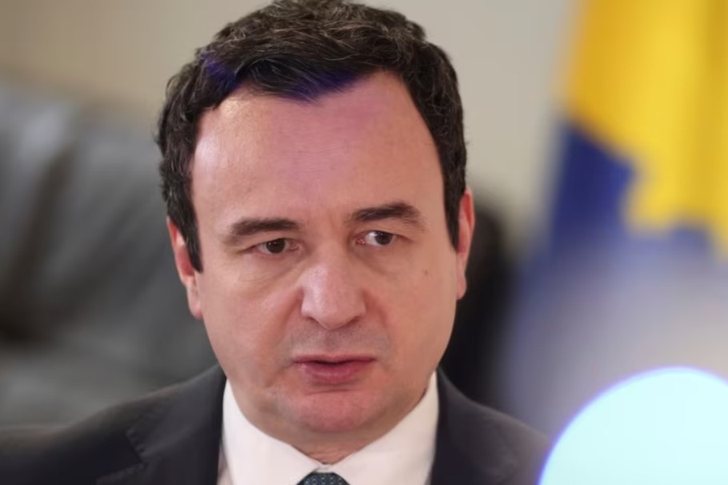
The Prime Minister of Kosovo, Albin Kurti, has assessed th...

US Ambassador Yuri Kim has asked the leaders of Serbia and...

Pak ditë më parë, CNA zbuloi se, Yuri Kim është emëruar zë...
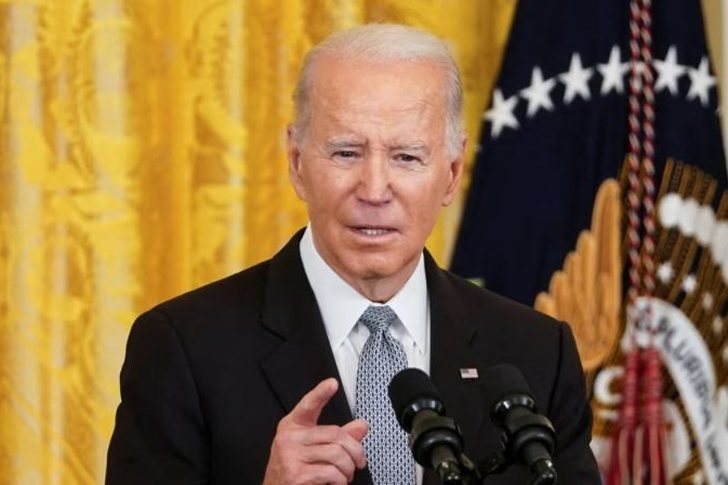
The White House announced through an announcement that...

Më shumë se 120 farmaci kanë mbyllur dyert e tyre përgjith...

A Canadian military surveillance plane has recorded underw...

CNA has launched another investigation that could lead to ...

Irfan Hysenbelliu is a businessman that we call "Irfan the...

In March 2026, CNA launched another investigation centered...
The arrested mayor of Tirana, Erion Veliaj, with 13 charge...

The Special Board of Appeal (KPA) decided this Monday ...

The KPA vetting decided this Thursday to dismiss the p...

Suela Salavaçi, a prosecutor in the Prosecutor's Offic...

The Special Board of Appeal reinstated the prosecutor ...

A person has died today on Orikum beach. According to repo...

Footage emerges from the serious accident that occurred th...

A Shkodra traffic police officer was hit with hard objects...

This Wednesday, around 4:00 PM, a serious accident occurre...

Children without parental care, for whom alternative famil...

On Thursday, our country will be under the influence of st...

A serious accident that occurred this Wednesday with the c...

The Institute of Geosciences has shared a forecast for wea...

For the first time since the launch of the euro, European ...

Artificial intelligence (AI) models from the American comp...

At least 10 people have died after a fire broke out in a h...

Yemen's Houthis have claimed to have attacked two Saudi oi...

At a time when industrial products are increasingly taking...

Trust among people is not just a three-syllable word. It c...

Master of humor Todi Llupi has passed away at the age of 7...

The ninth edition of "MIK Festival" kicked off with one of...

The average sale price of apartments in Tirana reaches rec...

This Thursday, one US dollar is bought for 81.5 lek and so...

The price of diesel reached 206 lek per liter from 198 lek...

Businesses will no longer be required to simply register t...