

Cyber Gulag: How Russia Tracks, Censors and Controls Its Citizens
Journalist and activist Yekaterina Maksimova avoids the Mo...


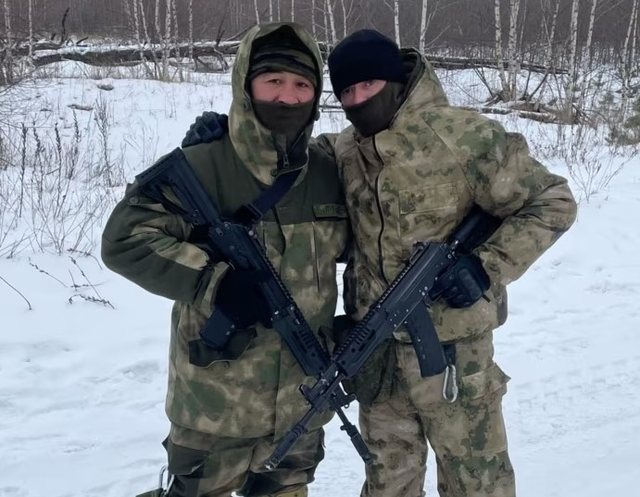
Never one to mince words, Yevgeny Prigozhin, the founder of the infamous Russian mercenary company Wagner, lashed out at Russian military commanders, using profanity, in a video released on May 9.
Prigozhin complained about ammunition supplies to his fighters, who have played a key role in the 10-month assault on the eastern Ukrainian town of Bakhmut. He then criticized a private security company founded by state gas giant Gazprom, complaining that its fighters were taking up positions in the fighting near Bahmut.
"We are spending public money, gathering people, sending them to the meat grinder?" he said in the published video. “Their mothers will come and give them a good [expletive]. Stop this nonsense, this is war!".
Wagner, who has gained fame in countries such as Mali, Sudan and the Central African Republic, has already become a household name for followers of Russian military tactics. But Prigozhin's company is not the only one of its kind.
In this text you can also learn about other, lesser-known companies in Russia's complex but growing private security industry: some of them have sent soldiers to fight in Ukraine, others have gained fame through their special.
Redoubt
Soldiers from the company known as Redut were among the first soldiers to enter Ukraine, according to the Meduza news website, when Russia launched its full-scale invasion of its neighbor on February 24, 2022.
The word "redut" in the Russian language has the meaning of fortification or raising fortifications to strengthen the defense.
But the origins of this mercenary group date back several years: in Syria, according to the Russian-language daily Novaya gazeta. In this country, according to this newspaper, soldiers of this group are reported to have been involved in guarding buildings built by Stroitransgaz, an engineering and construction company that was originally founded by Gazprom, but was later bought by billionaire Gennady Timchenko, who has close ties to the Kremlin.
According to Novaya gazeta, the headquarters of the Redut group is located in Kubinka, a city in the Moscow region that is close to the base of the 45th Brigade of the special air forces of Russia.
This mercenary group has been actively recruiting soldiers through Russian social networks, saying that interested candidates must be at least 25 years old and have experience in a military specialty or experience in law enforcement agencies.
A copy of Redut's contract, obtained by Radio Free Europe, does not mention Ukraine or any ongoing military operations, but says it is a construction company registered in the southern city of Rostov-on-Don, not far from the Russian-occupied parts of the Donbas of Ukraine. In the Russian corporate registers, however, no details of such a corporation are given.
In the contract, Redut also identifies itself as the Regional Laboratory for Social and Psychological Research. This lab is actually a unit of Russia's military intelligence agency, known by its acronym GRU, officially known as military unit 35555.
A person who had joined Redut told REL that before the invasion, contractors were sent to Ukraine – Russia has supported local forces in Donbas since 2014 – and they were paid in cash, in US dollars. But since the start of the occupation, salaries have been paid in rubles.
Expectations and responsibilities from contractors include "performing any special duties at any time and any place required by the employer," the contract states.
Another former contractor told REL that soldiers undergo some training at the military and intelligence training facility located near the city of Tambov in southwestern Russia.
Mercenaries of the Gazprom company
In addition to the infamous Wagner, which under Russian law remains an illegal private military company, there are other armed security companies present on the battlefields of Ukraine that are not illegal.
The existence of even a private military company, supported by Gazprom, has been criticized by Prigozhin. Russian Prime Minister Mikhail Mishustin earlier this year authorized Gazprom subsidiary Gazpromneft to create such an entity under the classification "private security company" and such companies are legal under Russian law.
According to the BBC Russian Service, Gazprom's private entity was originally established in the Siberian city of Omsk and was named Gazpromneft Okhrana- or Sigurimi Gazpromneft. This entity was led by Stanislav Bauman, the acting regional director of Arkhangelsk in the Ministry of the Interior.
According to Prigozhin's statements and other reports, there are several private security entities that exist under the Gazprom umbrella.
One, known as Potok, or "stream," was thrust into the public eye in April when a group of contractors released a video complaining about a lack of supplies on the battlefield. They also complained that they were told they would receive official contracts through the Ministry of Defense, but instead they were deployed under the authority of the Redut company.
Union of volunteers of Don and Donbass
The Don Brigade, which is related to Redut, consists of volunteers, most of whom are Cossacks. The brigade is listed in the National Ready Reserve System, known as BARS, and is officially affiliated with the Ministry of Defence.
A senior official of the Cossack organization called the Union of Cossack Warriors of Russia and the Diaspora has been recruiting volunteers through social media. Another senior official of the group is Aleksandr Borodai, a Russian who was officially the leader of the separatists in Donbas. Now he is a member of the Parliament of Russia.
A soldier of the Don brigade, who introduced himself only as Maksim, told Radio Free Europe that he joined this brigade based on the age requirement set by Redut. However, he said that the salaries for the contractors in the Don and in the Union of Donbas Volunteers are paid by the Redut company.
This soldier said that some contractors have been sent to join the Redoubt, where the special units of the Don brigade have been established. However, these soldiers are officially considered members of the Donbas Volunteer Union.
And, like other fighters of the Redut company, the mercenaries of the Don brigade are not included in the BARS system.
According to the Union's website on the VKontakte social network, the group has three battalions that train at the Kadamovski training center in the Rostov region.
The Moran group, the Slavic corpus and the ENOT corpus
Russia's other military and security companies are better known for past activities, for activities outside the Ukrainian battlefields or for supporting extremist ideologies.
There are various dates as to when the Moran security group first appeared. According to corporate filings, which detail a 2019 report by the New America Foundation, the company was incorporated in Belize in 2011, followed by Moscow the same year. Promotional materials say this group has provided security for Russian ships from pirates since the 1990s. Among the largest clients of the Moran group is Sovcomflot, Russia's largest state-owned shipping company.
According to the St. Petersburg newspaper Fontanka, Wagner traces his roots to the Slav Corps, a private military company that was recruiting soldiers in 2013. Another company, with the same name, the Slav Corps, first appeared in corporate records in Hong Kong in 2013; its two directors were Moran's former employees, Vadim Gusev and Yevgeny Sidorov. That same year, the fighters of the Slav Corps appeared in Syria at the request of the Syrian Government, which was already facing the growing threat from various groups, including the Islamic State militant group that had taken control of several oil facilities.
After a battle in which several Slav corps fighters were wounded, Gusev and Sidorov returned to Russia and were arrested by the Federal Security Service. A year later, they were found guilty of running an illegal mercenary company and sentenced to prison by a Moscow court.
One of Wagner's first bosses was Dmitry Utkin, a veteran of Russian military intelligence who had worked for the Moran Group and later the Slav Corps.
Another private company that Ukrainian researchers have said took part in the Russian invasion of the Ukrainian peninsula of Crimea in 2014 was the ENOT corps, founded by nationalist activist Igor Mangushev.
ENOT soldiers have also been seen in Syria, according to a 2018 report published by the Polish Institute of International Affairs, and have also been involved in paramilitary operations in Tajikistan and Nagorno-Karabakh. The group also had "patriotic" camps for young people in different countries, including in Serbia, Montenegro, Belarus and others.
In 2018, the group was targeted by Russian law enforcement in the Krasnodar region, and several of its members — some of whom were federal security and intelligence officers — were charged with theft and extortion. Last year, Roman Telenkevich, who has led this group since 2016, was sentenced to 13 years in prison for extortion, threats and other charges./ Rel

Journalist and activist Yekaterina Maksimova avoids the Mo...

A judge on Tuesday set March 25, 2024, as the tentativ...
When Russia launched its aggression on Ukraine more th...

Czech state energy company Mero announced on May 23 that i...
Ukrainian President Volodymyr Zelensky announced on Tuesda...
During the meeting of the defense ministers of the Europea...
India has defended its decision to host a Group of 20 (G20...
Në Belgjikë kanë shpërthyer protestat, pasi njerëzit po an...

Ministrat e Jashtëm të BE-së nuk kanë arritur të bien dako...
The EU will speed up the accession process for the six cou...
Brazili ka shpallur emergjencën gjashtëmujore pasi janë sh...
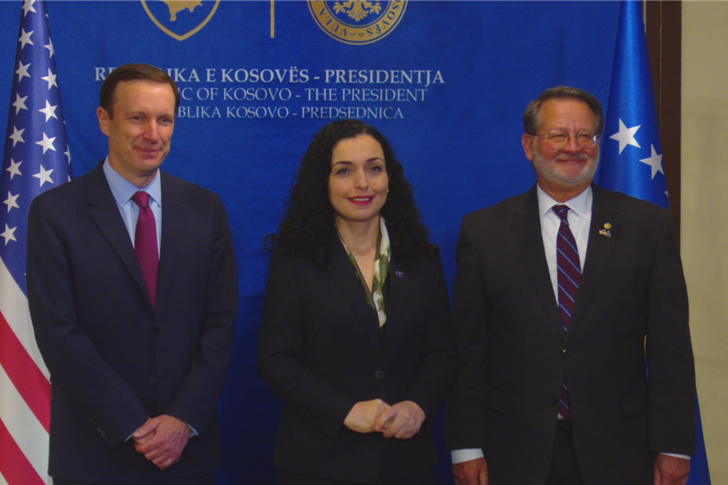
American Senator Chris Murphy said on Monday that it is im...
The head of Germany's intelligence agency warned on Monday...
The Ambassador of the European Union in Skopje, David Geer...
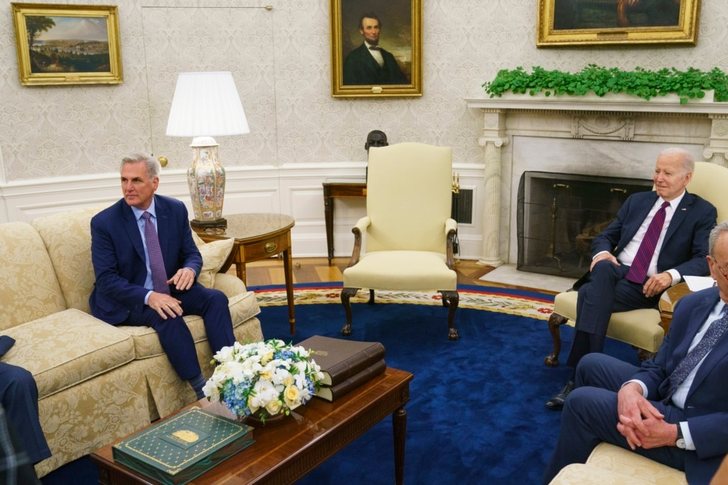
President Joe Biden and House Speaker Kevin McCarthy are e...
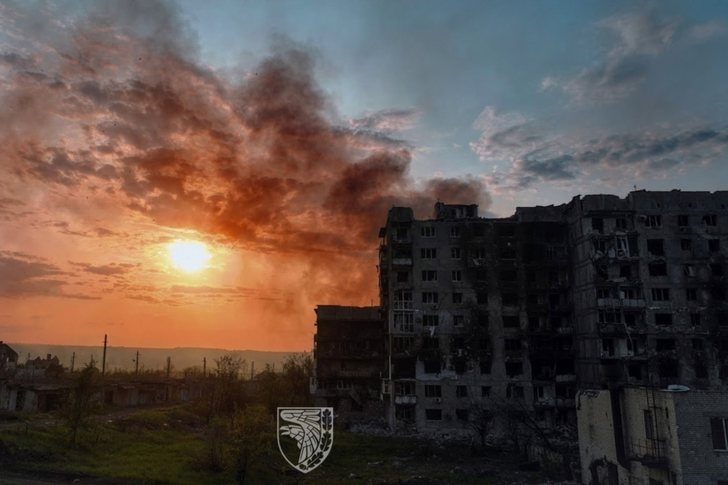
Russia claims to have taken control of the city of Bakhmut...
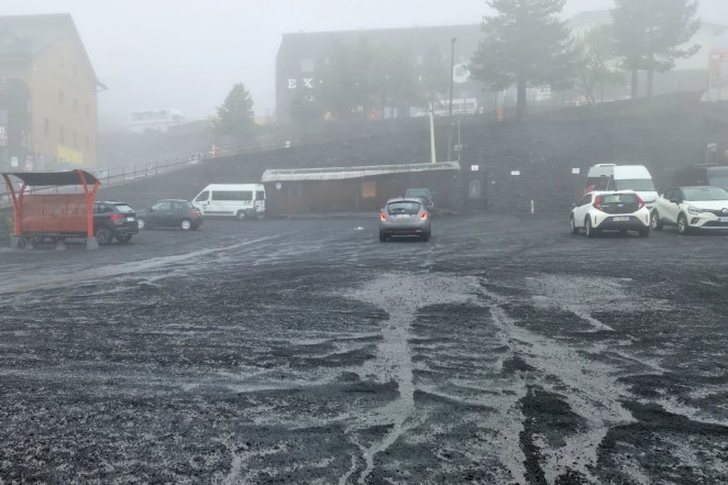
Flights from Catania airport in Sicily were grounded on Su...
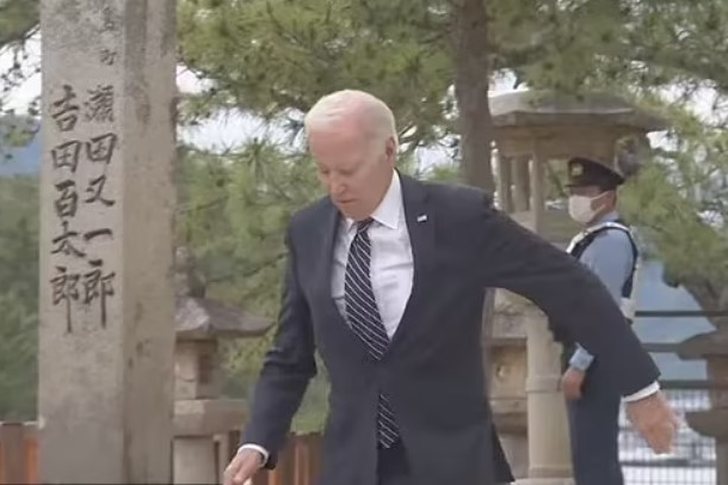
Presidenti Joe Biden duket se nuk iu ndahet incidenteve. G...
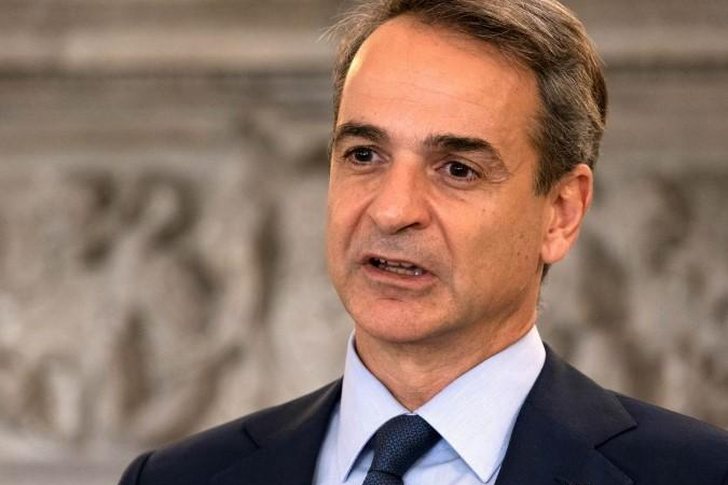
Greek Prime Minister Kyriakos Mitsotakis on Monday cal...

Swedish authorities have said that highly skilled work...
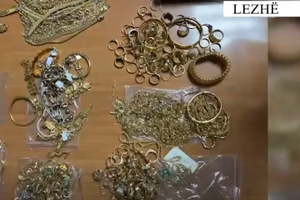
A 39-year-old citizen has been arrested in Lezha, after se...

CNA has launched another investigation that could lead to ...

Irfan Hysenbelliu is a businessman that we call "Irfan the...

In March 2026, CNA launched another investigation centered...

The Special Board of Appeal (KPA) decided this Monday ...

The KPA vetting decided this Thursday to dismiss the p...

Suela Salavaçi, a prosecutor in the Prosecutor's Offic...

The Special Board of Appeal reinstated the prosecutor ...
Police Announcement: Following preliminary information...
New details from the operation being carried out in Fier t...

The 17-year-old, who was seriously injured yesterday after...
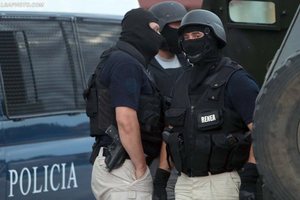
RENEA is headed towards Roskovec after the murder that occ...

By noon, cloudiness is expected to prevail in almost all o...

Children without parental care, for whom alternative famil...

On Thursday, our country will be under the influence of st...

A serious accident that occurred this Wednesday with the c...
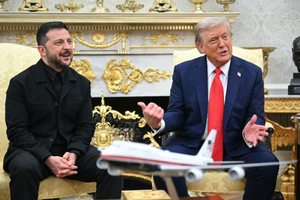
US President Donald Trump will host his Ukrainian counterp...
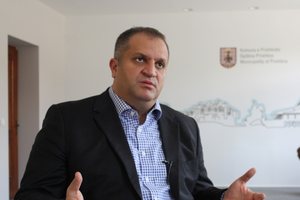
The Basic Court in Pristina found the former mayor of Pris...

The European Union Office in Kosovo has called on all poli...
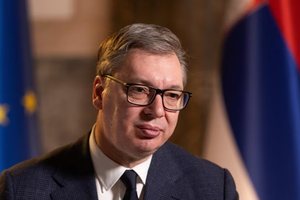
Serbian President Aleksandar Vučić, at a press conference ...

At a time when industrial products are increasingly taking...

Trust among people is not just a three-syllable word. It c...

Master of humor Todi Llupi has passed away at the age of 7...

The ninth edition of "MIK Festival" kicked off with one of...
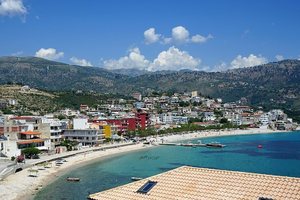
The number of active enterprises in Albania continued to g...
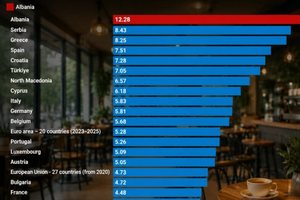
In Albania, the bar-cafe has long become an almost unique ...

This Friday, one US dollar is bought for 81.7 lek and sold...
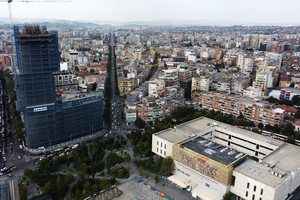
The average sale price of apartments in Tirana reaches rec...