

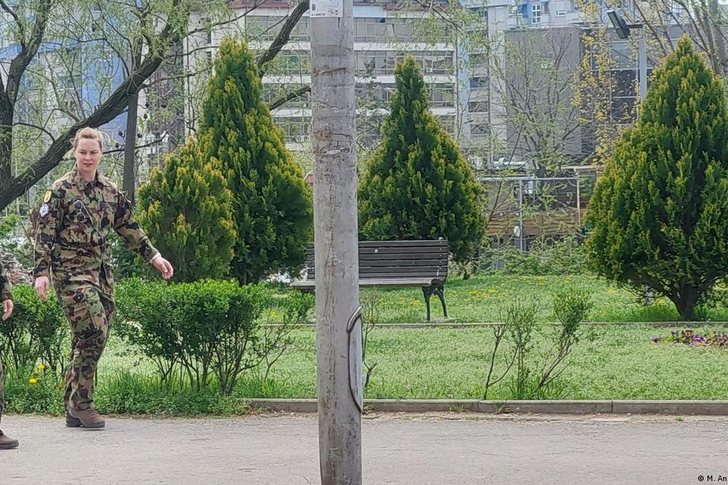
Kosovo: Elections in the north under the shadow of the boycott
On Sunday, April 23, the extraordinary elections for the m...



On the eve of the Easter holiday, a Palestinian demonstration with several hundred people took place in the middle of Berlin. Members of the Democ association observe the demonstration and later publish a video. According to Democ, the participants shouted several times "Death, death to Israel!". In addition, a man shouted from a car loudspeaker "Death to the Jews!"

Law enforcement agencies conduct investigations. Shortly thereafter, two planned pro-Palestinian demonstrators were detained. And Israel's ambassador to Germany, Ron Prosor, said the demonstrators had crossed all lines. He wrote on Twitter that the participants abused freedoms in Germany "to call for the destruction of Israel and the Jews". For the Minister of Justice, Marco Buschmann, there are prerequisites for starting the initial investigations for incitement to hatred.
Such demonstrations are grist to the mill of those who believe that anti-Semitism among Muslims and people with a migrant background is much more pronounced than among people without a migrant background and non-Muslims. However, Sina Arnold from the Center for Anti-Semitism Research at the Technical University (TU) Berlin points out: "Depending on the type of anti-Semitism you look at, people with a migration background and Muslims sometimes show stronger, sometimes weaker anti-Semitic attitudes than people without a background migration or non-Muslims." General statements cannot be made regarding anti-Semitism in the population groups examined. On behalf of the media service Integration, she reviewed and summarized the most important studies on this topic for TU Berlin.
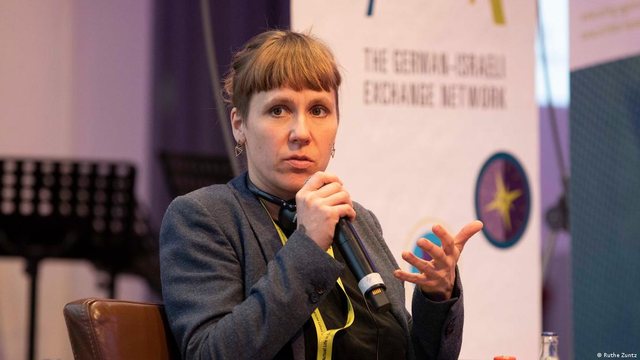
Arnold is also a project manager at the Research Institute for Social Cohesion and has been studying attitudes toward Judaism, the Holocaust, and the Middle East conflict for years. Thus, she investigates the causes of anti-Semitic attitudes among refugees and other newcomers. An almost new field, because research on this very hot topic is still relatively rare. On the other hand, there are numerous scientific studies that prove that anti-Semitism is a widespread phenomenon throughout German society.
Anti-Semitic incidents like the one in Berlin just before Easter fall into the category of anti-Semitism in relation to Israel. For example, when Israel's policy is equated with National Socialism, when Jews around the world become responsible for Israel's policy, or when Israel is denied its right to exist. This, says Arnold, summarizing the results of the studies, is more prevalent among people with a migration background than among those without a migration background.
"Studies see a connection with the length of stay in people with a migration background. The level of approval of anti-Semitic statements drops, the longer migrants live in Germany," Arnold explains the so-called acculturation effect, "so there is an adaptation to the official taboo of anti-Semitism in German society".
In some countries where migrants come from, anti-Semitism is more widespread than in Germany and is often part of state propaganda. Anti-Semitism regarding Israel is also more pronounced among Muslims. "The explanations are religious orientation, authoritarian conservative attitude and regional and national origin. In other words, it is an institutional anti-Zionism that occurs in some of these regions," says the anti-Semitism expert.

But a completely different picture emerges when it comes to secondary anti-Semitism. So when the Holocaust is relativized or denied or when it is requested to put a visa on the past. "This tendency is less present among people with a migration background, among Muslims as well, because this form of anti-Semitism contains the treatment of German family history, which may not be as relevant for people with a migration background," says Arnold.
The third category is classical anti-Semitism, a prejudice or worldview in which certain biological, "racial" or cultural characteristics are attributed to Jews. These stereotypes are often expressed in conspiracy theories. "Here the research situation is really contradictory. There are studies that find higher values, others similar values, others lower values ??in people with a migration background compared to people without a migration background", says Arnold. "But anti-Semitism is higher among people with a migrant background who do not have German citizenship."
Here, anti-Semitism is both a question of generations and origins. Immigrants, for example, are more likely to agree with anti-Semitic statements than their children. There are also big differences in terms of countries of origin. "The values ??of support for anti-Semitic statements are lower among people with a migration background from EU member states than among people with a Turkish or Arab immigration background."
According to Arnold's research, for the more than five million Muslims in Germany, approval ratings for classic anti-Semitism are generally higher than for non-Muslims. Besides the dogmatic-fundamentalist or traditional-conservative interpretation of religion and Arab nationalism, personal frustration due to the conflict in the Middle East are also possible explanations.
The "Berlin Monitor" in 2019 came to the interesting conclusion that Muslims with anti-Semitic prejudices "do not differ in terms of their code of values ??and their approach from the conservative and authoritarian circles of the (non-Muslim) German population - i.e. from some AfD voters , since anti-Semitism is less a consequence of religion than of the conservative-authoritarian approach./ DW

On Sunday, April 23, the extraordinary elections for the m...

As a result, the percentage of first- and second-genera...

Four member states of the European Union have stopped the ...

The Supreme Court decided on Friday to preserve women's ac...

The almost 63-year history of nuclear power in Germany end...
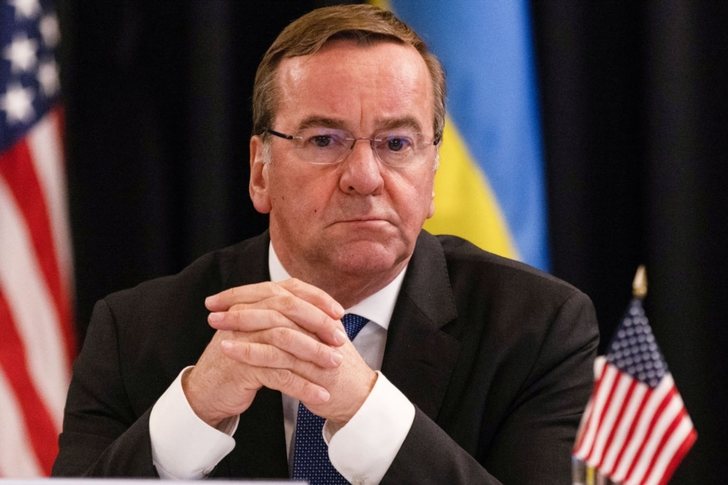
German Defense Minister Boris Pistorius dismissed the ...
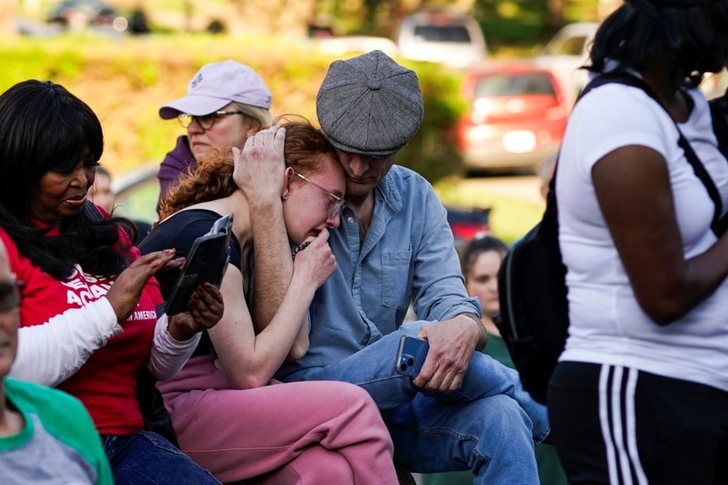
LOS ANGELES (AP) — The U.S. has hit a record pace for mass...

Vetëm rreth gjysma e demokratëve mendojnë se presidenti Jo...

The former Georgian president Mikheil Saakashvili, who has...

The visa liberalization that was approved for Kosovo a...

A report by President Biden's administration concluded tha...

The Pentagon is deploying military forces near Sudan t...

The countries of the European Union have agreed to extend ...

Lista Serbe, the largest party of Kosovo Serbs, called...
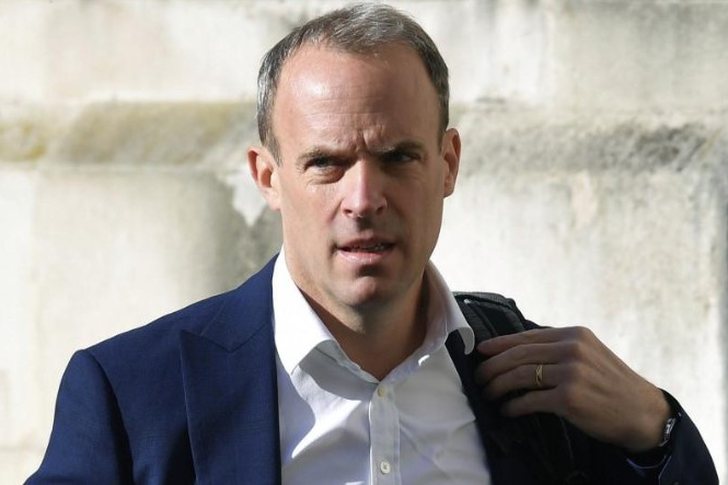
UK Deputy Prime Minister Dominic Raab has resigned aft...
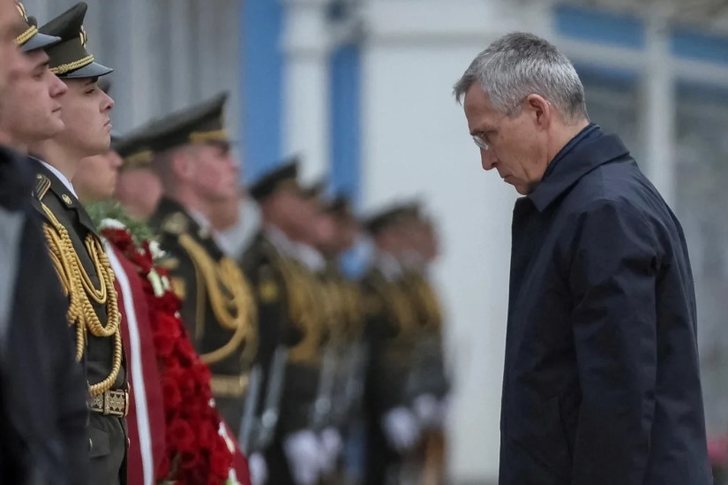
Sekretari i Përgjithshëm i NATO-s, Jens Stoltenberg th...

Europol në bashkëpunim me Gardën Civile Spanjolle (Gua...

Most American adults and more than a third of child...
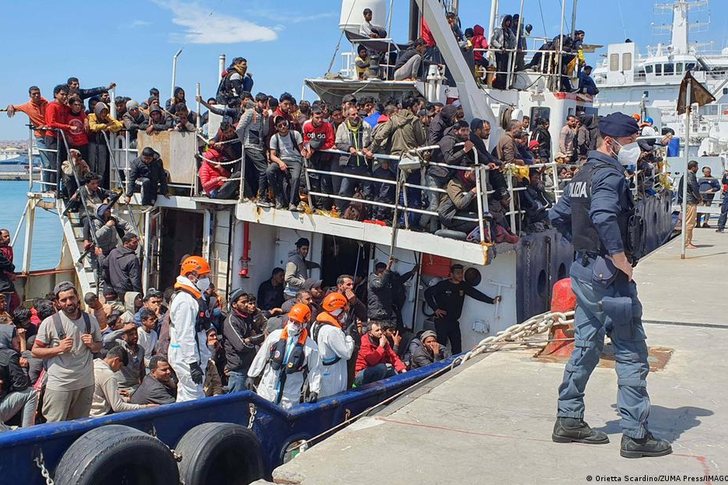
MEPs approved a series of proposals on migration, incl...

A large explosion occurred in the Russian city of B...

A 39-year-old citizen has been arrested in Lezha, after se...

CNA has launched another investigation that could lead to ...

Irfan Hysenbelliu is a businessman that we call "Irfan the...

In March 2026, CNA launched another investigation centered...

The Special Board of Appeal (KPA) decided this Monday ...

The KPA vetting decided this Thursday to dismiss the p...

Suela Salavaçi, a prosecutor in the Prosecutor's Offic...

The Special Board of Appeal reinstated the prosecutor ...

A conflict for weak motives was recorded today in the vill...

An accident involving three vehicles occurred a few minute...

55-year-old Belere Plaka, who was injured today with a sho...

Police Announcement: Following preliminary information...

By noon, cloudiness is expected to prevail in almost all o...

Children without parental care, for whom alternative famil...

On Thursday, our country will be under the influence of st...

A serious accident that occurred this Wednesday with the c...

Peru and Venezuela will restore diplomatic relations, the ...

United States President Donald Trump has left open the pos...

Israeli Prime Minister Benjamin Netanyahu will travel to t...

A bipartisan group of US lawmakers is calling for a Europe...

In my research at the Central State Archives, specifically...

At a time when industrial products are increasingly taking...

Trust among people is not just a three-syllable word. It c...

Master of humor Todi Llupi has passed away at the age of 7...

War, weather and supply disruptions could send gas prices ...
The number of active enterprises in Albania continued to g...
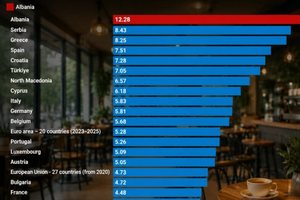
In Albania, the bar-cafe has long become an almost unique ...

This Friday, one US dollar is bought for 81.7 lek and sold...