


Exchange rate, November 13, 2025/ Euro unchanged, dollar falling
This Thursday, one US dollar will be bought for 83 lek and...



Albania is expected to achieve supervisory equivalence with the European Union in the first half of next year. Market sources indicate that an approximate deadline for the finalization of this process is expected to be April 2026.
This process is carried out by the European Banking Authority and aims to certify that the banking supervision framework in Albania is equivalent to that of the EU.
Certification of supervisory equivalence could, in theory, make the Albanian market more attractive for new investments from Eurozone banking groups, but could also positively impact the business and lending strategies of existing banks in the market.
Supervisory equivalence is also linked to the basic level of the capital adequacy ratio, which is the most important regulatory indicator for commercial banks. The minimum capital adequacy requirement for Eurozone banks is 8%, in line with the Basel Committee guidelines. Meanwhile, the Bank of Albania adopts a much more conservative approach and the minimum capital adequacy ratio is 12%.
Above this level, special macroprudential additions and those related to the framework of extraordinary intervention in banks are also calculated. With all these additions, the minimum level of capital adequacy for individual systemically important banks could reach up to 27% by 2030.
Given the very high increase in capital requirements, commercial banks have been pressing the Bank of Albania to at least reduce the basic capital adequacy ratio requirement from 12% to 8%, the same as the EU. However, the Bank of Albania's position is that this can only happen after certification of supervisory equivalence with the EU.
Reducing the minimum level of the capital adequacy ratio would in theory free up some of the banks' capital, reduce costs, and create more space to expand lending to the economy.
Since the financial crisis that began in 2008, European Union regulatory authorities have begun to tighten the regulatory framework for banks and in particular adopted a more conservative approach in valuing the assets that these banking groups have outside the Eurozone.
The assessment of Eurozone assets with higher risk coefficients translated into higher capitalization requirements for groups and was one of the determining factors that led to the departure of some of the important European banking groups from many Eastern European markets.
Such a trend of departure of European banking groups also partially affected the Albanian market.
The regulatory framework provides that the assets of EU banking groups in countries outside the EU will be treated in this way, until the full equivalence of supervision with the EU framework has been certified for each market.
Consequently, the recognition and equivalence of the supervisory regulatory framework provides common advantages not only for banking and financial institutions operating in the EU, but also for banking and financial institutions in other countries outside it.
For Albania, the process of assessing the equivalence of supervision only began at the end of last year.
However, in 2021 the Bank of Albania conducted an independent assessment of the equivalence of the supervisory and regulatory framework, according to the methodology published by the European Banking Authority (EBA). With the technical assistance of the European Bank for Reconstruction and Development (EBRD) and PricewaterhouseCooper (PwC), an independent assessment of the current supervisory framework was conducted under a comprehensive approach, relying on the methodology and questionnaire developed by the EBA for this purpose. This analysis concluded that the regulatory and procedural framework, as well as supervisory practices, are at a high level of equivalence (close to 85%) and aligned with the standards applicable in EU countries.
The approximation is considered particularly high in terms of capital requirements, applied mitigation techniques, large exposures, liquidity, financial leverage, macroprudential supervision, professional secrecy and international cooperation./ Monitor

This Thursday, one US dollar will be bought for 83 lek and...
The Albanian government will finance the concession contra...
12-month bond yields suffered another slight decline in th...
This Wednesday, one US dollar will be bought for 82.9 lek ...
The Bank of Albania celebrates the 100th anniversary of th...
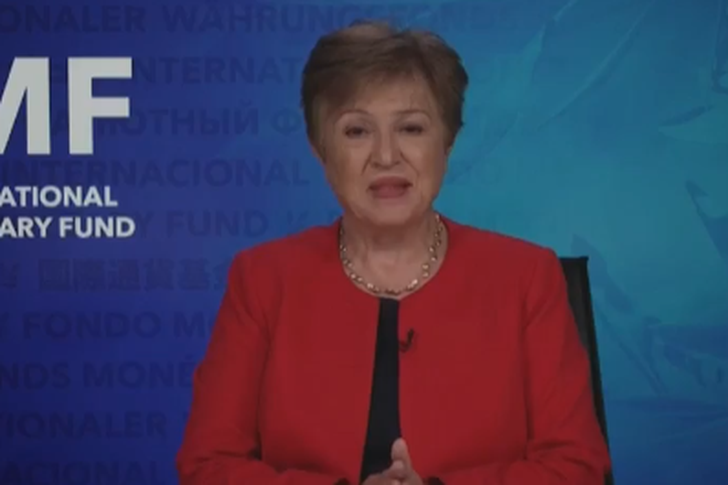
IMF Managing Director Kristalina Georgieva stated today th...
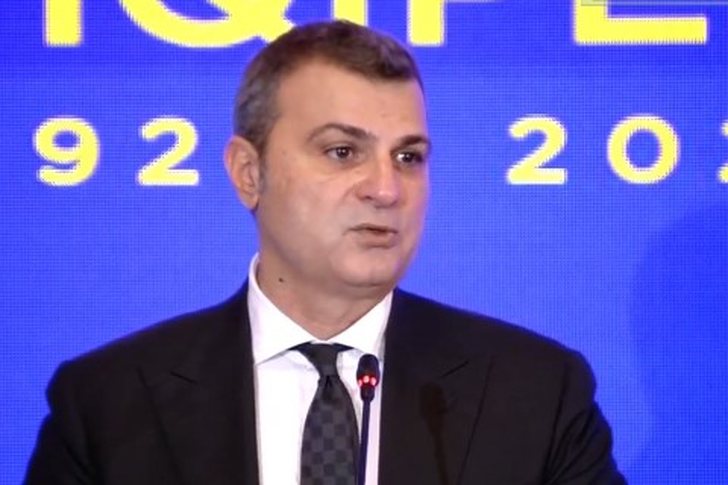
The Governor of the Bank of Albania, Gent Sejko, was prese...
This Tuesday, one US dollar will be bought for 83.1 lek an...

The non-performing loan ratio increased for the third cons...
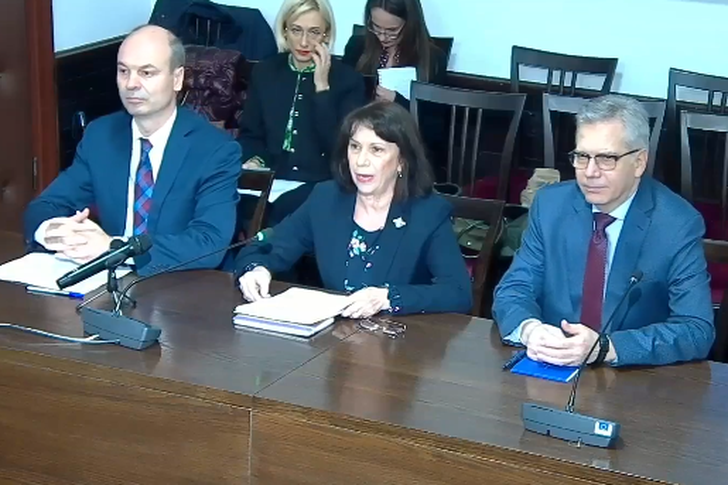
The Deputy Governor of the Bank of Albania, Luljeta Minxho...
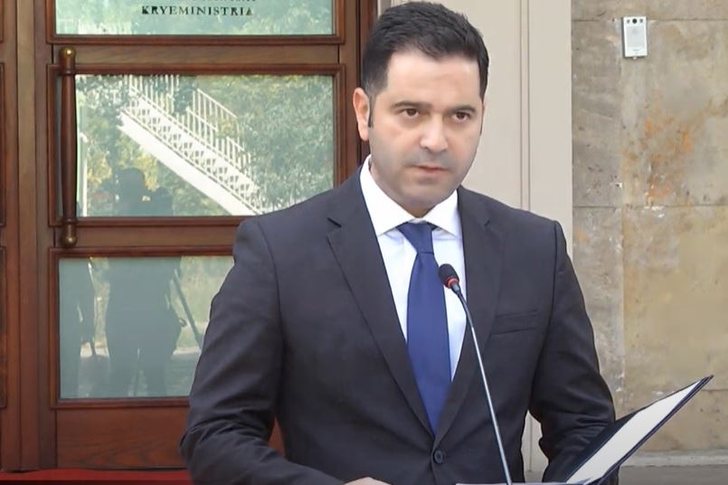
The Minister of Finance, Petrit Malaj, presented the 2026 ...

This Monday, one US dollar will be bought for 83 lek and s...

In the 2026 budget, the Albanian government expects to ben...

Today, the US dollar will be exchanged for 83 lek when buy...

The increase in living costs in rents and food prices, whi...
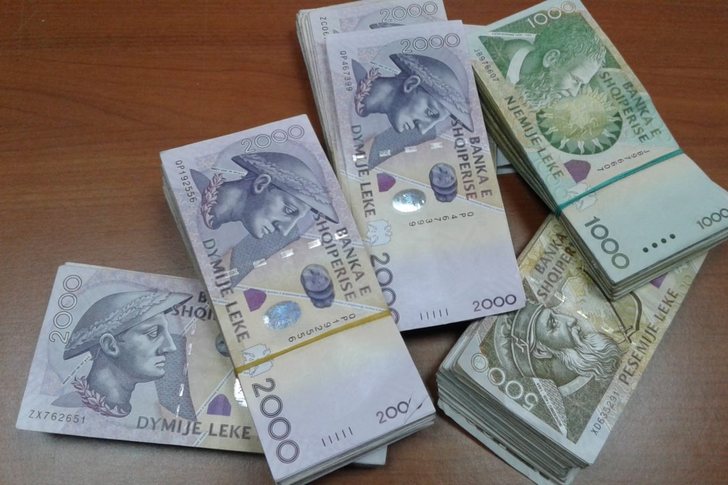
The more stabilized exchange rate performance improved the...

The growth of high-skilled jobs in Albania has been slower...
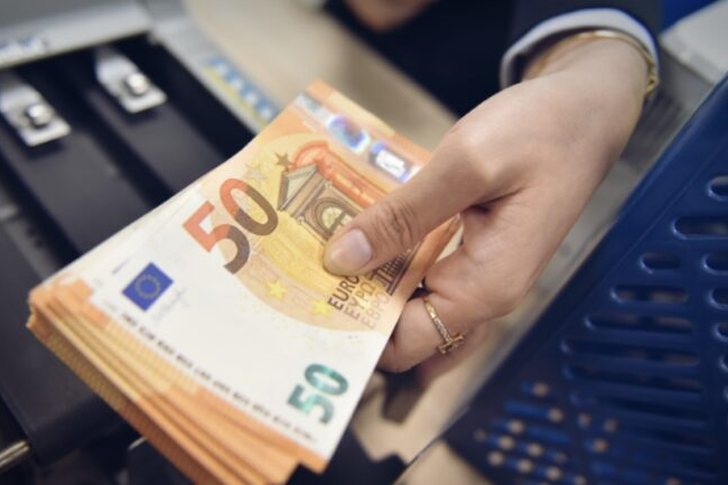
Today, the US dollar will be exchanged for 83.2 lek when b...
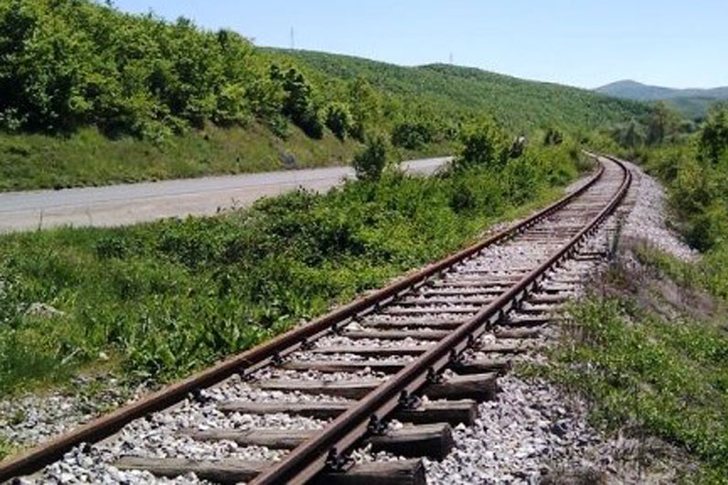
The project for the Tirana-Durres railway and the extensio...
Population aging and labor migration are risks to the coun...

CNA has launched another investigation that could lead to ...

Irfan Hysenbelliu is a businessman that we call "Irfan the...

In March 2026, CNA launched another investigation centered...
The arrested mayor of Tirana, Erion Veliaj, with 13 charge...

The Special Board of Appeal (KPA) decided this Monday ...

The KPA vetting decided this Thursday to dismiss the p...

Suela Salavaçi, a prosecutor in the Prosecutor's Offic...

The Special Board of Appeal reinstated the prosecutor ...

A road accident occurred this evening on Nikolla Zoraqi St...

Three people were shot and wounded in Elbasan last night b...
A serious incident occurred this Tuesday in the Yrshek are...

An accident occurred this Tuesday on "Dituria" street in K...

This Wednesday, our country will be under the influence of...
All of Southern Europe will face changing weather conditio...
Albania was hit by temperatures significantly higher than ...

For the first time, Pogradec welcomed the Inter-Lake Chess...

Prime Minister Andy Burnham has announced that most bus fa...

France's parliament has passed a law to ban social media f...

US Secretary of State Marco Rubio arrived in Manila on Jul...

In the space of a few days, Ukrainian President Volodymyr ...

At a time when industrial products are increasingly taking...

Trust among people is not just a three-syllable word. It c...

Master of humor Todi Llupi has passed away at the age of 7...

The ninth edition of "MIK Festival" kicked off with one of...

Businesses will no longer be required to simply register t...

Despite economic growth and income in recent years, Albani...

This Wednesday, one US dollar is bought for 81.4 lek and s...

Construction company licenses will have a validity period ...