

Why has the cryptocurrency craze reached new heights?
Are bitcoin fans right to be so excited about Donald Trump...

Prej vitit 2015, kur industria mbështetëse automotive shënoi fillesën në tregun shqiptar, vetëm viti 2020 i pandemisë së COVID-19 e detyroi të bënte hap pas. Rritja e vazhdueshme, si në numër kompanish të pranishme me fabrika prodhimi të fasonerisë së thjeshtë edhe në vlerë eksportesh, u frenua sërish në fund të 2023, duke u thelluar më shumë këtë vit. Kompanitë pohojnë se zhvlerësimi i theksuar i Euro-s përballë Lekut, kombinuar me faktorët e tregjeve të huaja, ku mbizotëron rënia e kërkesës në tregun e automobilave, janë shkaktarët kryesorë të kësaj situate. Në kahun optimist, ata presin që ky efekt të jetë i përkohshëm dhe 2025-a, të kthejë tendencën rritëse të sektorit. Në një përpjekje për të gjetur hapësira për të përmirësuar bilancet e tyre të shpenzimeve, kompanitë po marrin masa të vazhdueshme, pjesë e të cilave janë edhe planet e investimeve në fotovoltaikë për vetëkonsum.

Last year's balance gave the first signal that perhaps 2024 would not faithfully follow the upward trend that the automotive support industry had seen for years.
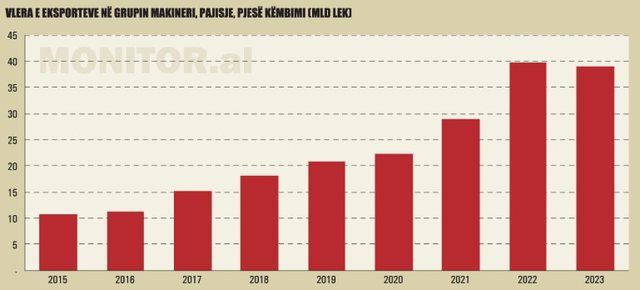
The group to which the products of this industry belong, "Machinery, equipment, spare parts", registered in exports the value of 39 billion ALL, or 390 million euros, with a decrease of 1.5% in relation to the value of 2022. This decrease has remained constant throughout the year 2024, being emphasized especially in October.
The goods of this group in January-October marked the value of 31.6 billion ALL, or about 316 million euros. Compared to the same period of the previous year, the decrease was 5.1%. The fluctuation of this group already makes clear the influence of internal factors, mainly related to the exchange rate, but also external factors, which are attributed to developments in the automobile sales markets.
In a situation like this, the automotive companies in Albania, which are the supporting links of some of the car manufacturers in the world, are trying to minimize the effects by taking measures in several directions.
Albanian factories that produce simple accessories (devices, tires or cables) for companies such as Mercedez Benz, KIA, Hyundai, Peugeot, Renault, Fiat Group or Sumitomo Electric Industries have preliminary contracts on the orders they must send to customers.
These companies have predetermined prices for their work and receive payments in Euros, while payments in the local market for various items must be made in Lek. The new level of the Euro, which this year has known other records of the historical minimum in relation to the Lek, seems to have increased the pressure on these companies, as it happened with most exporters.
"This troubling trend of the Euro is without question having a direct negative impact on the company's results, mainly based on the fact that over 75% of our operational costs are in local currency, making it impossible for us to take measures to avoid this effect.
This factor is also accompanied by the continued pressure of customers to keep an unchanged price, despite the change in costs, and puts the automotive sector on the same line of risk as all exporting businesses in the country", affirms Eris Jaçaj, Managing Director of Forschner Albania.
Being destined to produce only for foreign markets, almost all automotive companies in the country are affected by the devaluation of the Euro. Today, several such companies operate in the country, starting from Forschner Albania to Delmon Group Albania, PSZ Albania, Yura Corporation, SEWS Cabind Albania or Everest Automotive. The continuous expansion of factories in this field in the country seems to be called into question with the new conditions that appear.
"The effects of the increase in the value of the Lek compared to the Euro are negative for exporting businesses that have agreed contracts for sales in Euros. For every euro of sales, production costs in Albania, if converted into Euros, have increased by leaps and bounds since the strengthening of the Lek.
This certainly has a negative impact on the competitiveness of Albania for new projects", says Ertjan Çabiri, Managing Director of "Delmon Group Albania".
The overall performance of the global automotive market has been dynamic, but the effect of China has especially dominated. The production of electric cars of the latter have put both the American and the European market in a difficult position, something that brought as a chain effect the recently taken measures related to tariffs to somewhat limit this effect.
Apart from this, there seems to be a general decline in car sales, mainly appearing in the electric segment, but the signals have been the same in all segments.
A panorama like this seems to have had an effect on all links of the automotive industry, making it part of the supporting industries of more complex parts, but also those of simple equipment.
"During this year, the automobile market has seen a decrease in sales compared to the budgeted sales for most of the large European companies such as Stellantis, Renault Group, Volkswagen, etc. This happened mainly due to the drop in demand, but also the increase in supply and competition from electric cars of Chinese brands", - said Mr. Çabiri.
The decline in demand, which seems to have been highlighted at the end of this year, is expected to be somewhat compensated in the following year, or at least that is the expectation from the companies.
"In the global market, we face a decline in demand, mainly highlighted in the last quarter of 2024, although expectations and forecasts were for an increase. Some of the customers have postponed their requests for the first quarter of 2025, this fact gives us confidence that this slowdown is temporary and in 2025 we will return to the upward trend of the industry", Mr. Jaçaj underlines.
The energy crisis, which started in 2021 and culminated in 2022, turned into the biggest incentive to look at the most suitable alternatives to reduce the exposure to the crazy prices that were recorded on the stock exchanges.
Connected to 20/10 kv voltage, these factories are part of the group of businesses that must get energy from the free market. The latter, although not as in 2022, still continues to have higher prices than the historical average during 2024, or price volatility has continued to remain higher.
Faced with this situation, it seems that companies have turned their eyes to photovoltaics. According to the legal framework, any business can install capacity up to 500 KWp for self-consumption, amortizing part of the cost through this production.
"Currently favored by the climate in Albania, our company is planning to invest in solar panels, thus avoiding the risk of fluctuating energy prices in the local market", - asserts Mr. Yacaj.
It seems that Delmon is on the same line, considering the alternative of self-consumption, a model that has also been seen in the group's sister factories operating in other countries.
"The price of energy is stabilized, but remains high. To offset these costs, our company is considering installing solar panels. Even in this direction, I think
The government can further promote this process and guarantee fiscal relief for companies investing in solar panels. For comparison, our company's branch in Spain, for the same panel installation project, was directly financed with a grant for 15% of the project value from the EU and a 25% profit tax deduction of the project value from the Spanish state .
This certainly gives companies the opportunity to increase the value of the investment and the capacity of the solar panels", says Mr. Çabiri.
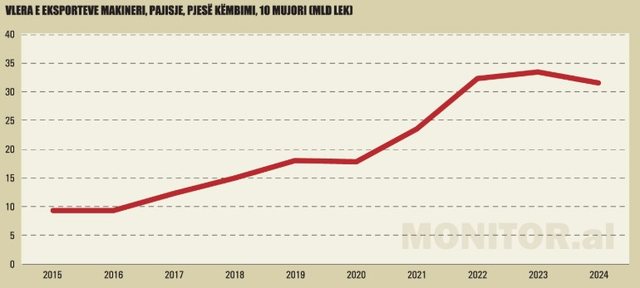
The years 2015-2016 mark the establishment of the first Albanian factories that are a supporting part of the automotive industry in the world.
The official data from the Institute of Statistics show that the group where the products of this industry, machinery, equipment, and spare parts are a part, then grew rapidly, where a good part of this weight has been kept by these companies as far as exports are concerned.
In the years 2015-2016, the value of exports was 10-11 billion ALL, or 110 million euros, while the value of exports is almost 4-fold.
This sudden increase in less than a decade, which took a step back only during the pandemic, is especially related to the increase in the number of new companies that have opened and have contracts with foreign clients.
Beyond the sure growth until 2022, the panorama has become more complicated in 2023.
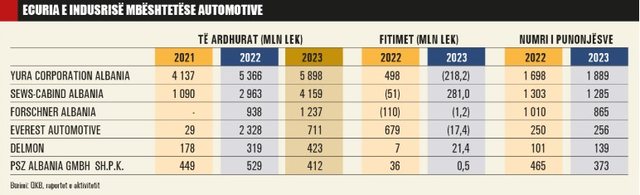
This is mostly related to the general performance of companies' income, profit, expansion plans or the number of employees, which have shown fluctuations in two years.
Specifically, according to the processing of balances by "Monitor", it turns out that the largest company in terms of revenue turnover in the country in 2023 is Yura Corporation, in Fier. The company recorded 5.8 billion ALL in revenue, but a loss of 218 million ALL.
There is an increase in the number of employees by 11.2% compared to 2022.
The second is Sews Cabind Albania, in Kamëz. The income of the latter increased by 40.3% in 2023 compared to 2022, as the company recorded a profit of 281 million ALL or 2.8 million euros. Compared to 2022, the company recorded a reduction in the number of employees.
Forschner Albania, located in Domje, had at the end of 2023, 865 employees, cutting at least 14.3% of them compared to 2022. Revenue was 1.2 billion ALL, with an increase of 31%.
Everest Automotive, although it is among the youngest in the market, seems to be positioned fourth in terms of market weight, although its revenue in 2023 fell by more than 3 times compared to 2022. The company had in end of last year 256 employees.
Delmon, with activity in Elbasan, recorded 423 million ALL in revenue and 21 million ALL in profit in 2023. The number of employees at the end of 2023 was 139 people. PSZ Albania recorded 412 million ALL in revenue in 2023, which was down compared to the previous year.
The profit was only 0.5 million ALL, while the number of employees was 373./ Monitor.al

Are bitcoin fans right to be so excited about Donald Trump...

Today, on December 7, 2024, in the foreign exchange market...
Today, December 6, 2024, in the foreign exchange market, t...
Banks' income from commissions is increasing for the fourt...
Production costs continued to rise in the third quarter, b...
The price of Bitcoin has crossed the $100,000 mark for the...

Sot, më 5 dhjetor 2024, në tregun valutor, dollari amerika...
The reconstruction of the road from the village of Sinë to...
At least seven contracts have already been concluded with ...
In 2025, residents and businesses of the capital are expec...
Today, on December 4, 2024, in the foreign exchange market...
Today, on December 3, 2024, in the foreign exchange market...
Public debt risk indicators this year fell further in the ...
The distribution of the year-end bonus for pensioners,...
The value of the foreign exchange reserve of the Bank of A...
Year after year, the state budget is increasing the concen...
Today, on December 2, 2024, the US dollar is bought at 92....
Today, on December 1, 2024, the US dollar is bought at 92....

After retirement, after 40 years working as a midwife, Mrs...
Today, on November 30, 2024, the US dollar is bought at 92...

CNA has launched another investigation that could lead to ...

Irfan Hysenbelliu is a businessman that we call "Irfan the...

In March 2026, CNA launched another investigation centered...
The arrested mayor of Tirana, Erion Veliaj, with 13 charge...

The Special Board of Appeal (KPA) decided this Monday ...

The KPA vetting decided this Thursday to dismiss the p...

Suela Salavaçi, a prosecutor in the Prosecutor's Offic...

The Special Board of Appeal reinstated the prosecutor ...
Footage emerges from the serious accident that occurred th...

A Shkodra traffic police officer was hit with hard objects...
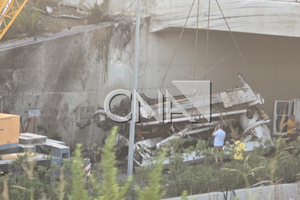
This Wednesday, around 4:00 PM, a serious accident occurre...

Tirana Police have shared details regarding the accident t...
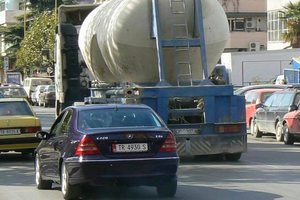
A serious accident that occurred this Wednesday with the c...

The Institute of Geosciences has shared a forecast for wea...
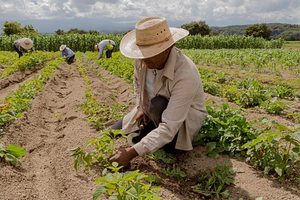
Rising energy and fertilizer prices are expected to contin...

Over 18,000 foreign citizens from 140 countries have appli...

The trial of ousted Venezuelan President Nicolas Maduro on...

US President Donald Trump has issued another warning to Ir...

Prime Minister Andy Burnham has announced that most bus fa...

France's parliament has passed a law to ban social media f...

At a time when industrial products are increasingly taking...

Trust among people is not just a three-syllable word. It c...

Master of humor Todi Llupi has passed away at the age of 7...

The ninth edition of "MIK Festival" kicked off with one of...
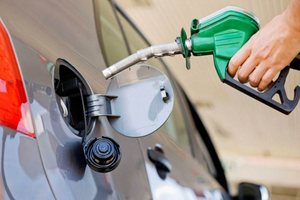
The price of diesel reached 206 lek per liter from 198 lek...

Businesses will no longer be required to simply register t...

Despite economic growth and income in recent years, Albani...

This Wednesday, one US dollar is bought for 81.4 lek and s...