

Foreign currencies rise/Foreign exchange, January 13, 2024
Today, January 13, 2024, the US dollar is bought at 94...



The Albanian economy has never had a problem to "shine" with numbers. The final result is always better than the forecast at the beginning of the year.
The International Monetary Fund (IMF) expected at the beginning of 2023 that the year would end with a growth of 2%, while the real figure could turn out to be between 3.2-3.5%, depending on the results of the fourth quarter.
In 2022, the country expanded by 4.8%, about 1.15 percentage points above the regional average.
The good performance of the economy in numbers always surprises the Manager of the World Bank Office for Albania, Mr. Emanuel Salinas. "2023 was much better than we expected. This is one of those cases where I am very happy that I was wrong", he says in a special interview for "Monitor".
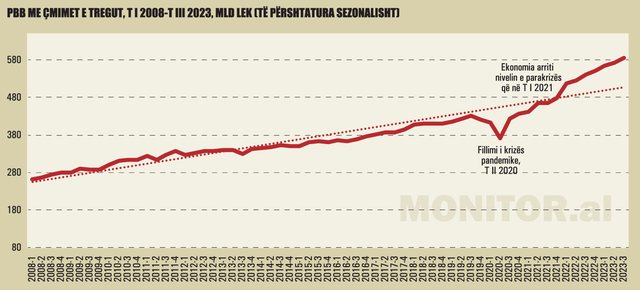
The real problem, in fact, is the quality of the economic growth that the country is experiencing.
"Construction and consumption have contributed significantly to Albania's growth in recent years. I am ambivalent about this trend.
On the one hand, yes, it is good to have growth, but it is clear that these sectors are not necessarily the ones that should guide the growth that Albania will have on a long-term basis - and of course they do not generate the good jobs, for which people aspire", affirms Mr. Salinas.
The current model of economic growth does not excite even the IMF.
"Albania should focus on creating a sound business environment, which would encourage the development of production with higher added value and increase productivity.
Implementing structural reforms to strengthen governance, human capital and competitiveness, as well as improving infrastructure, would help Albania attract more foreign investment and integrate more into global value chains," says Anke Weber, head of the mission. in Albania of the IMF, in an interview for "Monitor".
The figures have not "lied" to any important part of the labor force, which, in the absence of better employment alternatives or prospects, has found the solution in emigration, gradually turning into a major problem of the Albanian economy, which does not seem to is finding a solution.
"The curbing of immigration should be one of the main objectives of economic and social policies, by attracting more Foreign Direct Investments in productive and service sectors with more productive and better-paid work, creating more job opportunities for women , young people and people with disadvantages, as well as to improve the quality of education", says Mrs. Ekaterina Solovova, manager for Albania of the European Bank for Reconstruction and Development (EBRD), in an interview for "Monitor".
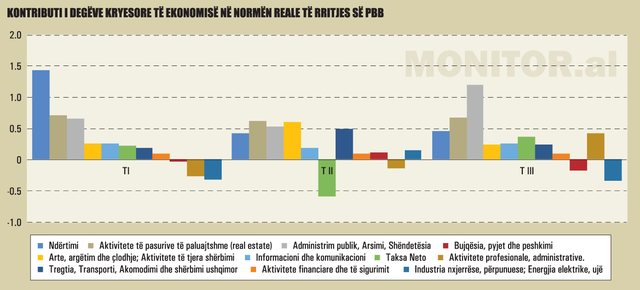
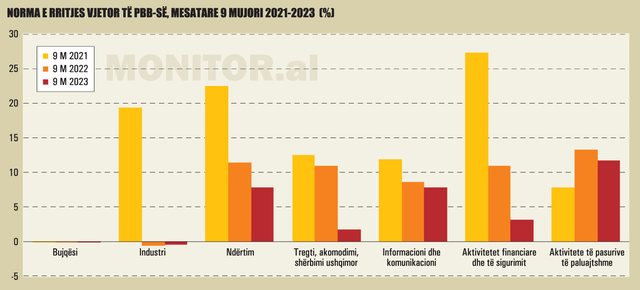
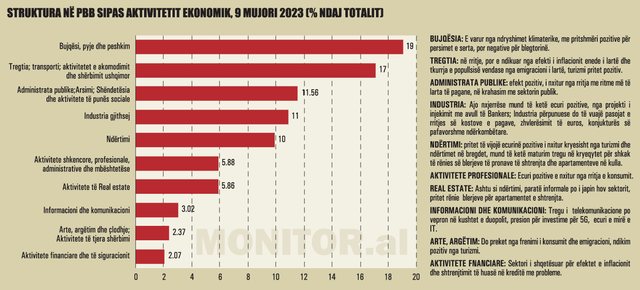
INSTAT's 9-month 2023 data shows that construction and real estate led economic growth in IT and T II and ranked second and third in T III, after public administration (influenced by wage growth).
Trade, Transport, Accommodation and food service, which are directly related to construction, made a modest contribution, while agriculture and industry mostly had a negative effect.
Practically, construction and real estate accounted for almost half of the growth for the 9th month, indicating the country's high dependence on an unsustainable development model and low added value.
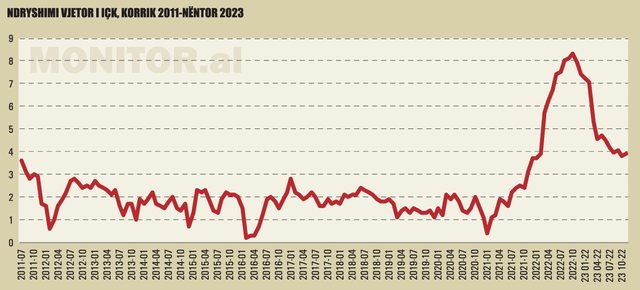
The high-stakes environment is not expected to be very supportive. The Bank of Albania has warned that it will continue to maintain a tight monetary policy, although with a lower intensity than before. The base rate has reached 3.25%, while the IMF has requested that it reach up to 4.5%.
Inflation, which rose less than the EU average at the beginning of the price crisis, is now around 4%, twice as high as in the EU, due to domestic problems, mainly from high costs of agricultural products .
The IMF predicts that inflation will reach the Bank of Albania's target of 3% in early 2025.
"There is uncertainty about the trend of inflation and the timing and size of these increases should be flexible and data-driven, taking into account the overall macroeconomic outlook," says the IMF.
Climate change is another long-term limiting factor. Global warming is triggering a series of abnormal events that, although expected, were abstract until they reached a point where they began to be seen from agriculture, which is being negatively affected by floods to energy.
Other sectors are also feeling the consequences, such as fashion (due to the warm weather, the demand for clothing has changed, creating stock for winter clothing), wine production, etc. The country is not yet prepared to face this process.
The problem of finding labor force and wage pressure. Labor shortages, mainly due to high immigration, are becoming a real problem for businesses, hindering their investment plans. Salinas of the World Bank says that the loss of human capital is a critical risk for Albania.
In order to prevent the departure of employees, businesses were forced to increase the salaries of employees, hastily and by the government's moves on the salaries of the administration.
But, the space for salary increase, which was not accompanied by an increase in productivity, seems to have been exhausted.
Erald Pashaj, Administrator of EPPC Albania & Kosovo, a company active in the field of staff training and development, claims that the rate of growth will decrease.
"Based on the analysis we have done in our office, in the last six months of 2023, but also on the anticipated growth of businesses that are our clients, we can say that the growth in 2024 will be in the range of 4% - 8% ", he claims.
International institutions expect growth to be moderate this year as well. Both the IMF and the EBRD predict that the expansion of the economy will be around 3.3% in 2024.
Consumption restrained by high prices and the still tight monetary policy expected to be maintained by the Bank of Albania are two factors acting against it, while tourism will continue to have a positive effect.
The speed of growth is expected to be different, depending on the sectors and specific factors that may influence positively or negatively.
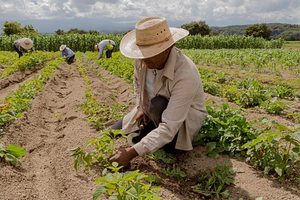
Agriculture, which continues to have the main weight in economic activity, will continue to face many unexpected events, such as the vagaries of the weather, or increasing costs. More positive is the outlook for vegetable production and greenhouses, which are positively affected by the high demand in international markets.
For livestock, the situation is quite the opposite. For several years, this sector has been experiencing only decline, as a result of immigration and rising costs, negatively affecting related industries, such as milk processing, giving way to imports.
Agriculture is the only sector that has been in negative territory in the last three years, although it has the highest weight in the economy, at about 19% of the Gross Domestic Product (GDP).
For years, the sector has failed to become competitive, as a result of structural problems, such as the lack of economies of scale, while in recent years it has been suffering from increased costs and especially high emigration that is leaving farms and local economies without employees.
The paradox of high tourism and the disappointing effect on the economy
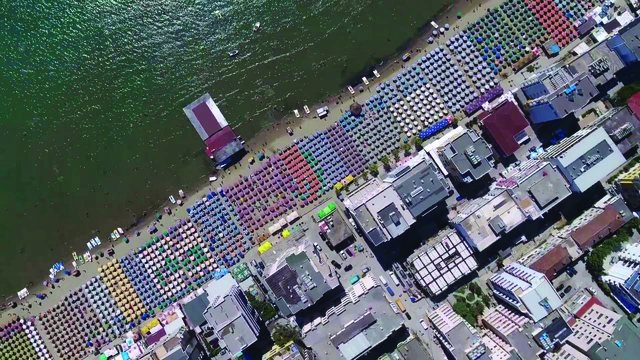
In 2023, Albania experienced its best historical year, passing for the first time the figure of 10 million foreign citizens who entered the country. In contrast, the effect on the economy was much lower than expected.
The activity of "Wholesale and retail trade; repair of vehicles and motorcycles; transportation and storage; accommodation and food service activities", which contributes about 17% of the economy (second only to agriculture) and should normally reflect the effect of increased consumption from tourism, increased by only 0.77% in the third quarter of 2023, when tourism peaks , from 9.92% in the same period of 2022.
This was also the lowest performance since the fourth quarter of 2020, when the country was suffering the consequences of the pandemic.
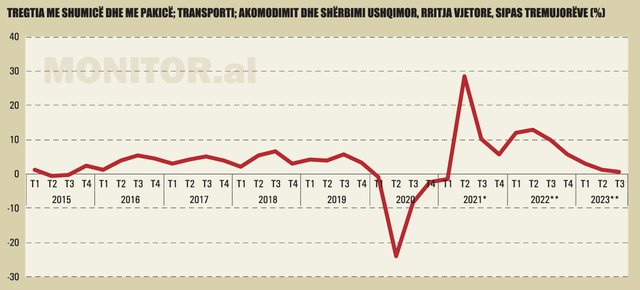
Even for the entire 9-month period, this activity expanded by less than 2%, much less than the double-digit levels it had reached the previous two years.
Some of the factors that have influenced this trend are estimated to be the high informality in tourism and the low expenses of foreigners coming to the country, who are mainly categorized as backpackers.
On the other hand, the country has "lost" consumers as a result of the high emigration, especially of young people, which is reflected in the decrease in the consumption of cereals, sugars, sausages, etc.
Anyway, at least for the arrival of tourists, the year 2024 is expected to be positive again. Official sources from "Tirana International Airport" told "Monitor" that in 2024, 9 million passengers are expected to fly through this airport, from about 7.3 million passengers that closed in 2023.
In 2023, about 60% of travelers were foreigners and this percentage has been increasing year after year. This year, an increase in tourists from the United Kingdom is expected, as a result of the entry of the low-cost airline "Ryanair".
Expectations are also positive for hotel bookings, a model that is becoming more and more stable, with the expansion of investments to increase the capacity in bed rooms throughout the coast.
"The contracts have been closed since the middle of 2023. From what I see in general from the market, it is an increase that goes up to 35% 'e-commitment', or the commitment to enter into a guarantee relationship.
For the year 2024, the guaranteed capacities have been exhausted and some partners have secured their requirements, while others have not managed to find the required capacity. The Polish market leads for this year as well, and then comes the Czech one and others in a row", says Rrahman Kasa, president of the Albanian Tourist Union.
Stela Dhami, executive manager of Colliers International Albania, says that the hotel industry is expected to follow the strong development it had in 2023, also helped by positive tourism figures.
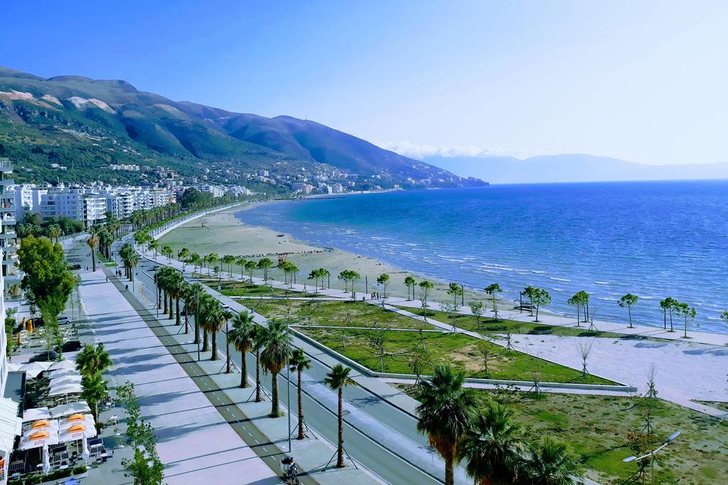
The Albanian coast, and especially the Albanian Ionian Riviera, is expected to have even greater interest, increasing significantly with the opening of the Vlora airport. She adds that expectations are also positive for retail trade in shopping centers, despite the increase in prices as a result of inflation.
Julian Mane, vice president of the BALFIN Group, the largest retailer in the country, is also optimistic. "For retail sales, the year 2024 is expected to be positive, giving an impetus and growth to retail trade in the Western Balkans region.
This is also due to the fact that the negative effects of the crisis created by the pandemic are fading, but also the businesses themselves have gained a certain experience and have built mechanisms that respond more quickly to changes", he affirms.
While the consumption of some local products is expected to decrease. For production operators, the main reason for the decline in consumption remains the structuring of the population due to the departure of young people abroad.
- The industry is expected to suffer the consequences of rising costs of raw materials, which on the one hand may make the industry uncompetitive and, on the other hand, may encourage imports.
The cement industry, metal processing, dairy processing, and fashion all report that they are suffering from both rising costs and labor shortages.
An expected weak international economy is expected to further add to the woes for this segment that contributes nearly 11% of the economy.
For the 9-month 2023, for the second year in a row, the industry recorded a decline, which deepened to 8.2% in the third quarter.
The industry is losing the competitive advantage of production at a low price, due to the increase in wages and other costs, while as a result of these problems it is not managing to move to another stage of production, with high added value, putting existence in dilemma for many enterprises.
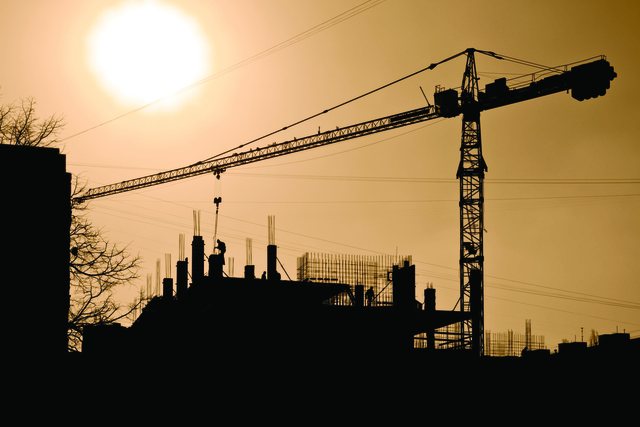
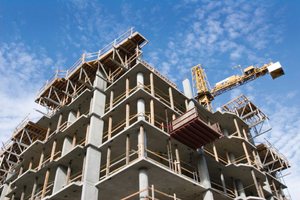
Construction and real estate activities have been the largest contributors to economic growth in the past three years, often accounting for nearly 50% of it.
Both together account for about 16% of GDP. Both construction and real estate were driven by a boom in building permits issued in the capital after 2017 and peaked in 2022, falling for the first time in 2023.
Construction is expected to continue to grow, but more tourism-oriented. While real estate sales are difficult to predict, because part of them is influenced by informal currency flows.
However, market operators predict that sales of expensive apartments will fall.
The bad news is that price increases are likely to continue, driven by higher taxes, which are passed on directly to the end buyer. "In construction, direct costs will not be higher, while the impact of taxes from the government is expected to be increasing.
If in Tirana, the maximum infrastructure impact tax (8%) is applied today, some cities, such as Vlora, have questioned the increase of this tax from the current 4% to 6%.
The changes in the reference prices to date have had an impact only in the city of Tirana, with the increase in the reference price in the entire territory of the capital, which is expected to increase the cost of construction by an average of 40% more. Of course, this increase in costs will be accompanied by higher prices.
I believe the price will increase by 20% on average", says the chairman of the Association of Builders of Albania, Erjon Harizi.
- Professional activities had a weak performance in 2023, with a negative contribution to the economy in the first 6 months of the year. The introduction of the income tax law, which increases the fiscal burden for them, may give another negative blow to their activity.
This sector contributes about 6% of the economy, almost the same as real estate.
-Information and Communication: The telecommunications market is concentrated, after the entry of the Hungarians 4iG, who have united ONE and ALBtelecom into a single one, in operation from January 1, 2023.
Companies are under pressure to invest in technology while profits are low, which is causing them to make packages more expensive for consumers.
Information technology is expected to continue growing, becoming a source of employment for young people, following the high interest of foreign enterprises to perform some of the services in Albania.
- Arts, entertainment will continue the positive trend, also influenced by the expected high flows of tourists.
-Financial activities will continue to be affected by the still tight monetary policy of the Bank of Albania, which is not expected to curb lending anyway. "Even the year 2024 is expected to be characterized by inflation and, depending on its level, we may also have a change in the basic interest rate in Lek during the first part of the year.
But I already believe that we are close to the peak of interest rates and gradually, we hope that during the second half of 2024 they will begin to decrease, especially in Euro", says Bledar Shella, chairman of the Supervisory Board of the Albanian Association of Banks (AAB). .
He adds that the economic growth, supported by tourism, construction as well as new projects in infrastructure, is expected to be positive and this will help to continue the growth of lending at satisfactory rates.
The year 2024 is expected to be positive for the insurance sector as well. "Currently, the insurance market is well capitalized and the finances of the companies are stabilized", says Klaidi Çitozi, president of the Association of Insurers of Albania.
He adds that after the challenges that passed, such as the earthquake or the pandemic, the companies showed that they are consolidated and mature enough to move to another stage, which is quite important for the country's economy.
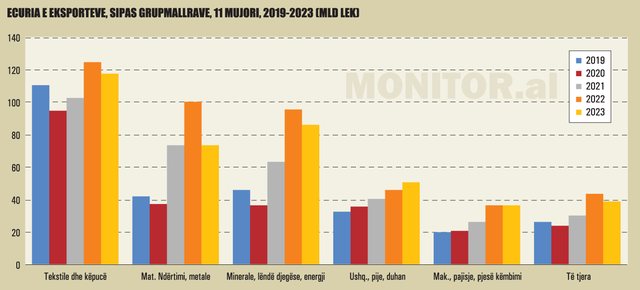
2023 was the most negative year for exports since the pandemic period. For the 11th month, INSTAT data shows that sales abroad fell by nearly 10% on an annual basis, from strong growth of 32% the previous year.
This trend was influenced by the decline of the main groups "Textiles and shoes", "Construction materials, metals" and "Minerals, fuels, energy". "Machinery, equipment and spare parts" was at the same levels as last year, while the only activity with an increase was "Food, drinks and tobacco".
The increase in costs, which is making the exporters uncompetitive, the unfavorable international conjuncture and especially the fall of the Euro, which reduces the exporters' income converted into Lek, were the main reasons for this trend. Forecasts remain pessimistic for 2024 as well.
"Textiles and shoes" is the largest group of exports in the country, with about 29% of the total. After the 6% contraction of exports for the 9th month of 2023, the fashion industry is not at all enthusiastic for the year 2024.
The economic crisis will curb consumption and orders, while the warm weather in winter is creating stocks in warehouses, which will affect lower demands for the coming winter.
The devaluation of the Euro reduces revenues and profits, as less is collected in Lek.
Eva Laro, from "Prodyn", the largest shoe manufacturer in the country, said that investments in absolute terms are decreasing for 2023 and the situation will be similar in 2024.
Unlike last year, when finding labor was a problem, the situation has reversed. The industry is so bad, it is laying off employees.
"The progress of employment will be very dramatic, having a social impact and especially in rural areas, where other economic activities, beyond the manufacturing sector of clothing and shoes, do not exist, and the forecast is understandable for everyone", says the president of the Pro-Export Association, Edvin Prençe.
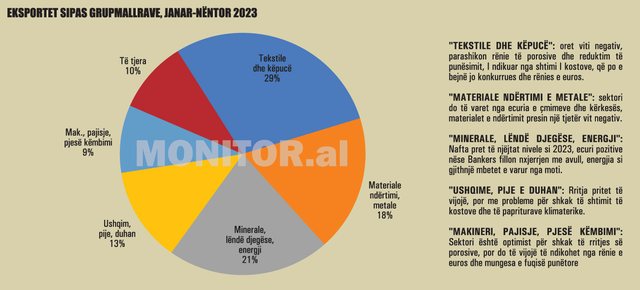
The third largest group of exports "Minerals, fuels and energy", with 21% of the total, is more optimistic. "Bankers Petroleum", the second largest exporter in the country, after "Kurum", expects constant growth of activity as long as oil prices will continue to be high.
"Bankers" expects to produce 500 thousand tons of oil barrels. But the company is optimistic that, after the completion of the steam injection investment, production could reach up to 800,000 tons in 2029.
"Construction materials and metals", the third largest group, with 19% of the total, are pessimistic.
Ilda Baraj, from the KID-Alb brick factory, claims that the drastic fall of the Euro has affected exports, while costs have increased, making them uncompetitive in the market.
"We have very high costs and the impact of the exchange rate must be added here, where the Euro has significantly depreciated against the Lek, making it even more difficult.
We can no longer compete in the region, because their production costs are much lower than ours, starting from the excise tax for producers to the night regime for electricity and other elements like these".
"Food, beverages and tobacco", which contribute to 13% of exports, have recorded steady growth year after year and were the only ones with a positive trend even in 2023.
The sector is optimistic for the year 2024, for expansion by at least 10%. The increase in the surface area of ??greenhouses, but also the increase in the production of some fruit trees, is expected to have a positive effect.
For medicinal plants, a product that has an important weight in agricultural exports, the situation is not so optimistic.
"We don't expect positive progress for the sector in 2024, if we continue with the same problems we had last year", the chairman of the Association of Medicinal and Aromatic Plant Exporters, Mr. Filip Gjoka.
The sector has suffered from a drop in demand for medicinal plants of more than 50%, due to the oversaturation of foreign markets from the COVID-19 pandemic and the consequences of the devaluation of the Euro and the Dollar.
"Machinery, equipment and spare parts" was one of the groups with the fastest growth in recent years, after the opening of several factories that assembled parts for the automotive industry.
Companies such as "Forschner Albania", "Delmon Group Albania", "PSZ Albania", "Yura Corporation" and "SEWS Cabind Albania" are active in Albania, which produce wires, cables, tires or simple parts for international companies such as " Mercedes Benz", KIA, "Hyundai", "Peugeot", "Renault", "Fiat Group", or others such as "Sumitomo Electric Industries".
The representatives of these companies are optimistic for 2024, although they are suffering like everyone else from the fall of the Euro and the lack of manpower that does not allow them to expand. Mario Scarfalto, manager of "SEWS Cabind Albania" says that Albania can benefit from the orientation of production towards electric cars.
He claims that the increase in the weight of electric cars in the total number of vehicles seems to give effects in Albania as well, where a small fraction of the products are produced by the factories located here.
Demographic developments, immigration and the lack of labor are turning into a systemic problem of the economy: For the fourth year in a row, entrepreneurs show as one of the main problems not only the lack of labor, but also the impact that immigration is having on consumption.
Unlike the government, which calls immigration a normal process, international institutions are much more worried. "Albania has the highest rate of migration, compared to its population, in Central and Eastern Europe, according to the International Organization for Migration.
The young male and educated population of working age is mainly leaving, reducing the labor force available in the country", says Mrs. Ekaterina Solovova of EBRD.
"Population aging and continued labor force emigration represent two of the main sources of concern for the medium-term perspective.
These factors put pressure on government spending on pensions and health. Continued emigration of workers could worsen skills-demand mismatches and further tighten the labor market," says IMF's Anke Weber.
Mr. Salinas of the World Bank asserts that "we must all focus (and firmly and quickly) on strengthening human capital and making sure that it is put to good use." He advises that investments in human capital should be oriented urgently, as the most important priority for Albania.
The problem of the labor force, its quality and education is closely related to the other dilemma, that of where the country's economic model is going.
For three decades, the main competitive advantage of the domestic economy has been the cheap cost of labor, which has encouraged low-value-added and minimum-wage sectors.
Now, this model is no longer working. Immigration has created a real bottleneck in the labor market. All sectors report that they are struggling to find employees and are being forced to increase wages, for the most part without improving productivity, affecting the reduction of competitiveness in relation to their neighbors.
The government is calm, calling this development "normal", as some activities have already finished the cycle and the economy is moving towards other sectors. In fact, the greatest investment orientation is in construction, a temporary sector with no added value in the economy.
The industry is failing to invest in improving technology, losing the advantage of cheap labor costs, without creating another advantage. Albania lags behind in information technology, which is being developed mainly as a service for third parties.
"Complacency" is also high for tourism, which, as seen from the 2023 figures, failed to bring added value to the economy. Besides having a seasonal impact, no effort is seen to be made to link other sectors, such as the food processing industry.
In addition, this sector is quite fragile, both to unexpected developments and to a deterioration of the image, in the conditions of a not very functional infrastructure and a rapid increase in prices in the country that is marketed as one of the cheapest Europe./ Monitor.al

Today, January 13, 2024, the US dollar is bought at 94...
Today, January 12, 2024, the US dollar is bought at 94...
Today, January 11, 2024, the US dollar is bought at 94.2 A...
From January 1, 2024, the increase of the infrastructure i...
In order to discipline state enterprises that take loans a...
The World Bank predicts that the Albanian economy will...

The Competition Authority has opened a preliminary investi...

Today, January 10, 2024, the US dollar is bought at 94.8 A...
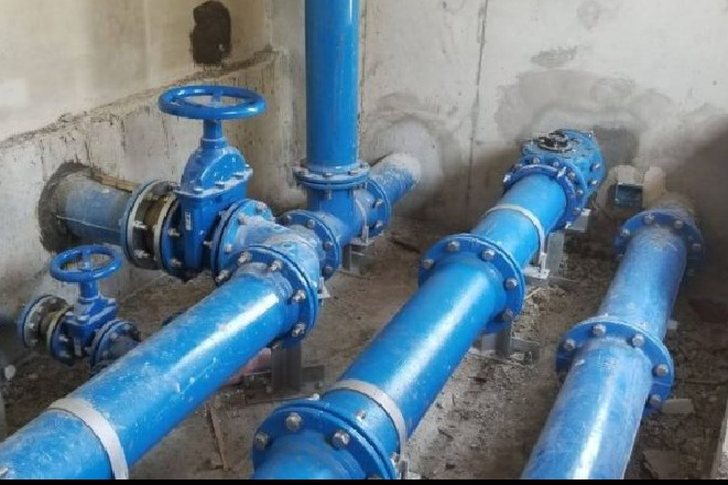
As the reform of aggregation, or the joining of water util...
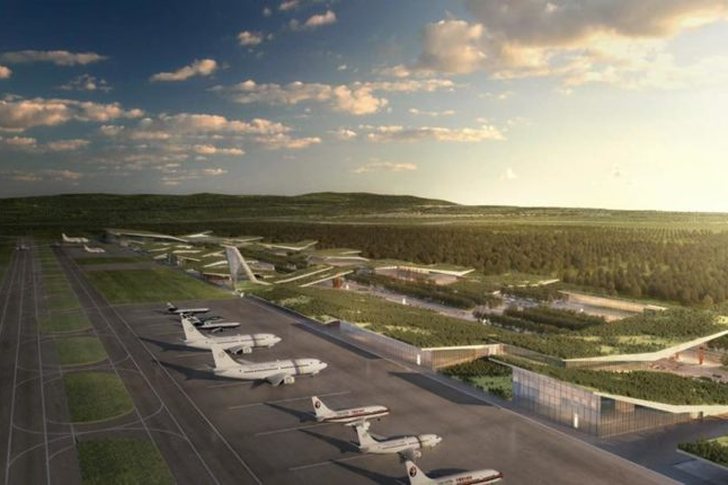
The International Airport of Vlora, which is expected ...

Today, January 9, 2024, the US dollar is bought at 94.7 AL...
Today, January 8, 2024, the US dollar is bought at 94.6 AL...
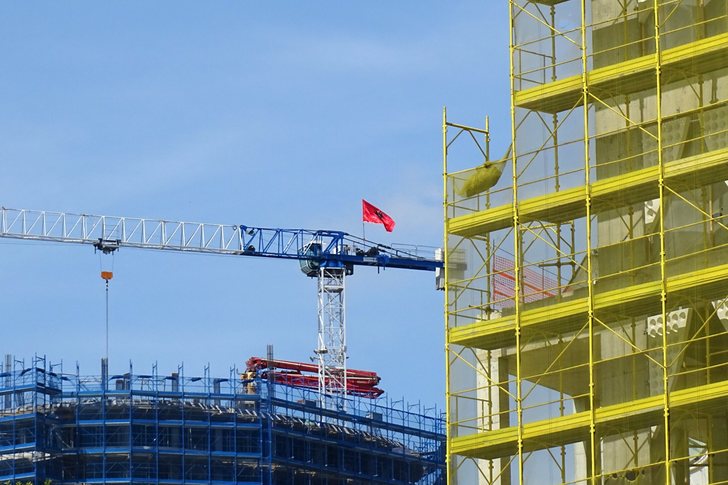
It is being built all over Europe and the region, but in n...
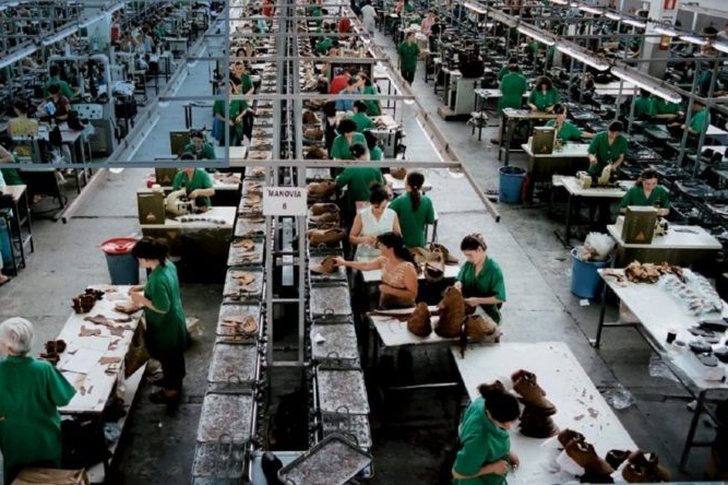
The industrial sector has entered a long crisis cycle with...
Sot më 7 janar 2024, dollari amerikan blihet me 94.5 l...
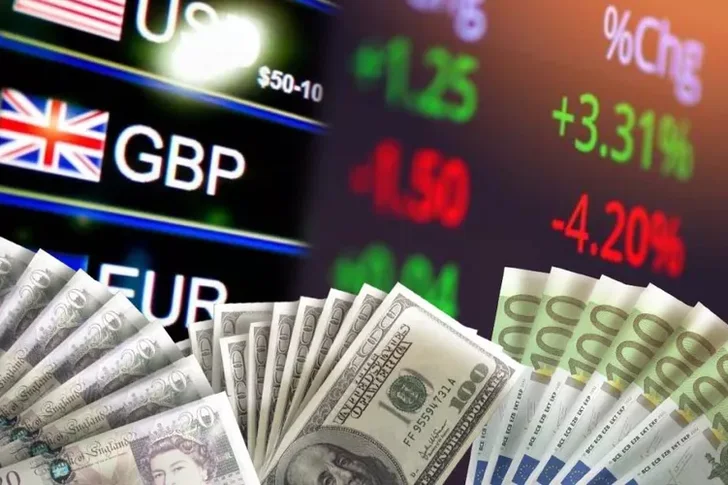
Today, January 6, 2024, the US dollar is bought at 94....

The Minister of Finance and Economy, Ervin Mete, at th...

Although with economic uncertainty and changes in cons...
Today, January 5, 2024, the US dollar is bought at 94....
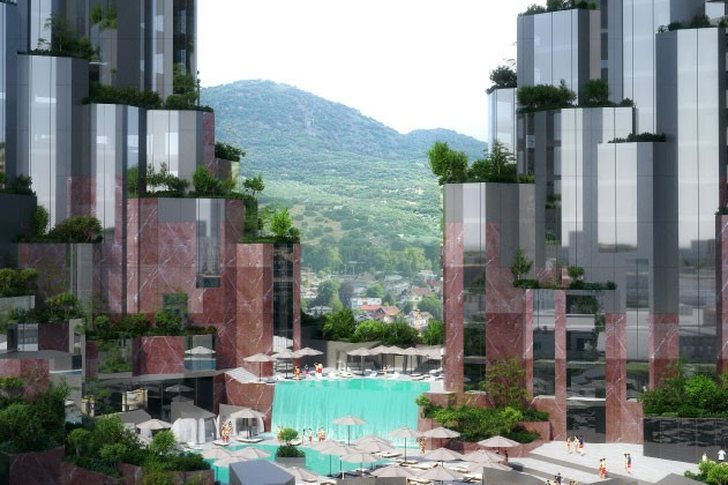
An investor who has already received strategic investment ...

CNA has launched another investigation that could lead to ...

Irfan Hysenbelliu is a businessman that we call "Irfan the...

In March 2026, CNA launched another investigation centered...
The arrested mayor of Tirana, Erion Veliaj, with 13 charge...

The Special Board of Appeal (KPA) decided this Monday ...

The KPA vetting decided this Thursday to dismiss the p...

Suela Salavaçi, a prosecutor in the Prosecutor's Offic...

The Special Board of Appeal reinstated the prosecutor ...

New details have emerged regarding the accident that occur...

New details have emerged from the serious accident that oc...

A serious accident occurred this Wednesday on the Elbasan-...
Citizen MH, 61, a fisherman, was found dead near the islan...

The Institute of Geosciences has shared a forecast for wea...
Rising energy and fertilizer prices are expected to contin...

Over 18,000 foreign citizens from 140 countries have appli...

This Wednesday, our country will be under the influence of...
US President Donald Trump has issued another warning to Ir...

Prime Minister Andy Burnham has announced that most bus fa...

France's parliament has passed a law to ban social media f...

US Secretary of State Marco Rubio arrived in Manila on Jul...

At a time when industrial products are increasingly taking...

Trust among people is not just a three-syllable word. It c...

Master of humor Todi Llupi has passed away at the age of 7...

The ninth edition of "MIK Festival" kicked off with one of...

Businesses will no longer be required to simply register t...

Despite economic growth and income in recent years, Albani...

This Wednesday, one US dollar is bought for 81.4 lek and s...
Construction company licenses will have a validity period ...