


The pound deepens the crisis/Here's how foreign currencies are exchanged today
Today, in the foreign exchange market, one US dollar will ...


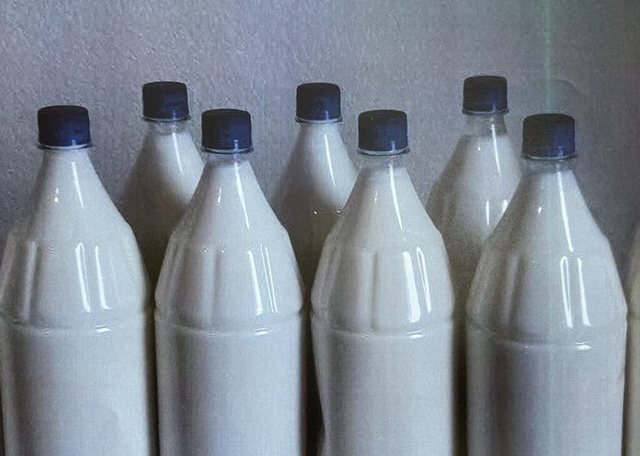
Small markets are left without milk supplies. Taxes: Use auto-invoicing for purchases from farmers.
Since Monday, after the start of the tax campaign, the supply of fresh milk produced by farmers has been interrupted in many small markets in Tirana.
According to an observation made by Monitor, the situation is similar in many neighborhoods of the capital, including Astir, Fresku and the "5 Maji" area.
Market traders, contacted, claim that they are unclear about how they should act regarding the issuance of invoices.
While they are supplied with significant quantities of fresh milk directly from farmers in rural areas of Tirana, they do not know how to formalize this invoicing process.
Farmers, for their part, claimed that they are equipped with NIPT, but despite this, their milk has been rejected by small trading units for three days.
The General Directorate of Taxes (GDT) explains to Monitor that referring to instruction no. 16, dated 03.04.2020, "On the invoice and the circulation monitoring system", as amended, all commercial units without exception that purchase goods from agricultural and livestock producers must be accompanied by a fiscalized invoice, of the auto-invoicing type.
The scheme for invoicing goods purchased directly from farmers, from a neighborhood market, bar, restaurant or large supermarkets is the same as in the case of trading agricultural or livestock goods to large processors or collectors.
"So, if a business, be it a neighborhood market, bar, restaurant or any other type of unit for agricultural or livestock goods is not supplied by a collector or processor, but directly from the farmer, the obligation to issue the invoice lies with the buyer. Even in this case, the invoice uploaded to the system is made by the buyer, with the seller's data.
"The invoice also needs to be signed by the seller, who in this case is a farmer, for the purpose of traceability of the goods for food safety," explains the DPT.
So, the neighborhood market, which in this case can be considered the small collector of the farmer's fresh milk, regardless of whether the latter is equipped with a NIPT or without an agricultural NIPT, can issue the farmer an invoice for the purchased goods.
In cases where the farmer is not equipped with an agricultural NIPT, Taxes clarify that in order to ensure traceability of the product sold, only the name of the individual who sold the product needs to be noted on the invoice and the invoice must be signed by the seller.
The farmer, regardless of whether he is equipped with a NIPT or not, has the right to sell his livestock products in small grocery stores, while the obligation to issue a fiscal invoice lies with the buyer.
The scheme is the same even if the farmer takes the milk to the collection and processing points, the obligation to issue the fiscal invoice (sales invoice) lies with the buyer.
Therefore, the licensed processor or collector is obliged to issue an autoinvoice by uploading it to the SelfCare system.
For several days now, tax officials have been launching an action to control the trade of agricultural products.
The Tax Administration emphasizes again that the focus of the action is to strengthen field control over the issuance of invoices for the trade of livestock products, at large agricultural commodity trading markets, slaughterhouses, dairies, and then large collectors and processors.
Tax authorities claim that small traders and street vendors are not the focus of the action. Through this action, taxes aim to increase revenues and strengthen the system for traceability of goods./Monitor.al

Today, in the foreign exchange market, one US dollar will ...
Local government expenditures for the first 5 months of 20...

The action launched by the tax administration with a focus...
Following the completion of the action to control the invo...

Today, in the foreign exchange market, one US dollar will ...

Last year was the warmest year on record both in Europe an...

Today, in the foreign exchange market, one US dollar will ...

Bitcoin's price hit a record high as the popular cryptocur...
The increasing pressure in the rental market has also been...
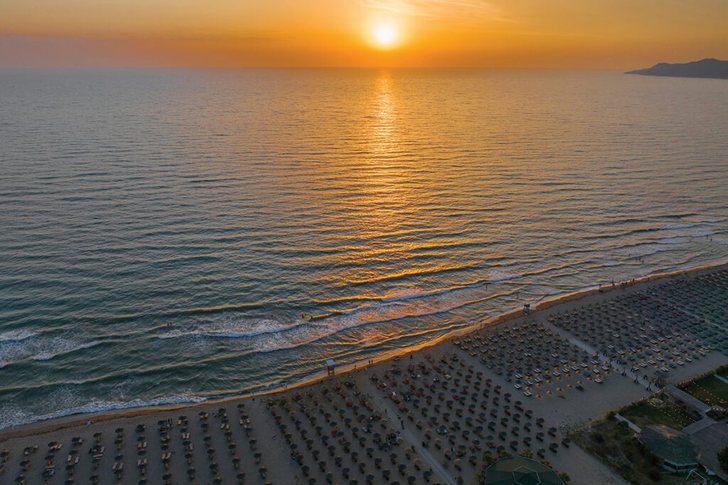
While expectations were for tourism to grow by around 15% ...

Today, in the foreign exchange market, one US dollar will ...
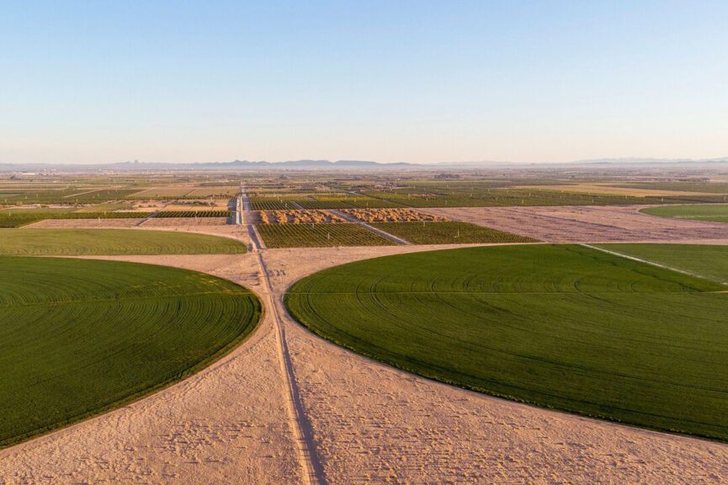
Ever since climate change was widely recognized as a probl...

Today, in the foreign exchange market, one US dollar will ...

Tax authorities have started collecting VAT from large com...
Today, in the foreign exchange market, one US dollar will ...
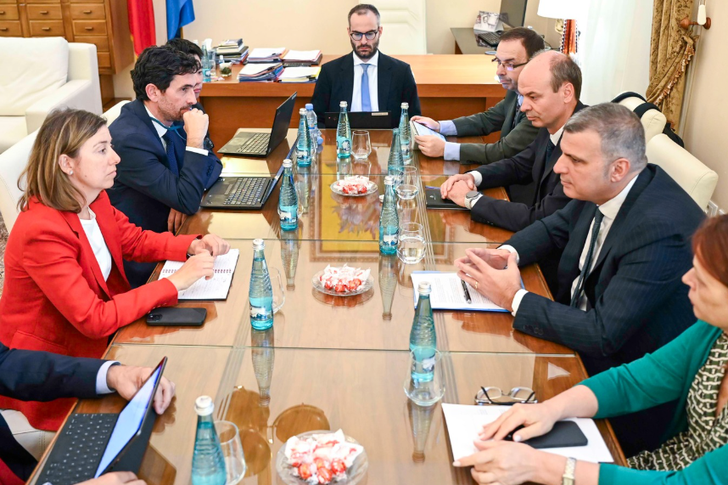
The Governor of the Bank of Albania, Gent Sejko, held a me...
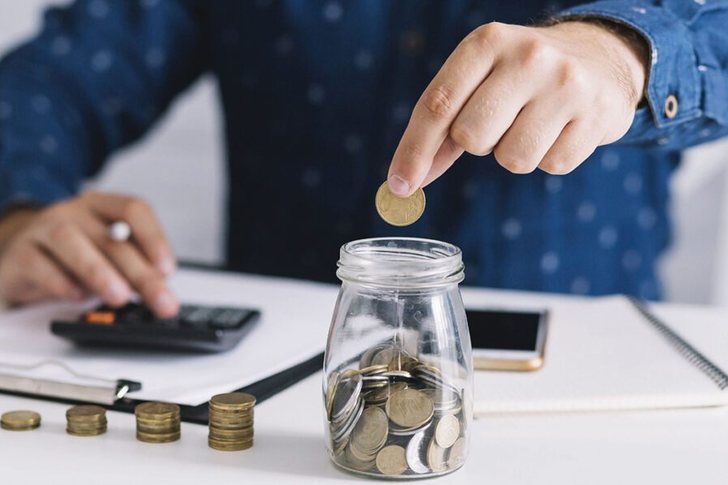
The regulation that paves the way for the recognition of p...

Today, in the foreign exchange market, one US dollar w...

Today, in the foreign exchange market, one US dollar will ...
Today, in the foreign exchange market, one US dollar will ...

CNA has launched another investigation that could lead to ...

Irfan Hysenbelliu is a businessman that we call "Irfan the...

In March 2026, CNA launched another investigation centered...
The arrested mayor of Tirana, Erion Veliaj, with 13 charge...

The Special Board of Appeal (KPA) decided this Monday ...

The KPA vetting decided this Thursday to dismiss the p...

Suela Salavaçi, a prosecutor in the Prosecutor's Offic...

The Special Board of Appeal reinstated the prosecutor ...

A road accident occurred this evening on Nikolla Zoraqi St...

Three people were shot and wounded in Elbasan last night b...

A serious incident occurred this Tuesday in the Yrshek are...

An accident occurred this Tuesday on "Dituria" street in K...

All of Southern Europe will face changing weather conditio...
Albania was hit by temperatures significantly higher than ...

For the first time, Pogradec welcomed the Inter-Lake Chess...

Albania has achieved a record for the employment of foreig...

US Secretary of State Marco Rubio arrived in Manila on Jul...

In the space of a few days, Ukrainian President Volodymyr ...

The spokesman for the Iranian Foreign Ministry warned Bulg...
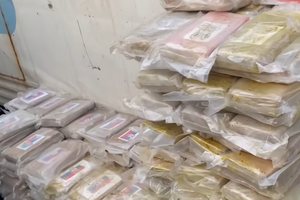
Autoritetet italiane sekuestruan pako me afër 800 kilogram...

At a time when industrial products are increasingly taking...

Trust among people is not just a three-syllable word. It c...

Master of humor Todi Llupi has passed away at the age of 7...

The ninth edition of "MIK Festival" kicked off with one of...

Construction company licenses will have a validity period ...
The Centralized Purchasing Operator recently opened a tend...
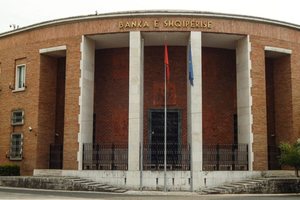
The new draft law "On the Bank of Albania" provides that t...
This Tuesday, one US dollar is bought for 81.2 lek and sol...