


Erion Veliaj's shadows in protest
Veliaj through Arta Dade rejects Edi Rama'...

Veliaj through Arta Dade rejects Edi Rama'...

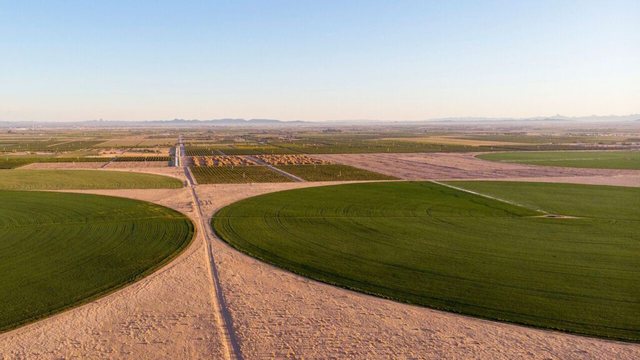
Ever since climate change was widely recognized as a problem in the 1980s, its impact on agriculture has been an active field of study.
A new study, published in the journal Nature, offers a particularly comprehensive, but also disappointing, picture.
In the first attempt to predict how farmers will adapt to the new climate, based on how they are currently operating, the authors conclude that food production in the world's most fertile areas will be among the hardest hit, although some more northern and currently less productive regions, such as Canada, China and Russia, may benefit somewhat.
And although adaptation will somewhat mitigate global losses, it will not be enough to avoid them.
The project is the result of eight years of work by the Climate Impact Lab, a group of mostly American researchers.
It has focused on six major agricultural crops, which account for two-thirds of global calorie consumption: cassava, maize, rice, sorghum, soybeans and wheat.
With the exception of rice – which is expected to benefit from increased rainfall in the regions where it is grown and which responds better to adaptation measures – the study finds that higher temperatures and increasingly frequent extreme weather will lead to reduced yields for all major crops by the end of this century.
The authors conclude that for every additional degree in average global temperature, the amount of food available for consumption will decrease by 120 calories per person per day (about 4.4% of the recommended daily requirement).
"These things are hard to calculate," says Timothy Searchinger, an expert on agriculture and economics at Princeton University, who was not involved in the study.
He appreciates the team's analysis, but emphasizes that there are still major uncertainties.
The study represents an improvement over previous efforts, which typically assumed that farmers would either not adapt at all, or adapt perfectly, implementing new technologies and strategies without difficulty, regardless of costs or access to them.
None of these scenarios is realistic.
In practice, farmers do the best they can with the resources they have, switching crop varieties or adding artificial irrigation when possible.
Projection
Researchers at the Climate Impact Lab have tried to factor this reality in. Because the constraints farmers face vary widely by location and economic level, modeling individual responses would be “nearly impossible,” says Andrew Hultgren, the study’s lead author and an economist at the University of Illinois at Urbana-Champaign.
They built a statistical model of current adaptation, based on how yields in more than 12,000 regions in 54 countries have already changed due to rising temperatures. They then extended this model to projections for an even warmer climate.
They estimate that, in a scenario where the world reduces emissions slightly faster than the current trajectory, adaptation efforts will only slightly mitigate the yield reduction.
In a future without adaptation, yields would fall by 8.3% by 2050 and by 12.7% by 2098, compared to a hypothetical scenario where the climate does not change. With adaptation, these figures become 7.8% and 11.2%, respectively.
The authors predict that the consequences will be felt most strongly at the extremes of the income spectrum.
For the poorest 10% of regions (measured by GDP per capita), the overall reduction in food production capacity by the end of the century is projected to be around 13% in a low-emissions scenario and up to 28% in a high-emissions scenario.
Meanwhile, the richest 10% of regions are projected to face reductions of over 19% and 41%, respectively.
The decline in poorer regions can be explained by the fact that farmers there grow low-yielding crops and are unable to adapt effectively.
The authors estimate that adaptation may be even more difficult in affluent regions. Agriculture in the corn belt areas of the US, where corn plantations dominate, relies on large areas planted with only one crop.
This makes adaptation very difficult, and losses could be extremely large. (The expensive insurance policies that have helped protect these farmers from unexpected problems like droughts or heat waves could become unaffordable as global warming progresses.)
Although farmers at both ends of the income spectrum will suffer losses, it will be the poorest who will go hungry.
The best way to mitigate this problem is to make food trade as open as possible, says Solomon Hsiang, director of the Global Policy Lab at the Doerr School of Sustainability at Stanford University (and one of the study's lead authors).
“The number of hunger cases has decreased significantly compared to the past and this is often attributed to the globalization of food trade and the removal of many political barriers,” he says. “Increasing trade liberalization is one of the best adaptation strategies.”/ Monitor.al


Today, in the foreign exchange market, one US dollar will ...

Tax authorities have started collecting VAT from large com...

Today, in the foreign exchange market, one US dollar will ...

The Governor of the Bank of Albania, Gent Sejko, held a me...

The regulation that paves the way for the recognition of p...

Today, in the foreign exchange market, one US dollar w...
Today, in the foreign exchange market, one US dollar will ...
Today, in the foreign exchange market, one US dollar will ...

The new electronic register that municipalities will set u...

The mid-year amendments to the 2025 budget that were appro...

It takes an average Albanian family 16.3 years of work to ...

Today, in the foreign exchange market, one US dollar will ...

Governor Sejko received today the new Ambassador of the Ki...

The budget subsidy for the public pension scheme is declin...
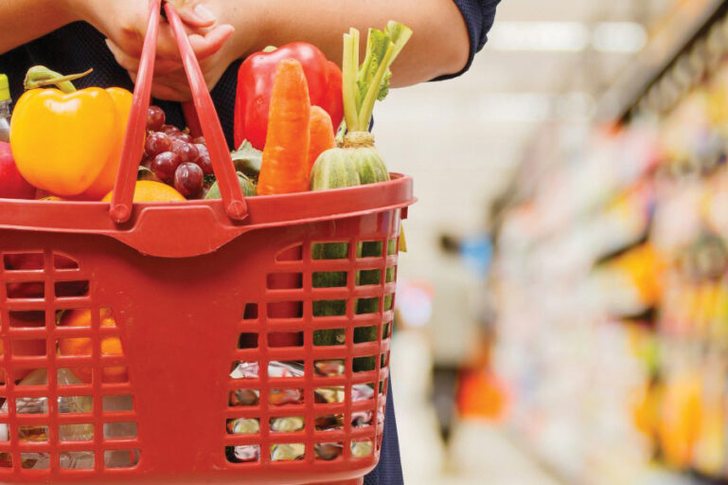
Albania is facing a paradox, where food prices for the fir...
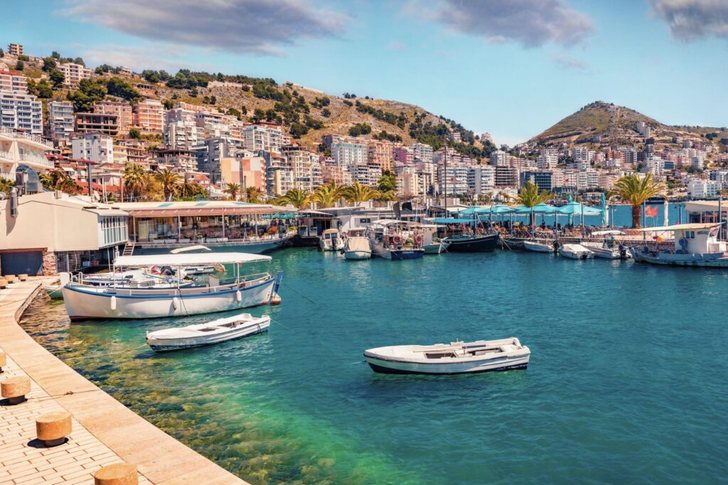
A European spends an average of around 91 euros when trave...

Today, in the foreign exchange market, one US dollar will ...
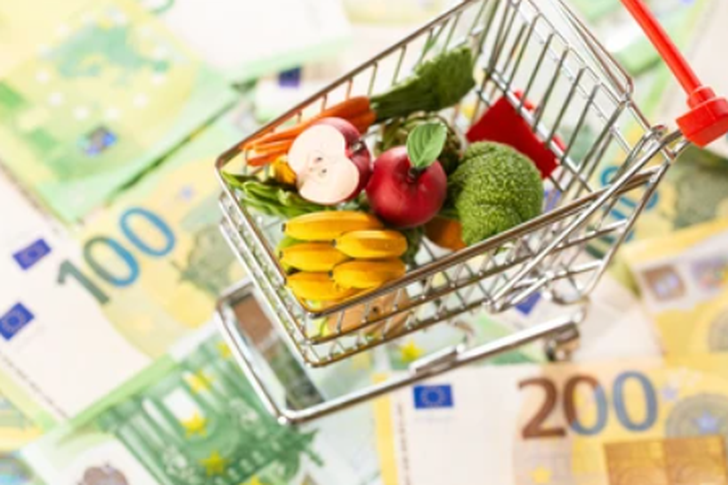
Prices vary significantly between countries in Europe. But...
Today, in the foreign exchange market, one US dollar will ...
Confusion over the forgiveness of taxpayers' and individua...

There have been 12 days of protests in the capital, which ...
Dritan Prençi is the SPAK prosecutor who is sleeping on th...
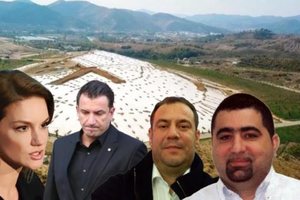
The in-depth investigations that SPAK conducted into Ajola...
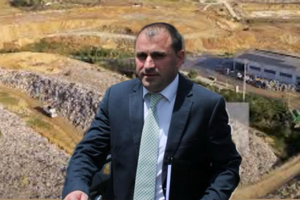
SPAK's standards, the way it investigates, how it secures ...

The Special Board of Appeal (KPA) decided this Monday ...

The KPA vetting decided this Thursday to dismiss the p...

Suela Salavaçi, a prosecutor in the Prosecutor's Offic...

The Special Board of Appeal reinstated the prosecutor ...

Policia e Vlorës ka finalizuar operacionin e koduar “Sigur...

New details have emerged regarding the serious accident th...

An Albanian businessman was arrested this afternoon in Gre...

A serious accident has occurred on the Korça-Ersekë axis, ...

Today our country will be affected by stable weather condi...

A tragic accident occurred this Friday afternoon in Kameni...

Today our country will be affected by unstable weather con...

On Thursday, our country will be affected by relatively un...
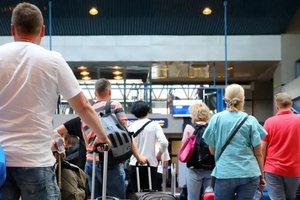
Good news for those who fly: After years of negotiations, ...

It took more than two years, but now the EU can begin acce...

US President Donald Trump announced that the US military h...
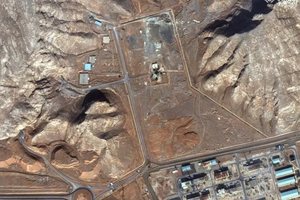
Iran has taken new measures to strengthen the protection o...

Several archaeological excavations conducted during this s...

At the Museum of Fine Arts in Chambéry, France, an exhibit...

Korça has transformed this weekend into the capital of cel...

Korça is ready to open the summer season with one of the c...
This Saturday, one US dollar is bought for 81.5 lek and so...
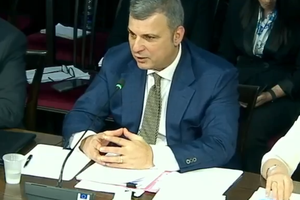
The Governor of the Bank of Albania, Gent Sejko, shared to...

Business lending has increased in the first half of this y...

The labor market has shown worrying trends in early 2026. ...