


British pound rises / Exchange rate, March 9, 2024
Today, March 9, 2024, in the foreign exchange market, ...


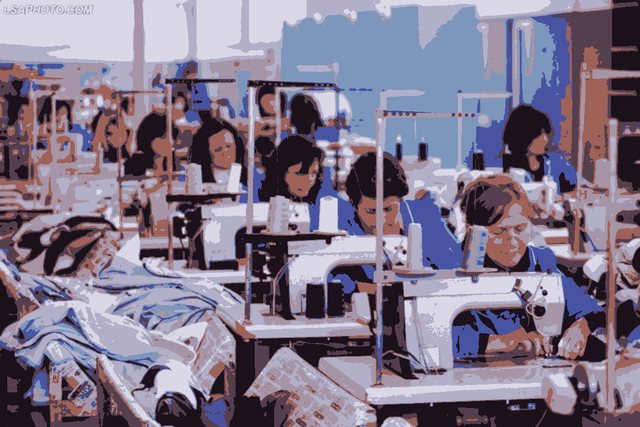
Nazmia has been working in the textile sector since 2017, first in the coastal city of Durrës and then in Tirana, producing clothes for export. However, over the past month, the 58-year-old and her colleagues have been told on several occasions not to go to work, as there is nothing to do.
"I came back on Monday, but I don't know how it's going to go," she says.
For Albanian women like Nazmia, the fashion industry is an important employer, but hit by the increase in the value of the Albanian currency, the Lek. In 2016, one euro was worth 140 ALL; in January of this year it was worth 117 ALL, while this week it went down to the record of 104 ALL.
Some critics say that the strengthening of the lek is a consequence of large amounts of dirty euro money being laundered in Albania, where much of the economic growth is driven by the construction and real estate sectors, which are highly prone to for money laundering.
The governor of the Bank of Albania, Gent Sejko, ruled out the possibility of intervention to stop the increase of the lek, while the government told BIRN that it was "in the process of negotiations" with the banks for the issuance of a sovereign guarantee of 4 billion lek to support the financial companies. who need credit.
Meanwhile, women employed in the textile industry are paying a high price.
"Women working in the fashion sector are often exposed to the risk of poverty," says Xhuljane Uku from the Institute of Critique and Social Emancipation, ICSE, which will publish a study on the phenomenon on March 8, International Women's Day.
"Work stoppages and reduced working hours can cause problems in the ability to cover basic living expenses," she added to BIRN.
"This can worsen their economic situation, bringing financial discord and insecurity to women and their families, and putting them in a cycle from which they are unlikely to get out again."
For women in small towns, the difficulty is even greater.
"The closure of factories or the reduction of the number of employees in the peripheral areas means that these employees may find it difficult to find another job compared to big cities such as Tirana, Durrës, Vlora or Shkodra, which offer more diversity in the market of work," added Uka.
Unsustainable industry
According to government data, the fashion sector employs about 43 thousand people. But PROEKSPORT ALBANIA, which represents about 700 companies producing clothes and shoes, estimates that the number is about 70 thousand.
This year alone, 4,000 of them lost their jobs, Edvin Prençe, head of the organization, told BIRN.
"The clothing and footwear manufacturing sector is facing a difficult time and reduced orders, as with increased costs it has already lost competitiveness compared to other manufacturing countries," he said.
"I think that a responsible government, in normal times, creates economic policies to support and give the necessary impetus to the exporting sectors," added Prençe.
"What is needed is the easing of fiscal policies, liquidity support for the renewal of production plants, liquidity for the purchase of raw materials, product certification and promotion at international fairs."
Asked about the social impact, Prençe said that rural areas are the most affected because employment depends on the fashion sector.
"Most affected are workers on the verge of retirement with low productivity and professional skills, and most of these factories are in rural areas, where there are no other opportunities for economic development," he said.
In the absence of state intervention, the social impact will worsen, Prençe warned, while calling for the issue to be seen as a "national problem and not as a sectoral problem".
Exporters of textile products have made continuous calls for government support. In February, the government revised the budget to approve a sovereign guarantee of 4 billion lek, about 38.5 million euros, for bank loans requested by the fashion sector.
"The government's offer is not enough," said Zef Preçi, director of the Albanian Center for Economic Research, a think tank based in Tirana.
"The measures introduced by the government are not only insufficient, but also out of context, since the textile industry is not a developed industry, but a survival industry," said Preçi, while adding that the government should develop policies to help what to produce the raw material in the country as well as in the qualification of the workforce./ Reporter.al

Today, March 9, 2024, in the foreign exchange market, ...

Arrears in December 2023 have decreased to ALL 7.85 billio...
While Albania has for years facilitated the procedures for...

Today, March 8, 2024, in the foreign exchange market, the ...
The high flow of tourists in Albania has not stopped even ...

It's March 8, women's day. The balance over the years show...

Po ta dinin që 7 Marsi 1887, i cili shënon hapjen e Shkoll...

Today, March 7, 2024, in the foreign exchange market, the ...

Any individual who rents out rooms, apartments or vill...

Today, March 6, 2024, in the foreign exchange market, the ...

Our country allocates much less funds from the general bud...

Today, March 5, 2024, in the foreign exchange market, the ...

If there is one business that has been doing well in recen...

Today, on March 4, 2024, in the foreign exchange market, t...
The country's economy has accelerated growth rates after t...

Months after the end of last year's tourist season, consum...
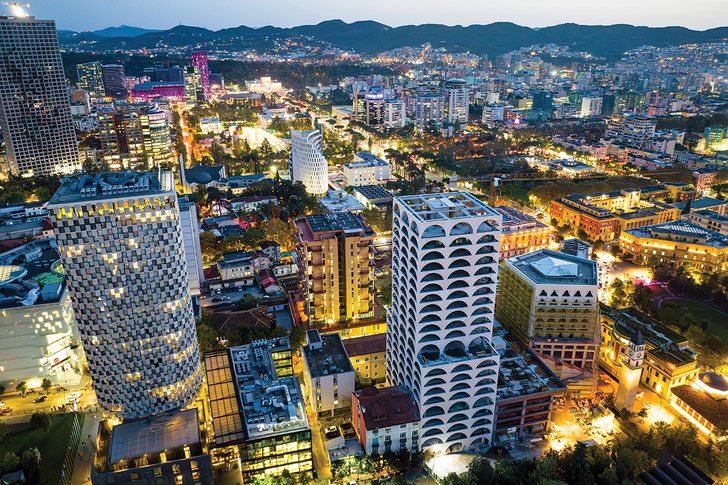
Apartment prices in Tirana are only getting more expensive...

Today, March 3, 2024, in the foreign exchange market, the ...
Gazetari Klodian Tomori ka komentuar deklaratat e ish-mini...
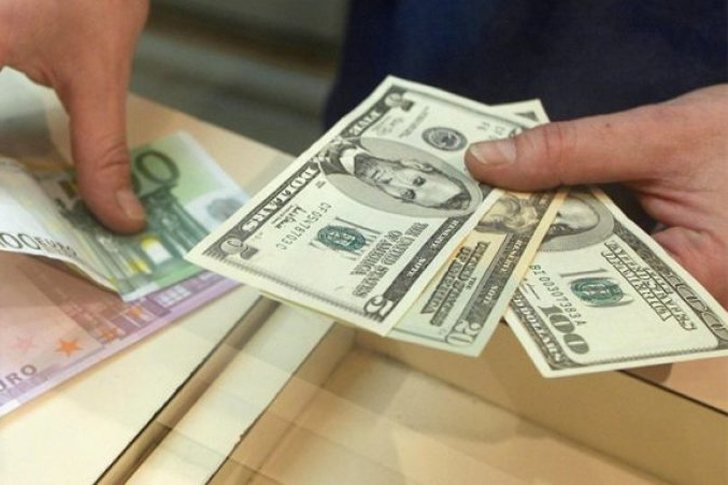
Sot, më 2 mars 2024, në tregun valutor dollari amerika...

CNA has launched another investigation that could lead to ...

Irfan Hysenbelliu is a businessman that we call "Irfan the...

In March 2026, CNA launched another investigation centered...
The arrested mayor of Tirana, Erion Veliaj, with 13 charge...

The Special Board of Appeal (KPA) decided this Monday ...

The KPA vetting decided this Thursday to dismiss the p...

Suela Salavaçi, a prosecutor in the Prosecutor's Offic...

The Special Board of Appeal reinstated the prosecutor ...

A serious accident has occurred on the Lezhë-Shëngjin axis...
A serious incident has occurred in Morina, Kukes. Citizen...
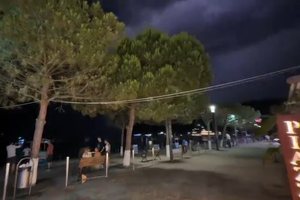
The bad weather that swept the country on Tuesday evening ...

A road accident occurred this evening on Nikolla Zoraqi St...
This Wednesday, our country will be under the influence of...
All of Southern Europe will face changing weather conditio...
Albania was hit by temperatures significantly higher than ...

For the first time, Pogradec welcomed the Inter-Lake Chess...

Prime Minister Andy Burnham has announced that most bus fa...

France's parliament has passed a law to ban social media f...

US Secretary of State Marco Rubio arrived in Manila on Jul...

In the space of a few days, Ukrainian President Volodymyr ...

At a time when industrial products are increasingly taking...

Trust among people is not just a three-syllable word. It c...
Master of humor Todi Llupi has passed away at the age of 7...
The ninth edition of "MIK Festival" kicked off with one of...

Businesses will no longer be required to simply register t...

Despite economic growth and income in recent years, Albani...

This Wednesday, one US dollar is bought for 81.4 lek and s...

Construction company licenses will have a validity period ...